Inner Life

For the inner work that doesn’t shout. Emotional steadiness, self-trust, meaning, and the kinds of insights you only earn by living long enough to notice what actually matters.


Two wooden Adirondack chairs facing a small table on gravel, with green hills behind

When researchers had people confide something painful to a friend sitting right beside them, the ones whose blood pressure climbed the highest weren’t leaning on someone difficult — they were turning to a friend they genuinely love and still, just slightly, hold their breath around

We tend to picture the relationships that wear on us as the ones already going wrong. A study that measured people’s bodies during a hard conversation points somewhere quieter, and closer to home.

When researchers had people confide something painful to a friend sitting right beside them, the ones whose blood pressure climbed the highest weren’t leaning on someone difficult — they were turning to a friend they genuinely love and still, just slightly, hold their breath around Read More »

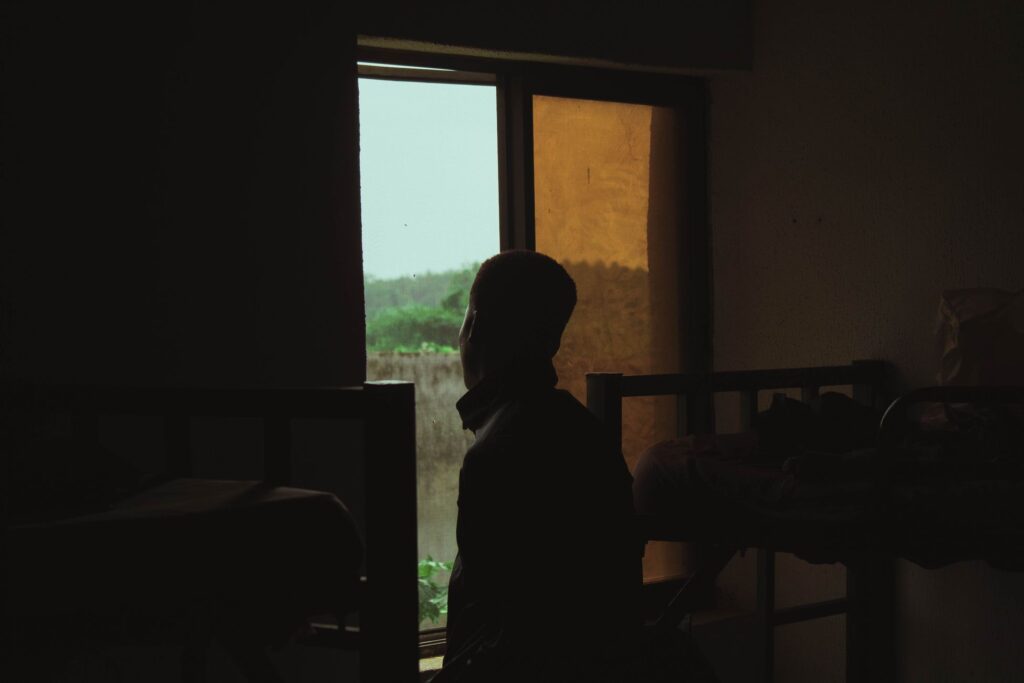
A solitary man sits on a bench in Dhaka, Bangladesh, silhouetted against a foggy, grayscale landscape.

We tend to think grief needs an explanation to heal, but bereavement researchers found the opposite — people who rushed to make meaning of a loss often recovered more slowly than those who let the pain remain unresolved

Columbia bereavement researcher George Bonanno spent decades tracking widows and widowers, and found that mourners who rushed to explain a loss often stayed stuck longer than those who let the pain remain unresolved.

We tend to think grief needs an explanation to heal, but bereavement researchers found the opposite — people who rushed to make meaning of a loss often recovered more slowly than those who let the pain remain unresolved Read More »

The people who help us become who we want to be often aren’t just the ones who love us exactly as we are, but the ones who treat us, day after day, as the person we’re quietly trying to become — until one afternoon we catch ourselves already doing the thing we thought we’d never manage

A set of studies from 1999 gave a name to something most of us have felt but rarely say out loud: that the right person doesn’t only accept us, they draw out the self we were hoping to become. Here is what the research actually found, and where it stops.

The people who help us become who we want to be often aren’t just the ones who love us exactly as we are, but the ones who treat us, day after day, as the person we’re quietly trying to become — until one afternoon we catch ourselves already doing the thing we thought we’d never manage Read More »

The advice to let the anger out goes back more than a century — but when researchers gave angry people a punching bag, the ones told to picture the person who had enraged them walked away angrier than the people who just sat quietly for two minutes, doing nothing at all

Venting was supposed to drain the anger out of us. In a 600-person direct test of that idea, it did the opposite — and the group that did nothing at all fared best.

The advice to let the anger out goes back more than a century — but when researchers gave angry people a punching bag, the ones told to picture the person who had enraged them walked away angrier than the people who just sat quietly for two minutes, doing nothing at all Read More »

A freshly paved, empty desert highway running straight toward the horizon under a wide open sky, with large Route 66 shield markings painted on the asphalt

For decades psychologists measured the good life two ways, as happiness and as meaning, and then kept meeting people who wouldn’t trade their most disorienting years, the move that failed, the year everything changed — for all the calm in the world

A newer strand of research argues there is a third kind of good life — one built less on comfort or purpose than on variety, interest, and the experiences that quietly rearrange how we see. Here is what it does, and does not, show.

For decades psychologists measured the good life two ways, as happiness and as meaning, and then kept meeting people who wouldn’t trade their most disorienting years, the move that failed, the year everything changed — for all the calm in the world Read More »

For years people were told there’s a magic ratio of good feelings to bad, right around three to one, that separates the people who flourish from the ones who quietly languish, and then a physicist and two colleagues checked the equation behind it and found the famous number had been borrowed from a decades-old model of heat rising through a fluid

A single number was supposed to tell you whether your inner life was thriving. Then someone read the math.

For years people were told there’s a magic ratio of good feelings to bad, right around three to one, that separates the people who flourish from the ones who quietly languish, and then a physicist and two colleagues checked the equation behind it and found the famous number had been borrowed from a decades-old model of heat rising through a fluid Read More »

Airplane wing over a soft sea of clouds with a warm dawn horizon

The move to a sunnier city, the bigger salary, the thing we’re sure will finally make us happy usually does far less than we imagine — researchers found that whatever we focus on looms huge while we’re picturing it, then shrinks back to almost nothing inside an ordinary Tuesday

A pair of well-known studies suggest that when we imagine how much a single change would improve our lives, we quietly overweight it. The illusion is not that circumstances never matter. It is that whatever we are looking at looks larger than it will ever feel.

The move to a sunnier city, the bigger salary, the thing we’re sure will finally make us happy usually does far less than we imagine — researchers found that whatever we focus on looms huge while we’re picturing it, then shrinks back to almost nothing inside an ordinary Tuesday Read More »

The most generous act in a long marriage isn’t the grand gesture — it’s letting your partner tell the story slightly wrong at the table because you know which parts of it actually matter to them

Picture a dinner with another couple. One half of the long-married pair is telling the story — the road trip, the day they met, the famous disaster with the rental car — and he gets a detail wrong. It was 2009, not 2011. It was raining, not snowing. It was her cousin, not his. His

The most generous act in a long marriage isn’t the grand gesture — it’s letting your partner tell the story slightly wrong at the table because you know which parts of it actually matter to them Read More »

Every generation raises its children in reaction to the wound of the last, which means most of us are quietly solving our parents’ problem while handing our own children a brand-new one to spend their lives solving

Here is the loving paradox at the center of almost every childhood. We set out, with real devotion, to give our children precisely what we lacked — to fix the exact thing that hurt us — and it is often by succeeding at that, not by failing, that we hand them a fresh wound of

Every generation raises its children in reaction to the wound of the last, which means most of us are quietly solving our parents’ problem while handing our own children a brand-new one to spend their lives solving Read More »

Scroll to Top