

By now, I’ve become good at solo traveling.
At some point in adult life, you do. Or at least you become good at the version of it that looks convincing from the outside.
You book the ticket, find the hotel, carry your own bag, figure out the airport, calculate the transfer, tell people you’re excited, and move through the whole thing with the kind of competence that makes it seem like this is simply who you are now.
You stop waiting for the perfect companion. You stop postponing places just because no one is available at the same time, with the same budget, in the same emotional era of their life.
You learn that if you want to see the world, sometimes you have to go meet it alone.
Thailand had been on my list since 2024. Not my 2025 resolutions. The earlier, more optimistic version of me had already written it down and, in her defense, she was right. It just took me longer than expected to catch up with my own plan.
This year, I told myself I needed a break. But in the polished, socially acceptable sense.
The less polished truth was that I had become very good at functioning and noticeably worse at feeling. I was working, keeping routines, doing what needed to be done.
But deep down, I craved a summer break in the middle of February, meaning — it was time for solo travel in Thailand.
Little did I know I was actually going there to be unsettled, dysregulated, cracked open, soothed, sped up, slowed down, and, at several points, emotionally ambushed by my own capacity to still feel this much.
The trip began with leaving
Thailand did not open itself to me all at once.
Don’t ask me why, but Phuket was the first stop, and almost immediately, my body knew what my mind was slower to admit: it was not my place.
It was kind of beautiful, yes. But beauty is not always enough to make a place feel livable from the inside.
My whole system felt dysregulated there. Not awakened. Flooded.
I was overstimulated in the wrong way, the kind that makes your nervous system feel like it has nowhere to land. I have spent a lot of my life being able to override discomfort and keep going. I know how to function through mismatch.
But travel has a way of making certain truths harder to negotiate with. Some places simply do not hold you, no matter how attractive they look from the outside.
Leaving Phuket almost immediately felt abrupt at the time. Later, I understood it differently.
Sometimes a trip really begins when you let yourself leave the wrong version of it behind.
And that decision changed more than my itinerary.
I did not know then that Thailand was preparing another version of the story for me. One that would feel stranger, more dynamic, more emotionally charged, and much harder to file away later as just a nice solo trip.
Sometimes a random conversation can wake up parts of you that had gone quiet
There are conversations that do not look important while they are happening.
If you ask me, that is the mildly humiliating thing about life sometimes. You expect transformation to announce itself properly.
A sign. A crisis. A dramatic revelation. Better lighting, at least.
Instead, it slips in sideways while you are on a plane. Half-distracted. Trying to work, or at least convincing yourself you’re trying.
You assume the person next to you will remain what they were a minute before: a stranger you happen to be sitting beside.
And then something small opens.
A tone. A look. A simple question asked lightly.
At first, I didn’t care much. It was just a conversation. Just passing time in the air. Just one of those travel interactions you assume will dissolve the moment the plane lands.
Plot twist: it didn’t.
Something in that dialogue stayed forever open. Or maybe something in me did.
Sometimes the person on the other side of that conversation has no idea what they are doing. They do not know they are arriving at a moment when your inner life is unusually open, or unusually tired, or quietly asking to be interrupted.
But it happens anyway.
And once that kind of aliveness returns, even briefly, it changes the emotional weather of everything around it.
Some places make performance feel unnecessary
Chiang Mai changed the texture of everything.
It was the first place in Thailand where I felt not just relieved, but recognized in some harder-to-name way.
What struck me most was not only the city itself, but the atmosphere of the people in it. They felt like people who were living rather than performing.
Not because they were carefree. Not because they were untouched by struggle.
But because they seemed less trapped in the exhausting choreography of appearing okay in the approved way.
That mattered to me more than I expected.
It felt as though I had found a place where people were living rather than merely existing. A place where emotional complexity did not have to be hidden under competence. Of course, I did not suddenly become a different person there.
It’s simply not possible.
But I did feel less defended, which is sometimes the closest thing to relief.
I think I had been craving that without fully knowing that sense even existed.
What the body understood before I did
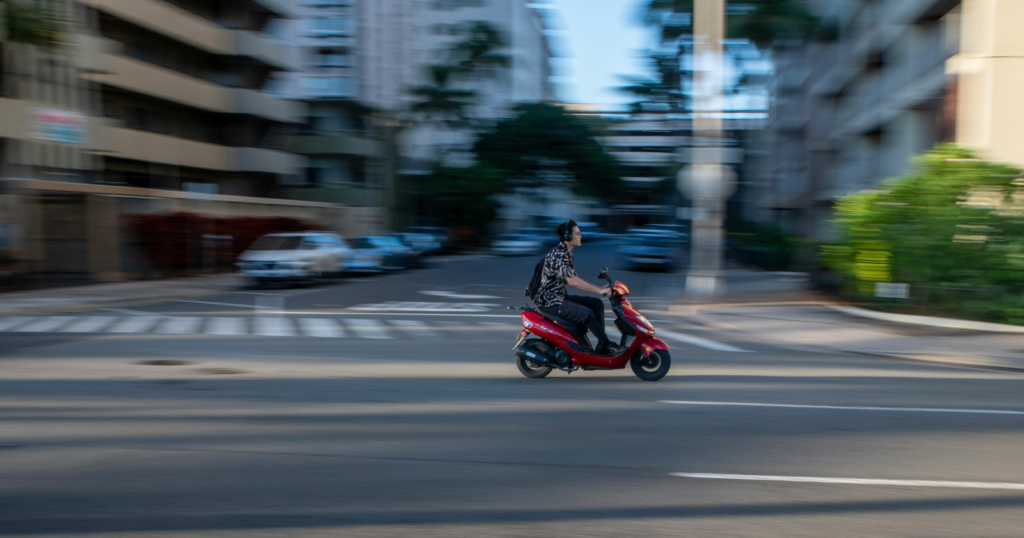
One of the clearest memories I have is of getting on the back of a Grab bike for the first time because I had no other choice.
We were high in the mountains. Walking was unrealistic. Hesitating was pointless. So I got on — I guess the only other viable option was to melt in the unbearable heat.
This was not exactly in character for me. Even ordinary bikes had always made me uneasy. And yet once it happened, there was no way back.
I kept doing it again and again.
First fear, then exhilaration, then the much less convenient realization that I was going to keep choosing it again because now I knew what it felt like.
That was the problem.
Once your body experiences a certain kind of aliveness, it becomes less interested in returning obediently to safer, duller alternatives.
After that first ride, I kept doing it.
Through traffic, through heat, through day and the night. With Grab drivers and with strangers who had started to feel strangely real.
It was not only adrenaline. It was freedom, closeness, immediacy. A form of movement that made ordinary life back home feel suspiciously overcontrolled.
And sometimes who you are beside changes what your body believes it can do.
Sometimes courage arrives through movement. And sometimes through closeness, through touch, through the way another person’s steadiness can travel into your body and make something frightening feel possible.
By the end of the trip, I had started thinking I might actually learn to ride a motorcycle one day, which should tell you enough about the psychological atmosphere I was living in.
Why it all felt more alive than it had any right to
What I felt there was not just happiness. It was something less polished and more convincing.
I felt immediate.
I laughed faster. I stayed out longer. I said things I would have edited out of a conversation at home. Small moments took on an odd emotional intensity. Stopping for something cold. Choosing street food by smell. Walking with no real plan. Eating mango sticky rice not once but multiple times, just because it felt right. Drinking coconut juice and using the straw to scrape out the soft coconut flesh, just as you were taught.
None of this sounds important on paper. That is precisely why it mattered.
Certain trips do not stay with you because of the spectacular parts. They stay with you because ordinary things start feeling vivid again. Not because the place is magical, but because you are suddenly less defended against your own life.
How contradiction got louder
Travel also made my contradictions harder to ignore.
There were moments when I felt small and expansive in the same hour. When I wanted comfort and distance. When I wanted to feel something and did not want to belong to anyone or anything. When I felt confused enough to disappear into myself, and then suddenly so awake that everything around me felt electrically real.
At home, routine softens those contradictions. Away, they sharpen. You stop being able to call something stress when it is really loneliness, or exhaustion when it is emotional undernourishment, or independence when it is partly defense.
That can feel destabilizing.
It can also feel like relief.
Because even confusion is intimate when it is real.
Islands slow you down enough to see what your system is asking for
It was only later, in Krabi, that I realized how overstimulated my system had become.
Until then, I had been running on momentum and calling it aliveness. Krabi gave me a different pace. The evenings were slower there. Softer. Less charged. It was where my body finally caught up with what my emotions had been doing for days.
It also reminded me, a little annoyingly, that transformation is not always loud.
Sometimes it is not the charged conversation or the midnight ride. Sometimes it is sitting still long enough to realize your nervous system has been asking for tenderness all along, while you keep offering it intensity and pretending that counts as care.
Even there, though, the trip kept producing its strange little coincidences.
I met an older couple from Texas who invited me to visit, and I may actually end up there in a few months. I met another solo traveler and, in the middle of a Grab ride, we exchanged our names as if that was the most natural place in the world to begin remembering each other.
The stranger part was that she was from Mainz, a city I once ended up in almost accidentally and already know I will return to.
By then, Thailand had started to feel like one of those places where the world folds in on itself a little. Everywhere I went, I kept meeting people strangely connected to places that were already mine.
Intensity lands differently when care is part of it
And then there was Bangkok, a city that looks almost cyberpunk in its heat, force, scale, and motion. A city that everybody said should have overwhelmed me.
And yet it didn’t, or not in the way I expected.
By then, perhaps, I had changed enough to meet it differently.
What helped was that Bangkok did not come to me as a tourist spectacle alone. I was there with locals who became friends, and they did not just show me the city’s attractions. They showed me their places, their rhythms, their version of the city.
That changes everything.
A place stops being a destination and becomes a lived environment the moment someone lets you see it through their own attachments.
I still think about the strange comfort of someone recognizing I was Georgian just by looking at me. Or the accidental conversations that turned, with suspicious speed, into discussions about family, adulthood, and the kinds of burdens people carry so routinely they forget they are carrying them at all.
Which, admittedly, is a very efficient way to ruin the fantasy that travel is an escape from yourself.
But maybe that was part of why Bangkok did not feel as alien as it should have. Even inside all that scale and intensity, there were moments of familiarity.
The heat that pushed my body too far. The moments when I thought I might actually faint. The quiet practicality of being cared for before I had fully admitted I needed care.
That mattered more than I realized at the time.
Because intensity lands differently when care is part of it. It becomes less about endurance and more about being carried through something. Less about proving you can handle a place and more about what becomes possible when you do not have to handle everything alone.
Back home reflections
When I came home, I thought I was grieving the end of the trip.
If you know me, you know that is what I always do. Place attachment, as we would politely call it in psychology. A completely respectable term for the very undignified experience of leaving somewhere and behaving, internally, as if I have been abandoned by a climate, a street, and a handful of small routines that were never technically mine to begin with.
So yes, at first I assumed this was simply that.
I missed the warmth. The movement. The late nights. The fact that stepping outside still felt like entering something. I missed the bikes, the noise, the fruit, the slow evenings, the accidental conversations, the strange intimacy of days that had not yet hardened into routine.
But after a while, I realized I was not only grieving the place.
I was grieving the version of me that had been easier to reach there.
The one who laughed faster. The one who stayed out longer. The one who did not feel so tightly edited all the time. The one who could still be surprised by her own life. The one who felt brave in small ways and alive in ordinary ones.
That is the harder part of coming home.
Not that the trip ends, but that the contrast begins.
You see more clearly how much of ordinary life has been organized around maintenance. How quickly you return to the old posture. How easily the body tightens again. How fast you become efficient, responsive, composed. All useful things. Deeply adult things. Not always convincing proof of aliveness.
And once you have remembered a more open version of yourself, that return can feel quietly devastating.
Not because home is wrong. Not because the trip was perfect. But because something in you woke up there, and now you know what it feels like when that part of you has room.
I think that is what I am still carrying. And craving.
Not just the memory of a country, but the memory of being more inside my own life. More porous. More responsive. More willing to want things. More willing to feel them.
And maybe that is why the sadness of coming home has felt so tender this time.
Because underneath it, there is gratitude too.
For the places that do this to us. For the people who, knowingly or not, return parts of us to ourselves. For the strange fact that even temporary worlds can tell us something lasting.
What I miss is real.
But so is what it revealed — that some part of me had been waiting for more life than I was giving her.
