

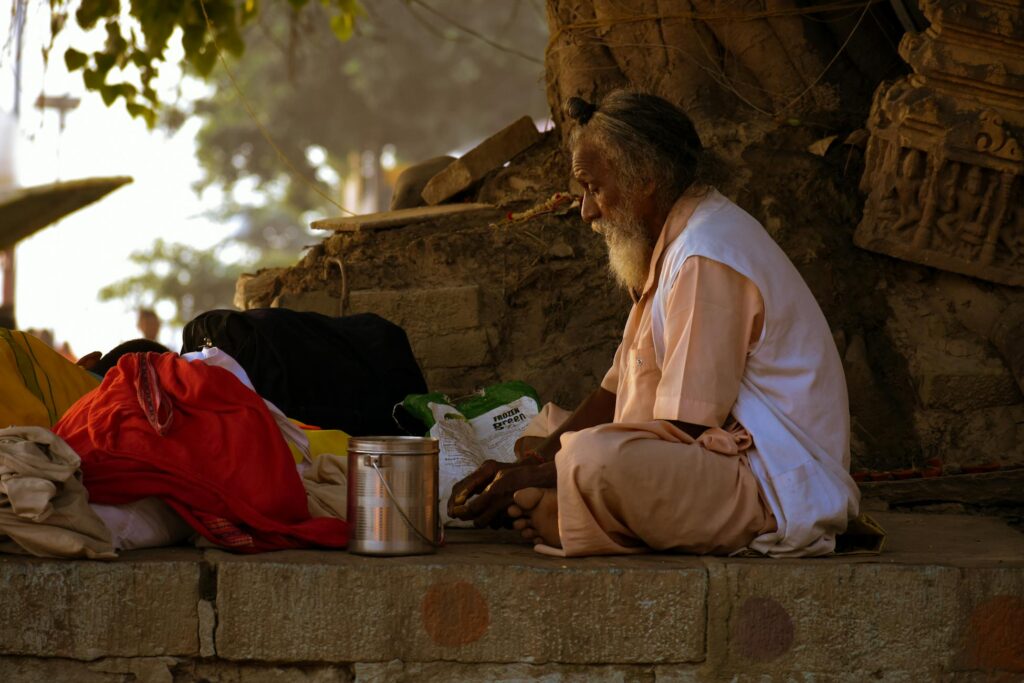
There’s a peculiar discomfort that shows up in the quietest moments. You finish a task, reach for your phone. You walk into an empty house, turn on the television. You sit down with nothing planned, and within minutes, something inside you starts fidgeting — not in your body, but in your mind.
Rainer Maria Rilke, the Bohemian-Austrian poet who spent much of his life in deliberate solitude, wrote something that still stops me in my tracks: “The only journey is the one within.”
He wasn’t being poetic for the sake of it. He was pointing to something that modern psychology and neuroscience are only now beginning to validate with hard data — that our capacity to be alone with ourselves, to genuinely inhabit our own inner landscape without flinching, may be the most consequential skill we ever develop. And almost no one teaches it.
Why being alone with yourself feels so hard
If you’ve ever felt a wave of restlessness the moment the house goes quiet, you’re not imagining things. Your brain is wired to resist stillness.
In a now-famous study, psychologist Timothy Wilson and his team at the University of Virginia asked participants to sit alone in a room with nothing but their own thoughts for six to fifteen minutes. No phone, no book, no task. Just themselves. The results were remarkable: 67% of men and 25% of women chose to administer electric shocks to themselves rather than sit in silence. They preferred physical pain to being alone with their own minds.
That finding isn’t about weakness. It’s about the architecture of the brain itself. The default mode network — the constellation of brain regions that activates when we’re not focused on an external task — tends to generate self-referential thoughts. Memories, worries, unresolved emotions, questions about identity. For many people, especially those who’ve spent decades in high-demand careers or caregiving roles, this stream of inner content can feel overwhelming.
The amygdala, our threat-detection centre, can interpret unfamiliar inner silence as a kind of danger. And the prefrontal cortex, which might normally help us regulate that response, has often been exhausted by years of problem-solving, managing, and performing for others.
So we reach for the phone. We fill the calendar. We stay busy.
The cost of never making the inner journey
Rilke understood something that many of us discover only when external circumstances force the question. Retirement, an empty nest, a health scare, the loss of a partner — these moments strip away the scaffolding we’ve built around our identity. And suddenly, the question isn’t what do I do? but who am I when I’m not doing anything?
This is precisely why retirement feels unsettling for so many people, even when life is objectively “good.” The discomfort isn’t about finances or logistics. It’s about the sudden, unstructured encounter with yourself.
Arthur Brooks, the Harvard professor who studies human happiness, has written extensively about how people who’ve derived their sense of self from professional achievement often face what he calls a “striver’s crisis” in the second half of life. The external metrics fall away, and what remains is the relationship you have with your own interior world — a relationship many of us have neglected for decades.

The cost of that neglect is real. Research by Matthew Lieberman at UCLA has shown that when people lack the capacity for self-reflection, they’re more likely to experience social disconnection, emotional dysregulation, and a diffuse sense of meaninglessness. Not because they’re broken, but because they’ve never developed the neural pathways that make inner companionship possible.
You might recognise this pattern in yourself — or in someone you love. The person who’s always the life of the party but never feels truly known. The person who fills every hour with activity and then wonders why they feel hollow at night. The person who has a hundred acquaintances but can’t name a single close friend.
These aren’t character flaws. They’re the predictable outcome of a culture that teaches us to look outward for everything — validation, meaning, identity, worth — and never turns us gently toward the only journey that Rilke said actually matters.
What the inner journey actually looks like
Neuroscientist Kalina Christoff and her colleagues have mapped what happens in the brain during genuine self-reflection. The default mode network, rather than spiralling into rumination, can actually shift into a creative, integrative mode when we engage with our inner experience deliberately rather than avoiding it. This is the difference between being lost in thought and being present with thought.
The inner journey looks like sitting with a cup of tea and noticing what surfaces when you’re not performing for anyone. It looks like writing in a journal without editing yourself — something I once dismissed as a waste of time before it changed everything for me. It looks like walking without a podcast. Driving without the radio. Lying awake for ten minutes before sleep and simply observing what your mind is doing.
These are small acts. But they’re radical in a world that profits from your distraction.
The ancient roots of this practice
Rilke didn’t invent this idea, of course. The Stoics practised daily self-examination. The Buddhist tradition has centred meditation — a formal practice of being alone with the mind — for over 2,500 years. The Desert Fathers and Mothers of early Christianity retreated into solitude not to escape life but to encounter it more fully.
What these traditions understood, and what modern neuroscience is confirming, is that the capacity for solitude isn’t the opposite of connection. It’s the foundation of it.
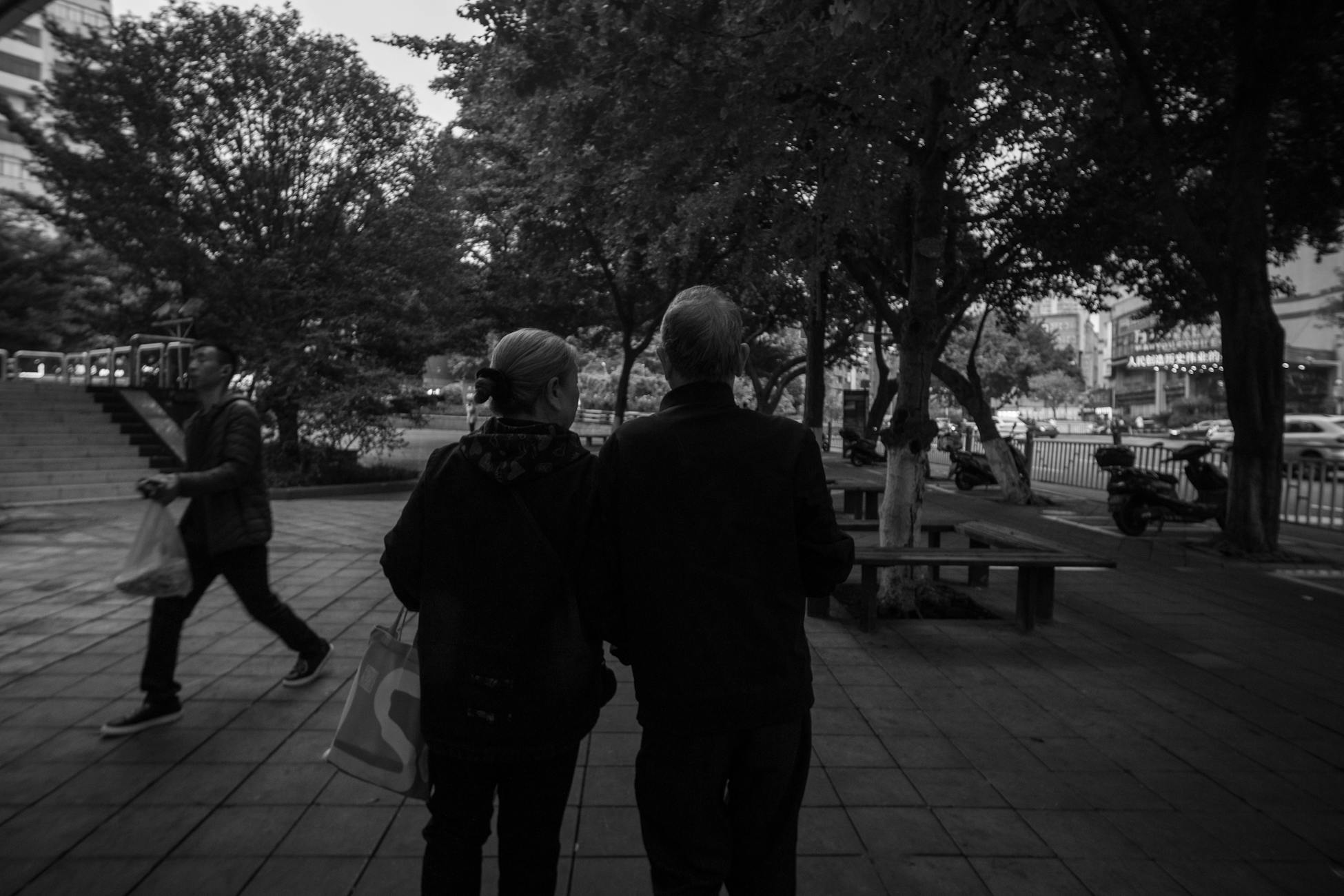
When you can tolerate your own company, you stop needing others to fill the void. Your relationships become less about mutual distraction and more about genuine presence. This is one of the reasons couples often struggle during retirement transitions — two people who’ve never learned to be alone with themselves suddenly find they don’t know how to be together without the structure that work and schedules once provided.
Building the skill nobody taught you
The good news is that the capacity for solitude is genuinely a skill. It’s not a personality trait, not something you either have or don’t. Your brain can learn it at any age, thanks to the neuroplasticity that persists throughout our entire lives.
Here are some ways people I’ve worked with have begun this inner journey:
Start with five minutes of unstructured silence. Not meditation with an app. Not guided breathing. Just five minutes where you sit and let your mind do whatever it’s going to do. Notice the urge to reach for a distraction. Notice it, and let it pass. That’s the whole practice at first.
Name what you’re feeling without trying to fix it. Lieberman’s research on what he calls “affect labelling” shows that simply putting a word to an emotion — “I feel restless,” “I feel sad,” “I feel alive” — reduces amygdala activation and engages the prefrontal cortex. It’s a remarkably simple act that literally changes your brain chemistry in the moment.
Get curious about your own patterns. When do you reach for your phone? What situations make you most uncomfortable with silence? What memories surface when you stop moving? Curiosity is a genuine superpower here — it shifts the brain from a defensive posture into an exploratory one.
Write without an audience. Not for social media, not for a blog, not even for a future version of yourself. Write the way you breathe — because it’s what you need to do in that moment. Let the words be messy, contradictory, incomplete.
Walk alone, regularly. Not as exercise (though that’s fine too) but as a practice of moving through the world without input. No earbuds. No companion. Just you and whatever landscape you’re in. The rhythm of walking has been shown to synchronise brain activity in ways that support creative insight and emotional processing.
Solitude as the doorway to authentic connection
There’s a paradox at the heart of Rilke’s insight. The journey within doesn’t take you away from other people. It brings you closer.
When you’ve made peace with your own inner world — the fears, the longings, the unresolved grief, the unexpected joy — you stop projecting all of that onto the people around you. You stop needing every conversation to reassure you. You stop performing. And something extraordinary happens: you become the kind of person others feel safe around, because you’re no longer asking them to carry what you haven’t been willing to carry yourself.
This matters enormously in the second half of life, when so many of our relationships are shifting. Transitions stir up conflicting emotions that can strain even the strongest bonds. The person who’s done the inner work — who has some practice sitting with discomfort, naming it, breathing through it — navigates these transitions with a groundedness that others can feel.
The journey you can start today
You don’t need a retreat, a therapist, or a dramatic life change to begin this. You need ten minutes and the willingness to stay.
Stay in the quiet room. Stay with the thought that surfaces. Stay when the urge to check your phone feels almost physical. Stay, and notice that you survived. That’s the beginning.
The capacity to be alone with yourself isn’t about becoming a hermit or rejecting the richness of human connection. It’s about building the inner architecture that makes genuine connection possible — the kind where you show up not because you’re afraid to be alone but because you freely choose to be present.
If you’re in a season of life where the external structures are falling away and you’re not quite sure who you are underneath them, you might find that building a thoughtful approach to this next chapter makes all the difference. I created a free guide called Thrive In Your Retirement specifically for people navigating this kind of terrain — the inner journey that retirement quietly demands.
Rilke was right. The only journey is the one within. And the remarkable thing about it is that it’s always available. Right now. In this room. In this breath. In this willingness to finally, gently, turn toward yourself.
