Inner Life

For the inner work that doesn’t shout. Emotional steadiness, self-trust, meaning, and the kinds of insights you only earn by living long enough to notice what actually matters.


Reading other people closely can begin as a way of staying safe: when one person’s moods controlled the house, some children learned to track everyone and reveal little of themselves, then carried that watchfulness into adulthood

Hyperattunement — the ability to read faces, moods, and rooms with unusual accuracy — often starts as a survival strategy in childhood homes where an adult’s emotions ran the household. The skill is real, and it doesn’t switch off when the danger ends.


Reading other people closely can begin as a way of staying safe: when one person’s moods controlled the house, some children learned to track everyone and reveal little of themselves, then carried that watchfulness into adulthood Read More »

A silhouette of a person walking in a dimly lit graffiti-filled urban tunnel.

The habit researchers behind the 43% figure found the location did the remembering for you — routines are triggered by place, which is why a familiar setting can run an entire behaviour before the conscious mind catches up

Wendy Wood’s habit research found that roughly 43 percent of daily behaviour is performed in the same location on autopilot — the room, not the willpower, is doing the remembering.

The habit researchers behind the 43% figure found the location did the remembering for you — routines are triggered by place, which is why a familiar setting can run an entire behaviour before the conscious mind catches up Read More »

A young child in a dress enjoys a sunny day outdoors, with a warm sunset glow.

We tend to blame the speeding-up of years on age, but memory researchers point to novelty: a childhood summer felt long because everything in it was new, and new is what the brain records — a repetitive year passes without being filmed

William James noticed it in 1890 and memory researchers keep confirming it: the brain records change, not time. A childhood summer felt long because everything in it was new, and a repetitive year passes without being filmed.

We tend to blame the speeding-up of years on age, but memory researchers point to novelty: a childhood summer felt long because everything in it was new, and new is what the brain records — a repetitive year passes without being filmed Read More »

A man drives down a rural road at dusk, showcasing travel and exploration.

The term for the brain packaging a whole routine into a single automatic unit is chunking, and studies at MIT traced it to the basal ganglia — the deep structure that lets you drive a familiar route while remembering none of it

MIT neuroscientist Ann Graybiel spent decades wiring electrodes into the basal ganglia of rats and watched their brains compress entire routines into single packaged units — the mechanism behind why you can drive home with no memory of the drive.

The term for the brain packaging a whole routine into a single automatic unit is chunking, and studies at MIT traced it to the basal ganglia — the deep structure that lets you drive a familiar route while remembering none of it Read More »

A song engineered with a sound therapist to slow your heart rate has been available since 2011 — and almost nobody who talks about anxiety has mentioned it to you

The song is called Weightless, it runs eight minutes, and it was built to order. In 2011, the ambient trio Marconi Union was commissioned by a wellness brand to compose a track with one job: lower physiological stress as measured by the body, not just reported by the listener afterward. The band worked with sound

A song engineered with a sound therapist to slow your heart rate has been available since 2011 — and almost nobody who talks about anxiety has mentioned it to you Read More »

Two wooden Adirondack chairs facing a small table on gravel, with green hills behind

When researchers had people confide something painful to a friend sitting right beside them, the ones whose blood pressure climbed the highest weren’t leaning on someone difficult — they were turning to a friend they genuinely love and still, just slightly, hold their breath around

We tend to picture the relationships that wear on us as the ones already going wrong. A study that measured people’s bodies during a hard conversation points somewhere quieter, and closer to home.

When researchers had people confide something painful to a friend sitting right beside them, the ones whose blood pressure climbed the highest weren’t leaning on someone difficult — they were turning to a friend they genuinely love and still, just slightly, hold their breath around Read More »

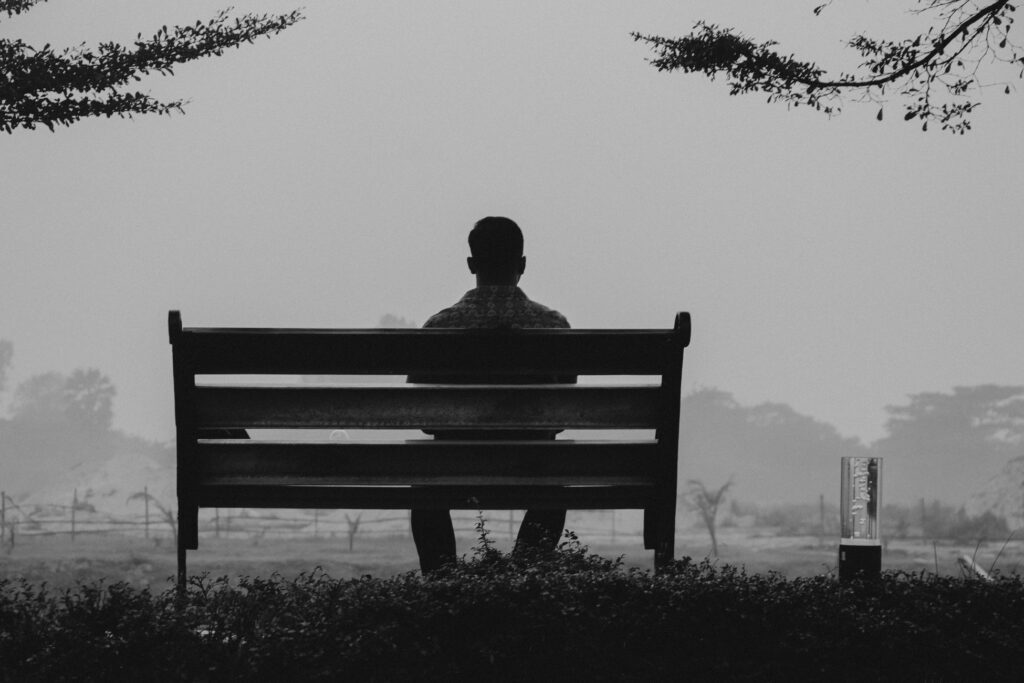
A solitary man sits on a bench in Dhaka, Bangladesh, silhouetted against a foggy, grayscale landscape.

We tend to think grief needs an explanation to heal, but bereavement researchers found the opposite — people who rushed to make meaning of a loss often recovered more slowly than those who let the pain remain unresolved

Columbia bereavement researcher George Bonanno spent decades tracking widows and widowers, and found that mourners who rushed to explain a loss often stayed stuck longer than those who let the pain remain unresolved.

We tend to think grief needs an explanation to heal, but bereavement researchers found the opposite — people who rushed to make meaning of a loss often recovered more slowly than those who let the pain remain unresolved Read More »

The people who help us become who we want to be often aren’t just the ones who love us exactly as we are, but the ones who treat us, day after day, as the person we’re quietly trying to become — until one afternoon we catch ourselves already doing the thing we thought we’d never manage

A set of studies from 1999 gave a name to something most of us have felt but rarely say out loud: that the right person doesn’t only accept us, they draw out the self we were hoping to become. Here is what the research actually found, and where it stops.

The people who help us become who we want to be often aren’t just the ones who love us exactly as we are, but the ones who treat us, day after day, as the person we’re quietly trying to become — until one afternoon we catch ourselves already doing the thing we thought we’d never manage Read More »

The advice to let the anger out goes back more than a century — but when researchers gave angry people a punching bag, the ones told to picture the person who had enraged them walked away angrier than the people who just sat quietly for two minutes, doing nothing at all

Venting was supposed to drain the anger out of us. In a 600-person direct test of that idea, it did the opposite — and the group that did nothing at all fared best.

The advice to let the anger out goes back more than a century — but when researchers gave angry people a punching bag, the ones told to picture the person who had enraged them walked away angrier than the people who just sat quietly for two minutes, doing nothing at all Read More »

Scroll to Top