
William James, writing in his Principles of Psychology, described the problem in a single sentence: “the same space of time seems shorter as we grow older.” He blamed it on the thinning of novelty. A child’s year is stuffed with first encounters — the first thunderstorm, the first bee sting, the first time a bicycle stays upright — and each of those first encounters lays down a dense memory trace. An adult’s year, by contrast, can pass in a blur of commutes and Tuesdays that resemble every other Tuesday, and when the brain looks back for something to hold on to, it finds an almost empty shelf.
James’s hunch has aged well. The brain does not record time evenly. It records change. And when nothing changes, it barely records at all.
The summer that lasted a year
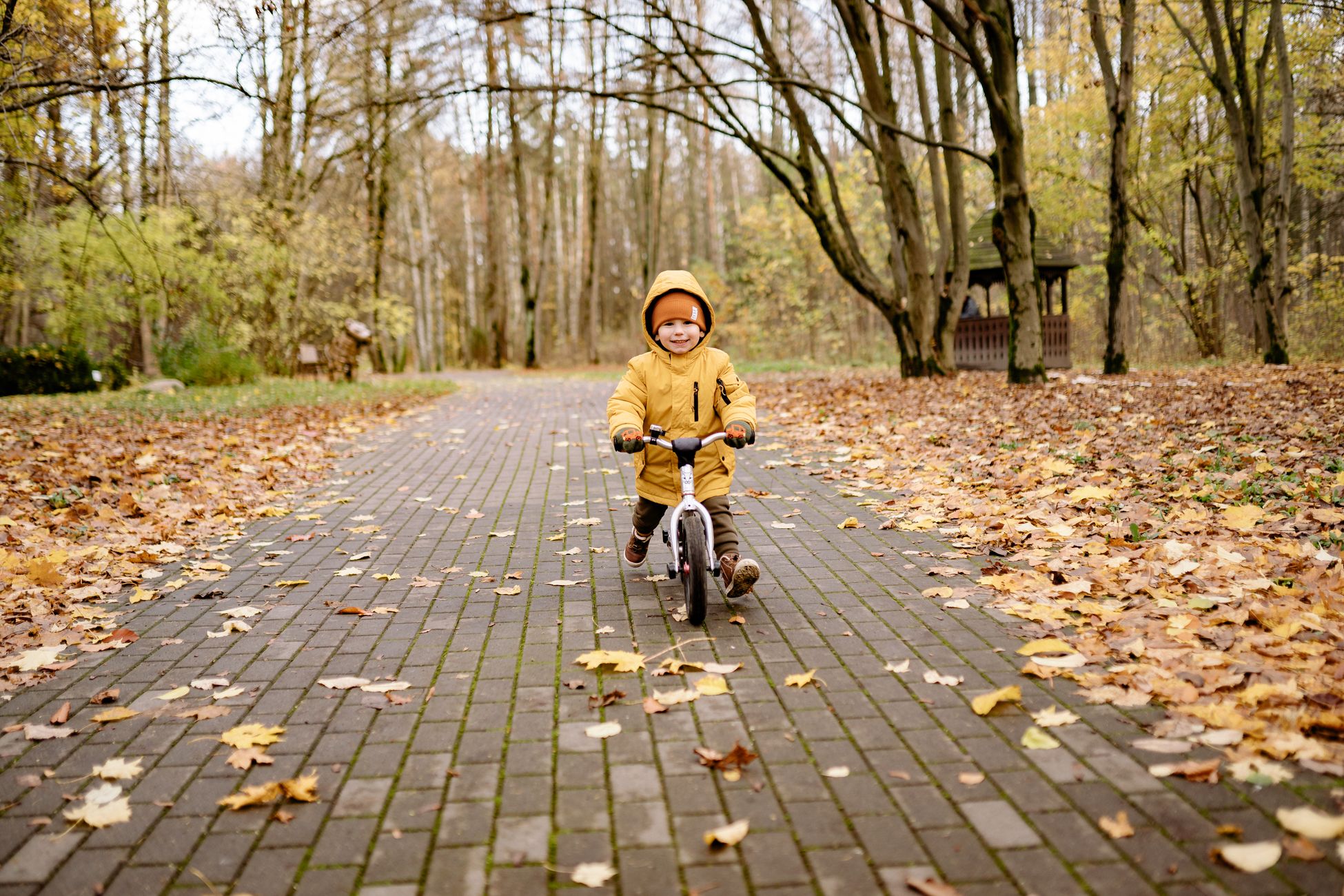
Ask anyone over thirty to describe a single summer from childhood and the answer arrives with a strange amount of texture. The smell of chlorine off a public pool. The particular grit of asphalt under bare feet in July. A cousin’s kitchen where the fridge hummed at a different pitch than the one at home. That summer, in memory, feels enormous — three months that seem to contain more life than the last three years of adulthood combined.
The illusion is not that the summer was longer. It is that the summer was denser. A ten-year-old spending a week at a grandparent’s house is encountering a new bed, new smells, new routines, new sounds through the wall at night, new food on the table, new rules about shoes. The hippocampus, which stitches together the where-and-when of experience, is working overtime. Every one of those novelties becomes a landmark, and the summer, remembered later, has hundreds of landmarks stacked into it.
What the brain actually saves
Memory researchers sometimes describe the process with a camera metaphor, and it is a useful one as long as it is not taken literally. The brain is not filming continuously. It is closer to a motion-activated security camera that only starts recording when something in the frame changes. Hippocampal place cells fire most strongly when an animal encounters a new environment or a rearranged version of an old one. A rat that has run the same maze a hundred times generates far weaker, sparser signals than a rat encountering the maze for the first time.
Novelty at the moment of encoding predicts how vividly a memory can later be retrieved. When something in the environment shifts — a change of room, a new person entering, an unexpected sound — the brain treats that shift as a boundary and lays down a fresh memory episode on the other side of it. Days without boundaries collapse into one.
Why Tuesdays disappear
Consider a typical adult Tuesday. Wake at the same time, drink the same coffee from the same mug, take the same route to the same office, sit in the same chair, eat lunch at the same desk, drive home along the same road, watch something on the same couch, sleep. Nothing in that day triggers the encoding machinery. There are no new smells, no unfamiliar rooms, no strangers, no surprises. A week of those Tuesdays leaves almost no trace. A month of them leaves the sensation that the month, in retrospect, was about four days long.
This is the holiday paradox. A two-week trip abroad feels endless while you are living it — every meal is a small event, every street is unmapped, every conversation requires attention — and yet when you get home, it feels like it flew by. The reverse happens with a routine month at work. It drags in the living and vanishes in the remembering. Time perception in the moment and time perception in retrospect are governed by different systems, and novelty pulls them in opposite directions.
The proportional theory, and why it isn’t enough
The most popular folk explanation for the speeding-up of years is proportional. A year is one-fifth of a five-year-old’s life and one-fiftieth of a fifty-year-old’s, so of course it feels shorter. This idea has been repeated for well over a century. It is not wrong, exactly, but it is not sufficient. The proportional theory predicts a smooth, mathematical acceleration. Actual experience is lumpier than that.
A fifty-year-old who spends a year backpacking through countries she has never seen does not report that year vanishing. She reports it as one of the longest years of her adult life. A twenty-five-year-old stuck in a job he could do in his sleep reports the opposite — a year that evaporated. The variable that best predicts the felt length of a stretch of time is not the age of the person living it. It is how much new information the person encoded during it.
Adulthood as a compression algorithm
There is a reason routine takes over as people age, and it is not laziness. The brain is efficient. Once it has learned that the office coffee tastes a certain way and the drive home takes a certain amount of time, it stops paying full attention to those things. Cognitive load drops. Anyone who has driven a familiar route and arrived home unable to remember the last ten minutes of the drive has felt this directly. The autopilot is a triumph of neural economy. It is also the reason large sections of adult life go unfilmed.
Marriages, jobs, and neighborhoods that were once packed with novelty settle into shapes the brain has already mapped. The mapping is what makes them liveable — no one wants to relearn their kitchen every morning — but it is also what makes them compressible in memory. Ten years of a stable job can shrink, in retrospect, to a handful of scenes: the day of the promotion, the day of the argument, the day the building flooded. The rest is a smooth grey band.
What people who feel their years describe
People who report that their adult years feel long, when interviewed, tend to describe lives with an unusual density of boundary events. A change of city. A new instrument taken up in the late thirties. A serious illness survived. A language learned. A relationship that ended and another that began. None of these are inherently pleasant. What they share is that they force the brain out of autopilot and back into encoding mode. A year with three or four genuine boundaries in it feels, in memory, like a longer year than one with none.
This is part of why some people who narrate their lives in repeating loops can feel simultaneously exhausted and as if nothing has happened to them for a decade. The loops are real, and they are also uncompressible in a way that mimics erasure.
The practical implication
If novelty is the ink the brain writes years in, then the way to make a year feel longer is to give the brain more new material to encode. This does not require dramatic upheaval. Even small deviations from routine — a different route home, a meal in an unfamiliar restaurant, a conversation with a stranger, a weekend in a town two hours away — create fresh boundaries that the hippocampus registers. The felt length of a year is not fixed by the calendar. It is set by how many distinct episodes the brain can later retrieve from it.
People who pay closer attention to what is actually in front of them — the pattern of light on a wall, the specific taste of the tea, the particular way a friend laughs — also seem to bank denser memory traces from ordinary hours. Attention is what tells the encoding machinery that this moment is worth saving.
The last summer of a life
There is a haunting corollary in the memory literature. Older adults who move into new environments — a different city in retirement, an unfamiliar apartment, a new circle of friends after loss — often report that their remaining years feel restored to something closer to childhood length. The clock has not slowed. The recording has resumed.
James, in that same chapter, put it more starkly than most modern researchers dare to. Empty years, he suggested, collapse in memory to almost nothing, so that a life spent on repeat can look, from the far end, like a very short life indeed. The consolation is that the reverse is also true. A year lived with attention, in unfamiliar rooms, among people whose faces the brain has not yet learned by heart, is a year that will stay long after it is over — longer, sometimes, than the decade of Tuesdays that came before it.