Most people believe that successful morning routines create successful lives. Wake at 5 AM, meditate, journal, exercise, eat perfectly, attack the day. We’re told these habits separate high achievers from everyone else—that if we just optimize our mornings enough, fulfillment will follow.
But what if these very routines are actually maintaining the emptiness they’re supposed to solve?
I know because I perfected this performance for years. My mornings in Los Angeles were a masterclass in optimization: up at 5 AM, meditation tracked in an app, green juice worth more than minimum wage, inbox zero before 7 AM. From the outside, I was crushing it. Inside, I was watching myself go through motions that felt increasingly hollow, like a ghost haunting my own morning routine.
Look at any successful person’s morning routine—the CEOs, the thought leaders, the productivity gurus—and you’ll find the same six habits repeated like gospel: track your metrics, meditate daily, exercise before dawn, consume educational content, schedule everything (even joy), and document it all for accountability. I mastered every single one.
The real trap isn’t the habits themselves. It’s what they’re replacing. When your morning routine becomes another performance, another metric to perfect, another way to avoid the simple question of whether you actually want to wake up to your life, you’ve turned self-care into self-abandonment.
Here’s what the productivity gurus won’t admit: these supposedly transformative morning habits aren’t filling emptiness—they’re perpetuating it. They’re elaborate theaters where we perform success for an audience that exists primarily in our own minds. I discovered I’d mastered all six morning habits that highly successful people swear by—and they were maintaining the very emptiness they promised to solve.
The habit I’d perfected most completely was checking metrics before checking in with myself. The phone lights up. Still in bed, sometimes still half-asleep, the ritual begins. Email count. Revenue dashboard. Instagram followers. LinkedIn notifications. Stock portfolio. News headlines. The external world floods in before the internal world has even stirred.
I called it “staying informed.” Really, I was hunting for evidence that I mattered.
The numbers became my morning catechism—a desperate prayer for worth measured in data points. Good numbers meant I could feel adequate for approximately three hours. Bad numbers meant scrambling to fix, post, engage, optimize before the day even began. Either way, I’d surrendered my emotional state to spreadsheets before my feet hit the floor.
What I never did: ask myself how I actually felt. Not my performed feeling based on metrics, but the raw sensation of being alive that morning. Was I rested? Anxious? Excited? Hollow? I had no idea. I’d replaced self-awareness with spreadsheet consciousness.
Checking your phone immediately upon waking correlates with increased anxiety and decreased emotional regulation throughout the day. We’re literally programming our nervous systems for external dependence before consciousness fully arrives.
Beyond the morning metrics comes another celebrated habit—meditation, which I’d weaponized against feeling. Twenty minutes every morning, I’d sit on my designer cushion, using an app that gamified enlightenment. Streaks, badges, achievement unlocks. I meditated religiously, and I use that word deliberately, because it had become a religion of bypassing.
The goal was always transcendence. Rise above anxiety. Float past frustration. Breathe through fear. I treated emotions like obstacles to overcome rather than information to receive. If difficult feelings arose, I’d return to my breath with the grim determination of someone defusing a bomb.
But meditation can become a form of emotional bypassing—using spiritual practice to avoid psychological work. That’s exactly what I was doing. Twenty minutes every morning, feeling absolutely nothing, calling it peace.
These meditation sessions have a particular quality—perfect form, zero connection. We perform presence without being present. We’ve learned to witness thoughts while avoiding feelings. We can describe every technique but can’t sit with discomfort for thirty seconds without deploying an escape strategy.
Then there’s exercise—punishment disguised as self-care. 5:30 AM at the gym, and it’s already a competition. Not with others—with yesterday’s self, with the body we think we should have, with time itself. The workout isn’t about feeling strong or alive. It’s about earning the right to exist in our bodies for another day.
I tracked everything. Heart rate zones. Calories burned. Personal records. The data mattered more than the experience. I once pushed through workouts with an injured shoulder for three weeks because stopping would break my streak. The pain was less important than the performance.
When tied to rigid morning schedules and performance metrics, exercise can become its own addiction. The workout high becomes another fix, another way to avoid feeling what’s actually happening inside.
Watch anyone in this pattern at the gym—the joyless efficiency, the constant device monitoring. They’re not present in their bodies; they’re managing them like difficult employees. They mistake exhaustion for accomplishment, soreness for success.
This physical disconnection parallels the habit every productivity expert pushes—consuming content instead of experiencing consciousness. The learning ritual: podcast while making coffee, audiobook during commute, business news over breakfast, motivational YouTube while dressing. Every moment filled with someone else’s thoughts, someone else’s wisdom, someone else’s success story.
I convinced myself this was growth. I was “maximizing dead time.” What I was really doing was avoiding the terror of silence, of being alone with my own thoughts without a productivity guru’s voice to guide them.
We become archivists of other people’s insights, curators of wisdom we never apply. We can quote every thought leader but generate no original thoughts. We know every successful person’s morning routine except what routine would actually serve us. We’ve consumed so much advice about living that we’ve forgotten to live.
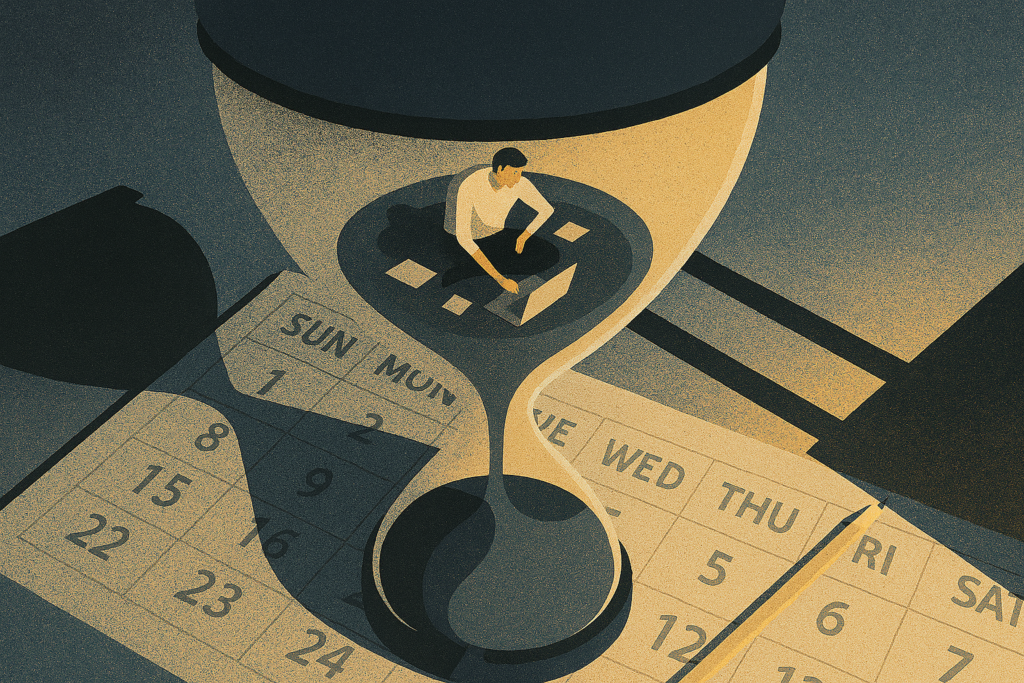
This endless consumption feeds into a habit that seems productive but reveals our deepest disconnection: scheduling spontaneity itself. “Creative time” from 7:00-7:30 AM. “Gratitude practice” for exactly five minutes. “Free thinking” as a recurring calendar event. Every aspect of morning transformed into measured units of productivity.
I once had “enjoy coffee mindfully” as a daily task in my productivity app. The irony of checking off “be present” from a to-do list was completely lost on me. I’d optimized my morning so thoroughly that there was no room for actual life to happen. Even joy had become a metric to achieve rather than an experience to feel.
Joy doesn’t arrive on schedule. Creativity doesn’t perform on command. Gratitude isn’t a bullet point but a spontaneous uprising of the heart. Yet we time our showers for optimal efficiency, calculate breakfast for maximum energy, remove every variable that might teach us something we didn’t plan to learn. We’ve turned spontaneity into another performance metric, scheduling our humanity into fifteen-minute increments.
But here’s what really ties them together—the sixth habit that no one admits to but everyone does: performing our morning for an invisible audience. Every ritual unconsciously curated for its potential LinkedIn post. The journaling that could become content. The workout that could become an inspiring story. The meditation that proves our evolution. Even alone, we’re performing success for an audience that exists primarily in our own minds.
I’d find myself mentally narrating my morning routine: “He rises before dawn, attacking the day with purpose…” as if my life were a documentary about achievement. Simultaneously living my morning and watching myself live it, critiquing the performance in real-time.
We’ve internalized the audience so completely we don’t realize we’re performing. We’ve turned morning routines into personal brands, even when no one’s watching. We choose habits based on what successful people do rather than what we actually need. We’ve become actors in our own lives, and the morning routine is our opening scene.
The breakdown happened on a Tuesday. I’d executed my perfect morning flawlessly—meditation, workout, green juice, inbox zero—and found myself sitting in my car in the parking garage, unable to remember why I was going to the office. Not the commute, not the meeting schedule. But the why. The actual reason I was living this life.
My hands were shaking. Not from caffeine—I’d optimized that too, exactly 200mg at the same time every morning. They were shaking because my body knew what my mind wouldn’t admit: I was suffocating in my own success story. The car felt like a cage, the parking garage like a tomb for ambitions I’d never chosen. I sat there for twenty minutes, suit perfectly pressed, life perfectly empty, watching other cars pull in with their own perfectly optimized drivers heading to their own perfectly meaningless days.
That’s when I realized: my morning routine had become an elaborate ritual of avoidance. Every optimized minute designed to prevent me from feeling the truth—that I was living someone else’s definition of success.
I stopped the routine cold. Not gradually, not strategically—just stopped. The first morning without it, I did something I hadn’t done in years: nothing. Sat with my coffee and stared out the window. No podcast. No journal. No metrics. Just the terrifying silence of my own company.
What emerged wasn’t peaceful. It was all the feelings I’d been meditating past, exercising through, optimizing away. The loneliness despite the full calendar. The exhaustion despite perfect sleep tracking. The hunger despite optimized nutrition. The emptiness despite—or because of—all the success.
This recognition eventually led me to deeper work, including with mentors like Rudá Iandê, whose Out of the Box program challenged everything I thought I knew about self-development. But that transformation started with the simple act of stopping, of refusing to perform my morning any longer.
Here’s what I’ve learned: morning routines aren’t the problem. The problem is using routine to avoid reality rather than engage with it. We’ve confused optimization with transformation, discipline with growth, metrics with meaning.
Real morning routines—the ones that fill rather than drain—have a different quality entirely. They include presence without performance. Sitting with coffee without documenting it. Feeling the morning without measuring it. They allow feelings without fixes—when anxiety arises, asking what it knows instead of how to eliminate it. Movement without metrics—walking without counting steps, stretching without holding poses. Space for silence—letting thoughts arise from within rather than importing them.
And crucially, they embrace irregularity without guilt. Some mornings sleeping in. Some mornings doing nothing. Some mornings completely different from others. Because you’re human, not a productivity machine.
The path from empty success to genuine fulfillment doesn’t require a better morning routine. It requires the courage to stop performing success long enough to feel what’s actually true. To ask not “What would a successful person do this morning?” but “What does this specific human—me—need this specific morning?”
Because here’s the ultimate irony: the most successful morning routine might be the one that doesn’t care about success at all. The one that prioritizes being over doing, feeling over achieving, presence over performance.
Your morning doesn’t need to be optimized. It needs to be honest. And honesty often looks like admitting that all the success in the world won’t fill the emptiness of living someone else’s life—even if that someone else is the person you thought you were supposed to be.
These are the six morning habits highly successful people have taught us to master—not because the habits are inherently wrong, but because we’ve weaponized them against ourselves. We’ve turned self-care into self-surveillance, growth into grinding, morning into another arena for achievement.
Sometimes the most successful thing you can do is fail at your morning routine completely. Sometimes the emptiness needs to be felt rather than filled. Sometimes the most productive morning is the one where you produce nothing but the honest recognition that something needs to change.
That’s the morning routine no productivity guru will sell you: the radical act of being human before being productive. The courage to feel what’s actually true, even when—especially when—the truth is that your perfectly optimized life is perfectly empty.
Because recognizing that emptiness, not optimizing it away, is where real life begins.
Did you like my article? Like me on Facebook to see more articles like this in your feed.