


For most of my adult life, I carried a quiet shame about something that seemed, on the surface, perfectly harmless. I liked being alone. Not all the time — I loved good conversation, valued my close friendships, thrived in collaborative work environments. But there was this recurring pull toward solitude that I couldn’t quite explain, and for years, I interpreted it as evidence that something in me was broken.
I grew up in a culture — Australian, gregarious, where “having a big group of mates” was practically a personality requirement — that treated wanting time alone as suspicious. If you weren’t at the barbecue, something must be wrong. If you declined an invitation to recharge, you were being antisocial. The message was clear: healthy people want to be around other people. Period.
It took me until my fifties to understand that this belief was not only inaccurate — it was costing me something essential.
The cultural story we inherited about being alone
There’s a deeply embedded narrative in Western cultures that equates aloneness with loneliness. They sound similar, they can look similar from the outside, and we’ve spent decades conflating them. But they are fundamentally different experiences, and confusing them creates real psychological harm.
Loneliness is the distress of feeling disconnected when you want connection. Solitude is the nourishment of being with yourself when you choose it. One is a wound. The other is a practice.
The problem is that our social conditioning rarely makes this distinction. Especially for women of my generation, being “good” meant being available — to partners, children, colleagues, friends, aging parents. The idea that you might need to step away from all of that to tend to your own inner life? That felt selfish. It felt like withdrawal.
If you’ve ever been the person everyone likes but nobody truly knows, you might recognise this pattern. You learn to perform connection while quietly starving for the one relationship you keep neglecting: the one with yourself.
What the neuroscience actually says
Here’s what shifted things for me. When I started reading the research — not self-help books, but actual neuroscience — I discovered that my brain had been trying to tell me something important all along.
Research co-authored by Matthew Lieberman on the brain’s default mode network reveals something fascinating. When we’re not focused on external tasks — when we’re daydreaming, reflecting, sitting quietly — a specific network of brain regions lights up. This default mode network (DMN) is deeply involved in self-referential thinking, meaning-making, and imagining the future. It’s not idle time. It’s the brain doing some of its most important work.
The DMN is where we consolidate our sense of identity, process emotional experiences, and engage in what psychologists call “autobiographical reasoning” — the act of weaving the events of our lives into a coherent story. Without regular access to this inner processing, we start to feel fragmented. We lose the thread of who we are.
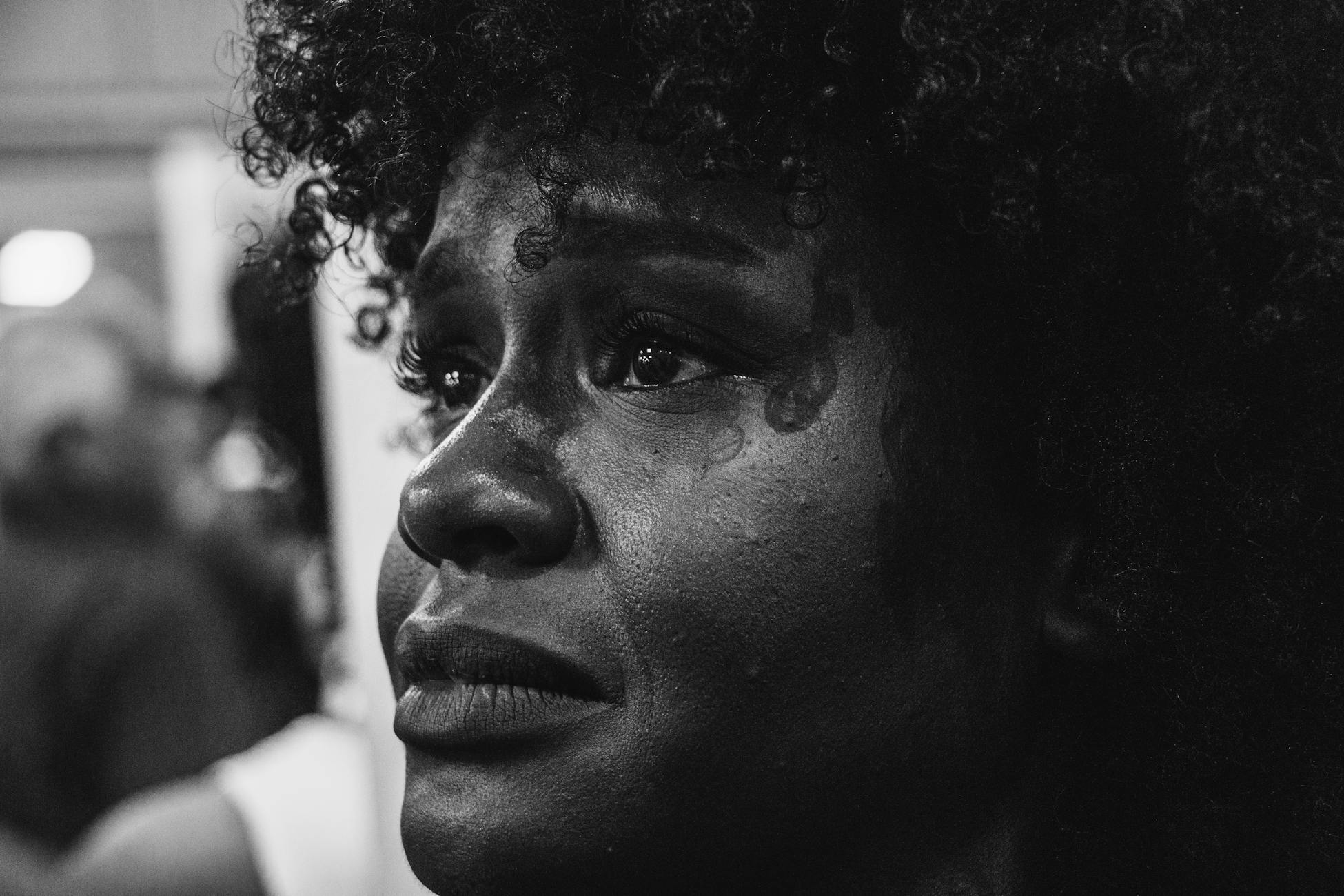
And here’s the catch: the DMN activates most powerfully in solitude. When we’re constantly surrounded by social stimulation, the brain stays locked in its task-positive network — responsive, alert, outward-facing. That’s useful, but it’s only half the picture. Research by Mary Helen Immordino-Yang and colleagues at USC found that the kind of deep internal reflection the DMN enables is essential for developing compassion, moral reasoning, and a stable sense of self.
In other words, solitude isn’t a luxury. It’s a neurological necessity.
The reckoning
This understanding finally landed — not as an intellectual concept, but as a felt truth when I decided to retire after a long and fulfilling career in education and management, and for the first time in my adult life, I had unstructured time. A lot of it.
The initial response was panic. We wrote about this in more detail when exploring why retirement feels unsettling even when life is technically good — that strange vertigo that comes when the external structures you’ve used to define yourself suddenly fall away.
But underneath the panic, something else was emerging. A quiet voice I hadn’t heard in years. My own.
Without the constant noise of meetings, deadlines, and social obligations, I started to remember things about myself that I’d forgotten. That I thought deeply about things. That I needed silence the way other people needed conversation. That some of my best ideas — about my work, my relationships, my purpose — came not from brainstorming sessions but from long walks taken alone.
This wasn’t depression. It wasn’t avoidance. It was reconnection.
Solitude as self-respect
The philosopher Paul Tillich once wrote, “Language has created the word ‘loneliness’ to express the pain of being alone. And it has created the word ‘solitude’ to express the glory of being alone.” I wish I’d encountered that distinction earlier.
When I began to treat my need for solitude as legitimate — as worthy of protection — something remarkable happened. I became a better friend. A more present partner. A more grounded coach. The time I spent with others became richer because I wasn’t arriving depleted.
This tracks with what research by Thuy-vy Nguyen and colleagues at the University of Rochester has shown: chosen solitude is associated with increased feelings of relaxation, reduced anger, and greater creativity. The key word is chosen. When solitude is a conscious practice rather than an imposed circumstance, it functions as a powerful form of emotional regulation.
And emotional regulation, as any neuroscientist will tell you, is one of the most important capacities we can develop as we move through life’s later chapters. The prefrontal cortex — the brain region most responsible for this — actually continues to develop our capacity for emotional wisdom well into our sixties and beyond. Solitude gives it room to do that work.

The practice of being with yourself
I want to be clear: I’m not advocating for isolation. Meaningful connection matters enormously, and the research on loneliness and health is sobering. What I’m describing is something different — the intentional practice of spending time in your own company, with curiosity rather than avoidance.
For me, this practice takes several forms. Sometimes it’s a morning walk without my phone. Sometimes it’s an hour with a journal. Sometimes it’s simply sitting on the back verandah with tea, watching the light change, letting my mind wander where it will.
What these moments have in common is that they’re not productive in any conventional sense. And that’s precisely why they matter. In a culture that measures worth through output, choosing to be unproductive is a radical act of self-respect. It says: I am worth attending to, even when I’m not achieving anything.
Richard Ryan and Edward Deci’s self-determination theory identifies autonomy — the sense of freely choosing your actions — as one of three fundamental human needs. When you choose solitude, you’re exercising autonomy at its deepest level. You’re saying: my inner life deserves as much attention as my outer one.
What this looks like in practice
If solitude hasn’t been part of your routine, starting can feel uncomfortable. You might notice restlessness, guilt, even anxiety. That’s normal. Your nervous system has been trained to equate stillness with danger and busyness with safety.
A few approaches that many people find helpful:
Start small. Ten minutes of quiet sitting, without agenda. Not meditation necessarily — just being. Notice what arises without trying to fix or optimize it.
Protect it like an appointment. Block time in your calendar if you need to. Treat it with the same respect you’d give a meeting with someone you admire.
Name it accurately. When someone asks what you’re doing and you say “nothing,” practice replacing that with something more honest. “I’m spending time with myself.” “I’m recharging.” “I’m thinking.” Language shapes experience, and reclaiming the language of solitude matters.
Let it evolve. Some seasons of life call for more solitude than others. Transitions especially stir up a need for inner processing that can only happen when you step away from external noise. Trust the rhythm rather than fighting it.
The permission I wish I’d given myself sooner
When I look back at all those years of thinking my need for solitude meant I was somehow deficient — I feel a deep tenderness toward the younger woman who didn’t know any better.
But I also feel grateful. Because the understanding, when it finally came, arrived at exactly the right time. Midlife and beyond is when solitude becomes not just beneficial but essential. The questions we face in this season — Who am I without my career? What matters to me now? What kind of life do I want to build with the time I have? — cannot be answered in committee. They require the kind of quiet, sustained self-inquiry that only solitude makes possible.
Arthur Brooks, the Harvard professor who writes extensively about finding meaning in life’s second half, argues that the shift from what he calls the “fluid intelligence” curve to the “crystallised intelligence” curve is one of the most important transitions we navigate. Crystallised intelligence — the wisdom, pattern recognition, and depth of understanding that accumulates over a lifetime — flourishes in reflective conditions. It needs space. It needs silence. It needs you to stop performing long enough to hear what you actually know.
If you’re navigating this kind of transition yourself and looking for a framework to help, I put together a free guide called Thrive In Your Retirement that addresses many of these inner shifts. It’s not about financial planning — it’s about the emotional and psychological architecture of building a life you genuinely want.
What solitude gives back
I’m writing this from my study on a weekday morning. The house is quiet. I’ve been up since six, thinking, reading, making notes. In a few hours I’ll meet a friend for lunch, and I’ll show up genuinely glad to see her — not because I’ve been lonely, but because I’ve been nourished.
That’s the paradox of solitude. It doesn’t pull you away from connection. It deepens your capacity for it. It doesn’t make you selfish. It makes you whole enough to be genuinely generous.
And it’s not something wrong with you. It never was.
It’s the part of you that has always known: before you can truly be with anyone else, you need to learn how to be with yourself. Not as punishment. Not as withdrawal. As the deepest form of self-respect you can practice.
