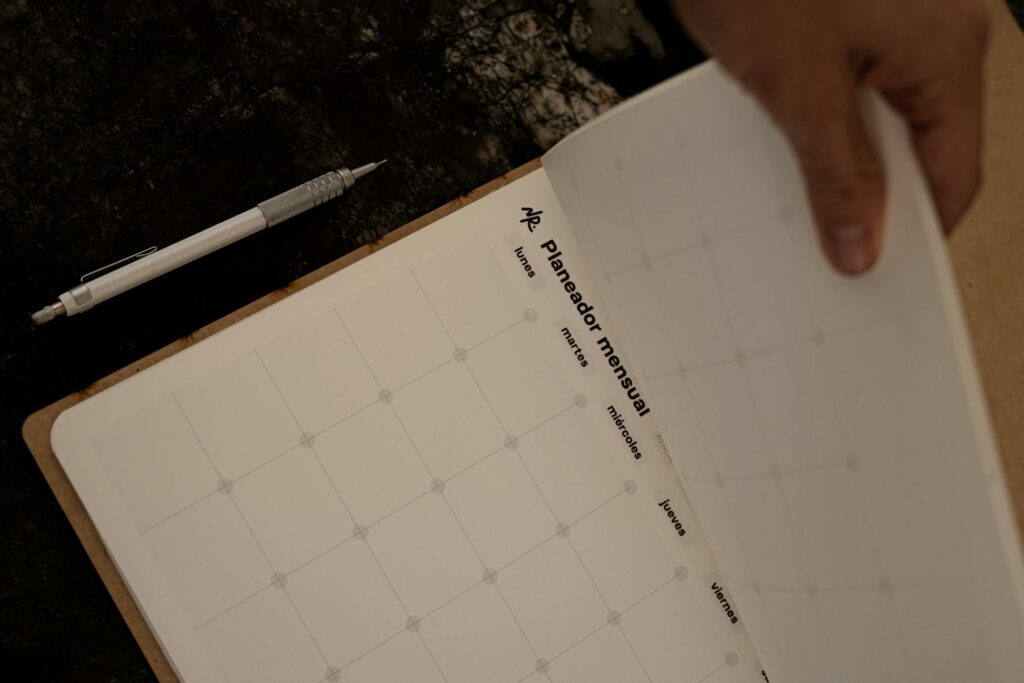
Maya keeps a spreadsheet. Not for work — for her friends. Birthdays, anniversaries, the date someone’s father went into hospice, the name of a colleague’s dog who died last spring, the week another friend’s divorce became official. She updates it on Sunday nights with the quiet diligence of someone balancing a checkbook.
When I asked her once why she did this, she laughed in a way that wasn’t really a laugh and said, Because if I don’t, who will?
She is thirty-six. She has been keeping versions of this list, in notebooks and phones and now a colour-coded spreadsheet, since she was nine.
We tend to look at people like Maya and call them thoughtful. Considerate. Maybe a little intense, in an admirable way. The friend who shows up. The colleague who remembers. The partner whose memory for small details feels almost supernatural.
We thank them, we lean on them, and we rarely ask the gentler question underneath it: what kind of life teaches a person to track other people this closely?
Most of us assume thoughtfulness is a personality trait, something some people are born with the way others are born tall. The people who remember everything are simply more emotionally generous than the rest of us, and we’re lucky to have them.
Sometimes that is true.
But sometimes the story is more complicated. For some people, remembering is not just a gesture of care. It is a habit built around the fear of being overlooked. It is a way of staying connected to people by making sure no detail is missed, no date is forgotten, no quiet shift goes unnoticed.
Memory is not neutral. It is emotional.
The brain does not record life evenly. It tends to hold on to what carries emotional weight. Research on emotional memory has explored how the amygdala and hippocampus work together when emotionally charged experiences are encoded and later remembered.
That does not mean every person who remembers your birthday is acting from fear. It does not mean thoughtfulness is secretly a problem. But it does suggest something important: memory is shaped by meaning. We remember what our lives have taught us to treat as important.
For one person, a birthday is just a birthday. For another, it is a test of whether they matter. For one person, a passing comment about a parent’s surgery is background information. For another, it becomes something they mentally underline, because remembering it feels like a way of proving care.
The difference is not always visible from the outside.
A person can look warm, generous, and attentive while also carrying a private pressure to remember everything. The action may be loving. The feeling underneath it may be more uneasy.
Research into memory at the molecular level continues to show how complex and changeable memory is. But the human version of this is something most of us already recognise: the mind keeps returning to the things it has learned not to take for granted.

What being forgotten can teach a child
Children are not philosophers about their own pain. They are pragmatists. When a child repeatedly experiences being overlooked — not necessarily in a dramatic or abusive way, but simply not being held in mind — they adapt.
They notice who gets attention. They notice what earns warmth. They notice whether anyone remembers their small details without being reminded.
Sometimes the lesson comes from a parent who was distracted, depressed, working constantly, grieving, or simply stretched beyond their own capacity. Sometimes it comes from a sibling who absorbed all the oxygen in the room. Sometimes it comes from being the new kid too many times, the quiet one, the easy one, the child who learned not to make a fuss.
The pattern does not have to be extreme to leave an imprint. A child may simply learn that being remembered by others is not something to count on. So they become very good at remembering others.
They become useful. Attuned. Easy to appreciate. Hard to accuse of not caring.
Psychology Today has discussed how early relational experiences can continue to shape adult memory and behaviour, though that kind of source should be treated as broad context rather than proof of any one person’s inner life.
Still, the everyday pattern is familiar. The child who once felt easy to forget may grow into the adult who makes sure no one else feels that way around them. They send the card. They remember the appointment. They ask about the thing you mentioned once and assumed no one heard.
The care is real. But it may also be carrying an old question: If I stop remembering, will anyone remember me?
The attentiveness that looks like care
From the outside, anxious attentiveness and relaxed thoughtfulness can look almost identical. Both involve close attention. Both involve picking up on small cues. Both can produce a person who seems unusually considerate.
The difference is internal, and it often shows up most clearly when the remembering is not returned.
A person who remembers from a place of ease may feel disappointed if others forget them, but the disappointment passes. They did not remember in order to be remembered. They remembered because they wanted to.
But someone whose remembering is tied to an old fear of being overlooked may experience the same moment very differently. A forgotten birthday, an unanswered message, or a missed detail can land as confirmation of something they already suspected: I am the one who keeps track. If I stopped doing this, I might disappear from these people’s lives.
That reaction can feel larger than the situation deserves, because the situation is not carrying only its own weight. It is touching an older story.
Attachment theory offers one way to understand how early relationship patterns can echo into adult life. And WebMD’s overview of disorganized attachment describes how some adults can become guarded, anxious, or highly alert to signs of rejection in close relationships.
Those sources do not prove that every highly attentive person has an attachment issue. That would be too neat, and too unfair. But they do support a broader observation: early experiences can shape what later feels safe, risky, ordinary, or urgent in relationships.

The cost no one sees
The cost of this kind of remembering is not visible from the outside. From the outside, it looks like a gift. From the inside, it can feel like a job you never formally agreed to take.
There is the mental load of holding everyone else’s calendar in your head. There is the quiet resentment that builds when no one seems to be doing the same for you. Then there is the guilt that follows the resentment, because a part of you knows they did not ask you to keep score.
That combination can quietly poison relationships that, on paper, look healthy.
There is also a deeper cost. People who organise their identity around being the one who remembers often have a complicated relationship with being remembered themselves.
They are so practiced at giving attention that receiving it can feel awkward, even exposing. When someone remembers their birthday, they deflect. When someone notices they have been quiet lately, they redirect the conversation. When someone offers care without being prompted, they may not know what to do with it.
The role of the rememberer can feel safer than the role of the remembered. The rememberer is active. Useful. Needed. The remembered has to receive. The remembered has to trust that they exist in someone else’s mind without constantly placing themselves there.
That is a much more vulnerable position.
What changes when the pressure softens
The goal is not to become careless. It is not to stop remembering birthdays, anniversaries, grief dates, job interviews, or the small details that make people feel loved.
The goal is to notice when remembering has stopped feeling like affection and started feeling like insurance.
Studies on meditation and deep brain activity have found changes in the amygdala and hippocampus during meditation, brain areas involved in emotion and memory. That does not mean meditation is a cure for relational over-functioning, and this is not clinical advice. But it does point toward a simple truth many contemplative traditions have long understood: attention can become less frantic when we learn to sit with discomfort instead of immediately obeying it.
I’ve written before about how performance can hollow out the very behaviours it produces, and this is another version of the same trap. When thoughtfulness is performed from unease rather than offered freely, it stops nourishing the person doing it.
They may run on it for years, sometimes decades, before noticing they are exhausted in a way that no amount of being thanked seems to touch.
The softening, when it comes, is rarely glamorous.
It may look like missing a birthday without turning it into a moral failure. It may look like saying I forgot without a long apology. It may look like asking someone else to remember something for you instead of quietly managing every detail yourself.
It may look like sitting through the discomfort of not being indispensable and discovering, slowly, that the people who actually love you did not need you to perform constant usefulness in order to stay.
A different way to read the rememberers
None of this is to say the people in your life who remember everything are broken, or that their care is not real.
It is real.
It is one of the most generous expressions of attention a human being can offer. But generosity becomes more honest when we understand that it can come from different places.
Some thoughtfulness comes from surplus: a person has enough room inside themselves that they can easily track your sister’s job interview, your dog’s surgery, your mother’s birthday, and the book you mentioned wanting to read.
Some thoughtfulness comes from structure: it was built into a person who learned early that knowing other people’s needs was one way to stay close to them.
Both deserve gratitude. Only one may also need tenderness.
If you know someone whose memory for the small details of your life is uncanny, the most thoughtful thing you can do back is not necessarily to match them detail for detail. It is to remember them out loud.
Say their name in a story. Ask how they actually are, and stay in the room long enough that the question does not feel efficient. Notice the dates they assume no one will notice. Let them be more than the person who keeps everyone else’s life in order.
Because sometimes the person who remembers everything is not asking for applause.
They are asking, in the only language they learned early enough to trust, whether they would still matter if they stopped keeping score.
Did you like my article? Like me on Facebook to see more articles like this in your feed.