There is a word that has been laundered so thoroughly it barely leaves a stain anymore. Initiation. It sits now on retreat brochures between the sound bath and the cacao ceremony. It arrives in your inbox as a three-day intensive with early-bird pricing. It comes with a certificate, a group photo, perhaps even a new name.
None of this means a retreat cannot matter. A weekend can alter a relationship, clarify a decision, or become one of those rare interruptions after which life genuinely feels different.
But initiation, in its older anthropological sense, asked for something more than intensity. It marked a change in status that other people recognized when you returned.
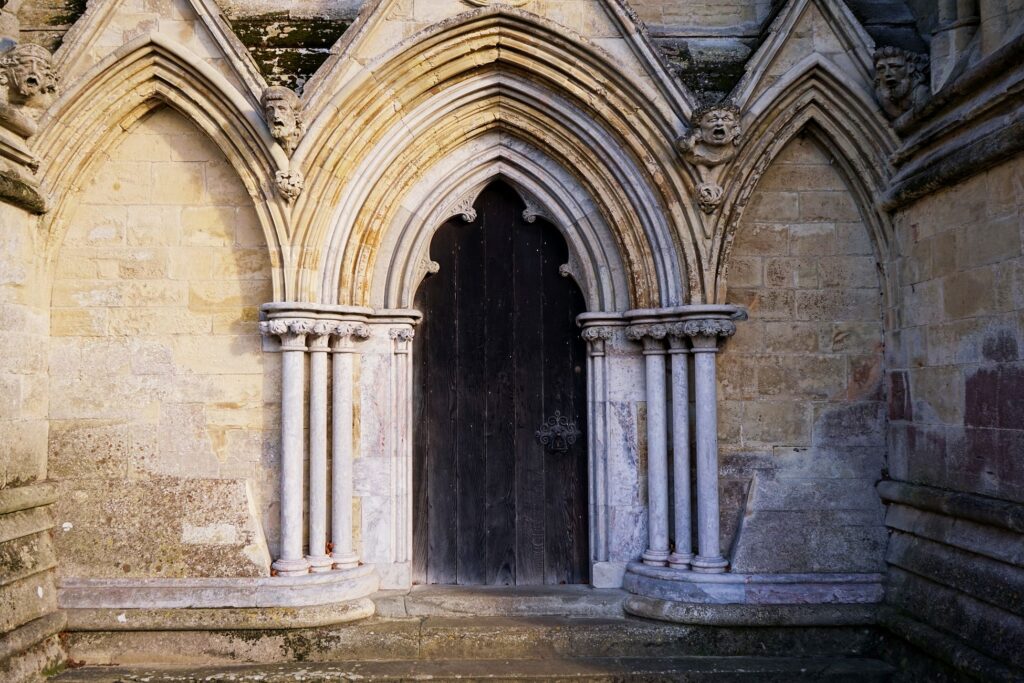
What the door was for
Across many societies, rites of passage have marked movements that were not merely private: birth, puberty, marriage, parenthood, death, changes of rank and belonging. The point was not simply that something happened inside you. Something changed in your place among other people.
Arnold van Gennep gave anthropology its enduring map of this process. In his classic study of rites of passage, he described a recurring structure of separation, liminality and incorporation. Victor Turner later developed the middle territory, liminality, as the strange interval in which an old status has been left behind and a new one has not yet fully arrived.
That distinction matters because the familiar shorthand of separation, ordeal and return is too neat. Ordeal can be part of initiation, sometimes dramatically so, but it is not the universal second stage. The deeper pattern is departure from one recognized position, a threshold period, and incorporation into another.
And incorporation is easy to miss when initiation is imagined as a private experience. The person does not simply decide that they have changed. Other people begin treating them as someone whose place, responsibilities or permissions have changed as well.
Something ends, and the community makes that ending real
Some initiatory traditions have demanded remarkable physical endurance. Others have relied on instruction, seclusion, ceremony, journey, fasting, performance or the gradual transmission of knowledge. Turning all of them into one heroic story about pain would flatten traditions that are profoundly different from one another.
Among the Sateré-Mawé of the Brazilian Amazon, for example, a documented male initiation rite involves gloves containing bullet ants. A paper in Wilderness & Environmental Medicine describes young males enduring the stings and notes one account in which the gloves are worn for at least ten minutes and the ritual is repeated twenty times. It is a startling practice, but the documented account is powerful enough without embellishment.
Maasai initiation offers a different warning against simplifying living traditions into spectacle. Ethnographic research published in Oryx describes boys entering organized age-sets as young men, or ilmurran, and later moving together through stages of elderhood. Lion hunting has historically belonged to the world of ilmurran, but the researchers stress that its meanings are social, political and practical as well as ceremonial. It is not accurately reduced to the image of every initiate walking alone into danger. The age-set is as important as the individual act.
Nor are journeys across Country simply solitary ordeals. In a National Museum of Australia discussion of desert initiation, songlines are described as knowledge learned through initiation, while a young man’s ritual journey can involve visits to communities that later gather for ceremonies involving hundreds of people. The movement across land is therefore also a movement through relationship, law and inherited knowledge. The journey is embedded in a social world.
What these examples share is not one universal dosage of suffering. It is that crossing a threshold has consequences beyond the private feeling of having crossed it.
Why the return mattered as much as the ordeal
This is the part modern versions of initiation can easily lose. Separation is dramatic. The threshold is memorable. Return is quieter, but it is where the change becomes social fact.
In van Gennep’s model, incorporation is not an optional debrief after the interesting part is over. It is part of the passage itself. A changed status becomes legible because a community recognizes it through new roles, obligations, permissions, relationships or ritual treatment.
That helps explain why an intense private experience can feel enormous on Sunday and strangely difficult to carry by Wednesday. The experience may have been completely genuine. The difficulty is that the world waiting at home still knows the previous version of you.
Your phone contains the same contacts. Your workplace uses the same title. Your family knows the same habits. Your partner did not necessarily cross the threshold with you. Nothing outside your own interpretation is obliged to acknowledge that a boundary was crossed.
Older initiation systems did not solve every human problem, and they should not be romanticized as if traditional societies possessed one lost technology of adulthood. But many rites did contain something contemporary self-development often lacks: a recognized before and after.
The desks of this house have circled this before
This site has approached the same territory through other images. There has been an exploration of what it means to let an old version of a life burn without mistaking reinvention for a cosmetic refresh. Another piece sits with the Buffalo as an image of steadiness when a storm arrives. And another turns to the Wolf as a figure for the tension between instinct and belonging.
Different animals, different weather, one recurring seam: transformation is not made real merely by naming it.
Modern language is tempted to translate that idea immediately into neuroscience, as though the old rites must secretly have been techniques for rewiring the brain. That claim is unnecessary. Ritual traditions can be taken seriously without pretending that every fast, vigil, drumbeat, exposure to cold or painful ordeal was a calibrated neurological intervention.
The anthropology gives us enough to work with. A rite separated someone from an earlier position, held them for a time in transition, and then returned them under changed conditions. Some rites used physical extremes. Others did not. The social architecture is the more defensible common thread.
A weekend retreat can still matter deeply. What duration alone cannot guarantee is initiation in this older sense. If nothing about status, obligation, recognition or relationship changes afterward, an intense experience may remain exactly that: an intense experience.
What the market did to the word
The problem begins when the prestige of initiation is borrowed while the structure that once gave the word its weight is left behind.
The hunger being sold to is understandable. People can reach thirty, forty, sixty and feel that no meaningful door ever closed behind them. School ended. Jobs changed. Relationships began and ended. Birthdays accumulated. Yet none of those transitions necessarily carried the sense that an old social position had ended and a new one had been publicly recognized.
So people go looking for a door.
Sometimes what they find is restorative, meaningful and genuinely beautiful. There is no need to sneer at that. But honesty asks us to distinguish a retreat from a rite of passage rather than treating the more ancient word as an automatic upgrade in significance.
A door that opens and closes on the same side of the wall may still give you rest. It may give you insight. It may introduce you to people you needed to meet. But those are different promises from the promise that you will return occupying a fundamentally different place in the social world.
And some of life’s clearest thresholds cannot be booked anyway. They arrive as bereavement, parenthood, illness, migration, the end of a marriage, the loss of a vocation, the taking on of care for another person. They are not automatically initiations either. But they can produce the same ancient problem: something has changed, and the people around you have to decide whether they can recognize it.
Building a village that can receive you
There is no five-step return to indigenous initiation, and pretending otherwise would repeat the very mistake at issue. Cultures are not software. Their ceremonies belong to histories, lands, relationships and systems of meaning that cannot simply be copied into another life.
Something more modest is possible.
We can pay attention to the part that modern individualism often leaves unattended: witness. Not a crowd applauding an announcement, but people capable of recognizing that a genuine transition carries consequences.
That may be three people. It may be family. It may be friends who have known you long enough to see when an old role no longer fits. It may be a community willing to let expectations change rather than congratulating you on transformation and then demanding the old version back by morning.
This work photographs poorly. It does not scale particularly well. It asks a harder question than where can I go to be transformed?
It asks: Who around me knows how to recognize a real transition?
And if the answer is no one, another question follows. What would it take to become the kind of person who can recognize such a crossing in somebody else without immediately pulling them back toward the familiar?
What to do with the hunger
So the hunger remains. Perhaps that is why the language of initiation keeps returning even after the institutions that once carried it have thinned or disappeared from many modern lives.
It is tempting to feed that hunger on demand. Another workshop. Another transformation. Another promise that three days will divide life cleanly into before and after.
A different response is to become more precise about what we are asking for.
Rest is worth having without calling it initiation. Insight is worth having without pretending it has permanently changed our status. A powerful weekend does not need borrowed grandeur to justify itself.
And when a genuine threshold does arrive, perhaps the question is not whether the experience was sufficiently extreme. Perhaps it is whether anything on the other side is capable of receiving what has changed.
That was part of the old architecture: separation, threshold, incorporation. Not one spectacular moment, but a passage whose final proof was that you did not simply return to the same place under the same terms.
The price of the threshold was never only pain. Sometimes it was responsibility. Sometimes belonging. Sometimes the loss of an old permission or the acceptance of a new obligation. Sometimes it was simply that other people would no longer let you pretend you were who you had been.
That is a quieter idea than the marketplace usually sells. It may also be the one worth keeping.