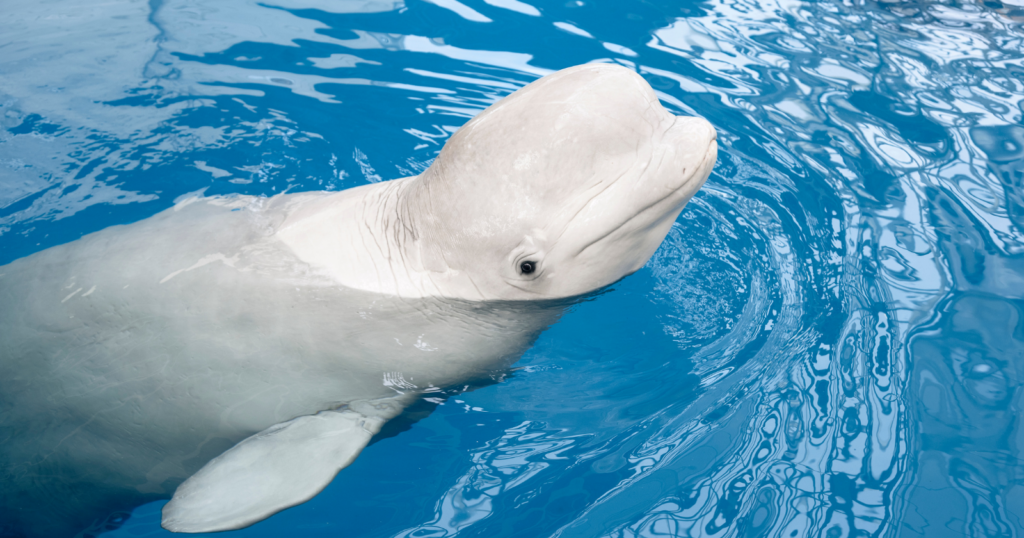
October 7 came and went. Marineland, the shuttered amusement park in Niagara Falls, Ontario, had set that as its deadline—give us emergency funding or we’ll have to euthanize all 30 beluga whales. The federal government said no. The deadline passed. And the whales? Still there. Still swimming in deteriorating concrete pools. Still costing $2 million a month to feed and care for. Still waiting for someone to figure out what happens to Canada’s last captive whales now that keeping them captive is illegal, releasing them would kill them, and nobody’s built the infrastructure for anything in between.
How we got here
Marineland closed to the public in 2024, trying to sell off its valuable property near Niagara Falls. But it still had 30 belugas. In 2019, Canada passed a law banning whale captivity for entertainment. That gave the park five years to plan for this exact scenario.
They didn’t.
This fall, Marineland tried to export the whales to Chimelong Ocean Kingdom, a theme park in China. On October 1, Fisheries Minister Joanne Thompson denied the request. She’d visited the facility in September, she told reporters, and “looked the belugas in the eyes.” It was obvious to her that whales belong in the ocean.
Then Marineland asked for a government bailout. Thompson said no.
The park closed in 2024. The ban on whale captivity became law in 2019. That’s five years to plan for this exact scenario. They didn’t.
But righteous anger doesn’t solve the immediate problem: 30 whales are still in tanks, still need feeding, and can’t stay there indefinitely.
Why these whales can’t just leave
The obvious solution is to release them. Open the tanks, let them swim to the ocean, problem solved.
Except that’s a death sentence. These belugas were born in captivity. They’ve never hunted for food. They wouldn’t know how to catch fish, navigate open water, or protect themselves from predators. Wild beluga pods would likely reject them. They’d starve, alone, in an environment they’ve never learned to survive in.
The Whale Sanctuary Project in Nova Scotia could theoretically house 8 to 10 belugas in a netted-off ocean cove. It would cost $15 million upfront and $1.5 to $2 million annually to operate. But the project has been stalled for years in disputes with local landowners. No timeline for when it might be ready.
Vancouver Aquarium won’t take them—no space, and they’ve stopped keeping whales entirely. Iceland’s beluga sanctuary exists, but it’s struggled. Two belugas there spend more than 90 percent of their time in an indoor pool. An oil spill contaminated the bay in 2022.
There is no facility in North America currently capable of housing 30 belugas. And these whales can’t wait for someone to build one.
What it’s like inside
Kristy Burgess worked as a beluga trainer at Marineland until she was fired earlier this year. In October, she spoke publicly for the first time about conditions at the park.
The pools are falling apart. Paint peels off the walls. Concrete chunks break loose and fall into the water. “Whales have come in with paint chips on their tongues,” Burgess said. The water system breaks down regularly, which delays medical treatment or forces trainers to take risks in deeper water to provide care. Staff shortages compound the problem—18 people officially cover both pools, but with shifts and time off, that often means just five to seven people doing hands-on care for 30 whales.
Since 2019, 20 animals have died at Marineland—19 belugas and one orca. Provincial animal welfare inspectors have visited the facility more than 220 times since 2020.
The stalemate
Minister Thompson visited Marineland last month and “looked the belugas in the eyes.” She felt certain they belonged in the ocean.
But when Marineland asked for emergency funding to keep caring for the whales, her written response was considerably less poetic: “The fact that Marineland has not planned for a viable alternative despite raising these whales in captivity for many years, does not place the onus on the Canadian government to cover your expenses.”
She’s not wrong—the whales still need to eat.
Ontario Premier Doug Ford says the federal government created this mess by denying the export permit. Thompson counters that whale welfare falls under provincial jurisdiction—Ontario could seize the animals under animal welfare laws if conditions warrant.
Meanwhile, the Canadian Veterinary Medical Association has called for a veterinary-led triage plan to assess what’s best for each individual whale. Nobody’s announced one yet.
What happens next
After the October 7 deadline passed, Marineland pulled back from its euthanasia threat. The park issued a statement saying it’s “actively working with the provincial government to find a suitable solution.”
On October 11, Marineland representatives told Niagara Falls’ mayor that the company has restructured and borrowed money to continue buying food for the belugas, dolphins, sea lions, seals, bears, and deer still living at the park. But time for what, exactly? The borrowed money is a tourniquet, not a solution. It’s only a matter of time before it runs out.
The provincial government claims it’s talking to Marineland. Animal welfare groups want Ontario to seize the whales. The Whale Sanctuary Project is working to get its Nova Scotia site approved—no timeline yet. Some suggest splitting the whales among multiple facilities. Others want temporary care arrangements. Others eye international sanctuaries.
None of it has happened yet. The whales shouldn’t be there, but where should they go?
The gap
The 2019 ban on whale captivity passed with broad support. Whales don’t belong in concrete pools. Marine parks built on animal performance are relics of a different era. The moral clarity was easy.
But these 30 specific whales can’t be unwound from their reality. They won’t survive in the wild. There’s nowhere prepared to take them. Sanctuaries that might work someday aren’t ready today. Knowing what’s right and making it happen turn out to be different skills entirely.
The whales remain. They swim in the same deteriorating pools where paint flakes into the water. A skeleton staff at a bankrupt park feeds them. They’re waiting for someone to figure out what “belong in the ocean” actually means when the ocean would kill them.
The deadline passed. The whales didn’t.