
There is a particular silence that turns up in families where a parent was born in the postwar decades. An adult child says something difficult, and the parent nods, refills the coffee, and moves the conversation to the roof. It is rarely coldness, and it is almost never disinterest. It is a rule about feelings being followed exactly as it was taught.
The generation born roughly between 1945 and 1965 — the standard boomer cohort runs 1946 to 1964 — was handed a very specific instruction about feelings, and most of them followed it. The instruction was that feelings were private machinery, that you tended to yours the way you tended to a car engine, quietly, in a garage, ideally without the neighbors noticing, and that asking someone else to help you tend to yours was a kind of imposition, or worse, a kind of weakness. Many of them are only now, in retirement or near it, discovering that this instruction was not universal wisdom. It was a cultural transmission, specific to a time, and there was another way the whole time.
The conventional story is that older generations are simply stoic, that the difference between a boomer and a millennial talking about anxiety is a matter of temperament or moral fiber. That framing misses what actually happened. What happened was a set of postwar norms — inherited from parents who had lived through the Depression and a world war — that treated emotional restraint as a civic duty and emotional expression as something close to a character flaw. The children of those parents were not born stoic. They were trained into it, and the training took.
The house rules nobody wrote down
Ask anyone who grew up in that window to describe the emotional atmosphere of their childhood home and you tend to hear the same handful of phrases. You’ll live. Don’t make a scene. There are people with real problems. What are you crying about now. These were not delivered as cruelty, in most cases. They were delivered as instruction, often by parents who had been given the same instruction and had no other vocabulary to offer. The message beneath the phrases was consistent: your interior life is your responsibility, alone, and the family’s job is to keep functioning around it.
The result was a generation of children who became fluent in a particular skill, which was managing the appearance of being fine. They learned to eat dinner while something was quietly breaking in them. They learned to answer good, and you? without checking whether it was true. They learned that the reward for holding it together was being called a good kid, and that the punishment for not holding it together was a kind of family embarrassment nobody named directly but everyone could feel. Writers on this site have described a neighbouring pattern before, the way reading other people closely can start as a way of staying safe in an unpredictable house and calcify into a permanent way of moving through the world.
These early lessons do not stay contained to childhood. Research on adverse childhood experiences has long linked early adversity to long-term outcomes in adulthood — and the same piece describes something less often discussed, a 2026 study in Child Abuse & Neglect by researchers at Michigan State finding that how people recall their early years is not fixed either. When present-day relationships are going well, the recollections soften; when they are going badly, the harder ones surface. Memory of the childhood home turns out to be partly a function of the room you are currently standing in. The children who learned to manage alone tended to keep managing alone, because the machinery for anything else was never installed — and the story they tell about why is not a stable object.
What the alternative would have looked like
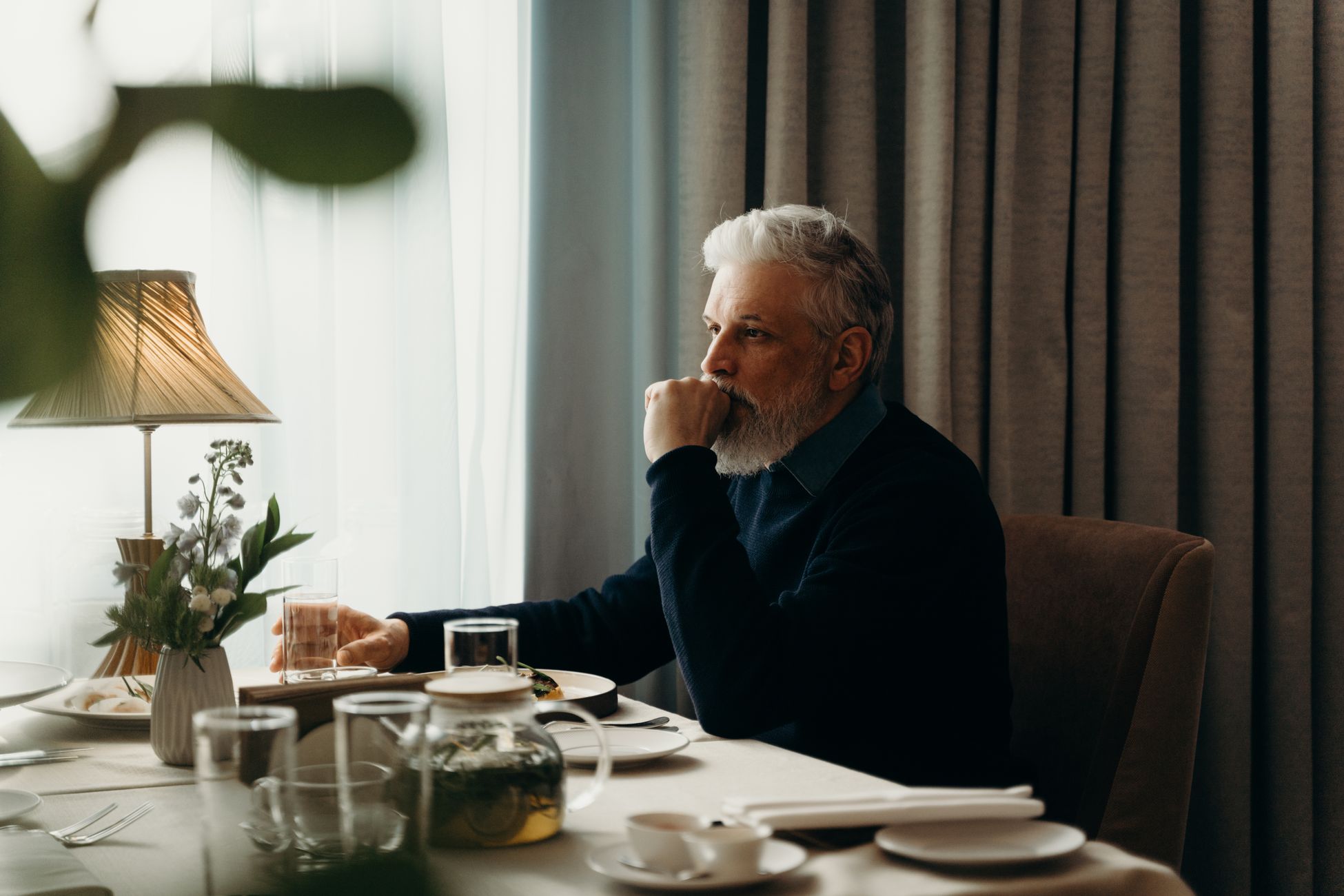
The other way — the one many people in this cohort are only now encountering — is not particularly exotic. It is what child development researchers now describe, plainly, as emotional co-regulation. A child feels something large. An adult notices, names it, sits with it, does not try to make it disappear on a schedule. The child learns, over thousands of small repetitions, that feelings are not emergencies to be hidden but signals to be read, and that other people can be part of reading them. Pediatricians now describe this kind of early relational scaffolding as foundational rather than optional — safe, stable, nurturing relationships in the first five years laying the groundwork for lifelong emotional and social well-being, long before a child has words for any of it.
Most people born between 1945 and 1965 did not receive this. Not because their parents did not love them, in the vast majority of cases, but because the vocabulary and the permission did not exist in the culture their parents inhabited. You cannot pass on what you were never given. A father who was told at eight that men do not cry does not, at thirty-two, spontaneously invent a different script for his own son. He hands over what he has, which is often a version of what was handed to him, slightly softened if he is trying, slightly harder if he is not.
The generational shift in how mental health is discussed has been documented widely, and the contrast is stark. Where younger generations now name therapy the way earlier ones named the dentist, the cohort in question was raised in an era when psychological help was often coded as a last resort for people who had truly fallen apart. One survey of generational attitudes to mental health makes the point directly: boomers came of age as deinstitutionalisation was reshaping care, and yet stigma around mental health and mental health care persisted through much of their lives, leaving many unable to talk about it or seek help. Support was something you went looking for only when the ordinary machinery of self-management had visibly, publicly failed.
The long tax of managing alone
The cost of decades of solitary emotional management does not always announce itself. It often shows up as things that look like something else. A marriage that has been companionable for forty years but where neither person can quite say what the other is afraid of. A friendship that has survived a dozen moves but never crossed into anything heavier than logistics. A relationship with an adult child in which everyone is warm and no one is known. The difference between being liked and being known can define an entire life, and for a generation trained to manage alone, the second one often never quite arrives.
It can also show up in the body. Chronic tension, sleep that does not restore, a sense that something is always running in the background even when nothing is wrong. Physical practices — movement, exercise, embodied routines — appear to support emotional regulation across the lifespan, partly by building resilience and lowering stress, and partly by giving the nervous system somewhere else to put what it has been holding. For people who spent decades without a language for what they were carrying, the body often becomes the first place the carrying becomes visible.
The late discovery
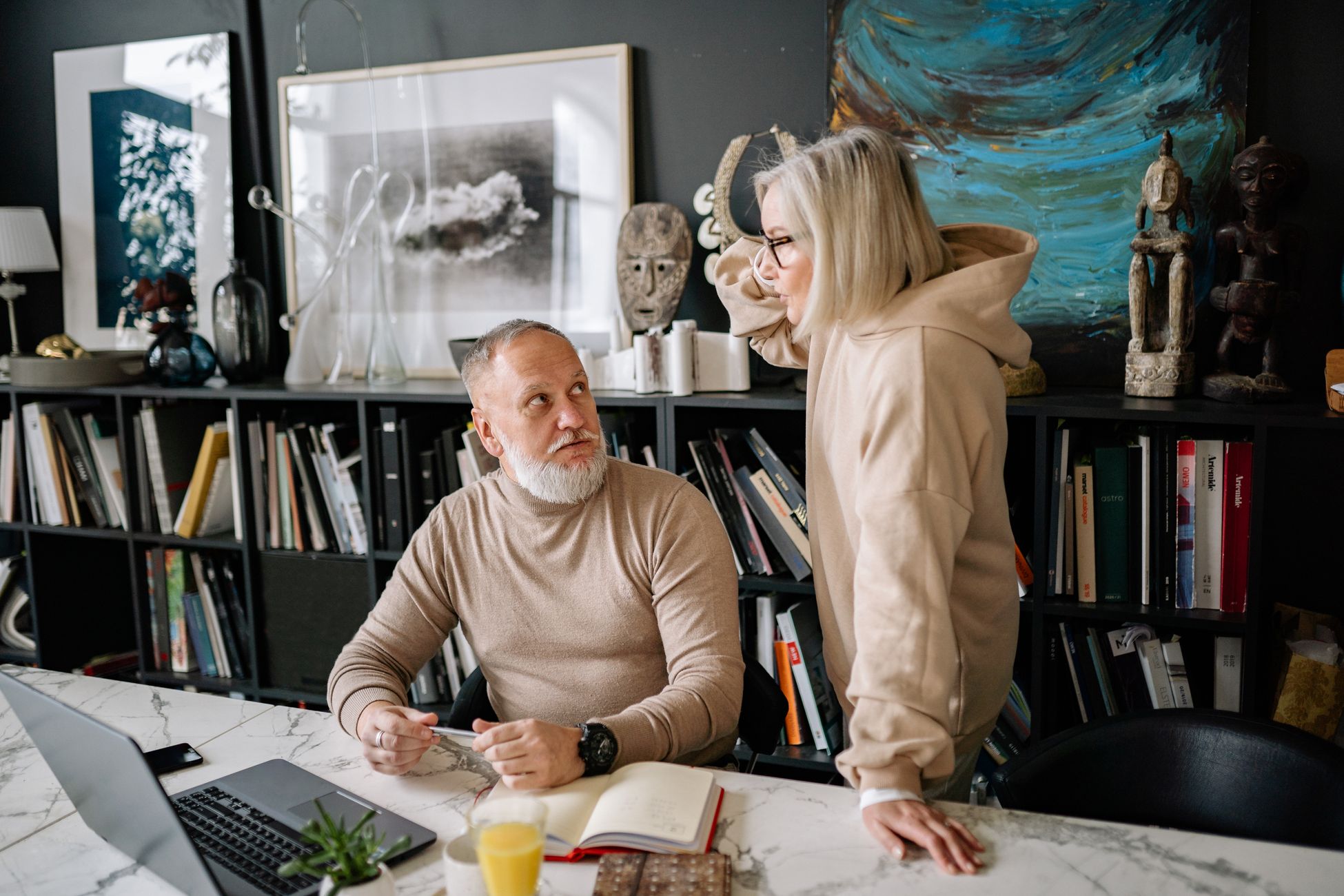
What is happening now, quietly, in a lot of households, is a kind of late-life reckoning, and it tends to arrive sideways rather than by decision. A grief group joined after a spouse dies turns up sadness that predates the marriage by decades. A first therapy appointment, made because an adult child asked, stalls on a question as basic as what do you feel about that — not because there is no answer, but because the honest one requires first working out what a person is supposed to feel. A memoir class stops being a hobby somewhere in the first draft. None of these are breakdowns. They are what happens when a lifelong policy of managing alone meets a situation it was never designed for.
Some of what makes this possible in later life is structural. The children are grown. The career is done or ending. The performance of being fine, which required an enormous amount of daily energy, no longer has the same audience. There is room, sometimes for the first time, to notice what was underneath the performance. Therapeutic modalities that were once niche have become more accessible, including creative and expressive approaches; reviews of art-based interventions with older adults point to meaningful self-expression and group work as the active ingredients, which is exactly why non-verbal routes can suit people who spent a lifetime without the words.
There is also, sometimes, a kind of witness effect. Watching a grandchild get held through a tantrum by a parent who narrates the feeling out loud — naming the disappointment, saying it is hard, saying they are staying — can be quietly devastating for someone who was told, at the same age, to go to their room until they could come out with a better attitude. The gap between what they got and what is being offered now is not an abstraction. It is happening in the next room, in real time, to someone they love.
What can and cannot be recovered
It would be dishonest to suggest that the alternative, once discovered, is easy to install. Some of the wiring set down early does not fully rewire. A person who spent sixty years experiencing their own feelings as private problems does not, after twelve weeks of therapy, suddenly experience them as shared human material. The reflex to manage alone is often faster than the intention to do otherwise. The phone stays in the pocket. The hard thing goes unsaid. The old script runs before the new one has finished loading.
What does seem to happen, for many people who begin this work late, is something smaller and more durable than transformation. The reflex still runs, but it is now noticed. The impulse to hide the difficult feeling arrives, and there is, for the first time, a second impulse behind it, asking whether hiding is actually required. Sometimes the answer is still yes. Sometimes, increasingly, it is no, and a sentence gets said out loud that would not have been said ten years earlier. The reaching out that seemed impossible becomes, occasionally, possible — and the research on that particular fear suggests the estimate of how badly it will land was slightly wrong all along.
The generation that was told feelings were something to manage alone is not, on the whole, going to become a generation of unguarded emotional expressiveness. That was never on offer. What is on offer, for many of them, is something quieter — the discovery that the instruction they were given was one option among several, that the loneliness inside the instruction was not the price of being a serious adult but the price of a specific cultural inheritance, and that even late, even partial, even awkward, the other way is still there. It was there the whole time. Nobody told them.