

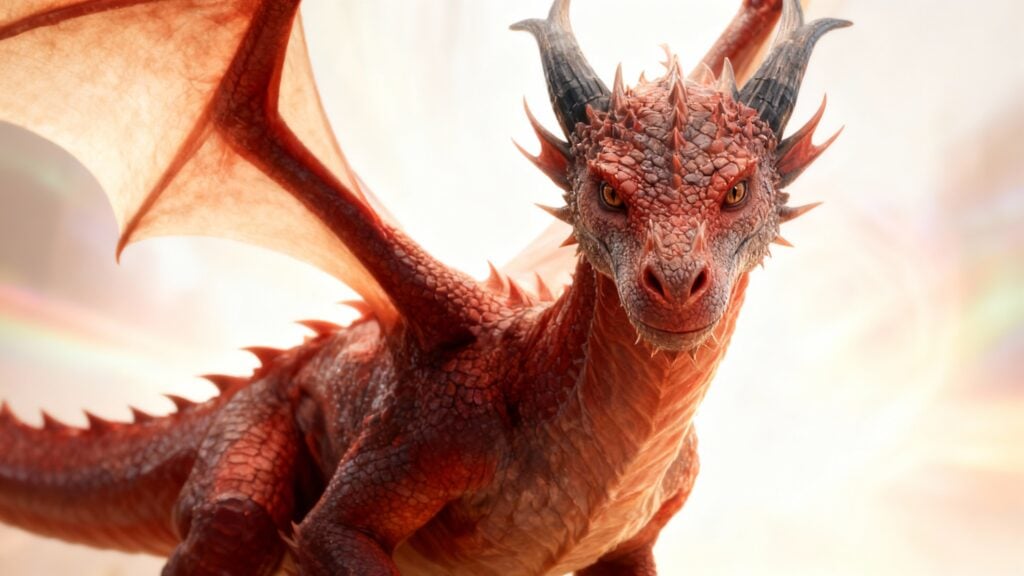
When Your Vision Is Bigger Than Your Life
There are seasons when the problem isn’t that you don’t know what you want.
It’s that you see too much.
You look at your work and instantly sense what could be built if people stopped playing small.
You look at your life and feel the gap between what you’re living and what you know is possible.
You walk into a project, a room, a relationship, and within minutes you see the patterns, the dynamics, the potential and the risk.
You don’t just think in tasks.
You think in horizons.
From the outside, people may call you ambitious, intense, driven, visionary.
From the inside, it can feel like carrying a fire that doesn’t always have a place to land.
You get frustrated when others don’t see what you see.
You get restless when the pace is too slow or the purpose is unclear.
You can feel both powerful and trapped—like a creature with wings trying to live in a hallway.
We don’t have much space in our culture for this archetype. We either glorify it in the form of “high performers” and “leaders,” or we pathologize it as “too much.” But underneath the labels, there is something ancient moving: the Dragon.
The Creature That Guards Treasure and Fire
Across cultures, Dragons are rarely small characters. They live at the edges of maps and at the center of myths.
In European stories, Dragons often guard something precious: gold, a kingdom, a hidden power. They’re dangerous, but they’re also keepers of treasure. Heroes are forced to confront them not just to win a fight, but to prove they are ready to handle what the Dragon protects.
In Asian traditions, Dragons carry a very different tone. Chinese Dragons are symbols of power, wisdom, and good fortune. They’re associated with rain, rivers, and the life-giving forces of nature. They don’t just hoard; they nourish and shape the world around them.
In many myths, Dragons bridge elements that usually stay separate:
earth and sky, water and fire, instinct and intelligence.
That’s why the Dragon has survived in our imagination for so long. It carries the archetype of the Visionary Leader: the one who sees the bigger pattern, feels the raw power of life, and is called—whether they like it or not—to do something with it.
The Dragon in you is that part that can’t help but see beyond the next step, the next quarter, the next performance review. It’s the part that looks at your existence and thinks in terms of whole chapters, not just daily to-do lists.
When Power Turns Into Pressure
Our culture has a strange relationship with Dragon energy.
On one hand, we worship it in a distorted way: we push people to “dream big,” “dominate,” “crush goals,” “be number one.” Power is pursued for ego and status, disconnected from responsibility and heart. On the other hand, anyone who carries a strong presence or clear vision often learns to tone it down so they don’t threaten other people’s comfort.
Healthy Dragon energy is not about domination. It’s about stewardship. It’s the ability to see far ahead, hold complexity, and make decisions that serve more than just your own vanity. It’s wisdom married to fire.
When it’s out of balance, though, Dragon energy turns inward. You become a tyrant to yourself.
You overload your schedule because “you can handle it.”
You push your body and nervous system to carry more and more.
You tie your worth to your output, your impact, your success.
If things go well, you can become inflated—identifying with the power and forgetting your humanity. If things go badly, you can spiral into shame and self-attack, convinced you’ve failed your destiny.
The task is not to shrink the Dragon in you.
It’s to educate it.
To let your vision mature, so it serves life instead of devouring you.
3 Signs You’re Already Aligned With the Dragon in You
We all have Dragon energy inside us—the capacity to see broadly, think long-term, and lead with vision. You may be naturally close to it if:
- You think in systems, not just tasks.
When you look at a situation—work, family, a project—you quickly see how the pieces fit together. You notice patterns, structures, and root causes instead of just symptoms. - People look to you when direction is unclear.
In moments of uncertainty, others often ask, “What do you think we should do?” Even if you didn’t ask for the role, you often end up shaping plans or holding the bigger picture. - You care about the “why,” not just the “how.”
You’re not satisfied with going through the motions. You want to know what something serves, what it builds toward, what the deeper purpose is. When the why is strong, your energy comes alive.
If this feels familiar, your inner Dragon is awake. The invitation is to keep your vision open while staying rooted in your humanity.
3 Signs Your Dragon Is Burning You Out
For others, Dragon energy is active—but turned against them. Instead of guiding life, it becomes a source of pressure, self-criticism, and exhaustion. You may need to rebalance your Dragon if:
- You’re rarely satisfied with where you are.
No matter what you accomplish, your mind jumps to the next goal. Rest feels undeserved. You constantly feel behind your own expectations. - You take on more responsibility than is actually yours.
At work, in family, in groups, you end up holding the vision, the planning, and the emotional weather. You step in because “no one else will do it right,” then resent how much you’re carrying. - Your body is paying the price for your ambition.
You ignore signals—stress, tension, sleep problems, fatigue—because you’re focused on projects, impact, or potential. You treat your body like a vehicle for your vision instead of part of the vision itself.
If you see yourself here, it doesn’t mean your vision is wrong. It means your Dragon has been flying without enough earth under its feet.
Final Notes and My Relationship With the Dragon as a Shaman
On my path as a shaman, Dragon energy has been both a gift and a challenge.
I’ve always had a strong sense of patterns—seeing where certain choices lead, sensing the deeper dynamics inside relationships, communities, and our civilization as a whole. When I work with people, I don’t just see their current problem; I often see the myth behind it, the trajectory of their life, the possibilities waiting if they’re willing to change.
But for a long time, I turned that same Dragon gaze on myself with brutality. I held myself to impossible standards. I expected my work, my relationships, my own spiritual development to match the scale of what I could imagine. When reality didn’t live up to the vision, I would push harder—or judge myself more.
There were times when my body, my heart, and my relationships were clearly asking for slowness, simplicity, presence… and I kept choosing projects, responsibility, impact. In the name of service and purpose, I was burning myself.
It took a series of crashes—emotional, physical, spiritual—for me to notice that my Dragon needed to come down from the sky and walk on the ground for a while. To let my vision be big, but my steps be human-sized. To hold power, but not escape intimacy, imperfection, and rest.
Laughing in the Face of Chaos grew out of that process. It’s a book for people who feel the intensity of this time, who sense that there is more to their life and to our world than the roles we’re handed. It speaks to the part of you that sees through illusions, that wants to build something real in the middle of the mess—without sacrificing your soul in the process.
If the Dragon speaks to you—if you recognize yourself as someone who carries vision, who can’t help but think in futures—this is the invitation from my book:
- To let your power be guided by wisdom,
- to let your vision include your own body and heart,
- and to remember that the real measure of your path is not how impressive it looks from the outside,
but how deeply it allows you to participate in life as you are.
