Editorial note: This article was originally published on My Inner Creative and has been updated and republished in May 2026 under The Vessel’s editorial standards.
One of the persistent ideas in bullet journaling is that the pages have to be beautiful to be useful.
The galleries that travel furthest on social media — flowering hand-lettering, watercolour banners, miniature illustrations in the margins — make a strong case for that idea. They are also a slightly misleading introduction to the practice.
The bullet journal method began as a plain system for keeping lists, and almost everything decorative was layered on by readers who wanted their notebooks to feel more personal. The original case for the practice was content over presentation, and that case still holds.
That history is worth remembering for anyone who has looked at a hand-painted weekly spread and quietly concluded that bullet journaling is not for people without artistic skill. The spreads collected below were originally published on My Inner Creative and lean in the other direction. They are deliberately minimal — clean grids, single-colour ink, neat hand-printed labels, and the occasional small flourish. Almost any of them could be reproduced in a notebook with a single fine-liner pen.
What you actually need to start
The short answer is a notebook and a pen. The slightly longer answer is worth knowing before you buy anything.
Notebook. A dot grid notebook is the most common choice because the dots are visible enough to guide straight lines but faint enough to disappear in photographs and finished spreads. A5 (roughly half a letter page) is the most popular size — large enough to write in comfortably, small enough to carry. Lined notebooks work fine. Blank notebooks work fine. The format matters far less than the paper weight: anything below 80gsm will likely show bleed-through from a fine-liner, which bothers some people more than others.
Pen. A single 0.4mm or 0.5mm fine-liner is enough to produce every spread in the gallery above. Micron, Staedtler Triplus, and Tombow Mono Drawing pens are all commonly used. A pencil for ruling lines before you ink them is useful in the early months, before spacing becomes instinctive.
Ruler. Optional but genuinely helpful for grid-based layouts. A 15cm ruler fits inside most notebooks.
Nothing else is required. Brush pens, watercolours, washi tape, and stamps all appear in bullet journal galleries and none of them are necessary. The spreads that get used most are almost never the most elaborate ones.
Bullet journaling for people who don’t consider themselves artistic
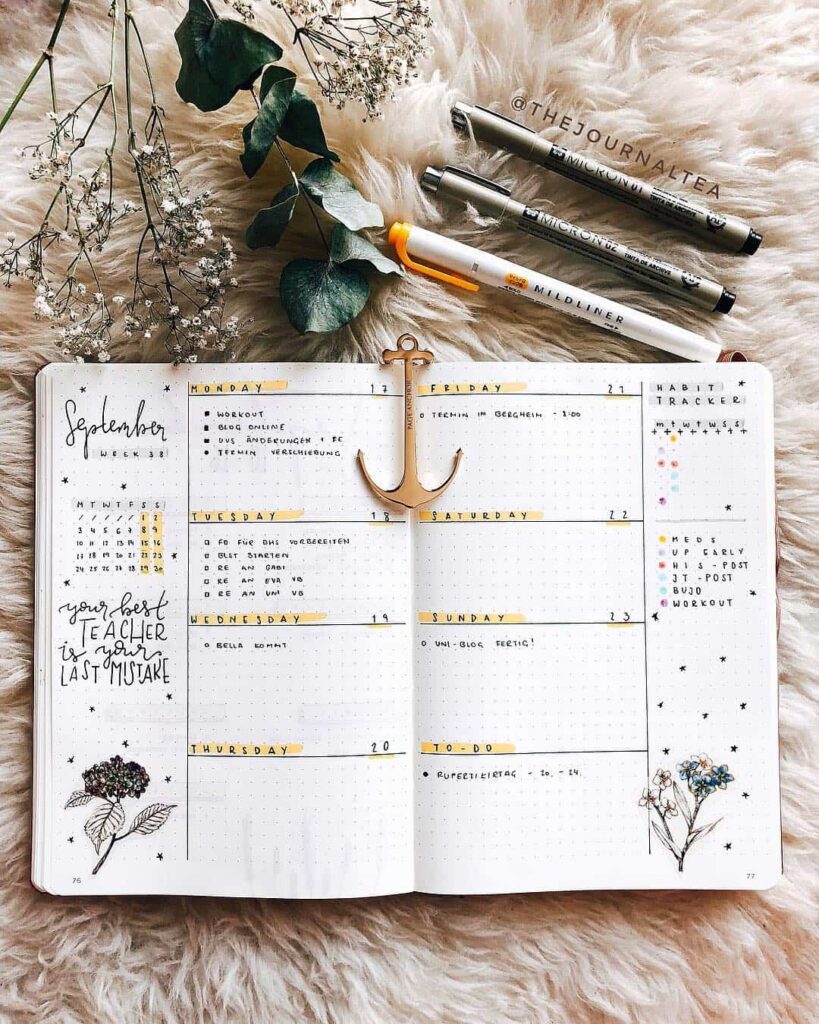
The most common objection people raise about starting a bullet journal is that they cannot draw, letter, or arrange anything aesthetically. The ornate examples shared on Instagram and Pinterest reinforce the worry. In practice, the system has almost nothing to do with art. It works perfectly well with straight ruled lines, plain headings, and abbreviations in pencil.
What artistic spreads add is a small amount of pleasure on the way to using the journal — the kind of pleasure that makes a person more likely to open it again the next day. Minimalist spreads can do the same work in a different way. A clean, well-spaced page rewards the same return visit. The choice between ornate and minimal is less about creativity than about which version of a notebook a particular person will actually keep using.
Starting from a blank notebook
Most introductions to the bullet journal method begin in the same place, with a few pages reserved at the front of the notebook for a contents list. The contents page is what makes the system searchable across months and years. Without it, a journal becomes a stack of unsorted notes; with it, the same notebook is a working index of everything inside.
The next page is typically an annual calendar — sometimes called a “future log” — laying out the months ahead on a single spread or across two pages. It is the place to mark birthdays, holidays, deadlines, and any commitments already on the horizon. The annual view does not need to be detailed. Its purpose is to give the year a shape that can be glanced at quickly while monthly and weekly pages do the closer work.
After that, the structure loosens. There are no rules about what comes next, and that is the point. Some people add a year-long habit tracker at the back of the notebook. Others use a goal page, a reading list, a birthday tracker, or any other page that makes the rest of the year easier to navigate. What sits at the front or the back of the notebook matters far less than the habit of returning to it. The recommendation that consistently helps new journalers is to start with less rather than more. A notebook with five well-used pages is more useful than one with fifty elaborately drawn ones that get abandoned in February.
The same principle applies inside the month. Whatever shape the journal takes — heavily designed, sparsely written, image-led, list-led — the practice is sustained by the willingness to keep coming back, not by the quality of any single page. Most people who keep journaling for years adjust their approach quietly over time, shedding pages they thought they wanted and adding others they did not. The notebook accommodates that drift; an unused planner template rarely does.
Common mistakes worth knowing about before you start
Designing pages you won’t actually use. A mood tracker that requires rating six variables every day, a habit tracker with fourteen rows, a weekly spread with eight colour-coded zones — these feel satisfying to draw and genuinely difficult to maintain. The page that gets used is the one that takes thirty seconds to fill in, not the one that takes three minutes.
Starting over instead of continuing. Missing a week or producing a messy spread is not a reason to start a new notebook. The journal is a working document, not a portfolio. Crossed-out entries, squeezed-in additions, and uneven pages are evidence of use, not failure.
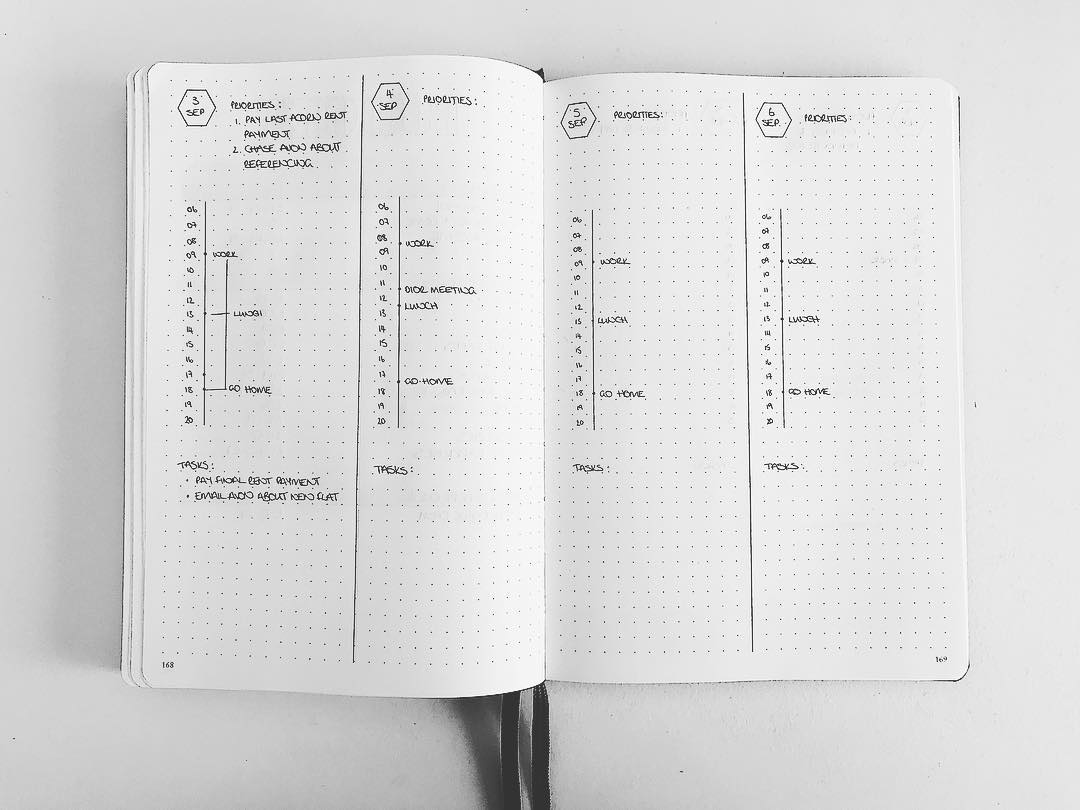
Copying a layout that doesn’t match how you think. A horizontal weekly spread works well if you plan by time of day. A vertical task-list spread works better if you plan by category. A spread that looked appealing on Instagram may feel awkward to use if the underlying structure doesn’t match your actual habits. It usually takes two or three months of experimenting to find the layout that suits you, and that is normal.
Overloading the first pages. Index, future log, year goals, reading list, bucket list, gratitude log — all in January, all elaborately drawn. Most of these pages get abandoned by February. The recommendation that holds up is to add a new collection only when you find yourself needing it, not in anticipation of needing it.
Treating missed days as a reason to stop. The journal works on the days you use it. A week of blank pages followed by a return is not a failed journal. It is a journal with a quiet week in it.

Featured minimalist bullet journal spreads
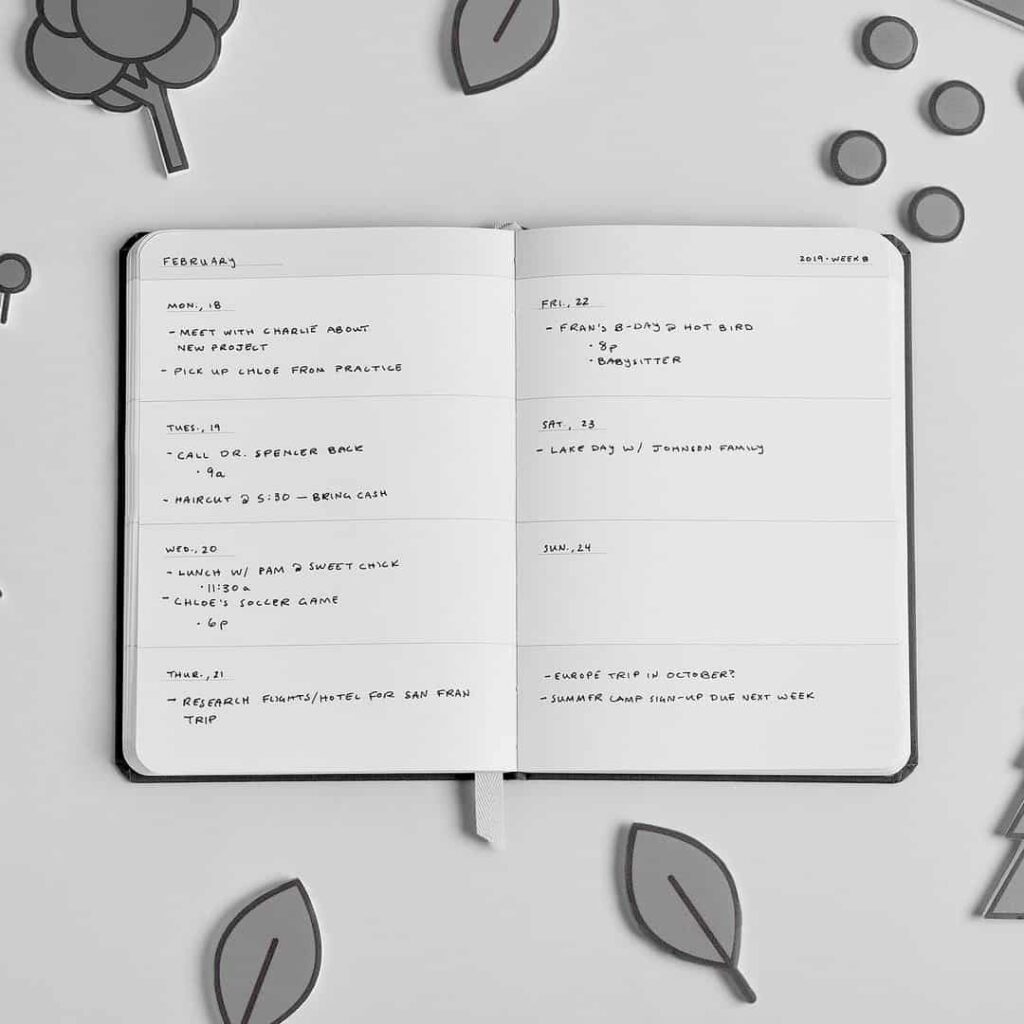
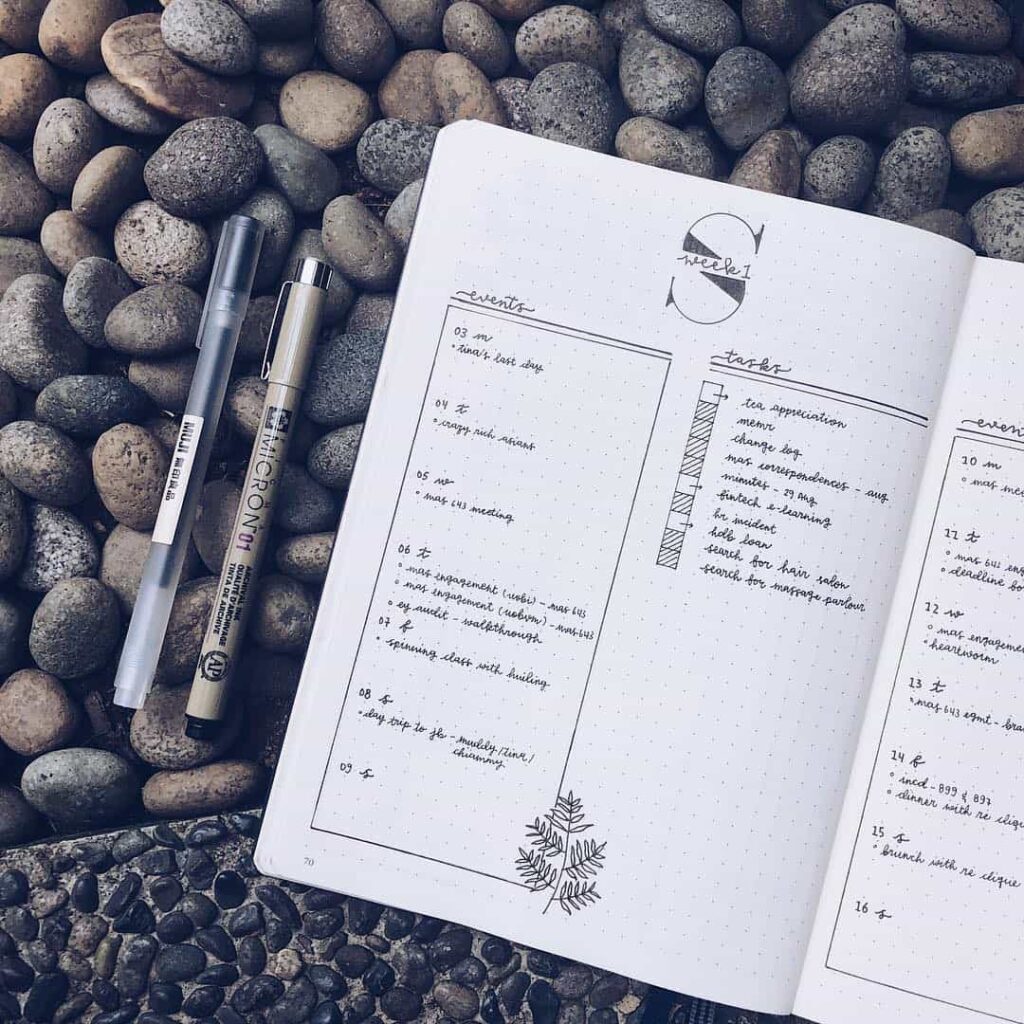
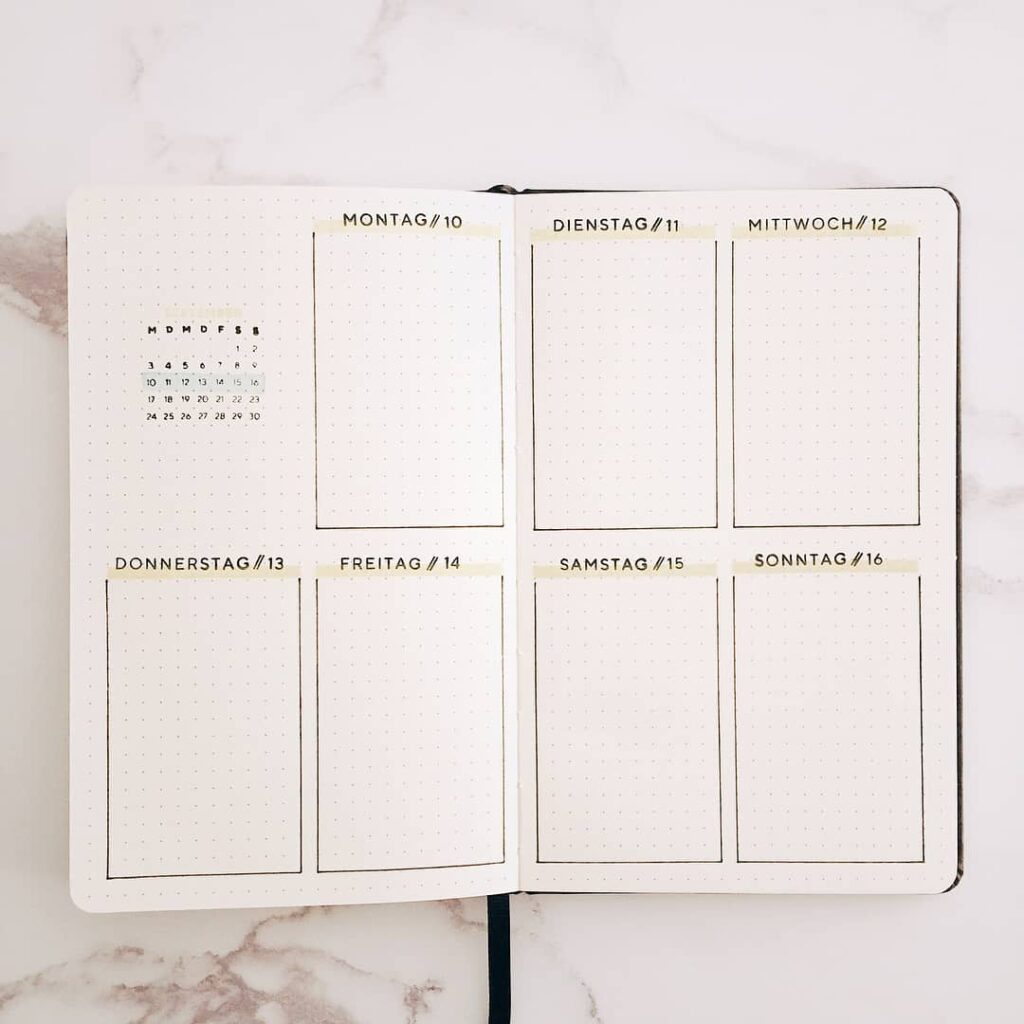
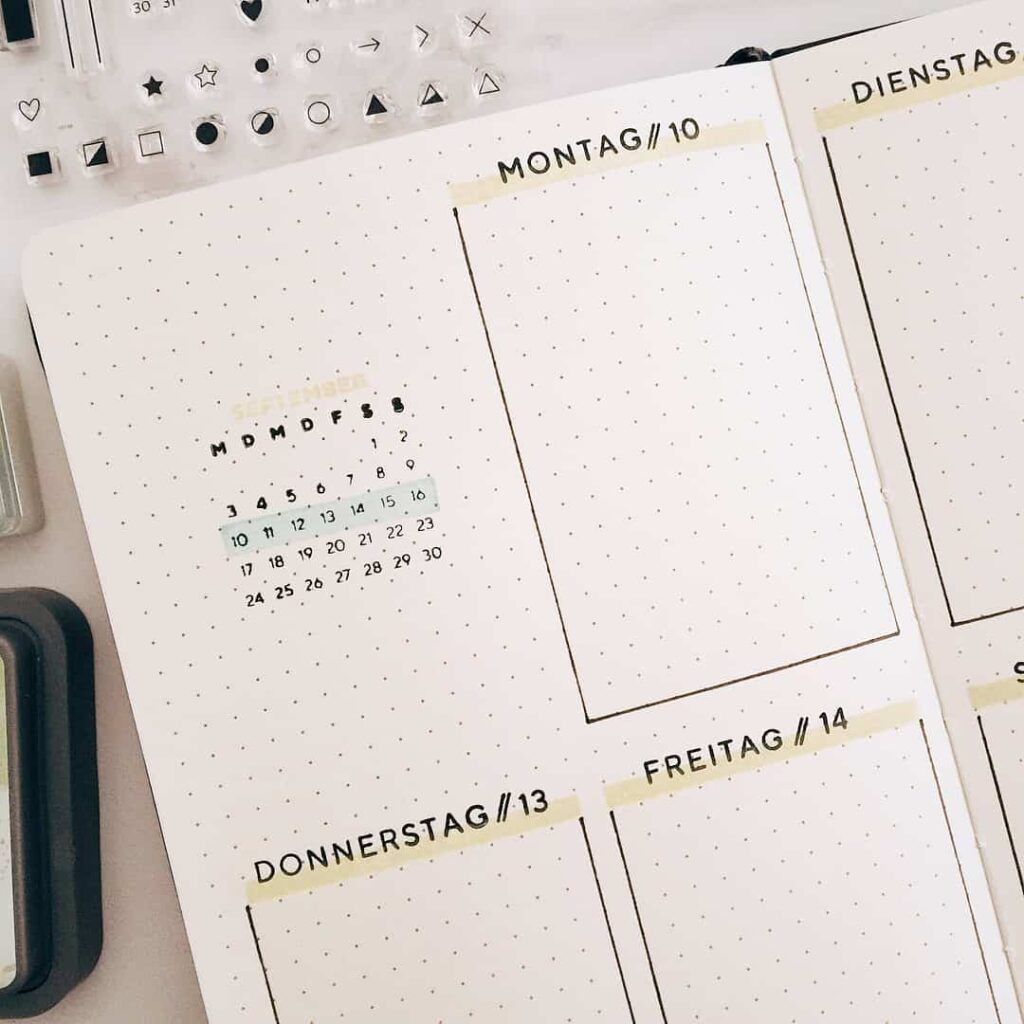
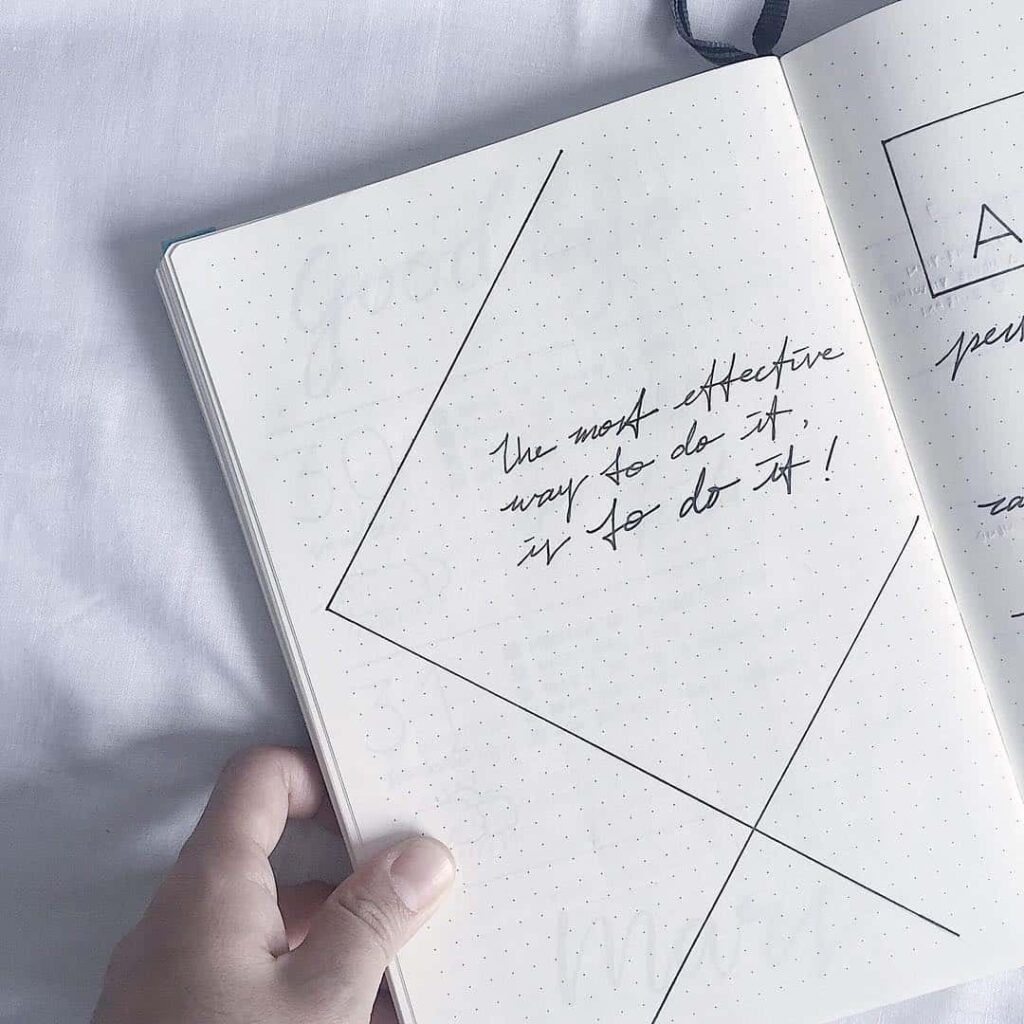
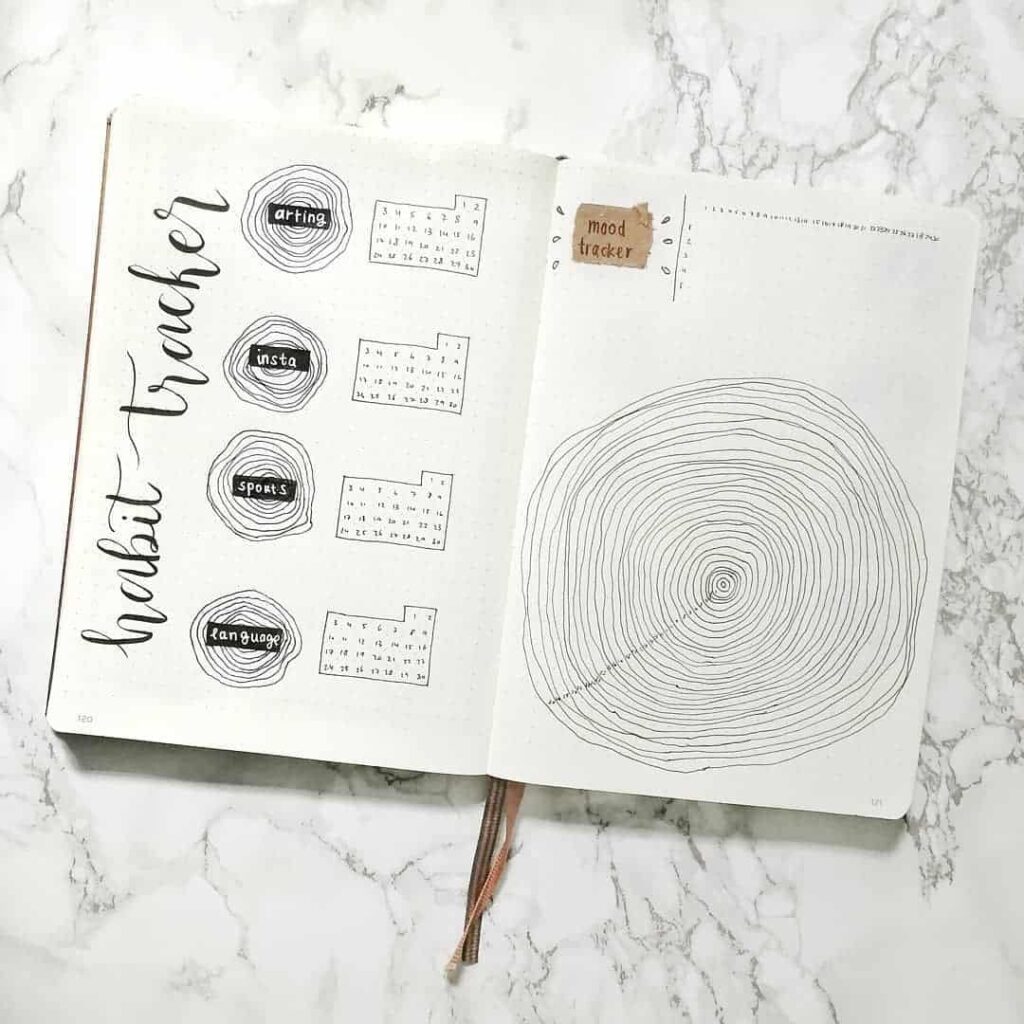
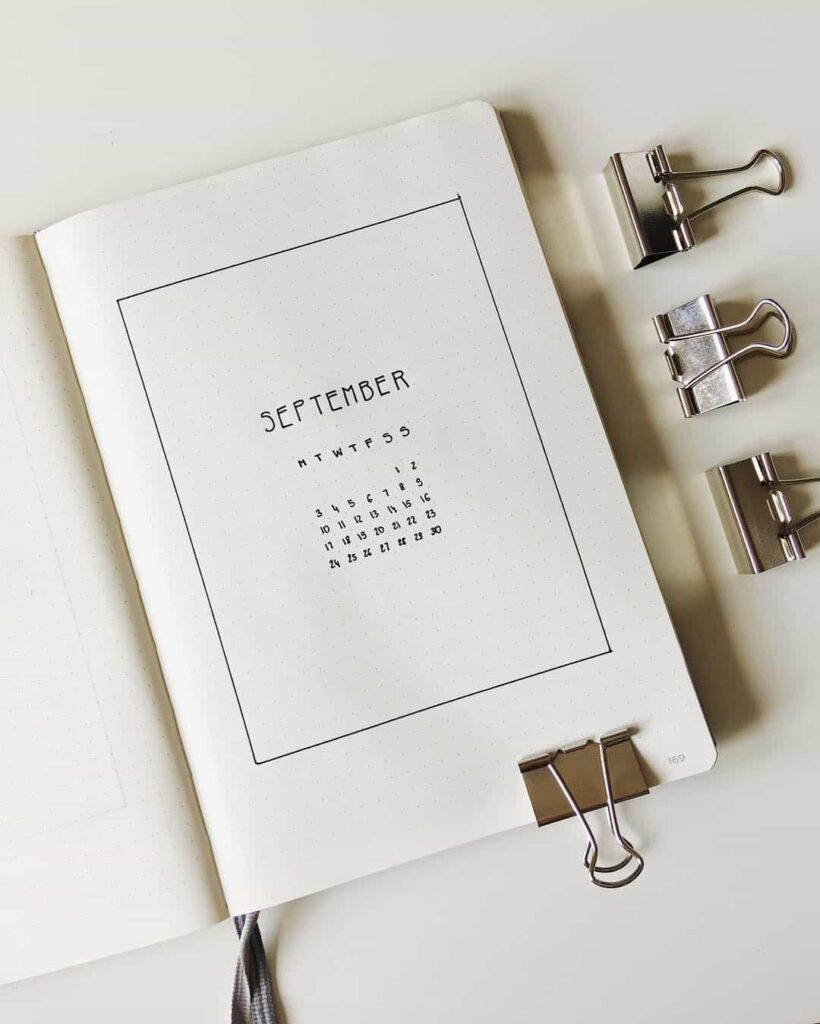
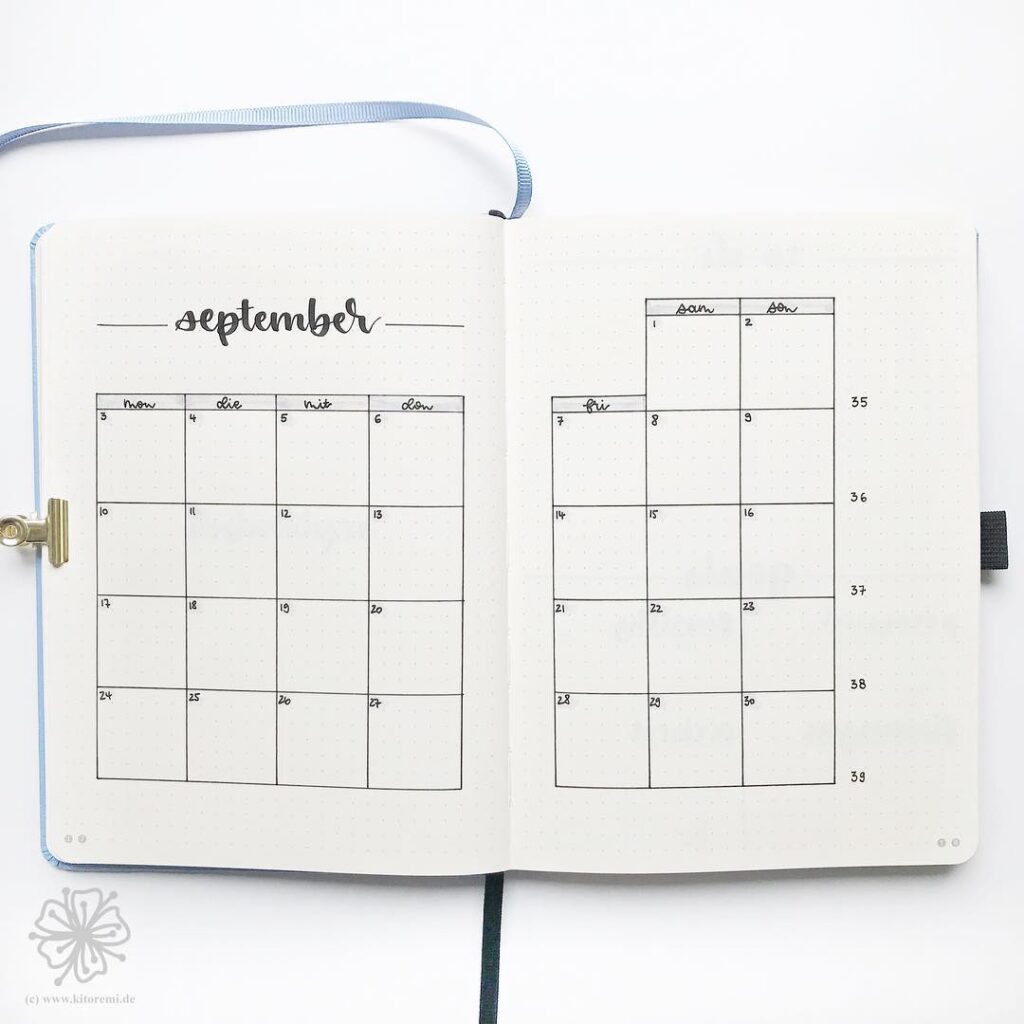
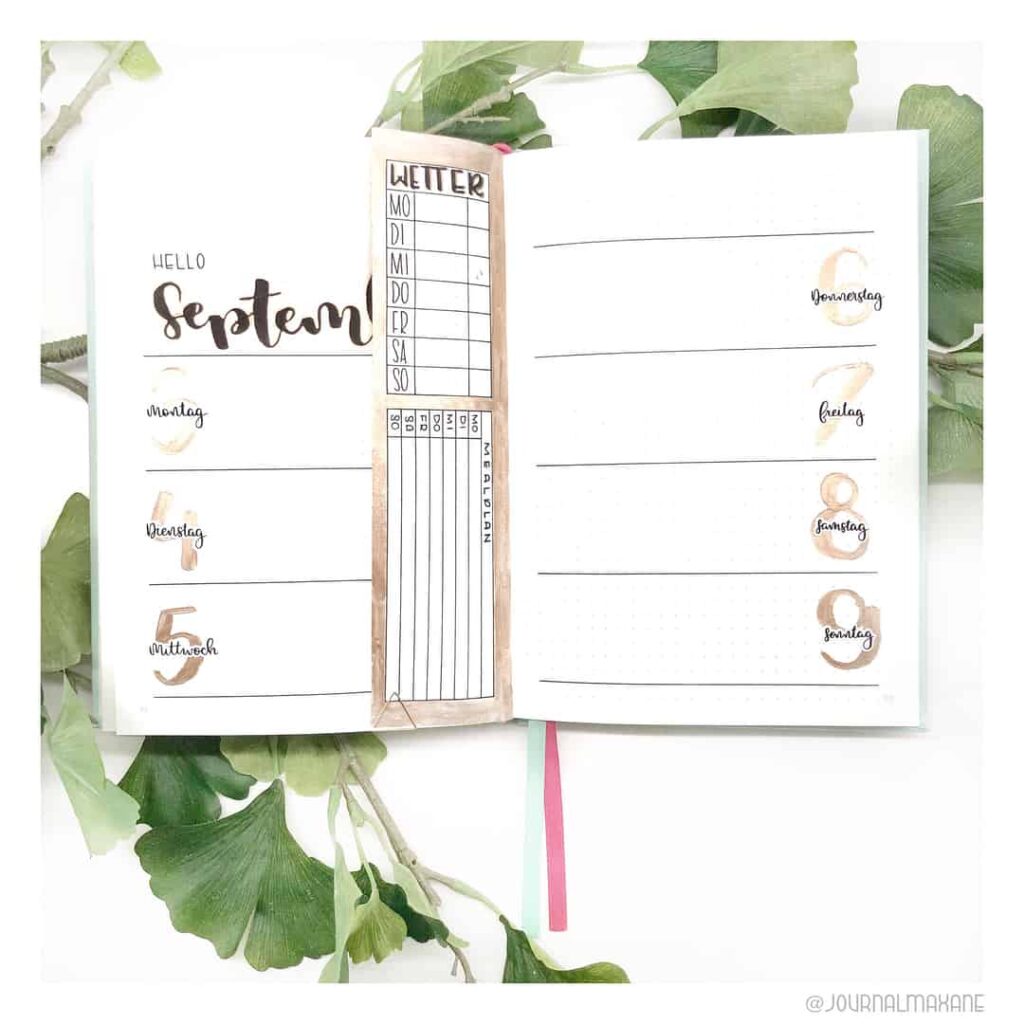
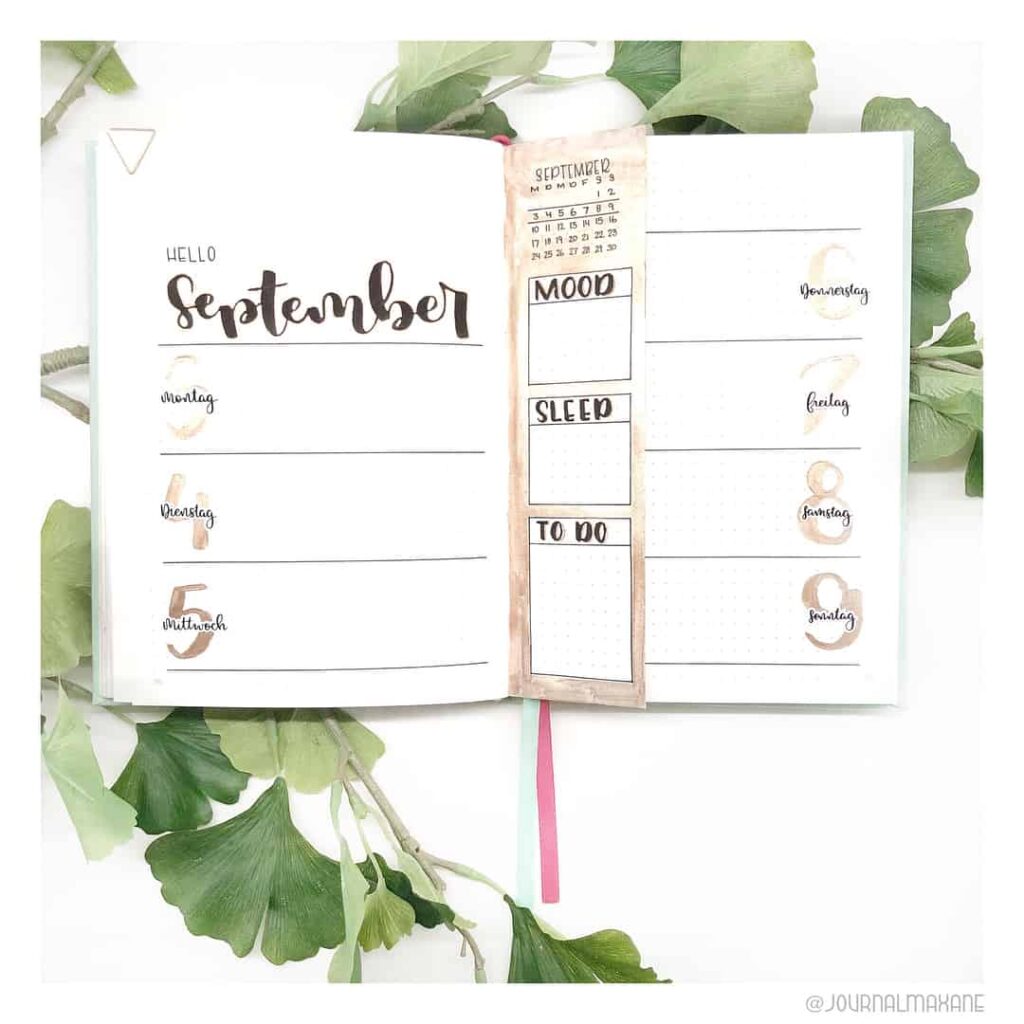
The gallery below pulls together a wide range of clean, uncomplicated bullet journal layouts collected by the My Inner Creative community. Most use a single pen colour, simple line work, and tidy typographical headings. A few add a small drawing or a thin colour accent, but none rely on advanced lettering or illustration.
The point of the collection is to show how varied minimalism can be while staying within reach of anyone who can rule a line and write in print. Looking through the gallery in one sitting also makes a quieter point: the spreads that look most appealing on the screen are often the ones that look most usable on the desk.
Whitespace, considered margins, and a single legible pen tend to age better than dense decoration that has to be repeated every month to keep the notebook looking consistent.









A January setup, one page at a time
The galleries below show single spreads in isolation. A January setup is what those individual pages look like when assembled into a working month.
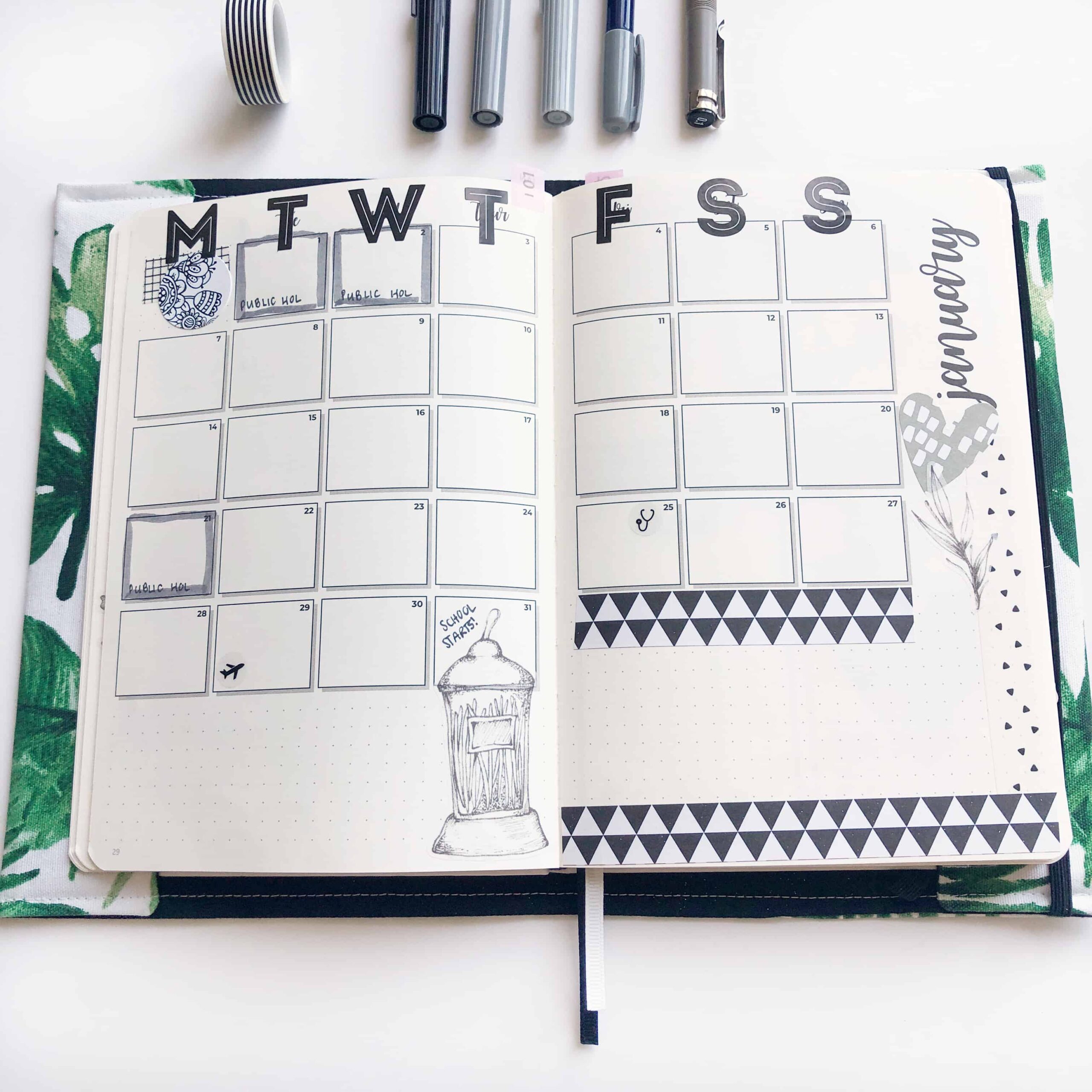
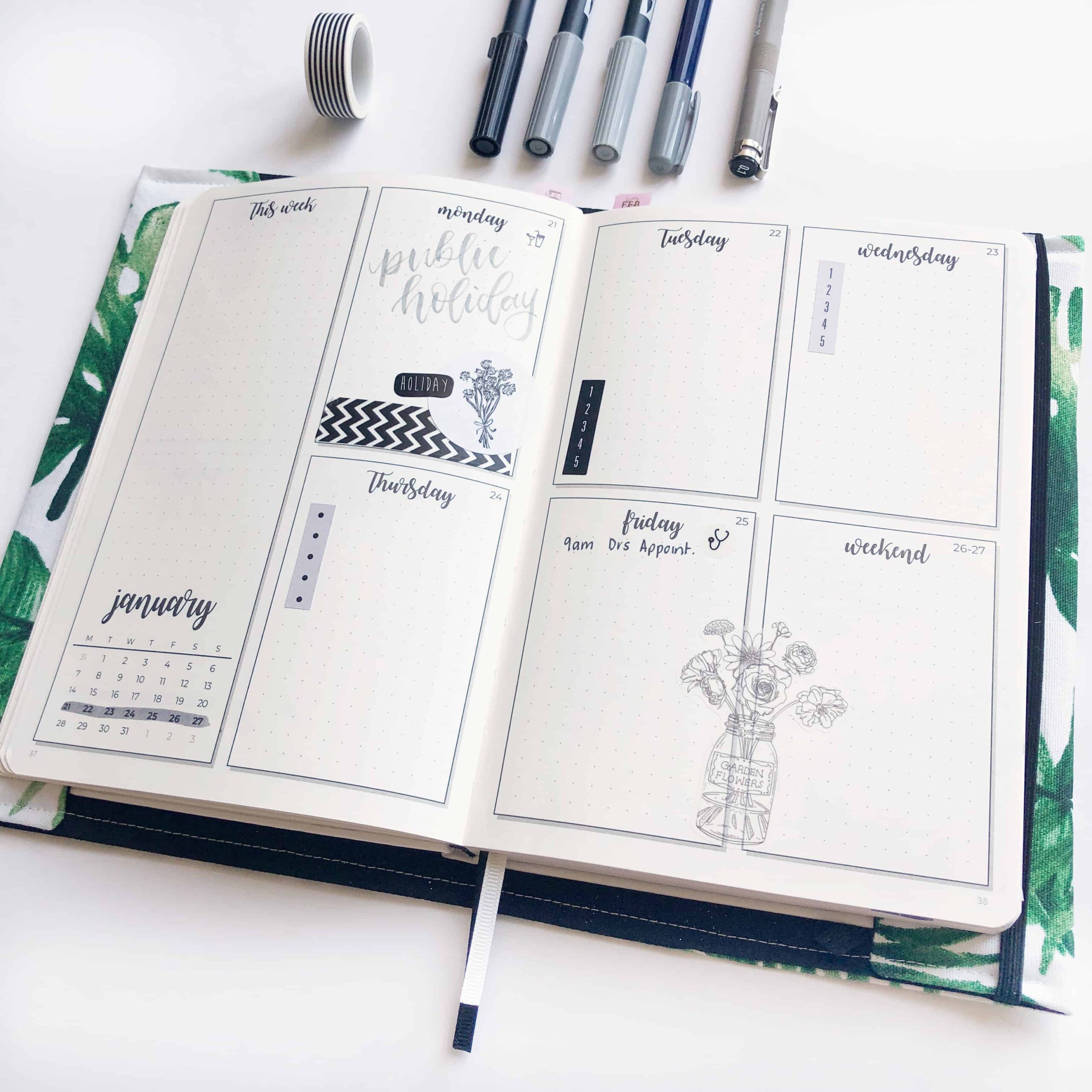
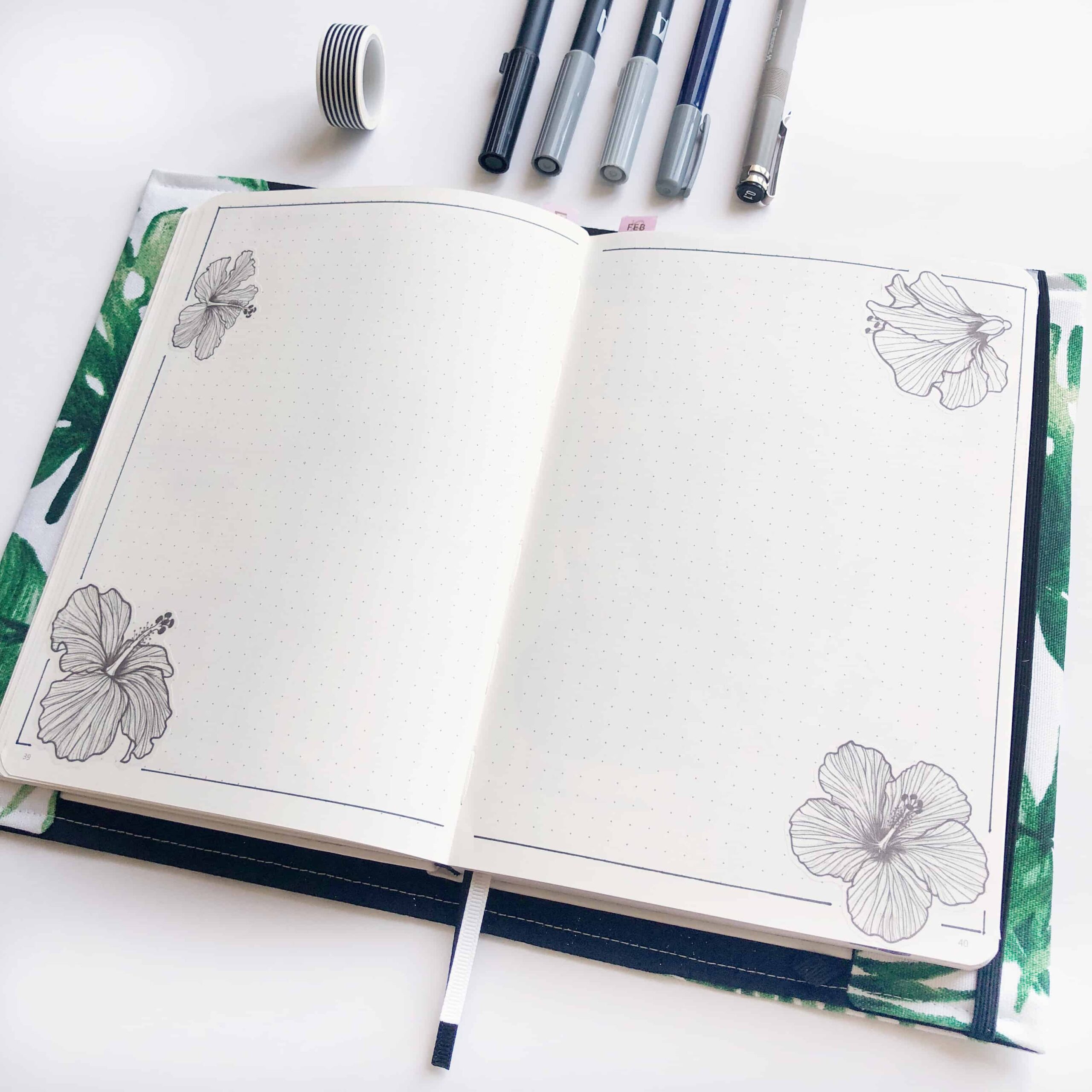
The sequence below was put together by the My Inner Creative editors as an example of a complete month built in a single notebook. It moves through the pages in the order you would actually create them: a cover page to mark the new month, a monthly overview to capture key dates, a habit tracker to set intentions, and then the weekly spreads that carry the day-to-day work. The January themed pages at the end show how a few optional collections fit naturally into the flow without taking up much space.
What the sequence demonstrates is rhythm: each page type has a clear job, and together they cover everything without overlap or redundancy. Nothing on these pages is hard to copy. The point is the rhythm of returning to the notebook, not the visual flair of any one page.
Common questions
- What do I do if I miss a week?
- Pick up where you are. Leave the blank pages or cross them out, whichever feels better. There is no rule that requires continuity, and a gap in the notebook is not a reason to start over or abandon it.
- Do I have to use the official bullet journal symbols?
- No. The original system uses a dot for tasks, a dash for notes, and a circle for events, with a small set of symbols to mark items as complete, migrated, or cancelled. These are useful defaults and worth trying. They are also easy to modify or ignore entirely. The system works with any shorthand that makes sense to you.
- Can I start mid-year?
- Yes. A new notebook can be opened on any day. The future log just covers whatever months remain. Some people start a new notebook every January; others start whenever the old one fills up. Neither approach is more correct.
- What is the difference between a monthly and a weekly spread?
- A monthly spread gives a bird’s-eye view of the whole month — key dates, deadlines, and commitments — usually on one or two pages. A weekly spread is where the day-to-day work happens: task lists, appointments, notes, and whatever needs tracking that week. Most people use both. Some use only monthly spreads and fill in daily tasks as a running list below. The two layouts serve different purposes and work together rather than duplicating each other.
- How long does it take to set up each month?
- For a minimal approach — cover page, monthly overview, habit tracker, and four weekly spreads — somewhere between twenty minutes and an hour, depending on how much drawing is involved. Purely functional setups with no decoration take less. The time investment drops significantly after the first two or three months, once the layouts feel familiar.



How the practice tends to change
Most people who keep a bullet journal for more than a year end up with something that looks quite different from where they started — simpler in some ways, more specific in others.
The habit tracker is usually the first thing to go, or to shrink. Tracking twenty habits across a month feels motivating in January and administrative by April. People who keep tracking tend to narrow it down to three or four things that genuinely need monitoring, and drop the rest.
Weekly spreads get smaller. The elaborate layouts of the first few months tend to compress into something faster to set up — sometimes just a dated list of tasks, sometimes a simple two-column grid. The time spent on construction starts to feel like time taken from use.
New collections tend to appear around specific life contexts: a project at work, a house move, a period of heavier reading. These pages appear when they’re needed and get left behind when they’re not, which is how the system is supposed to work.
What usually stays consistent is the index and the monthly overview — the structural pages that make the notebook searchable and give the month a shape. Those tend to be the last things to simplify, because they carry the most practical weight.
The drift is worth expecting rather than resisting. A journal that has changed shape three times in two years is one that has been genuinely used.
A bullet journal works because it is small enough to carry, simple enough to use without instructions, and personal enough that it slowly takes on the shape of the life it is recording.
The minimalist version of the practice asks for almost nothing — a notebook, a pen, and a few minutes most days. Whatever the page looks like on a given Sunday, the part that matters is the willingness to open it again on Monday.