
Editorial note: This article was originally published on My Inner Creative and has been updated and republished in May 2026 under The Vessel’s editorial standards.
A bullet journal is, at its plainest, a notebook and a pen. What makes it useful for self-care is not the notebook itself but the small, daily act of stopping to put something down on a page. Naming an emotion, marking a rest day, drawing a square around a glass of water — these are minor acts in isolation.
Done with any regularity, they become a record of what care actually looks like in a life rather than what it is supposed to look like in theory.
The spreads collected below were originally published on My Inner Creative, a community of bullet journal artists who organise their pages around mental health, rest, and the small rituals that make daily life feel manageable. The layouts span everything from mood tracking and gratitude prompts to hand-lettered reminders and quiet, decorative pages. The point of including so many is not to recommend any single style. It is to show how widely self-care can be interpreted on the page — from highly visual to almost entirely text, from structured trackers to loose, undated reflections.
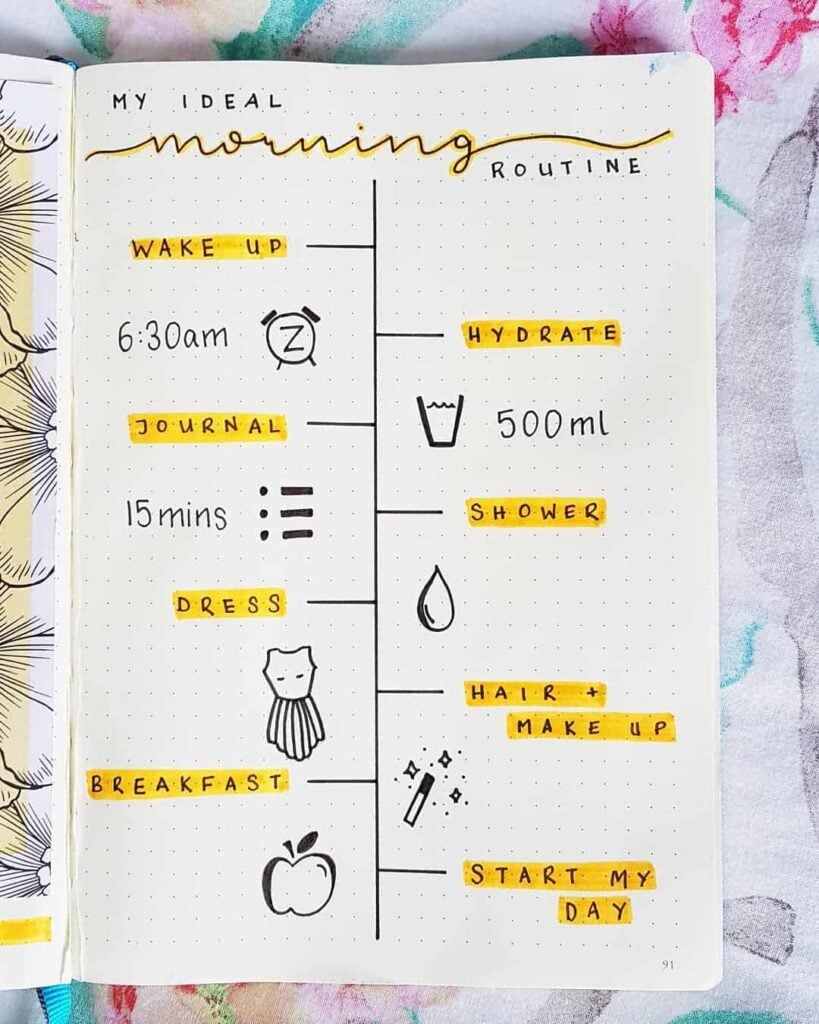
Why journaling supports mental health
The relationship between writing things down and feeling better is not new, and it is not mystical. Tracking emotions across days and weeks gives a person something to look at other than the inside of their own head. Reflecting on a difficult conversation in writing tends to slow the loop of replaying it. Marking small wins — a walk, a phone call returned, a load of laundry done — creates a counterweight to the day’s harder moments.
Many people find that brief, regular journaling makes difficult feelings easier to sit with. In fact, studies have found that regular journaling may be associated with reduced symptoms of anxiety and depression.
Noticing patterns across days makes their causes easier to name. A bullet journal is one of the more accessible places for this to happen — no app to open, no notifications, no streak to maintain.
What self-care actually means
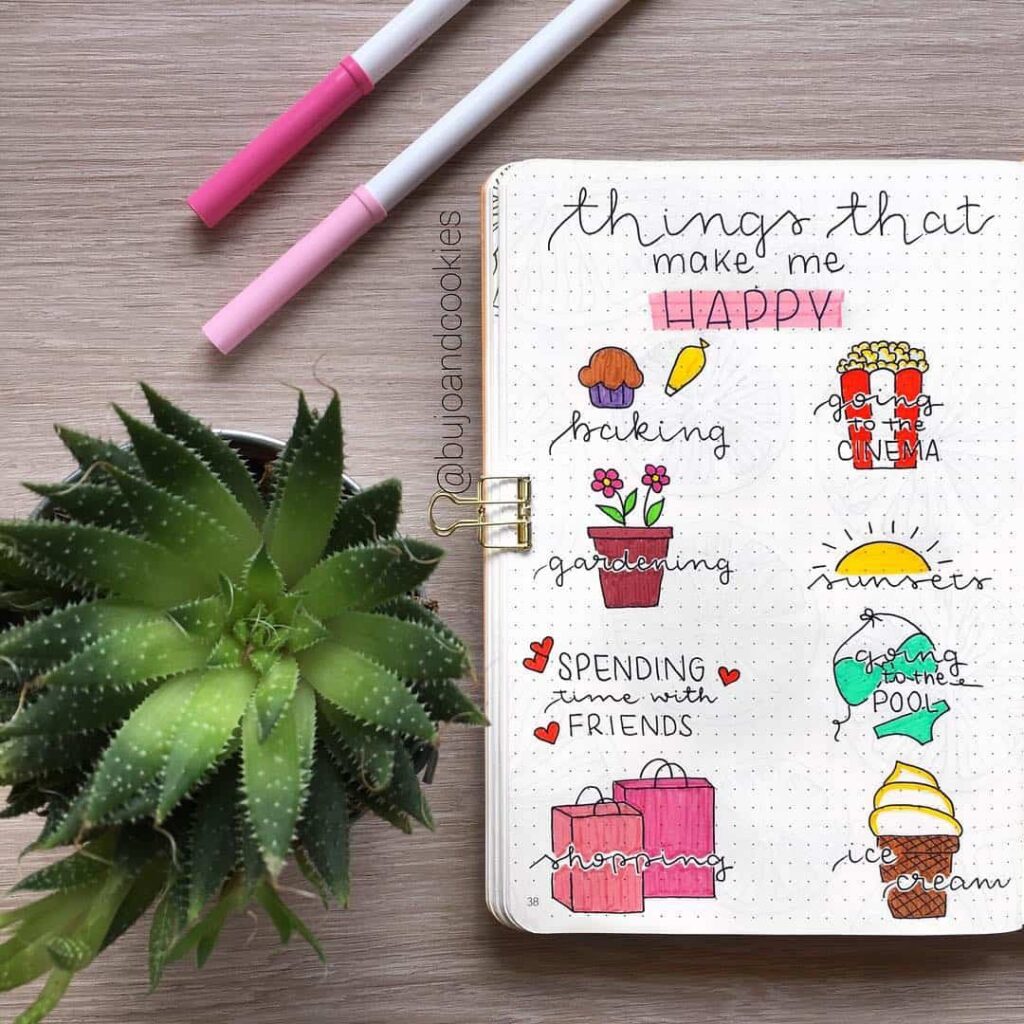
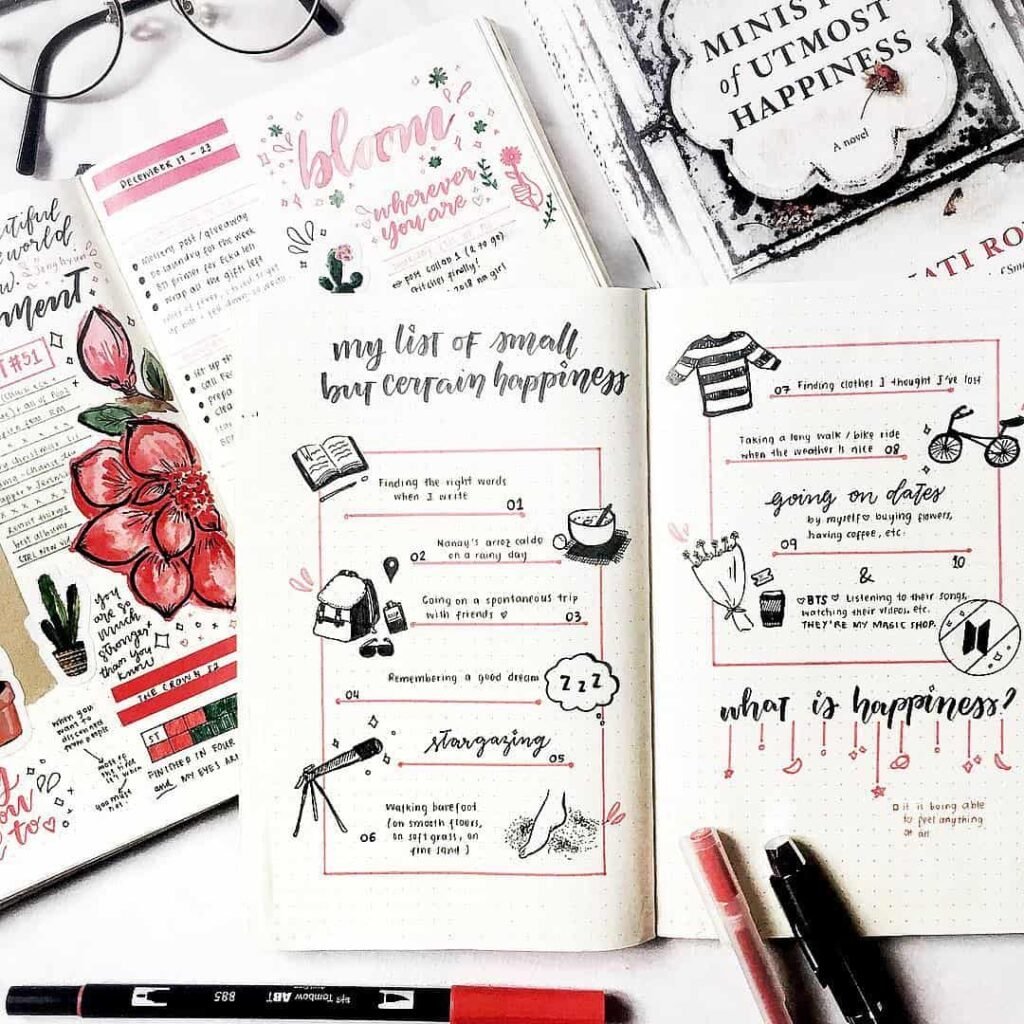
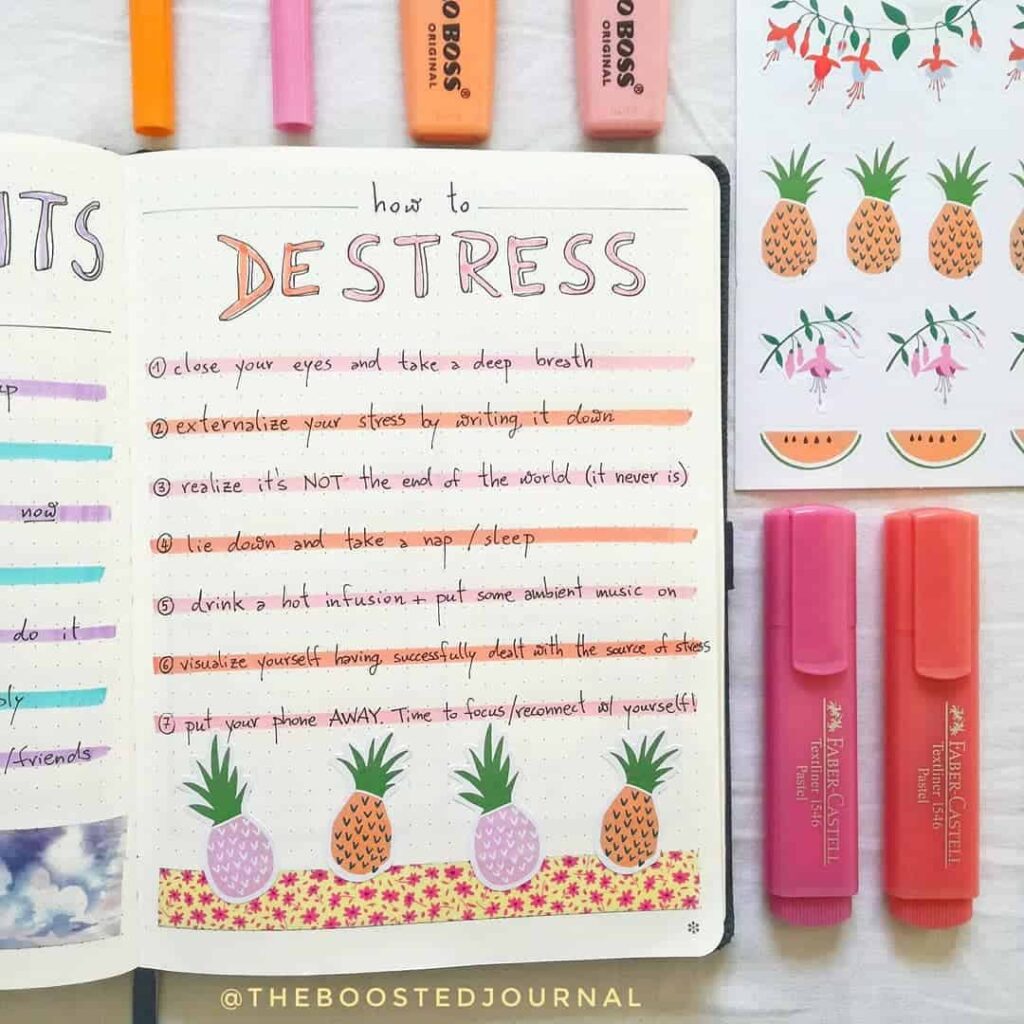
Self-care has been stretched, in popular use, to cover an enormous range of activity — bubble baths, sheet masks, expensive candles, scheduled retreats. In its plainer sense it is simply the maintenance work a person does on themselves so that they can continue functioning well in the rest of their life. It assumes that human energy is finite, that depleted people make worse decisions and worse company, and that recovery is something a person has to plan for rather than wait for.
Read this way, self-care does not require a particular aesthetic or budget. It might mean going to bed earlier on Tuesdays because Wednesday is always hard. It might mean refusing a recurring social commitment that drains more than it gives. It might mean keeping a list of foods that reliably steady the body, or a list of friends who are easy to call when something has gone wrong. The common thread is paying attention to what restores capacity and protecting time for those things on purpose.
A bullet journal helps make that attention visible. Instead of holding the question in the head — what actually makes a difference for a particular person, on a particular kind of day — the answers can sit on a page where they can be reviewed, edited, and trusted. The list of what restores energy is rarely glamorous, and it is almost always specific to the person who wrote it. Putting it on paper protects it from the tendency to forget what works under stress.
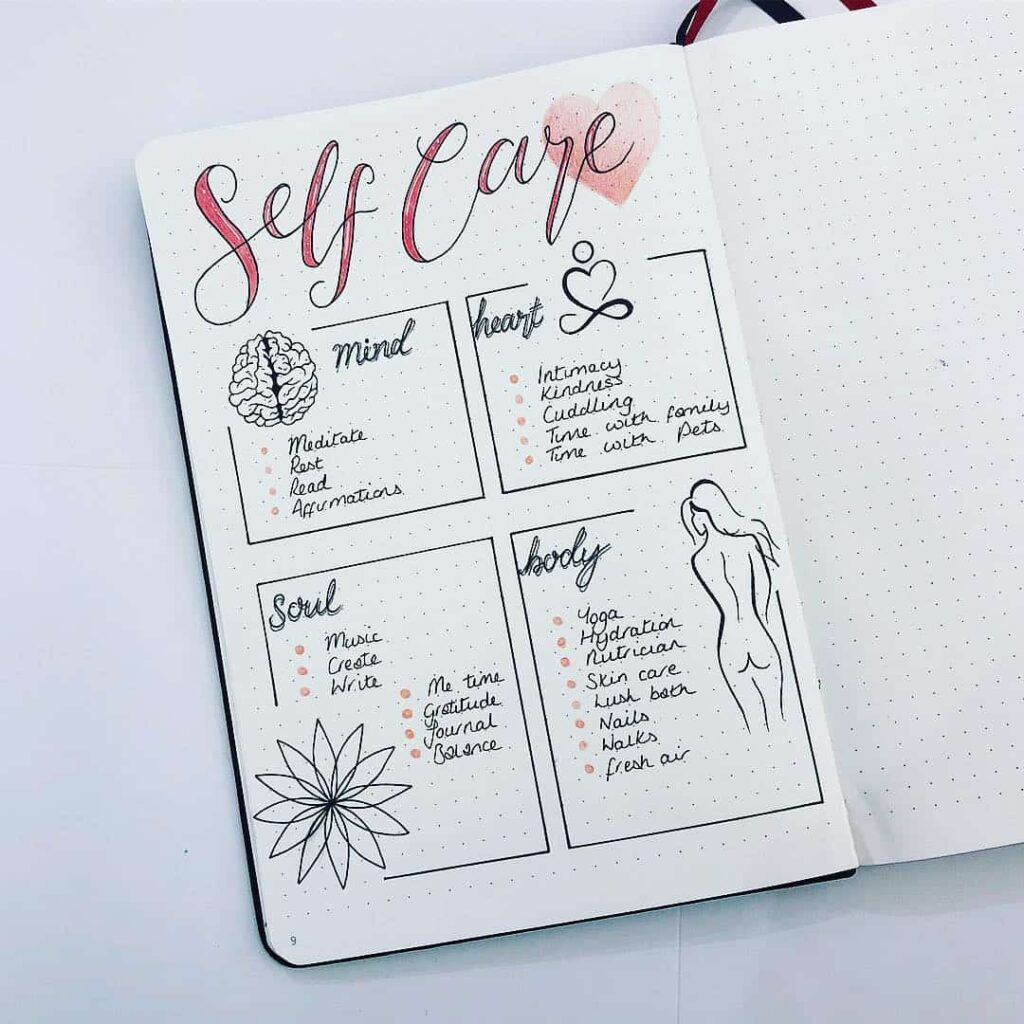
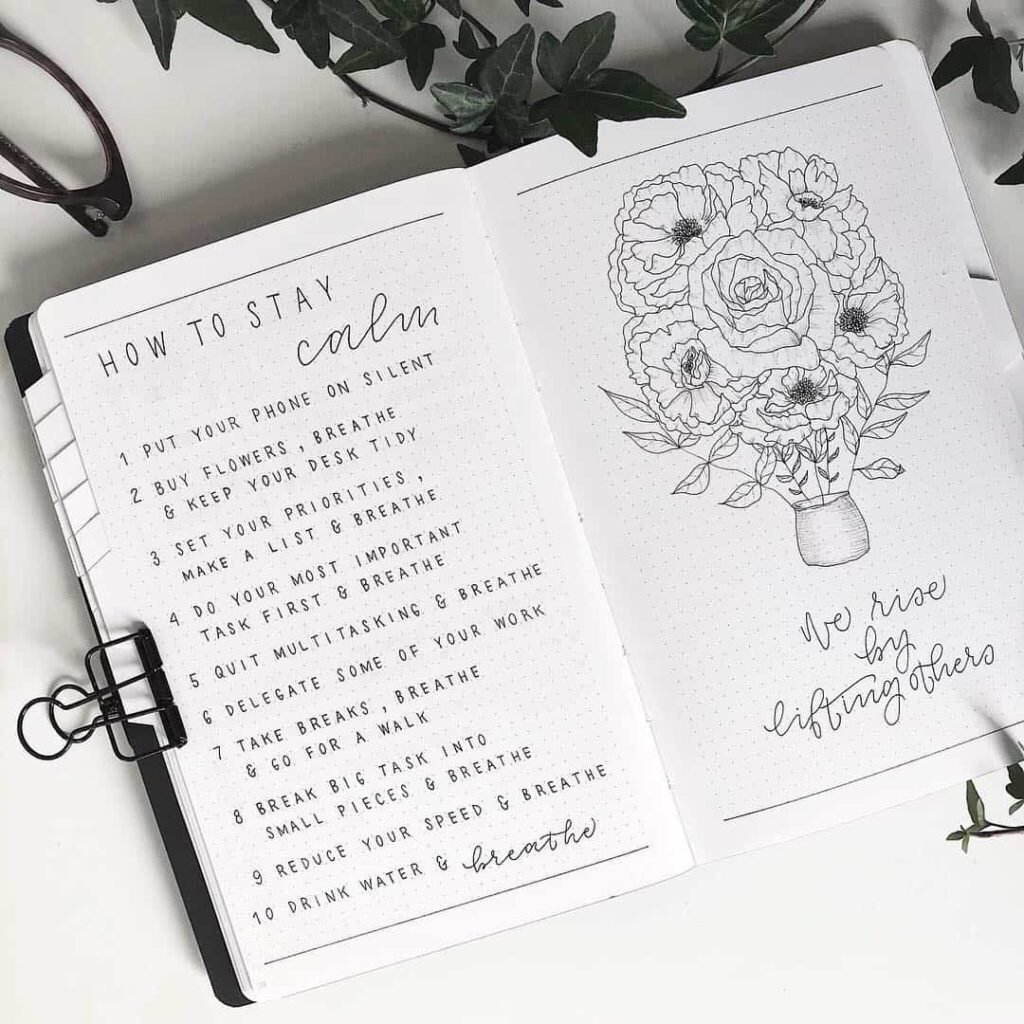
Ten self-care ideas to weave into a bullet journal
None of the suggestions below requires artistic skill, a specific notebook, or a long ritual. They are everyday choices that benefit from being recorded somewhere visible. The bullet journal is simply visible somewhere.
- Block out time for unscheduled rest the way other commitments get blocked out — in pen, on the weekly spread.
- Set aside a recurring slot each week that is specifically for restoration — a Sunday morning with tea, a Tuesday evening walk, or any quiet ritual that consistently helps the week settle.
- Use a page or two for decluttering — a list of items to give away, a corner of a room to clear, a drawer to empty.
- Sketch out a simple morning or evening ritual and track which parts of it actually get used.
- Write down one thing each day that went well, or one thing the day was good for.
- Reserve a page for creative time — colouring, doodling, hand-lettering — without expectations of producing anything finished.
- Keep a list of people worth reaching out to when too much time has passed. Cross names off as calls are made.
- Schedule the dull, important appointments that tend to slide — a physical, a dental check, an eye test.
- Mark days that include something restorative for the body, whether that is a long bath, an early night, or a slow meal.
- Note the small pleasures that helped on hard days. Cooking with music on. A film watched twice. A favourite jumper.
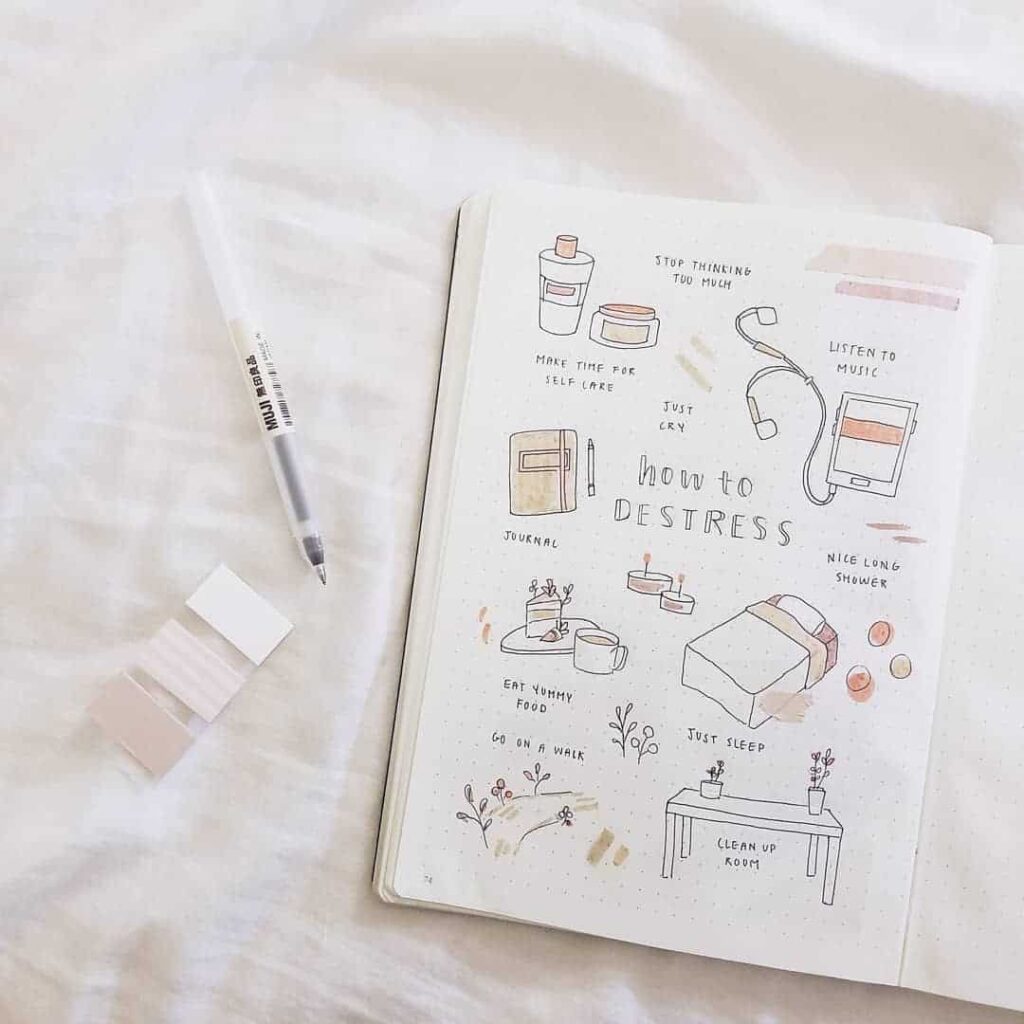
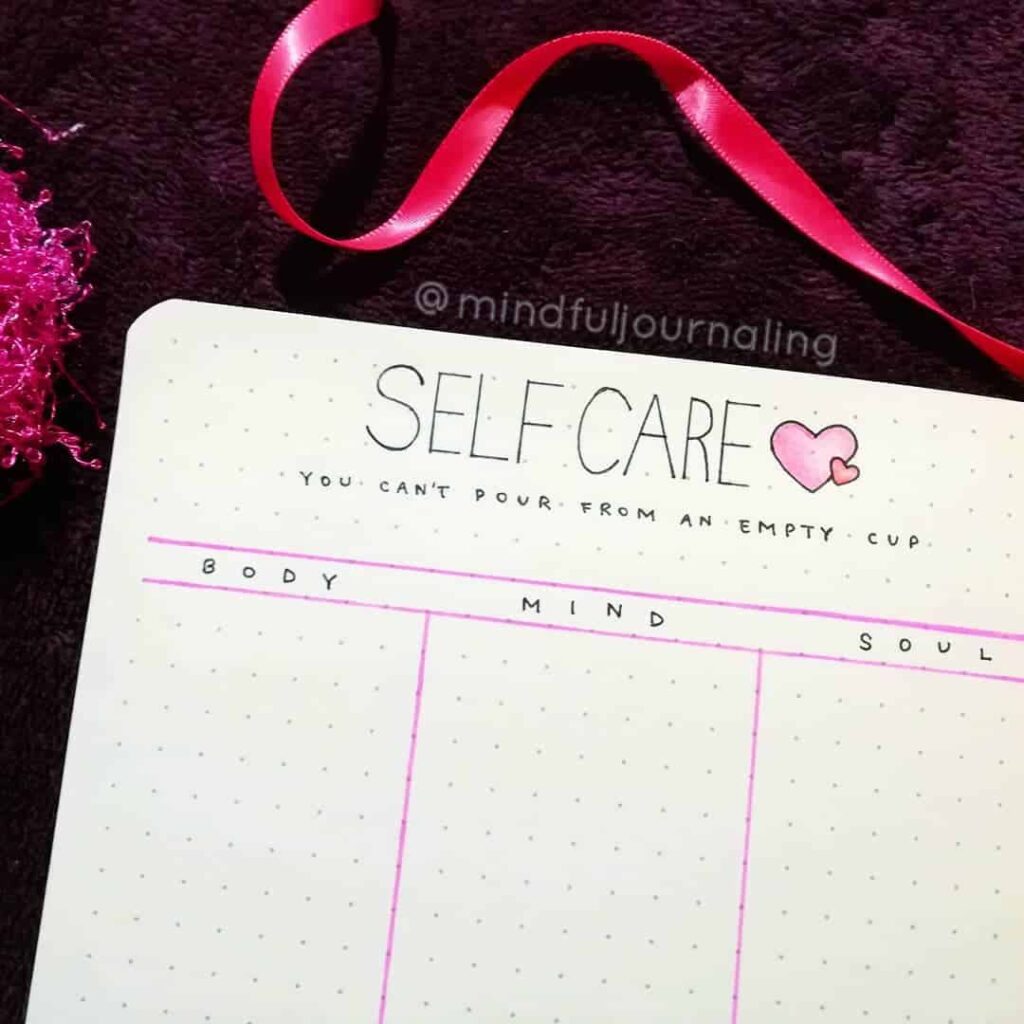
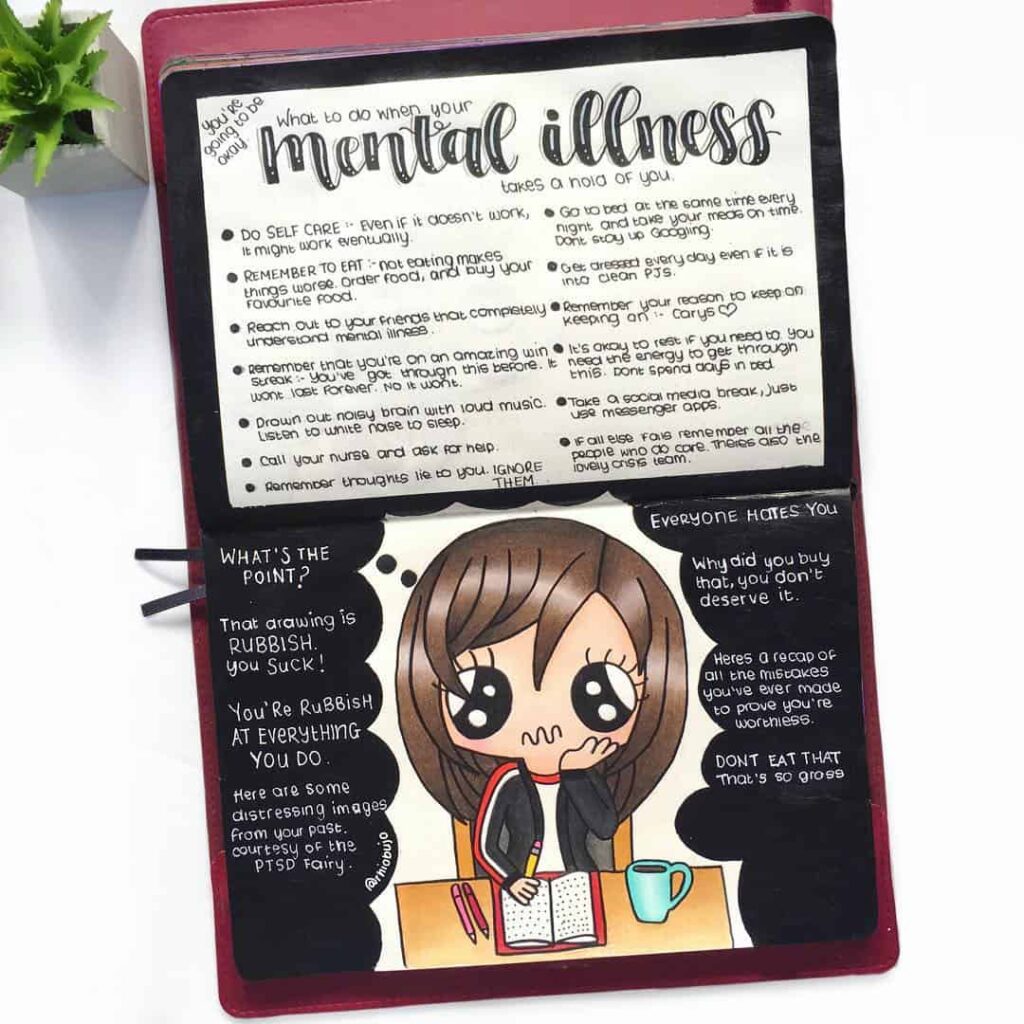
Featured self-care bullet journal spreads
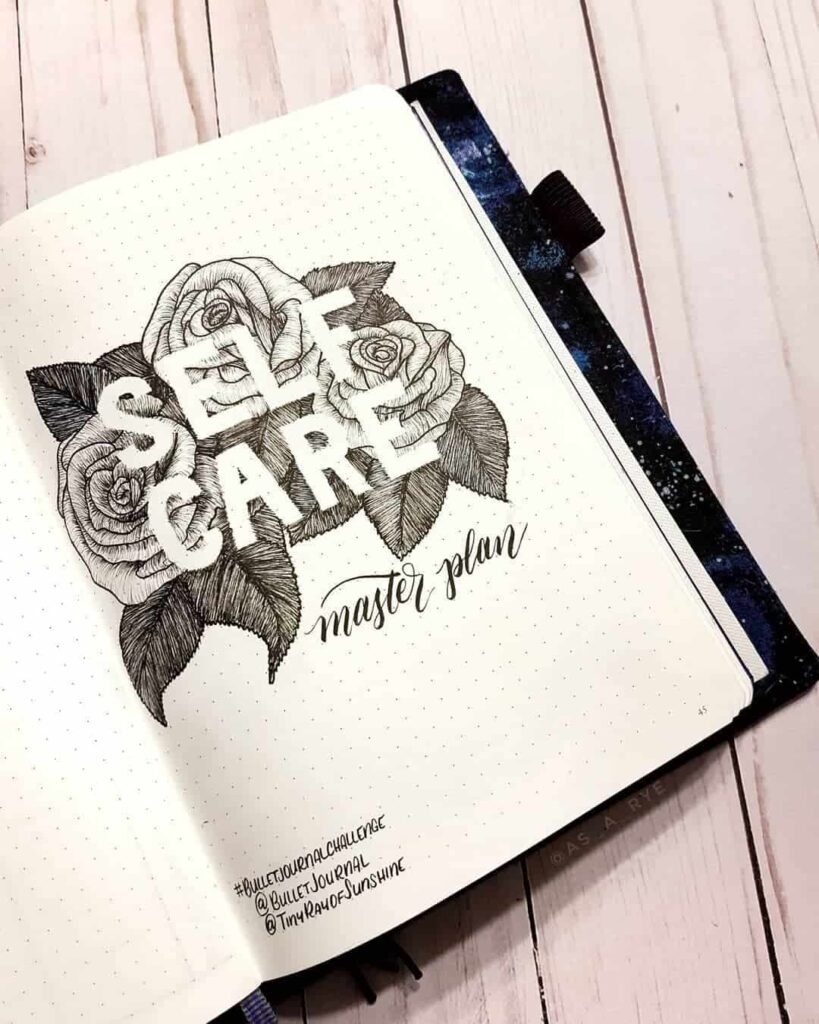
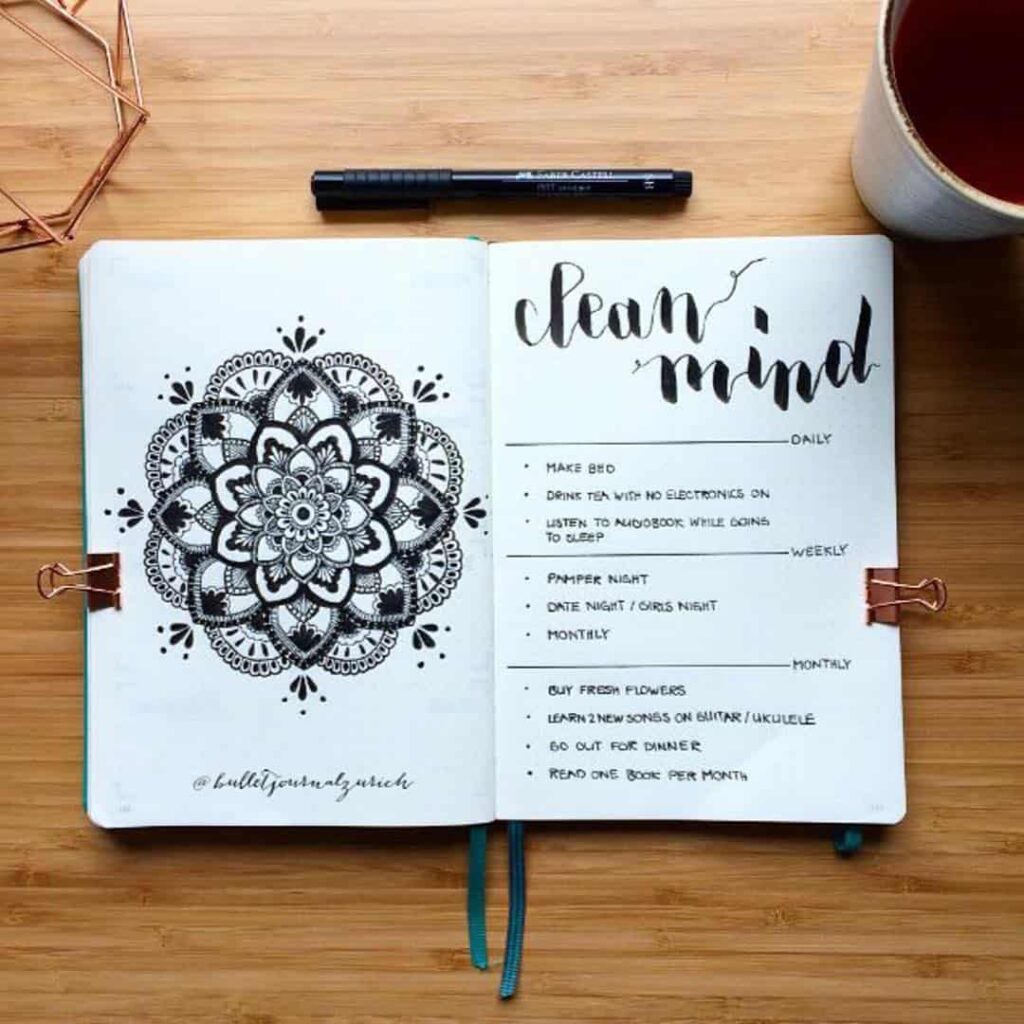
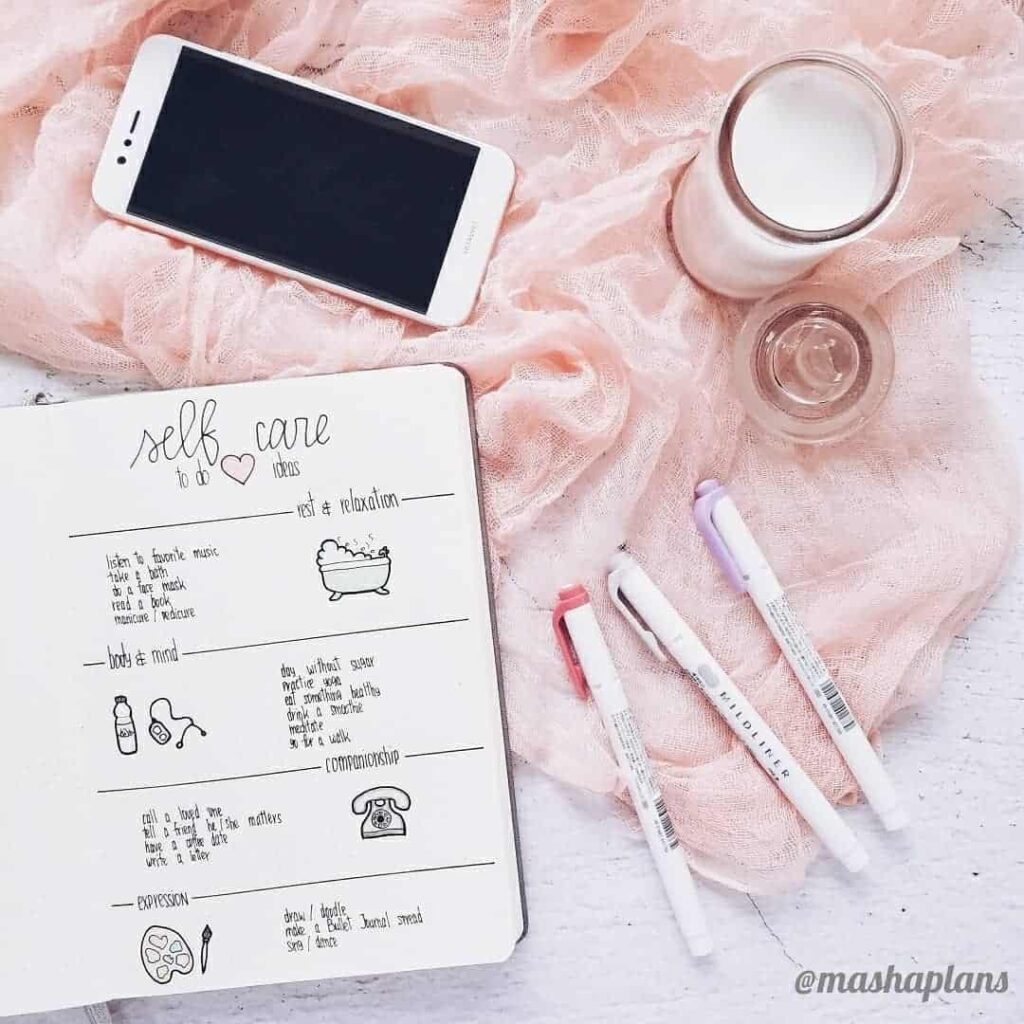
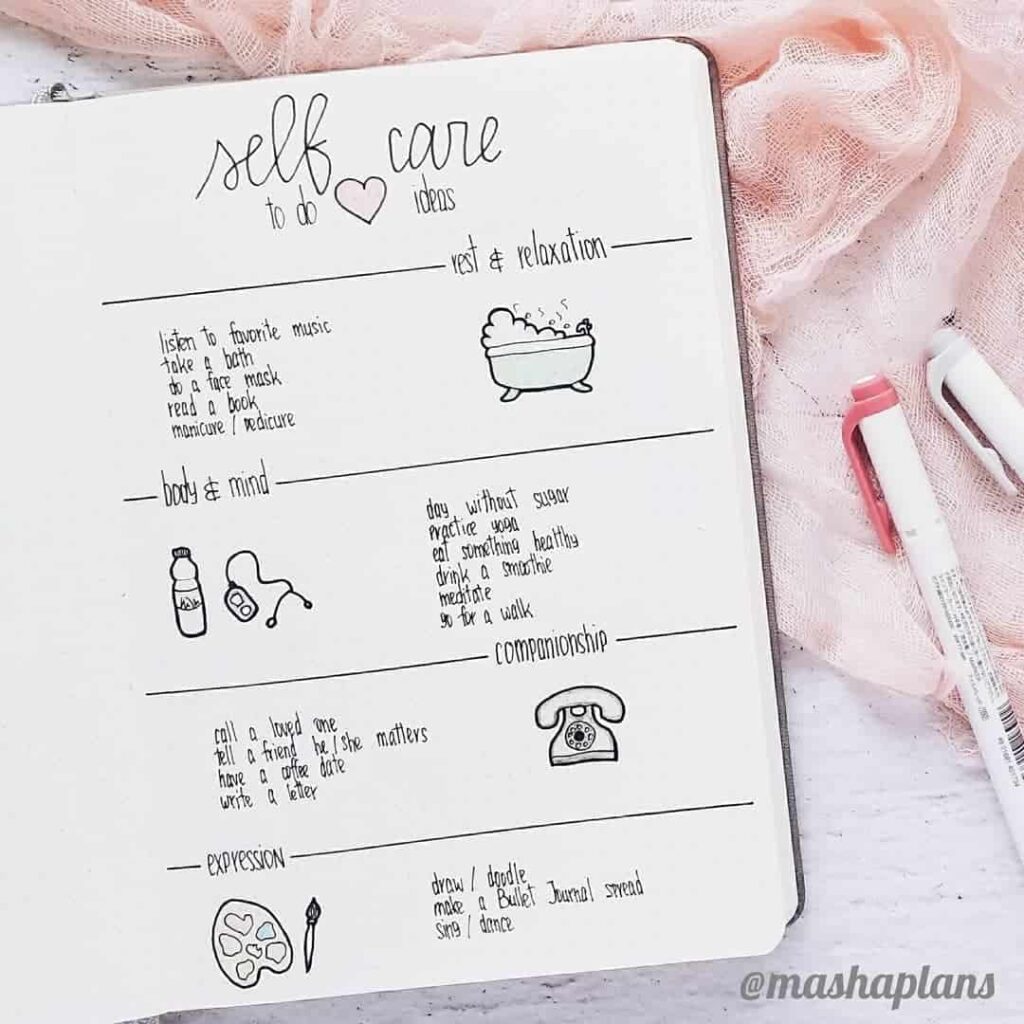
The gallery that follows pulls together spreads originally collected by My Inner Creative.
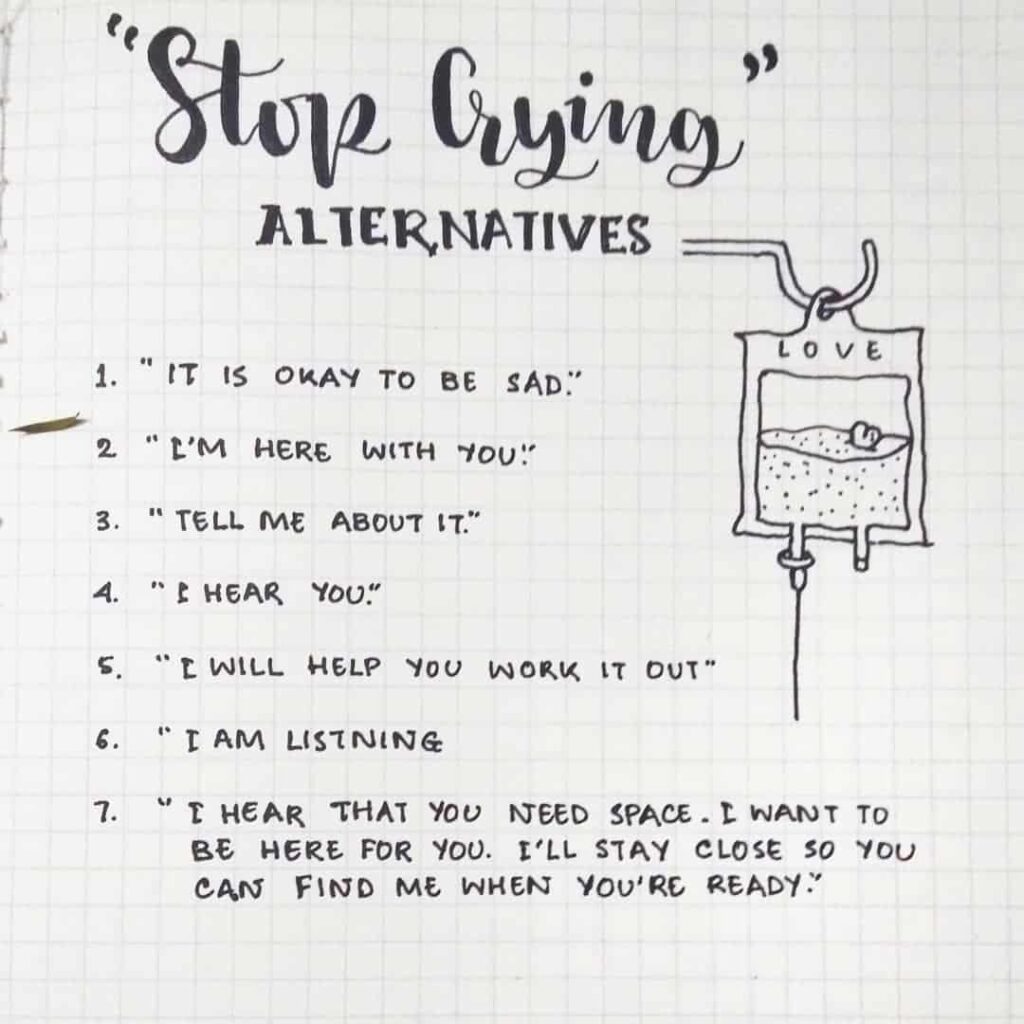
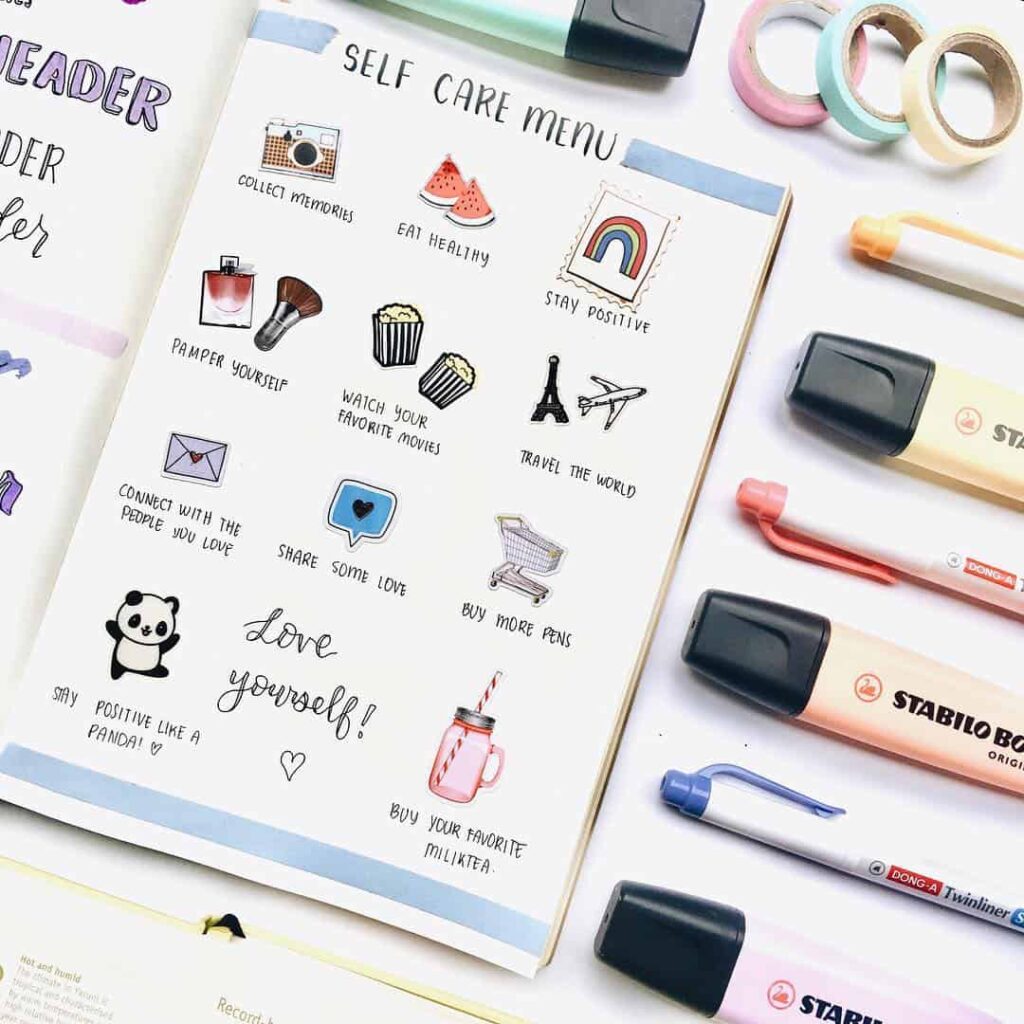
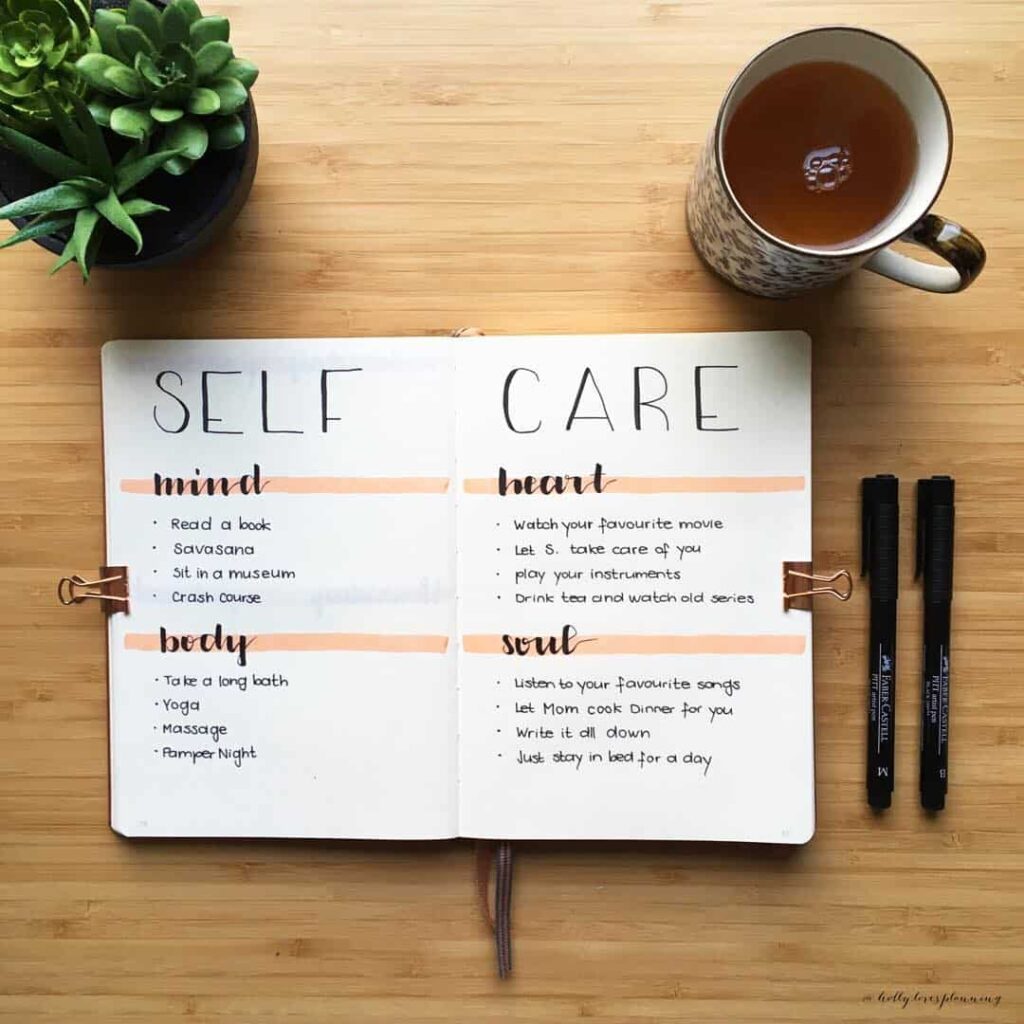
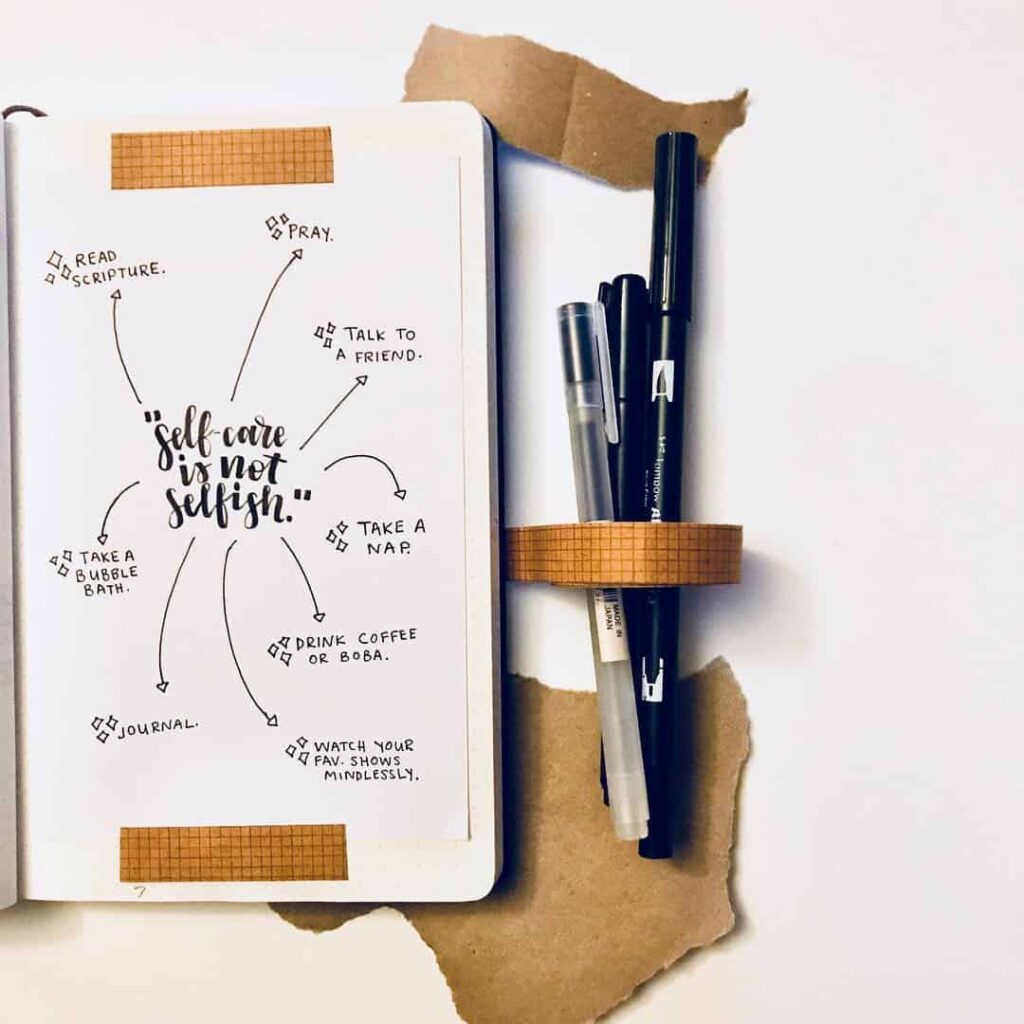
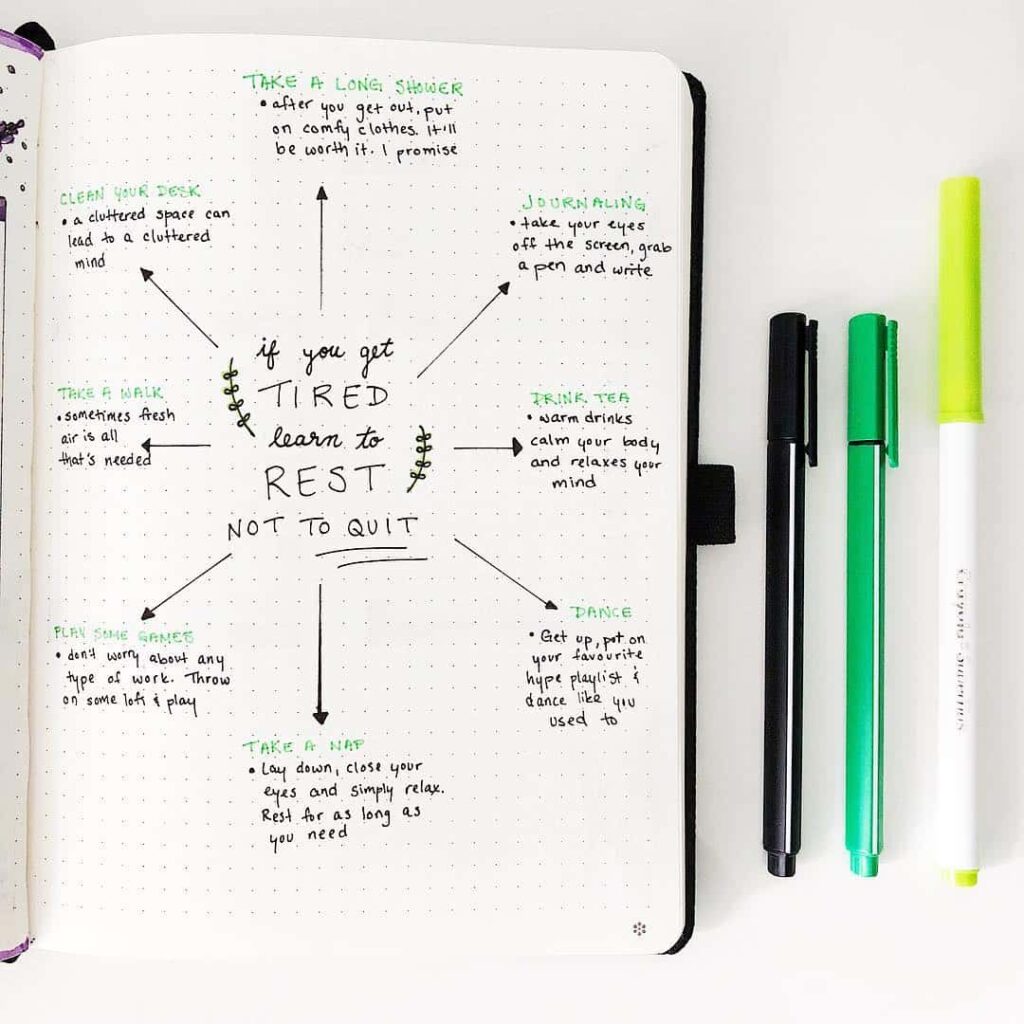
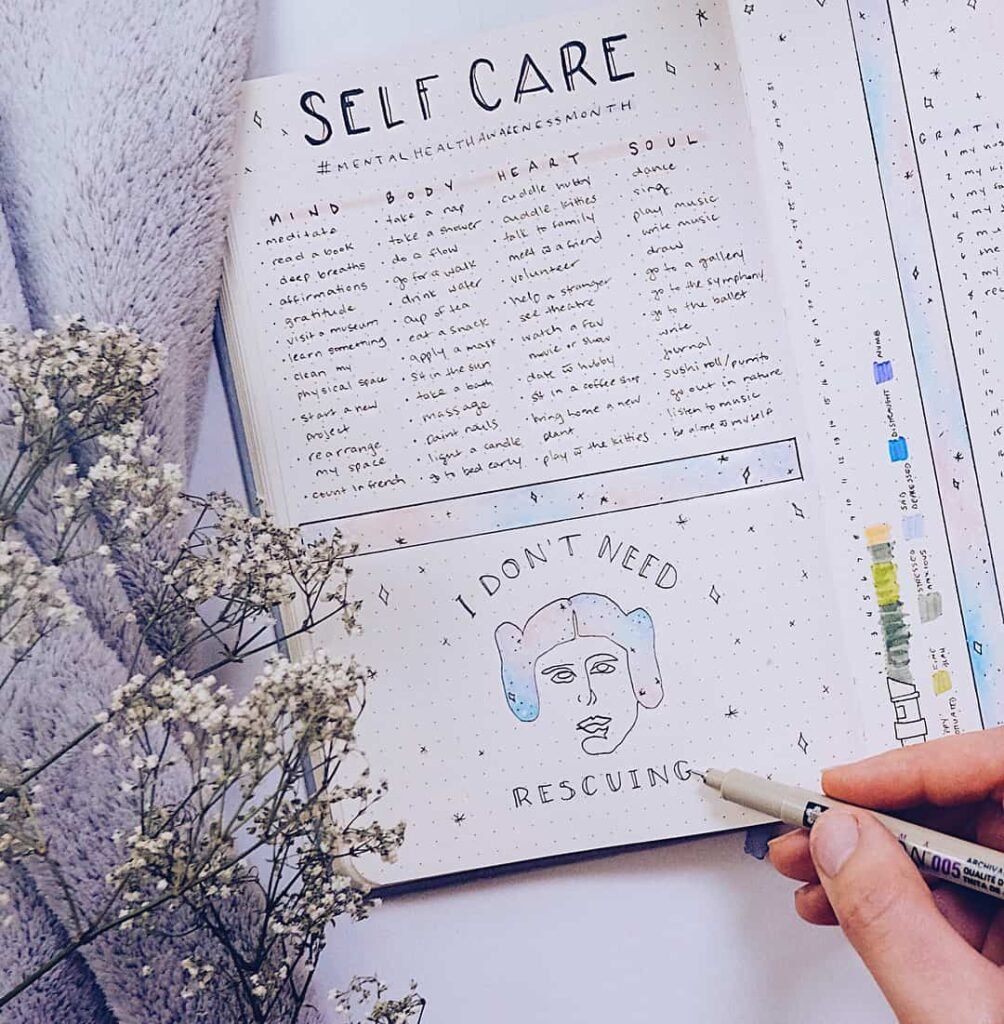
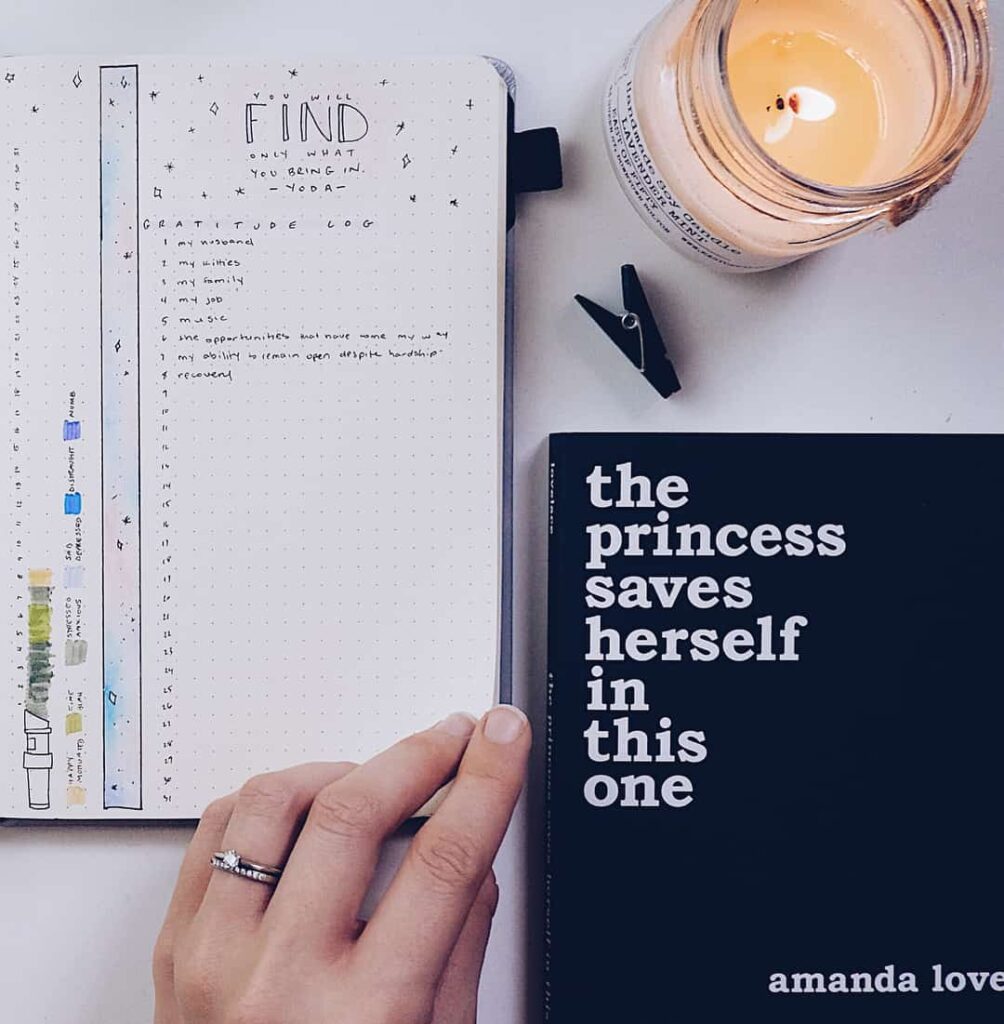
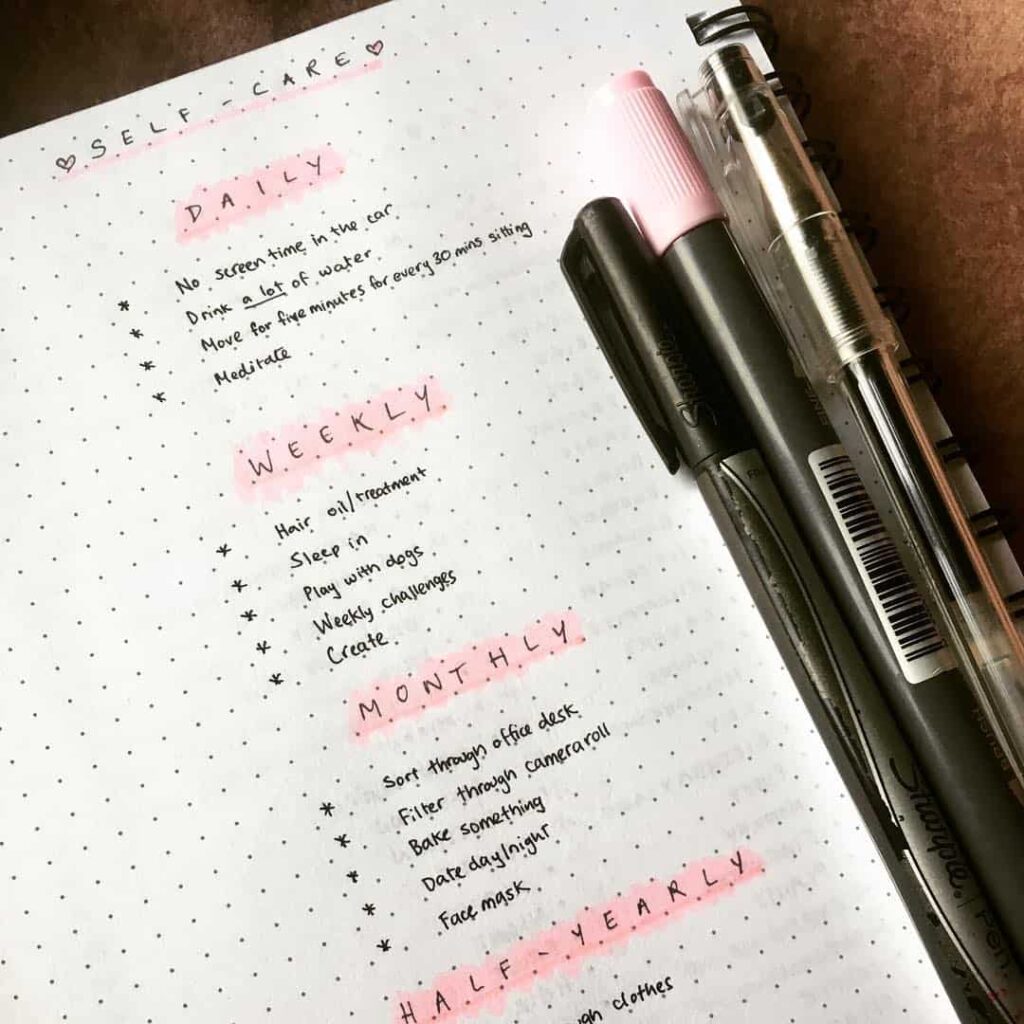
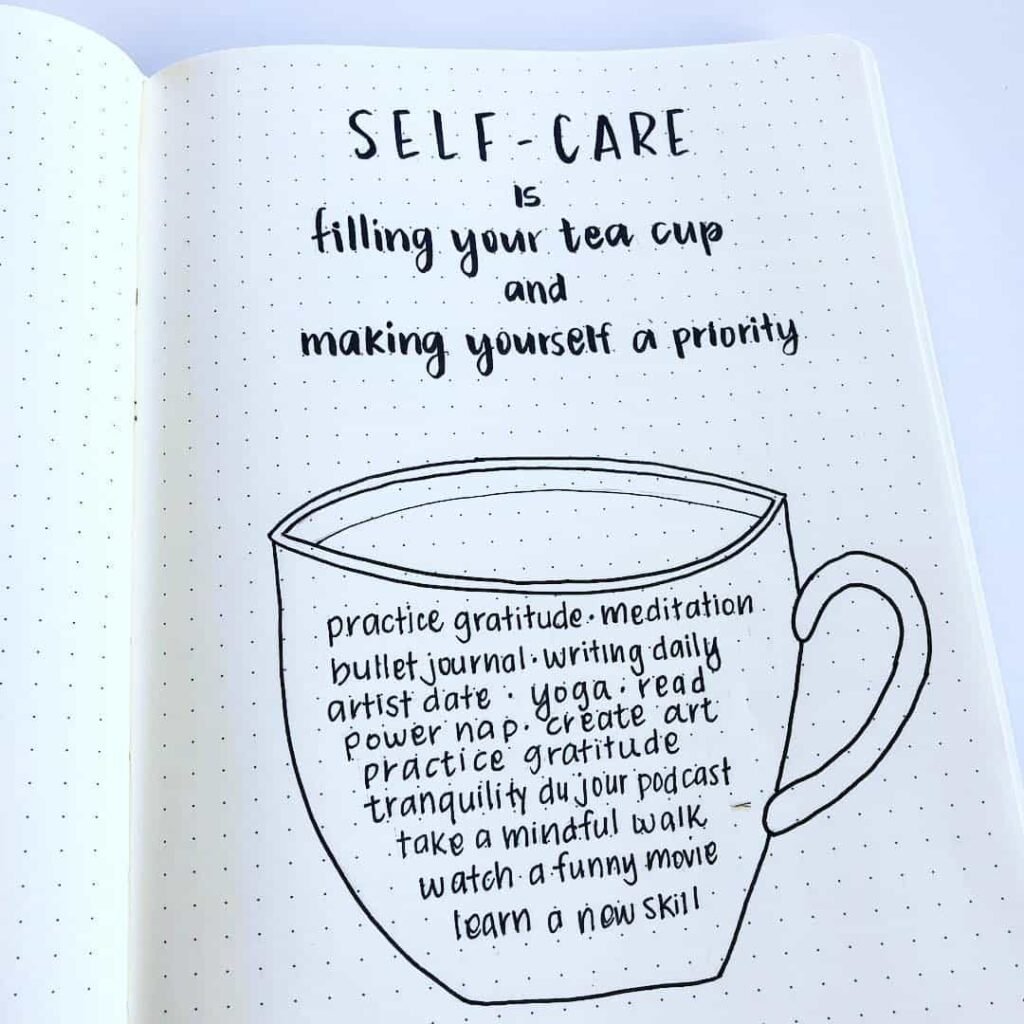
Some are highly designed; others are deliberately simple. A few use trackers and grids; others rely on a single hand-drawn image and a short prompt. They are less useful as templates to copy exactly than as a survey of what other people have found worth recording. The patterns repeat: water, sleep, mood, gratitude, small rituals, gentle reminders.
The styles vary, the underlying observation does not.
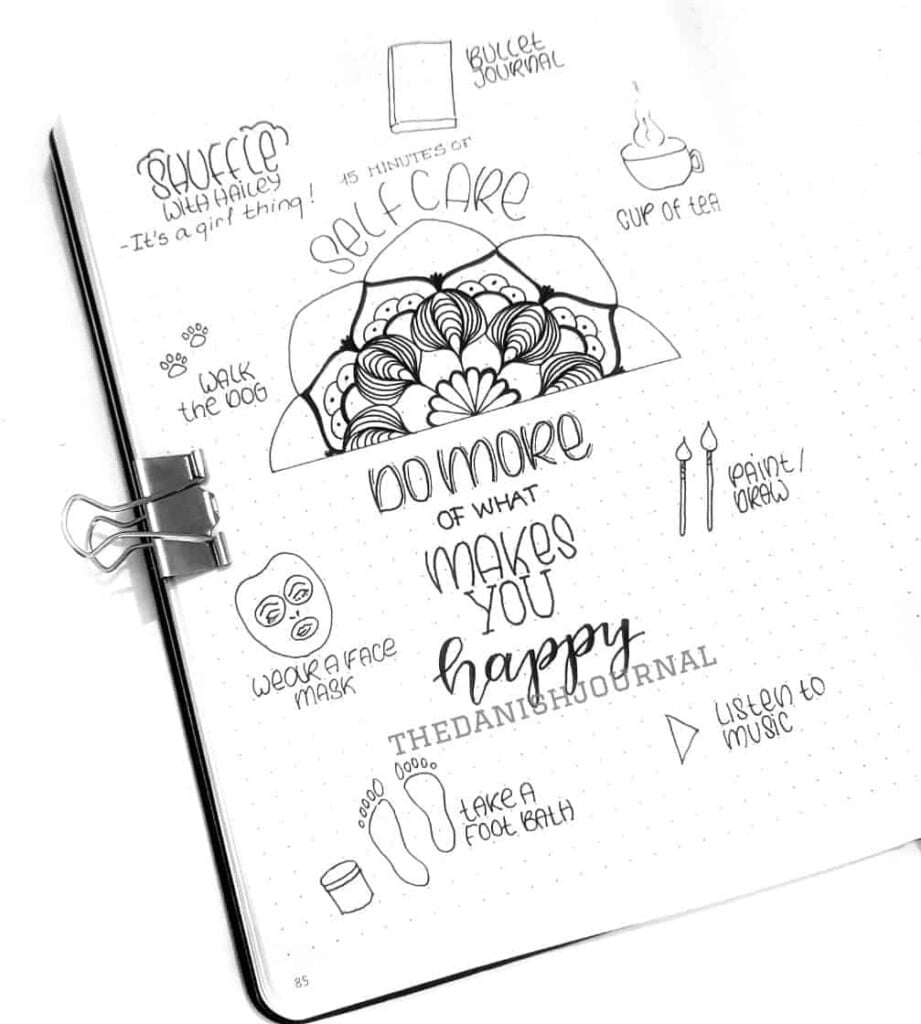
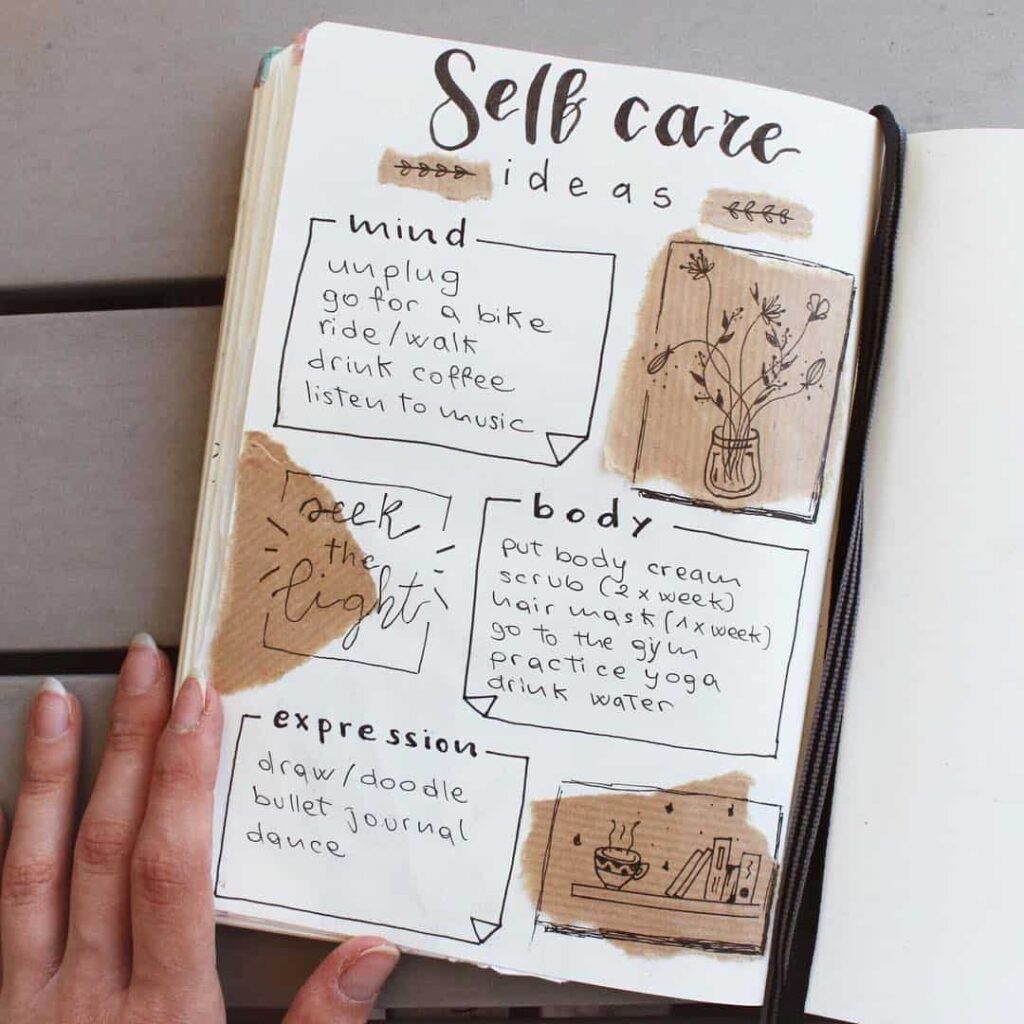
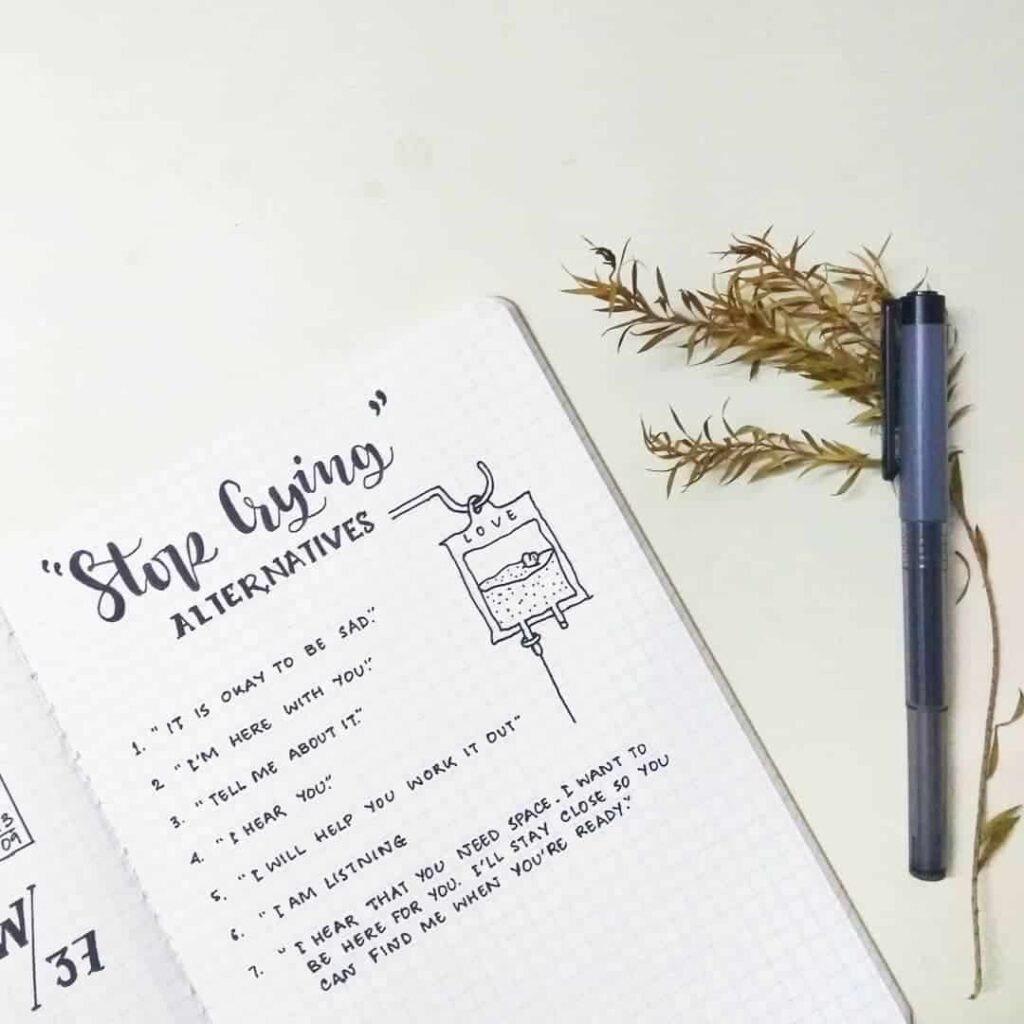
Whatever shape it takes on the page, self-care is mostly a question of repetition. The spread itself matters less than the willingness to come back to it. A notebook left open on a kitchen table, glanced at over coffee, asked the same small question for the hundredth time, will do more than the most beautiful layout drawn once and abandoned.
The page is patient, and on most days, with practice, the person holding the pen can be too.