

The river wakes before dawn.
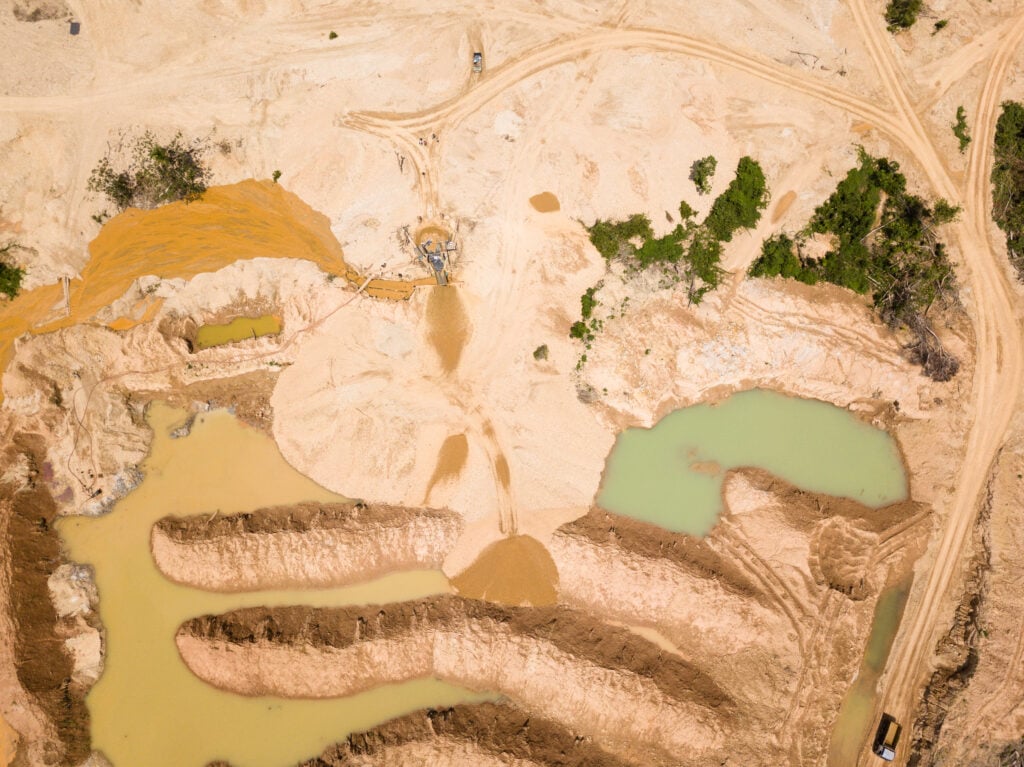
On the wide expanse of the Rio Madeira – a major tributary of the Amazon – the first pale light of morning reflects off an endless flat of steel rafts. Their engines lie silent now, but the bank still trembles with the memory of dredging: the long hoses, the metallic arms gouging the riverbed, the churned-mud water that once flowed dark and placid now hazed a coffee-cream color. Along the shore, driftwood and broken machinery litter the mudline. A scar where the river had been alive, now scarred by illicit gold extraction and mercury-laden silt.
And above the rust-stained shore, the forest stands half-aware – ancient, green, yet trembling in its roots.
In one of the most ambitious operations yet against illegal mining in the Amazon, Brazilian authorities have destroyed 277 floating gold-mining dredges on the Madeira River. The rafts alone were valued at roughly US$6.8 million, and when equipment, lost production and environmental damage are tallied, the impact on criminal networks is estimated at nearly US$193 million.
Setting the Stage of the Crackdown
The operation was conducted by Brazil’s Federal Police, aided by Interpol and coordination across several Amazon-region countries. Experts used satellite imagery to map some 400 square kilometres of river and forest impacted by the mining machines. The river is not just a waterway: it is the lifeblood of communities, fish species, forests and transport corridors.
By targeting the Madeira River, the authorities struck at a key artery of the illegal-gold trade – one of the most environmentally sensitive and logistically complex zones of illicit mining. This is the same stretch where, just months earlier, dredge rafts had re-appeared after a previous clearance.
The Ambiguity at the Heart of Power
But the scene contains a deeper contradiction. As Brazil readies itself to host the COP30 climate summit in November in the Amazon region, it has simultaneously authorised a major fossil-fuel project in the same biome. Less than a month before COP30, the government’s environmental agency granted the state-run oil company Petrobras the licence to explore for oil in the Foz do Amazonas Basin – the mouth of the Amazon River.
Campaigners describe the drilling approval as “sabotage” of Brazil’s climate leadership. As one coalition put it:
At the same time that the government is demonstrating force against illicit mining fleets, it is unlocking fossil-fuel extraction in one of the world’s most vulnerable ecosystems. According to Reuters, the licence was approved 20 October 2025, just weeks before the global summit. Reuters
Why This Matters
- Illegal dredging ravages ecosystems. These machines rip open riverbeds, stir sediments, kill aquatic life and leave behind mercury-laced residue. The re-emergence of dredges after prior crackdowns shows how resilient and mobile the networks are.
- Criminal ties run deep. In some operations, illegal gold mining was found to generate millions of dollars per month, involve heavy mercury usage and even weapons financing.
- Hostility between policy and practice. The government’s dual move – hard enforcement on dredges and new oil licences – signals a conflicted strategy. On one hand they posture as guardians of the Amazon; on the other they open new frontiers of extraction.
Voices from the Field
“They are circulating in the region even after the various police operations that have taken place in recent years.” – Jorge Dantas, Greenpeace Brazil.
“We estimate that around 40% of the gold that is extracted in the Amazon is illegal.” – expert quoted by Reuters on Brazil’s gold-traceability programme.
The Road Ahead
The destruction of hundreds of dredges is a significant blow. But it is only one front in a much larger struggle. Unless the government sustains pressure, invests in economic alternatives for local communities, and aligns its climate diplomacy with its resource policy, the scars will keep appearing.
Meanwhile, the dual posture – crack down on illegal mining while approving new oil drilling – raises a stark question: can Brazil lead a global climate summit while simultaneously opening fossil-fuel fronts in its most critical rainforest? The world will be watching as COP30 convenes and as the next dawn breaks over the Madeira, the dredges, the fishers, the forest and the river.
