
Editorial note: This article was originally published on My Inner Creative and has been updated and republished in May 2026 under The Vessel’s editorial standards.
A memory spread is a page in a bullet journal that records the small things from a stretch of time — a week, a month, a year — that the journaler decided afterwards were worth keeping. The page does not store everything; it could not. What it stores is the residue: the few moments that, on reflection, the journaler chose to write down rather than let slip out of memory the way most days do.
The spreads collected below were originally featured on My Inner Creative as a survey of how journalers have built memory pages into their notebooks. They range from short weekly entries — three lines a week, sometimes less — to elaborate annual recap spreads that hold the entire shape of a year on a single page. None of the formats are required; the format that matches the journaler’s memory and patience is the one that works.
What goes on a memory spread
The entries on a memory spread are usually short. A line or two per memory is enough; the page is not a journal entry, and it does not need context. A meal, a walk, a conversation that landed well, a small piece of work that came together, a stretch of weather, a book finished, a film seen, a place visited for the first time. The entries can be anything the journaler wants to remember later, and the only filter that matters is whether the journaler will actually look back at the page months later and feel grateful that the entry is there.
What does not usually go on the page is the everyday administration of life. The dentist appointment, the bills paid, the meetings attended — these belong on other pages in the notebook. The memory spread is for the entries that would otherwise drift away, and most days do not produce such an entry. A week with two entries and five blank days is a normal week. A month with thirty entries is the rare and notable month.
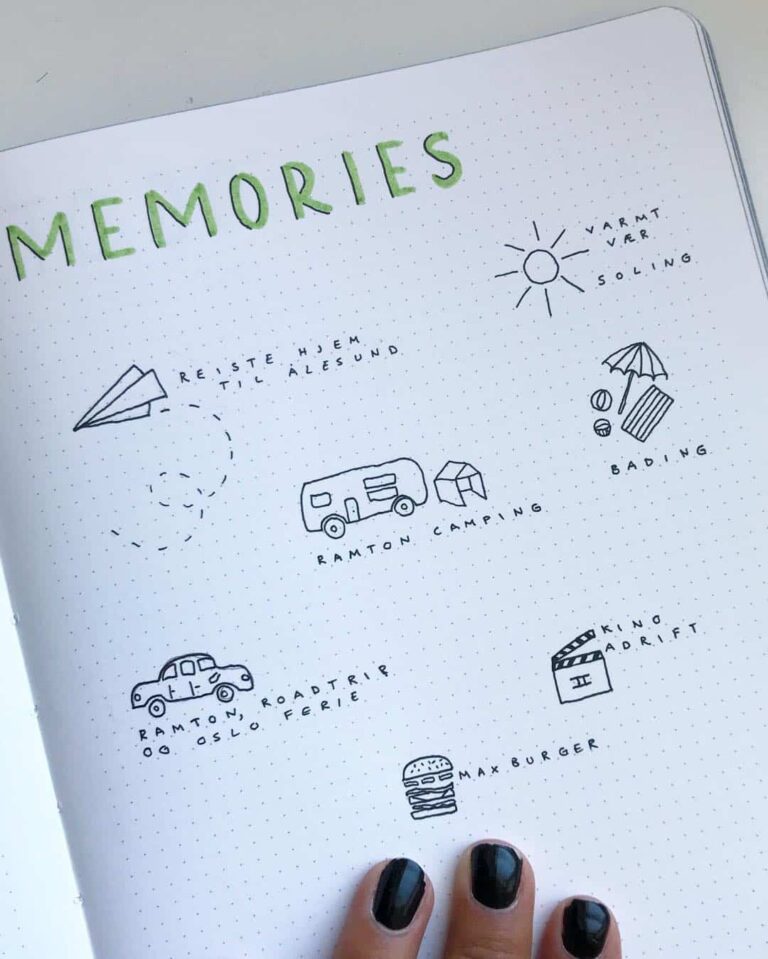
How the page is usually laid out
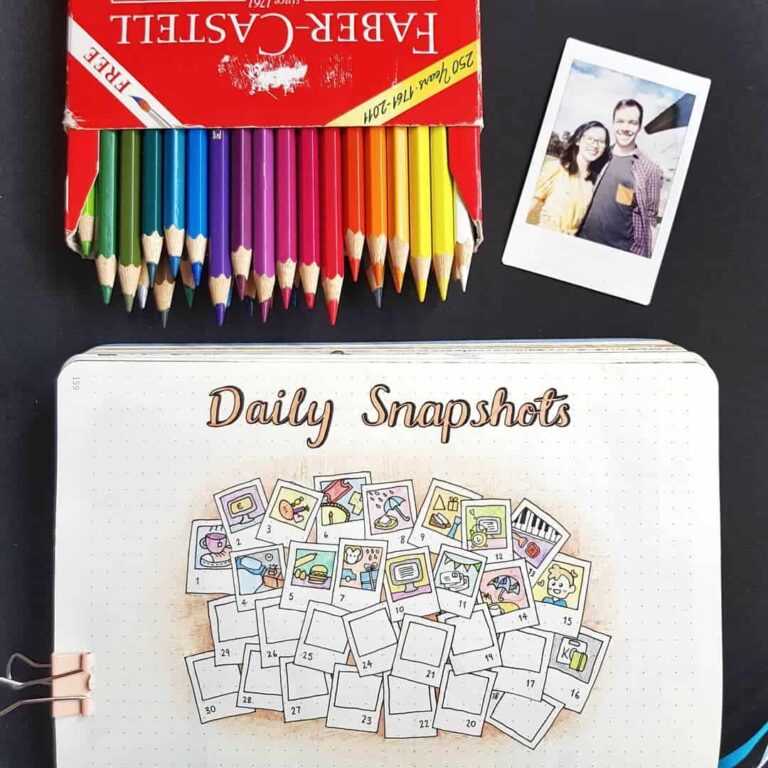
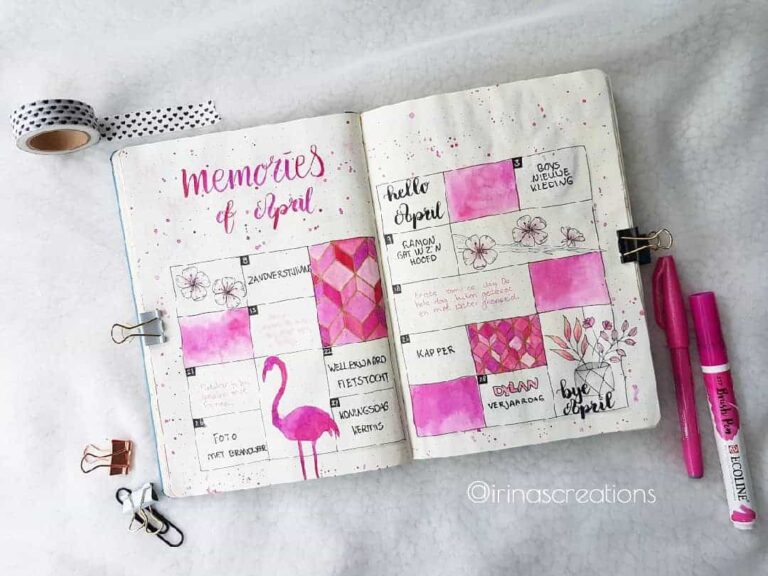
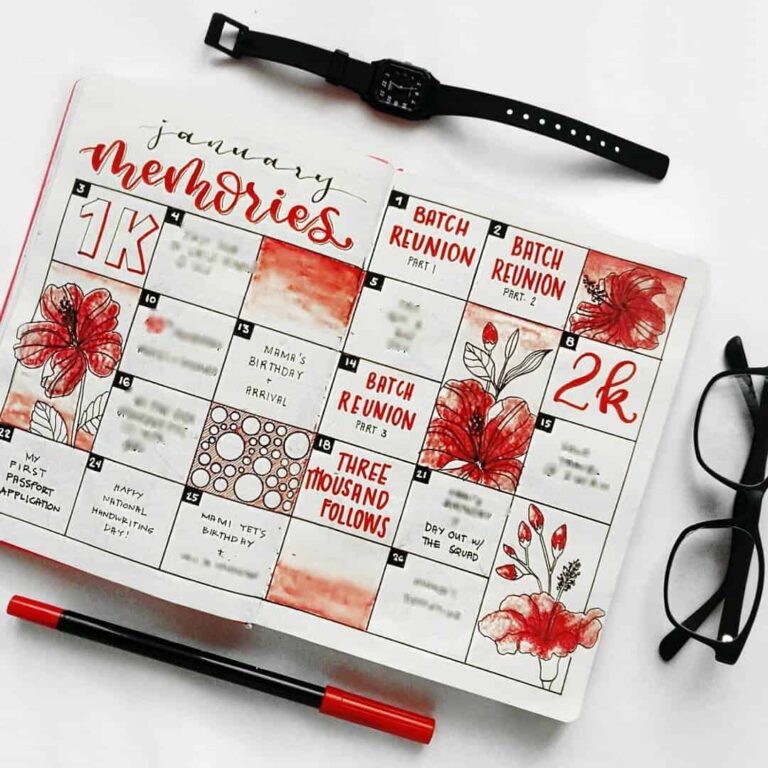
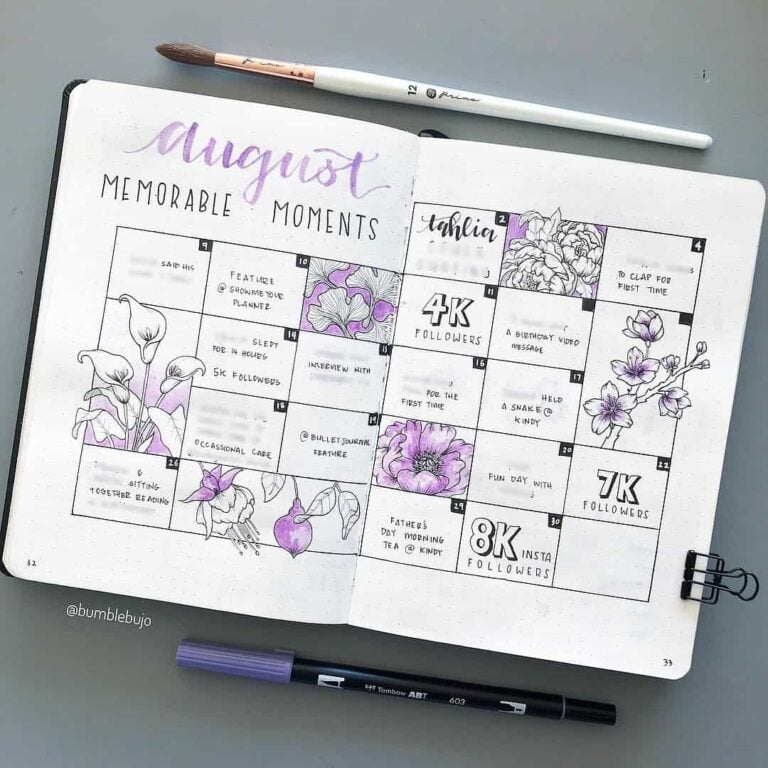
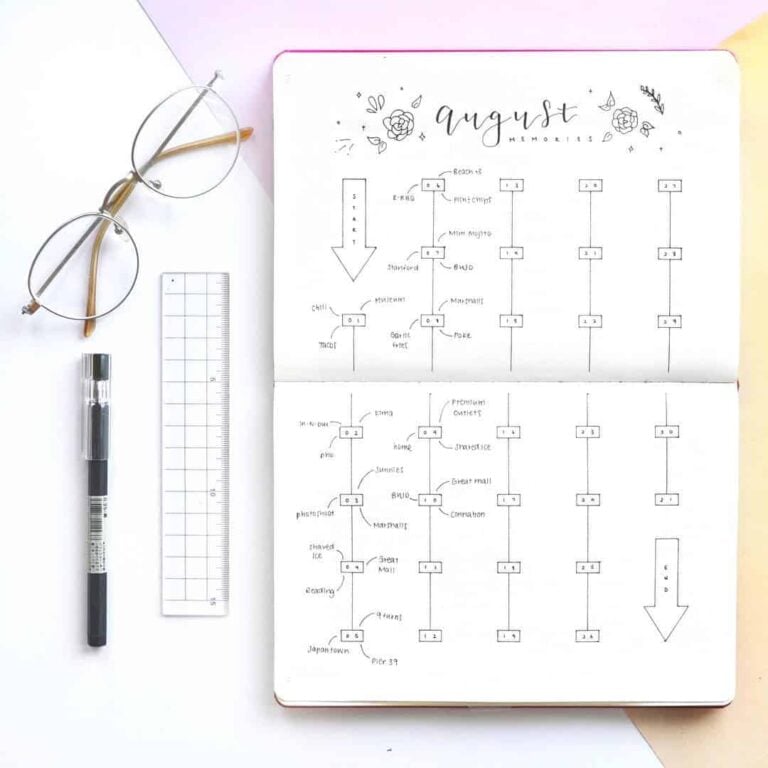
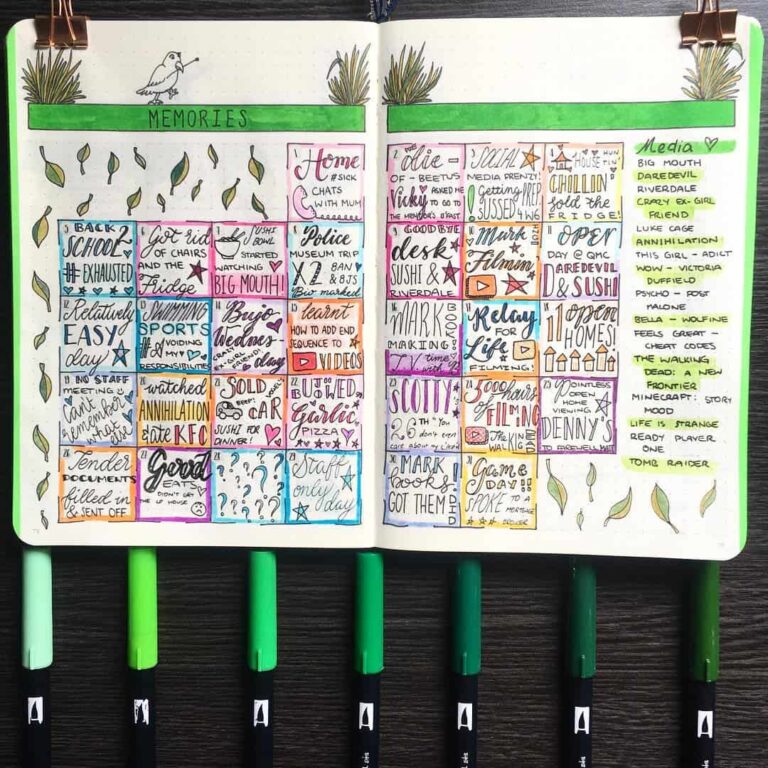
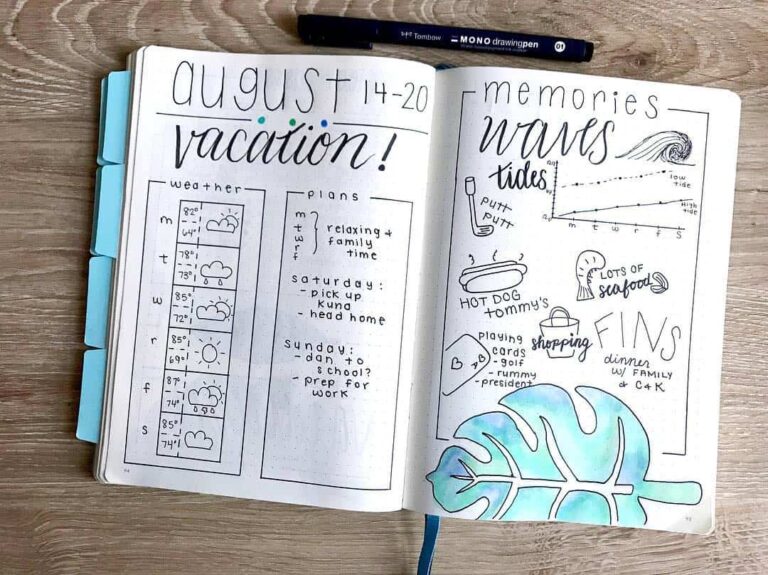
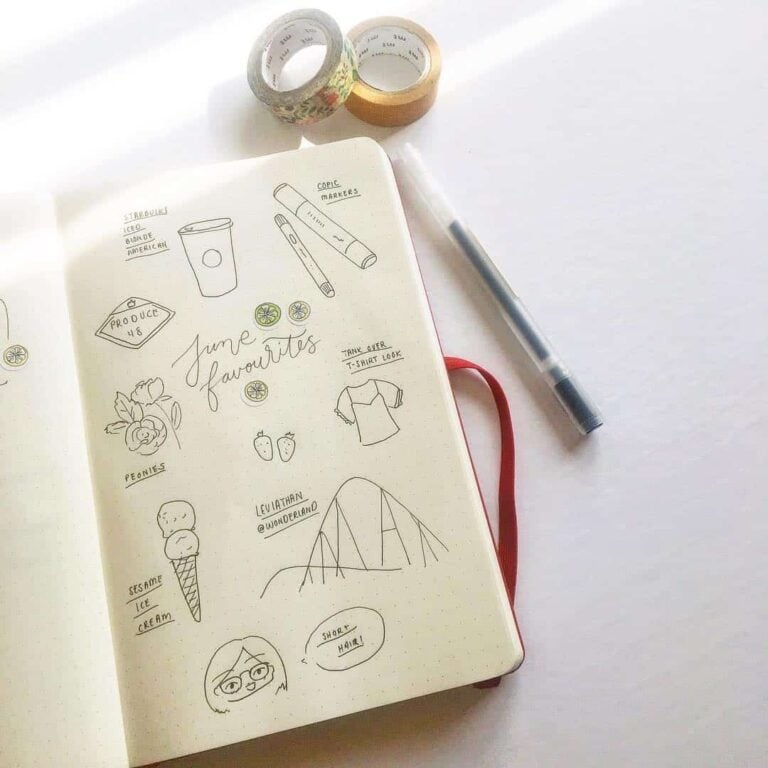
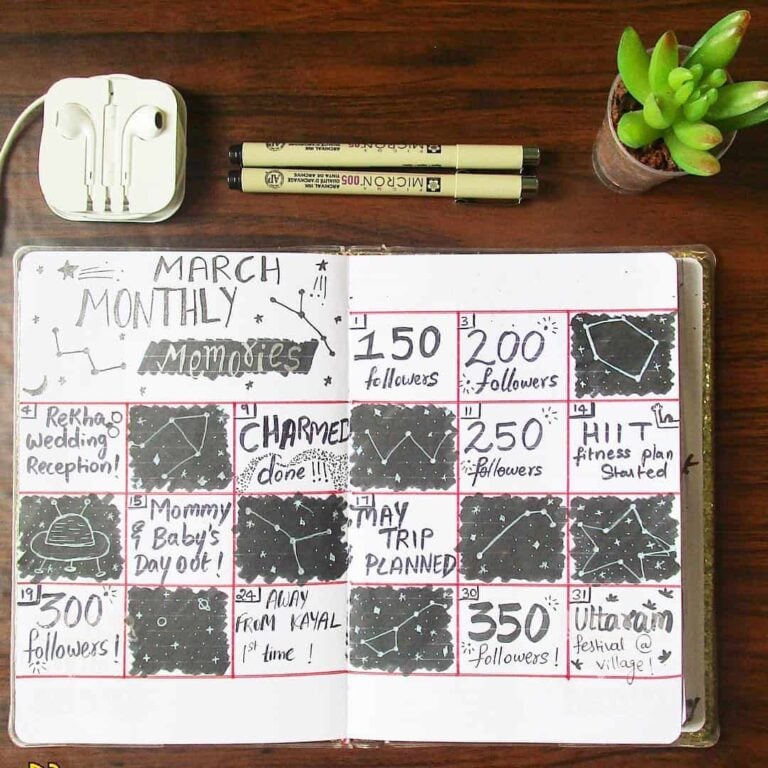
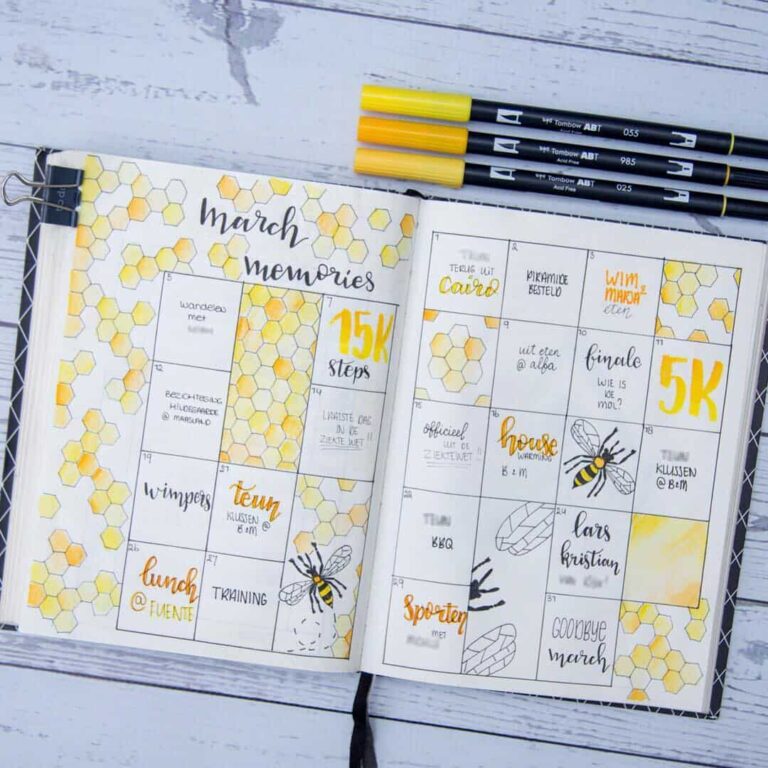
Three formats appear across the gallery. The simplest is a running list, with the date noted alongside each entry. The format is fast, easy to keep up with, and works equally well filled in at the end of each day or at the end of the week in retrospect. The second is a calendar grid, where each day has a small box and the journaler writes a short note for the days that produced one. Blank days are part of the format; they do not need to be filled in.
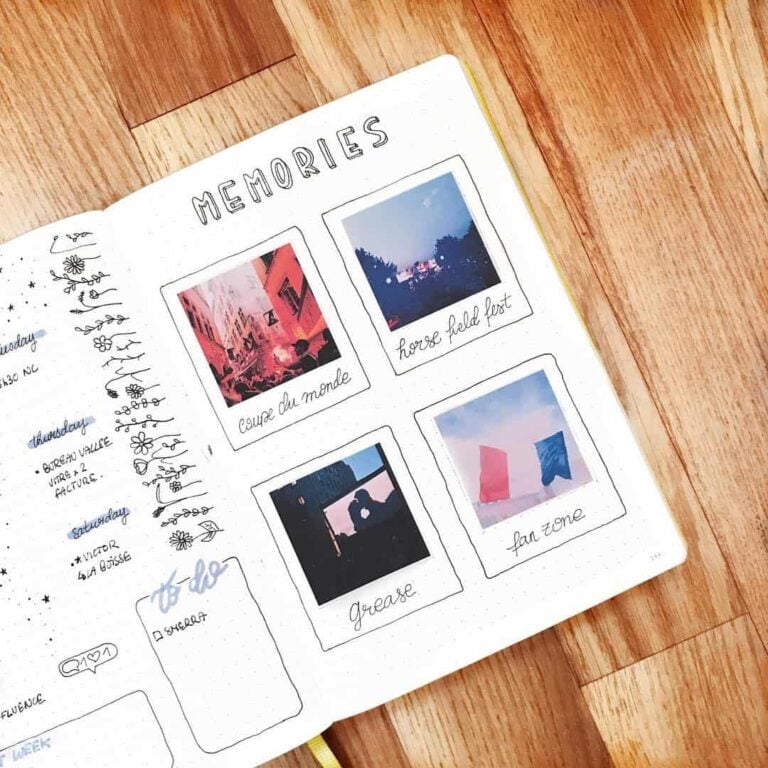
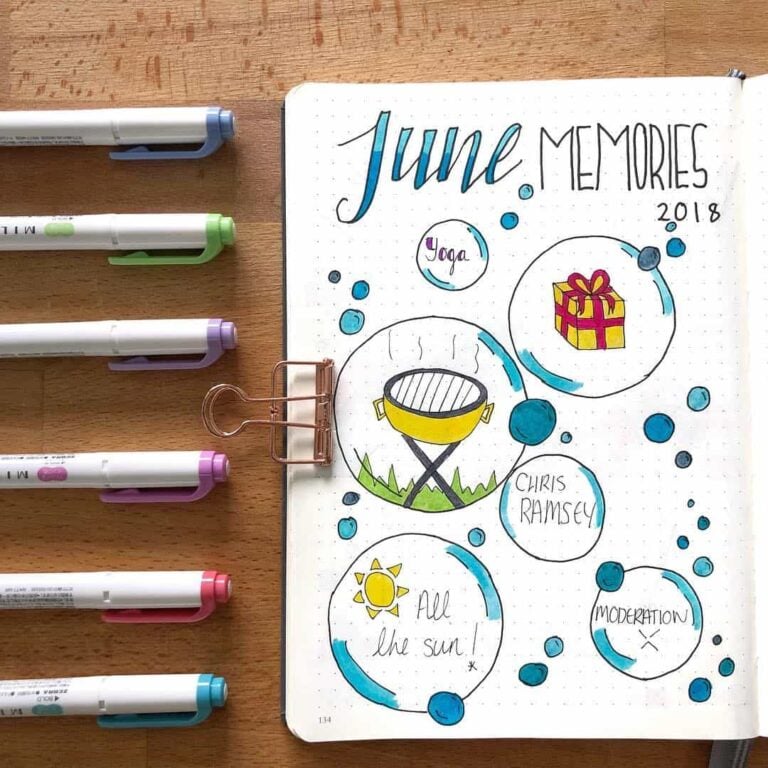
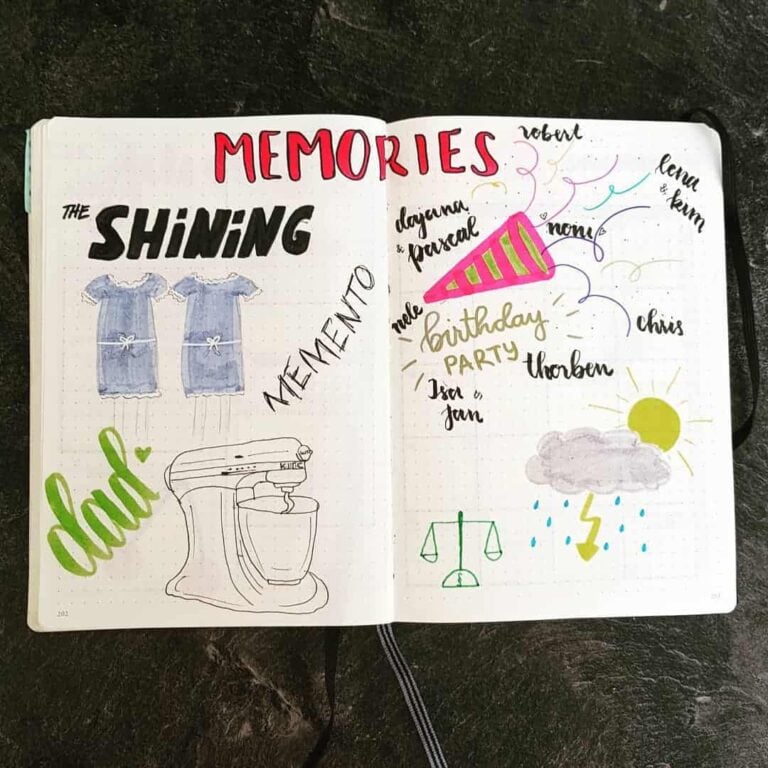
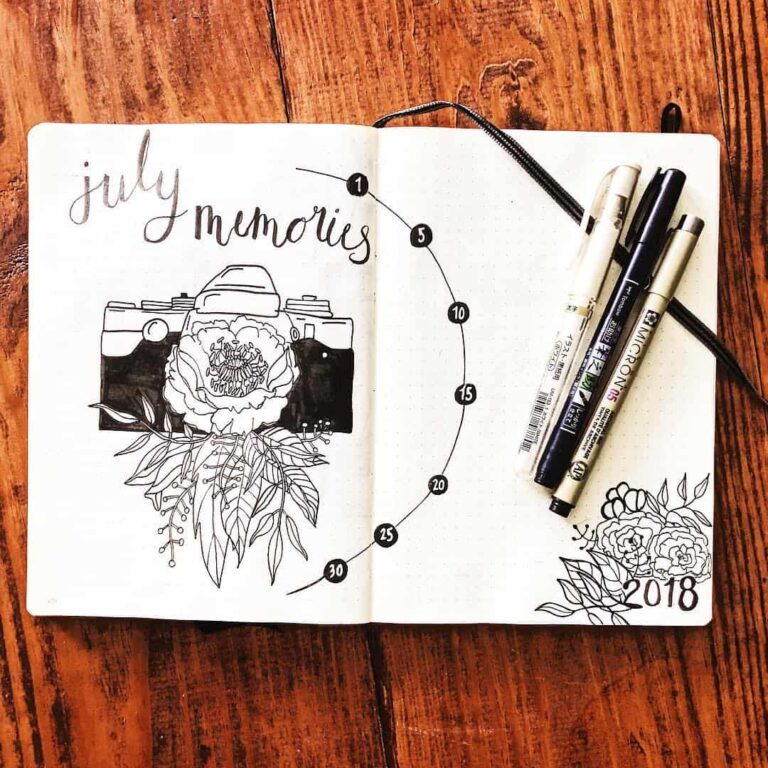
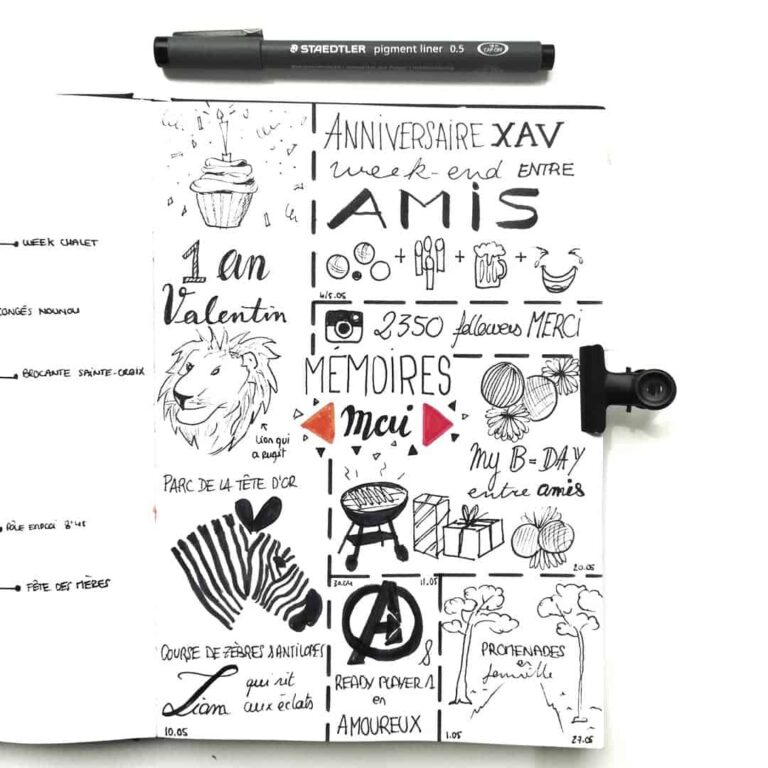
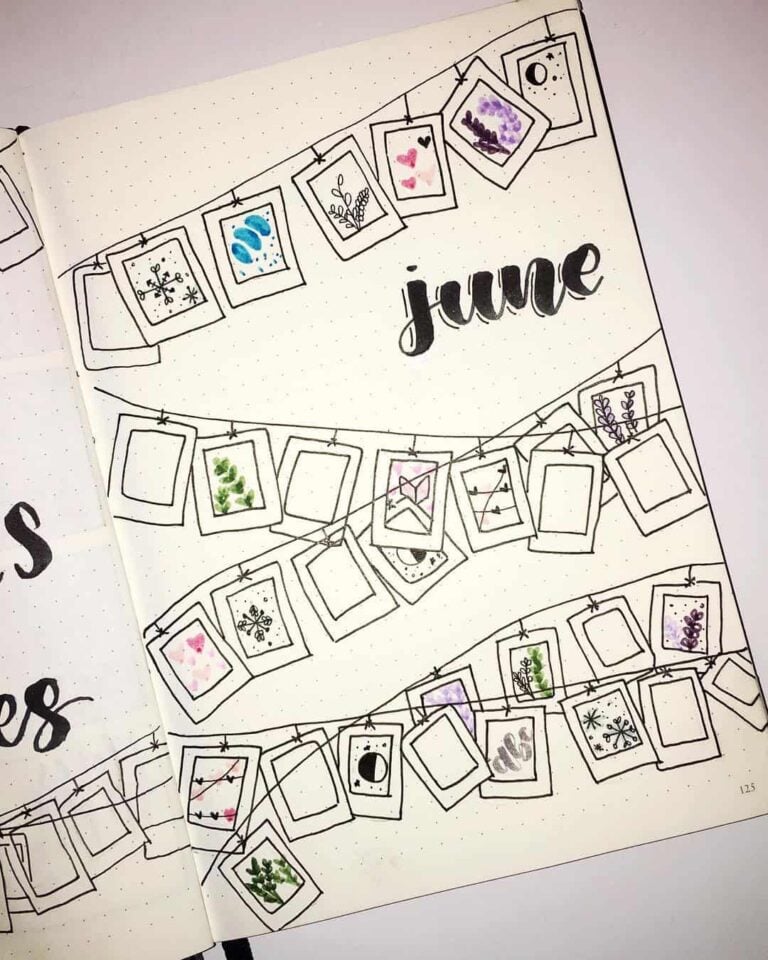
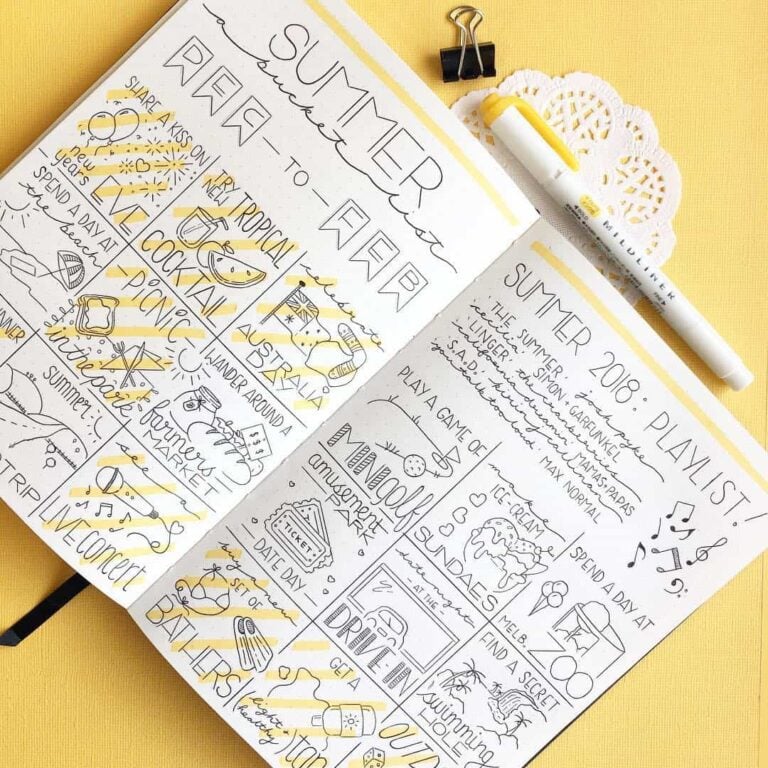
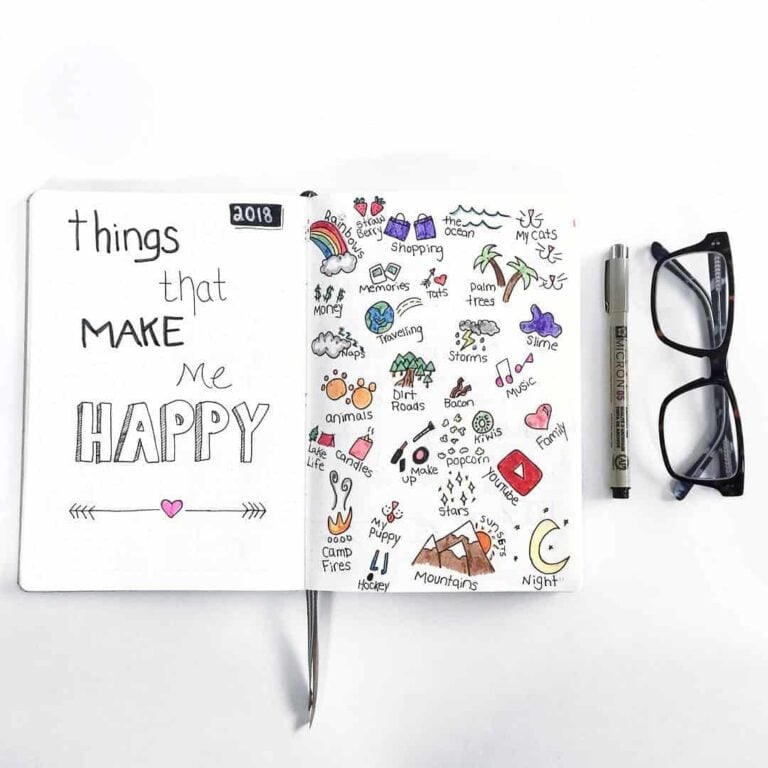
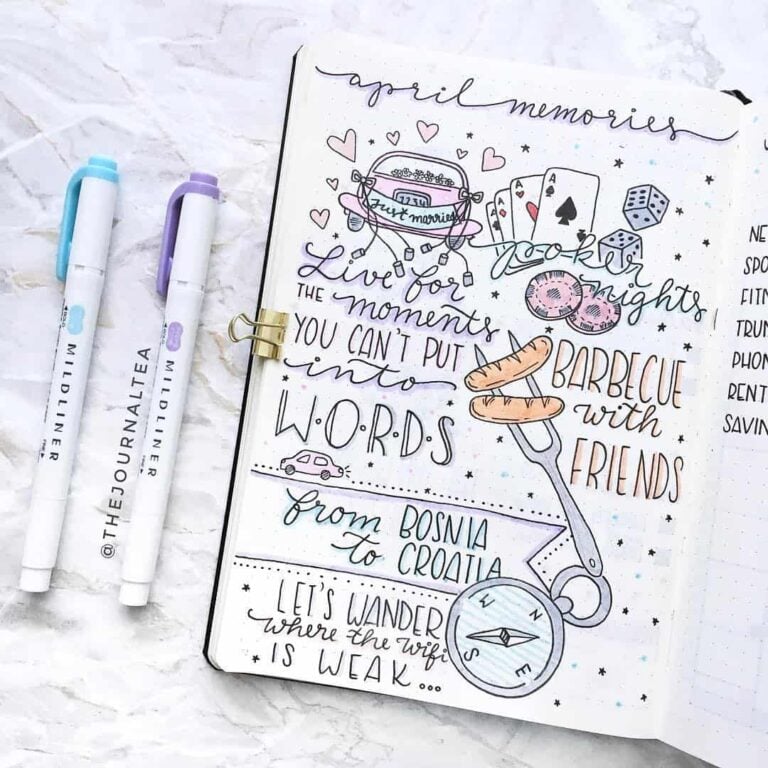
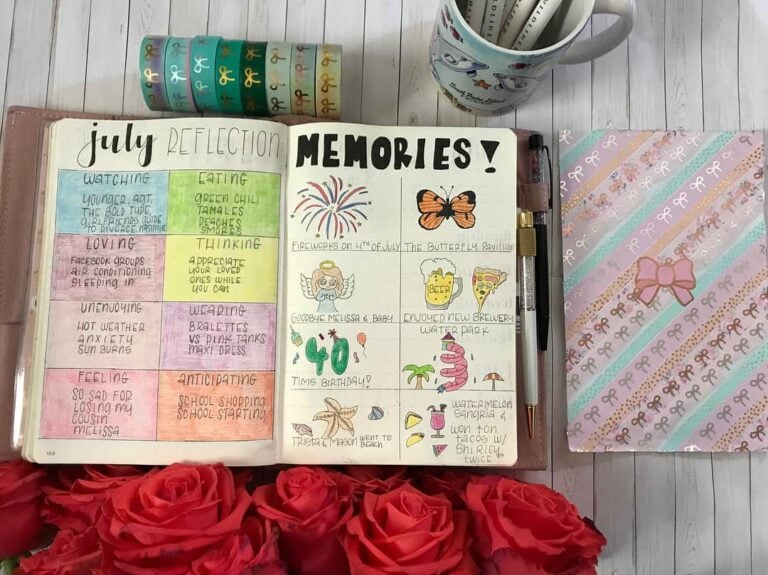
The third is a scrapbook-style page that combines text with small drawings, washi-tape strips, ticket stubs, pressed leaves, or printed photographs. This is the most time-consuming of the three to maintain. The pages in the gallery that use it tend to be set up on a longer rhythm — a single spread per month, or per quarter, or per year — rather than continuously, because the scrapbook format does more work as a single completed page than as a running entry.
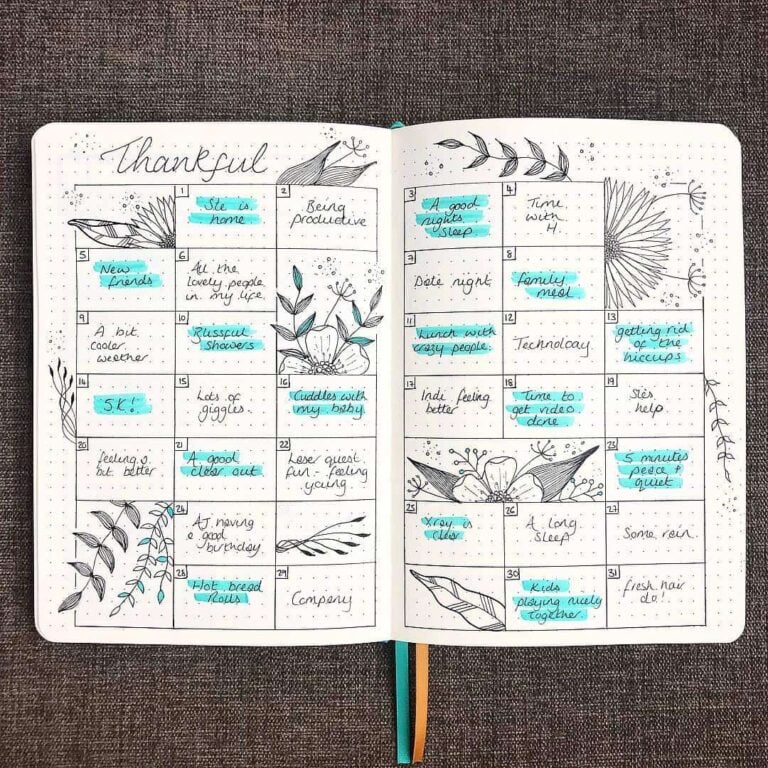
Why people keep them
The most practical reason is that memory is unreliable. A year that felt full of nothing tends to look quite different on the page once the small moments have been written down. The memory spread is not a corrective for that mismatch — it does not change what happened — but it does provide a more accurate record than recollection alone, particularly for the periods of life when the days run together and any one of them is hard to distinguish from the next.
A second reason is the act of choosing. Deciding what counts as a memory worth keeping is a small piece of attention that the page asks for once a day or once a week. The decision is private and low-stakes; nothing depends on it. But the practice of pausing at the end of a day to look back at it, even briefly, and to write one small thing down is itself part of why the page is useful, separate from anything that gets recorded on it. Some people who keep these spreads describe the choosing as the part of the practice that matters most.
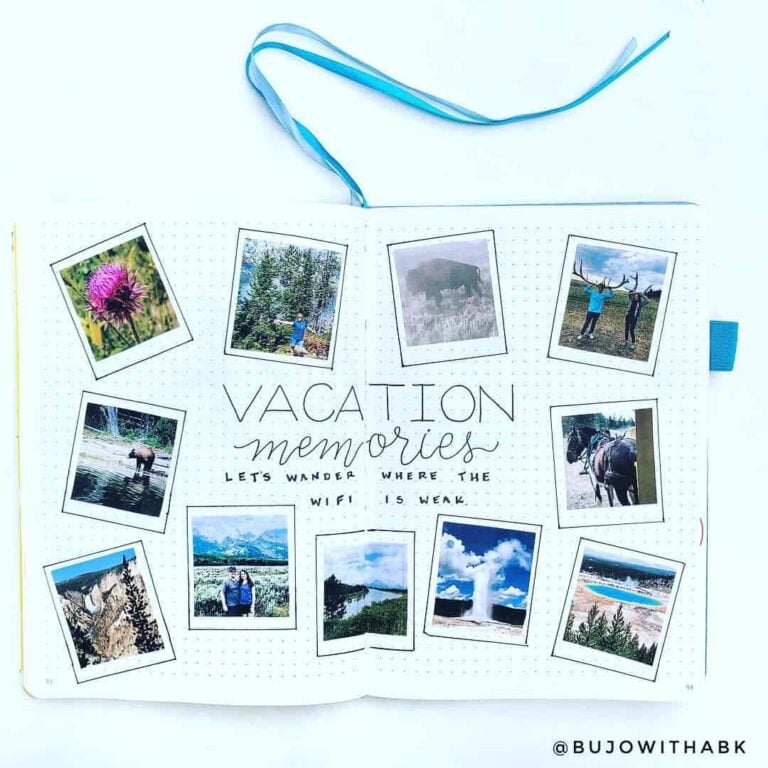
Different time scales
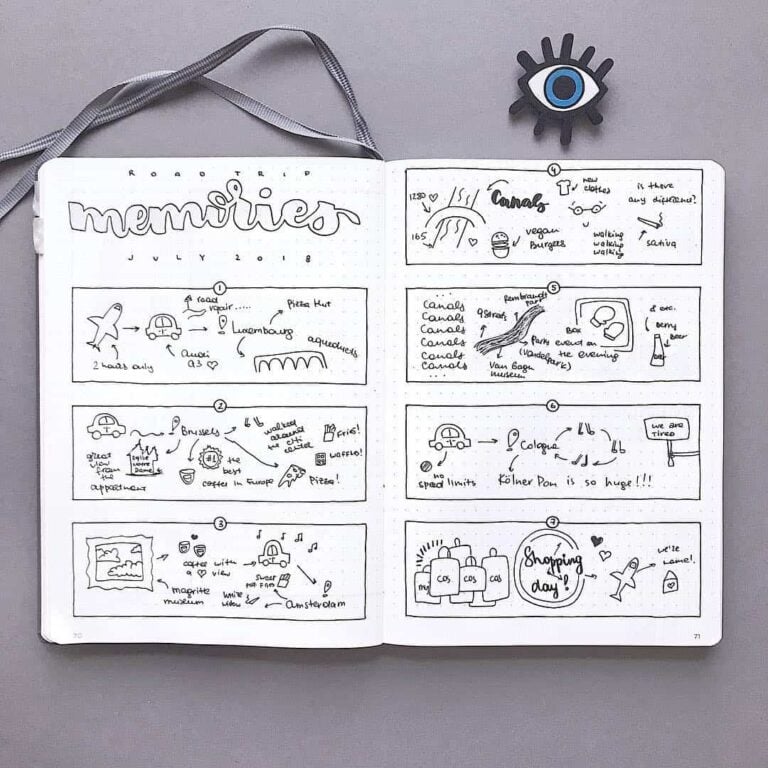
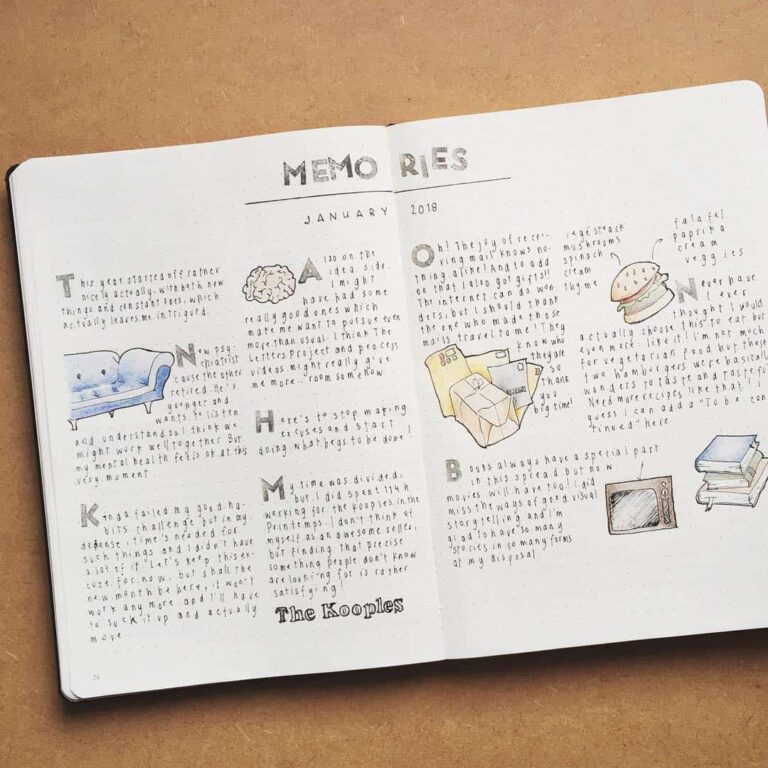
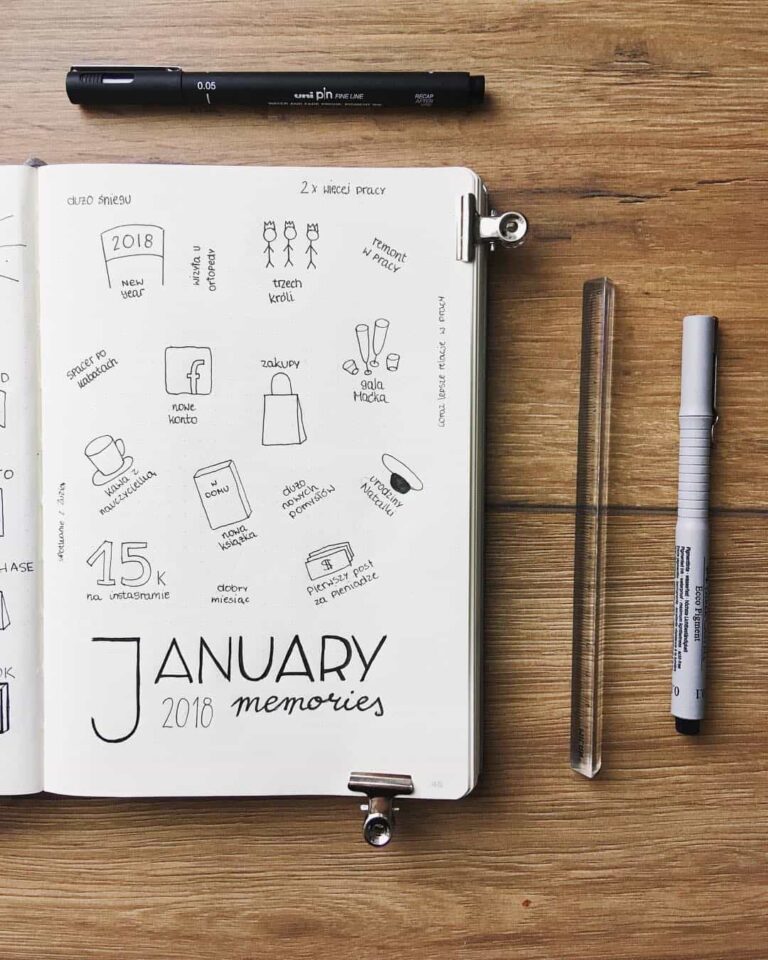
Memory spreads can be kept at any scale the journaler finds useful, and the spreads below cover most of them. A daily memory line at the bottom of the daily log; a weekly summary written on a Sunday; a monthly recap spread filled in at the end of each month; an annual one-page-per-year spread that compresses twelve months onto a single page or a single double spread. The longer the time scale, the more selective the entries; the shorter, the more granular.
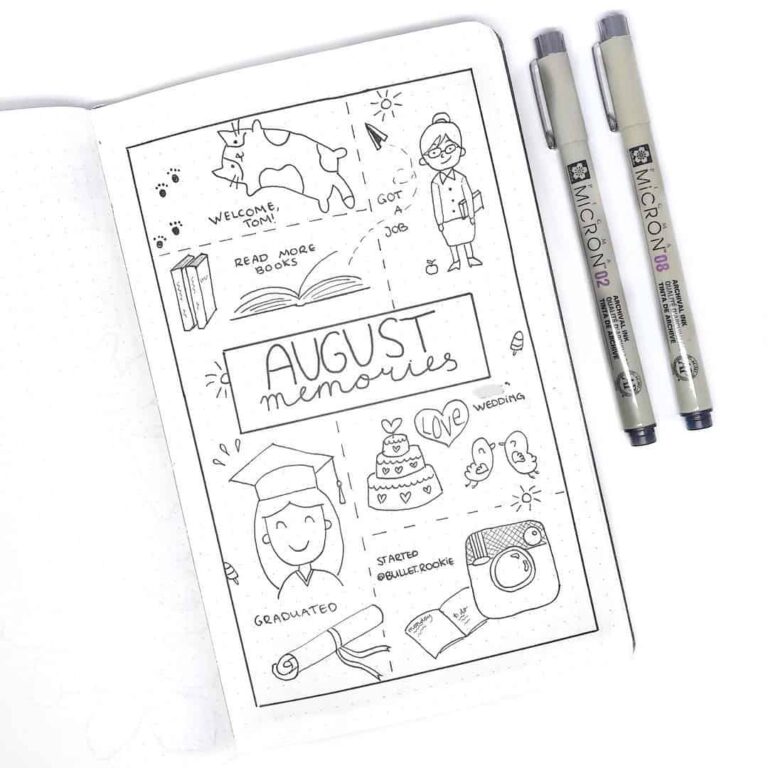
The annual spreads in the gallery are the most striking visually. Some use a single page divided into twelve small sections, one per month, with each section holding the handful of entries the journaler chose to carry forward from that month. Read together, the page is a year in maybe a hundred lines. It is not a complete record of the year, but it is a record of the year as the person who lived it would describe it after the fact, which is often the version of the year worth keeping.
What a memory spread is not
A memory spread is not a gratitude journal, although the two overlap. A gratitude journal is filled in with the express purpose of recording things to be grateful for, often as part of a practice aimed at a particular emotional effect. A memory spread is filled in with whatever the journaler wants to remember later, which sometimes is gratitude and sometimes is just a record of a day. The difference matters because the memory spread does not require the journaler to be in any particular emotional state to fill it in; a difficult month can produce as many memory entries as a good one, just different ones.
The memory spread is also not a diary. A diary holds the texture of a day in full sentences. A memory entry is generally a phrase, sometimes a single word. The difference is the time commitment. A diary asks for ten or fifteen minutes; a memory entry asks for thirty seconds. The lower bar is part of why the practice survives weeks that a longer journaling practice does not.
Featured memory spreads
The spreads collected below come from the My Inner Creative community and span running lists, calendar grids, scrapbook-style pages, monthly recap spreads, and full-year compressed pages. They are included as a visual reference; any one of them can be redrawn in a notebook with a pen and whatever the journaler happens to be carrying alongside it.
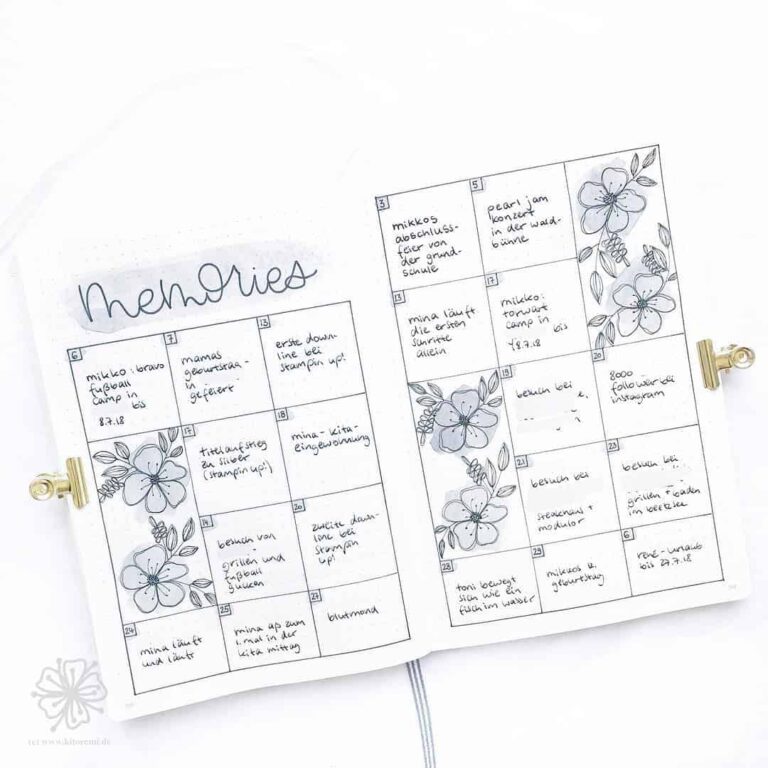



The work the memory spread does is mostly the work of choosing. Most days produce small moments that the journaler could write down, and most journalers choose to write down only a few of them. The choices accumulate over weeks and months into a record that is not the full year but is, on most pages, the part of the year worth carrying forward. What is on the page is the part the journaler decided to keep. What is not is the rest of the year, which the page does not pretend to hold.