There is a specific kind of loneliness that hides inside a full contact list. The person who runs it — the confidante, the crisis manager, the friend everyone calls at 2 a.m. — is often the one no one has thought to call in return. The pattern shows up across decades of attachment research, and it turns out not to be a personality type at all. It is a role, and the role has a cost.
The phrase “low maintenance” gets used as a compliment, the way easygoing does, or chill. In the research literature it looks less flattering. What clinicians see when they interview so-called low-maintenance friends is a consistent pattern of emotional suppression, compulsive caregiving, and a specific kind of loneliness that can persist even inside a large, warm social network.
The role has a name
The clinical concept is compulsive caregiving, and it was described by the British psychiatrist John Bowlby — the same Bowlby who developed attachment theory — in the third volume of his trilogy, Loss: Sadness and Depression, published in 1980. Bowlby had noticed that a subset of adults responded to their own distress by locating someone else’s distress and tending to it. Not out of saintliness. Out of a learned incapacity to be the one who needed tending.
His observation was that these adults, as children, had often been in households where a parent was unavailable, ill, grieving, or overwhelmed, and where the child had figured out early that being useful was safer than being needy. The child who becomes the family’s small adult grows into the friend group’s steady one. The mechanism is not mysterious. It is just old.
Bowlby’s framing was later expanded by the psychologist Kim Bartholomew, who with Leonard Horowitz in a 1991 paper in the Journal of Personality and Social Psychology mapped four adult attachment styles, one of which — dismissive-avoidant — closely tracks what people in ordinary conversation call being “low maintenance.” Dismissive-avoidant adults report high self-reliance, low comfort with dependency, and a strong preference for being the giver rather than the receiver in close relationships. They are not cold. They are, in Bartholomew’s language, deactivated.
The 200-hour problem
To understand why the strong friend so often ends up with a network full of people who don’t reciprocate, it helps to look at how adult friendships actually form. In a 2018 study published in the Journal of Social and Personal Relationships, the communication researcher Jeffrey Hall at the University of Kansas tracked how long it took strangers to become friends. His finding, drawn from surveys of hundreds of adults, was that it takes roughly 50 hours to become casual friends, 90 to become real friends, and more than 200 to become close friends.
The number matters here for a specific reason. When one person in a friendship does most of the emotional labor — remembers birthdays, checks in after hard weeks, drives to the airport, listens through the divorce — they log those hours on the giving side of the ledger. The other person logs them on the receiving side. Over years, the relationship can feel enormously close from one direction and pleasantly light from the other. Both people are telling the truth about their own experience. They are just describing different relationships.
This is why the strong friend can be surrounded and still lonely. The hours are there. The reciprocity isn’t.

Emotional loneliness is not the same as being alone
The distinction the strong friend runs into is one the American sociologist Robert Weiss drew in 1973, in his book Loneliness: The Experience of Emotional and Social Isolation. Weiss argued that there are two distinct types of loneliness: social loneliness, which comes from not having enough people in your life, and emotional loneliness, which comes from not having the right kind of attachment inside the people you do have.
Weiss was clear that these are not degrees of the same thing. A person with fifteen close relationships and no one who asks how they actually are is emotionally lonely in exactly the way Weiss described, and social contact will not fix it. His research subjects — many of them widows, some of them highly social — reported feeling most alone at dinner parties.
The strong friend often sits in this exact gap. Their calendar is full. Their inbox is full. When they try to explain the feeling to someone, it sounds ungrateful, so they usually don’t try.
Why the strong friend often doesn’t ask
There is a specific piece of the pattern that researchers in the field of alexithymia — a term coined by the Harvard psychiatrist Peter Sifneos in 1972 — have documented in detail. Alexithymia is the difficulty in identifying and describing one’s own emotional states, and it is elevated in adults who took on caregiving roles as children.
A 2022 meta-analysis in the Journal of Child Psychology and Psychiatry by Khan and Jaffee, drawing on 88 studies and more than 43,000 participants, found a consistent link between childhood maltreatment — particularly emotional neglect — and adult alexithymia. The mechanism proposed by researchers is straightforward: children who grew up in households where their emotions were inconvenient learn to stop tracking those emotions. By adulthood, the tracking equipment is atrophied. They cannot ask for help partly because they cannot name what they need.
This is why the strong friend’s I’m fine is often not a lie. It is a genuine readout of a system that has been trained not to produce more granular data.
The health cost is measurable
The physiological consequences of long-term emotional suppression have been studied since the 1990s by the psychologist James Gross at Stanford, whose work on expressive suppression — deliberately hiding what you feel — showed in laboratory conditions that suppressors experience elevated cardiovascular activity, reduced memory for the suppressed event, and higher sympathetic nervous system arousal than people who express or reappraise emotions.
A 2013 longitudinal study led by Benjamin Chapman at the University of Rochester Medical Center followed 729 adults for twelve years and found that those who habitually suppressed their emotions had a 35% greater risk of premature death from any cause, and a 70% greater risk of cancer-specific mortality, compared to those who expressed. The sample was small enough that the effect estimates are noisy, but the direction has been replicated across other cohorts.
The strong friend, in other words, is not just tired. They are running a physiological cost the rest of the group cannot see, because the whole point of the role is that the cost stays invisible.
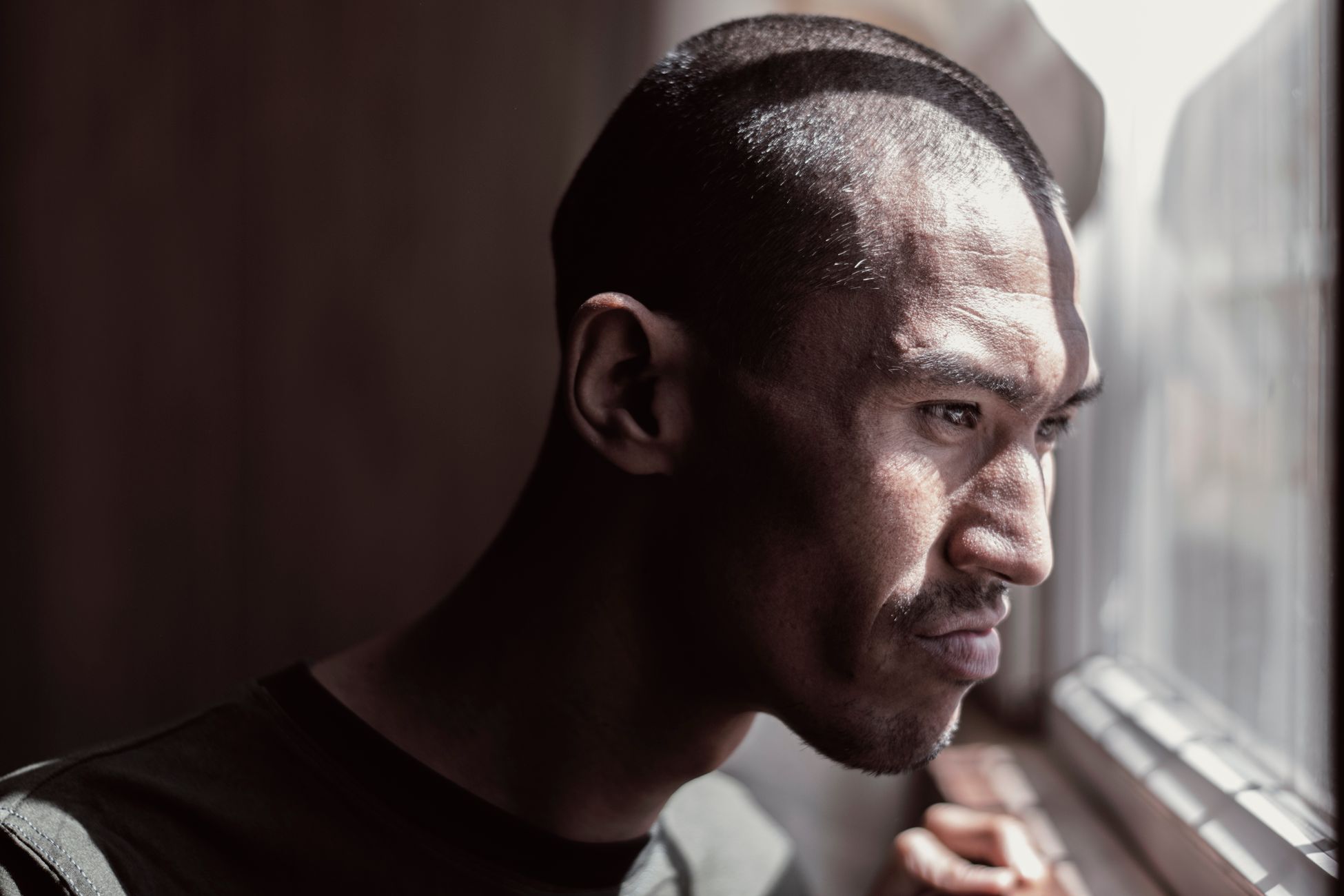
Young adults are the loneliest, and the strong friend is often young
The demographic distribution of loneliness is often misunderstood. A large 2023 Meta-Gallup survey across 142 countries found that nearly a quarter of adults reported being very or fairly lonely, and the loneliest cohort was not the elderly. It was young adults aged 19 to 29.
This is the same age band in which the strong-friend role often ossifies. In college and the first years afterward, when everyone is figuring out who they are, the person who is already good at holding everyone else together is quickly promoted. Others learn where to bring their problems. The strong friend learns nothing about where to bring their own.
By the mid-thirties, a friend group has typically settled into patterns that are very difficult to renegotiate. Hall’s 200-hour figure cuts both ways: it takes hundreds of hours to become close, and it takes almost as many to rewrite the terms of a closeness that already exists.
What breaking the pattern actually requires
The clinical literature on changing this pattern is not encouraging in the short term but not fatalistic either. The most cited framework is Sue Johnson‘s Emotionally Focused Therapy, developed in the 1980s and grounded in attachment theory, which explicitly targets the pattern of deactivation Bartholomew described. Johnson’s approach treats the inability to reach for help not as a character flaw but as a strategy that once worked and has now outlived its usefulness.
The intervention, in practice, is small and unglamorous. It involves practicing vulnerability statements like admitting when they’re struggling with one person, once, and staying in the room afterward to see what happens. Most strong friends, in Johnson’s clinical descriptions, expect the person on the other side to flinch, withdraw, or become overwhelmed. Most of the time, that isn’t what happens. But the belief that it will happen is what has organized decades of behavior, and beliefs organized that early do not dissolve on a single evening.
The quiet part
The uncomfortable observation buried in all of this research is that the people we most admire in our friend groups are often the people we have most thoroughly failed. Not through cruelty. Through the ordinary human tendency to accept a gift that keeps being offered without asking what it costs the giver.
The strong friend is not asking to be relieved of the role. Most of them, if asked directly, would say they like being the one people call. That is also true. Both things can be true. What the research suggests is only this: the person who never hands anyone anything heavy is not lighter than everyone else. They are carrying the same weight as anyone, and possibly more, and the reason no one has ever helped them with it is that no one has ever been asked.
The asking is the whole thing. It is also the part the strong friend has spent a lifetime learning not to do.