
When I was twenty-five, I moved into a studio apartment in Melbourne and assembled every piece of furniture in it by myself. A wardrobe, a bed frame, a desk, a bookshelf. I remember standing in the middle of it all at two in the morning, nursing a cut on my thumb and feeling something I mistook for pride. I hadn’t asked a single person for help. Not my brother Justin, who lived twenty minutes away. Not the mate who’d offered. Not anyone.
A year earlier, I’d moved a washing machine down a flight of stairs alone and hurt my back. Before that, a refrigerator up two flights, which left a bruise on my knee the color of an overripe plum that lasted three weeks. Each time, I told myself the same story: I was independent. I was capable. I was the kind of person who didn’t impose on others.
What I didn’t realize, and wouldn’t for years, was that the story had a quieter second half. The unspoken part went something like this: If I need something from you, you might find me too much. And if you find me too much, you might leave.
The shape of the pattern
There’s a particular identity that forms when a child grows up sensing, correctly or not, that love comes easier when they’re easy. When they’re quiet. When they don’t cry too long, don’t ask too many questions, don’t take up too much space. The child learns a devastating equation: my needs are the variable that determines whether people stay.
Psychologist Hal Shorey has written extensively about what he calls compulsive self-reliance, a pattern where individuals systematically avoid depending on others because dependency itself feels dangerous. Shorey traces this back to early relational experiences where expressing need was met with withdrawal, frustration, or subtle punishment. The child doesn’t necessarily remember being told “you’re too much.” They remember the atmosphere. The sigh. The shift in energy.
I was that child. Someone told me I was “too sensitive” when I was about eight or nine. I don’t remember who, exactly. I remember the feeling. The way I quietly decided, somewhere below language, that the sensitive parts needed to be managed out of other people’s view. That the safest version of me was the one who never needed anything.
By my twenties, I had perfected it. I battled anxiety through the entire decade and told absolutely no one. A coworker at the warehouse where I shifted TVs onto loading docks once told me I was “impossible to read.” I took it as a compliment. It was the furthest thing from one.
What the research actually shows
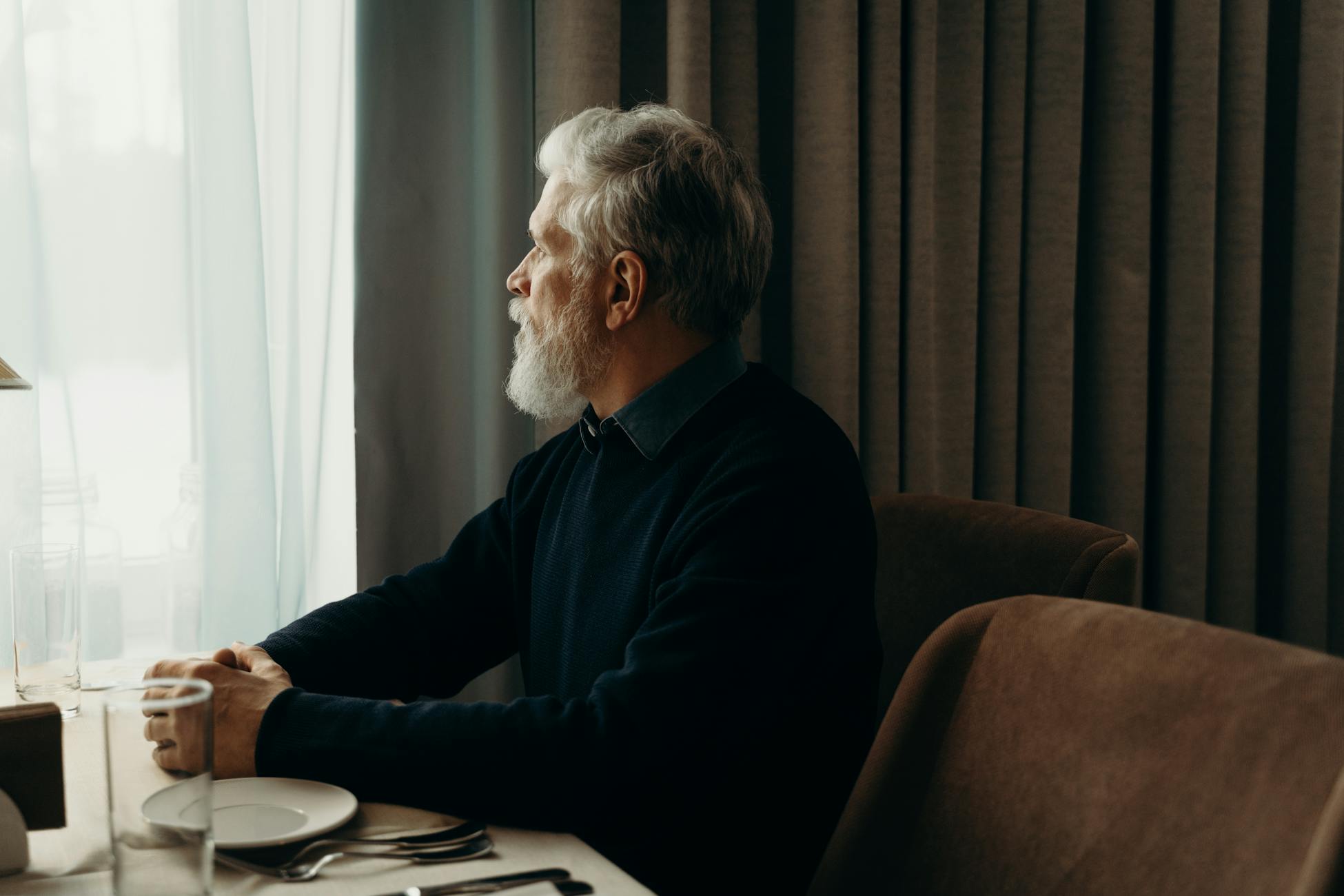
There’s a body of attachment research that makes this pattern uncomfortably clear. John Bowlby’s foundational work on attachment theory identified what later researchers would call the dismissive-avoidant attachment style, a relational orientation where closeness is experienced as threat. People with this style tend to prize independence, downplay emotional needs, and pull away when relationships deepen. From the outside, they look self-sufficient. From the inside, they’re vigilant.
You may have noticed something about these people, because you might be one of them: they’re often the ones described as “low-maintenance” in relationships. Easy to be around. Never demanding. The ones who say “I’m fine” so convincingly that everyone believes it, including themselves.
A 2013 study published in the Journal of Personality and Social Psychology by Jeffry Simpson and colleagues found that individuals with avoidant attachment styles showed measurably lower support-seeking behavior in stressful situations, even when support was readily available. More striking: their partners often had no idea they were distressed at all. The avoidant person wasn’t just hiding their need. They had become so skilled at suppressing it that the signal barely registered, even physiologically.
This is the quiet cost. The person who prides themselves on never being a burden has often become invisible in the very relationships that are supposed to see them.
How love starts to feel like performance
I had a girlfriend before I met my wife who once told me I was “too much” and needed to “tone it down.” The painful irony is that by the time she said it, I had already spent years toning everything down. Whatever she was reacting to was probably the small amount that leaked through despite my best efforts.
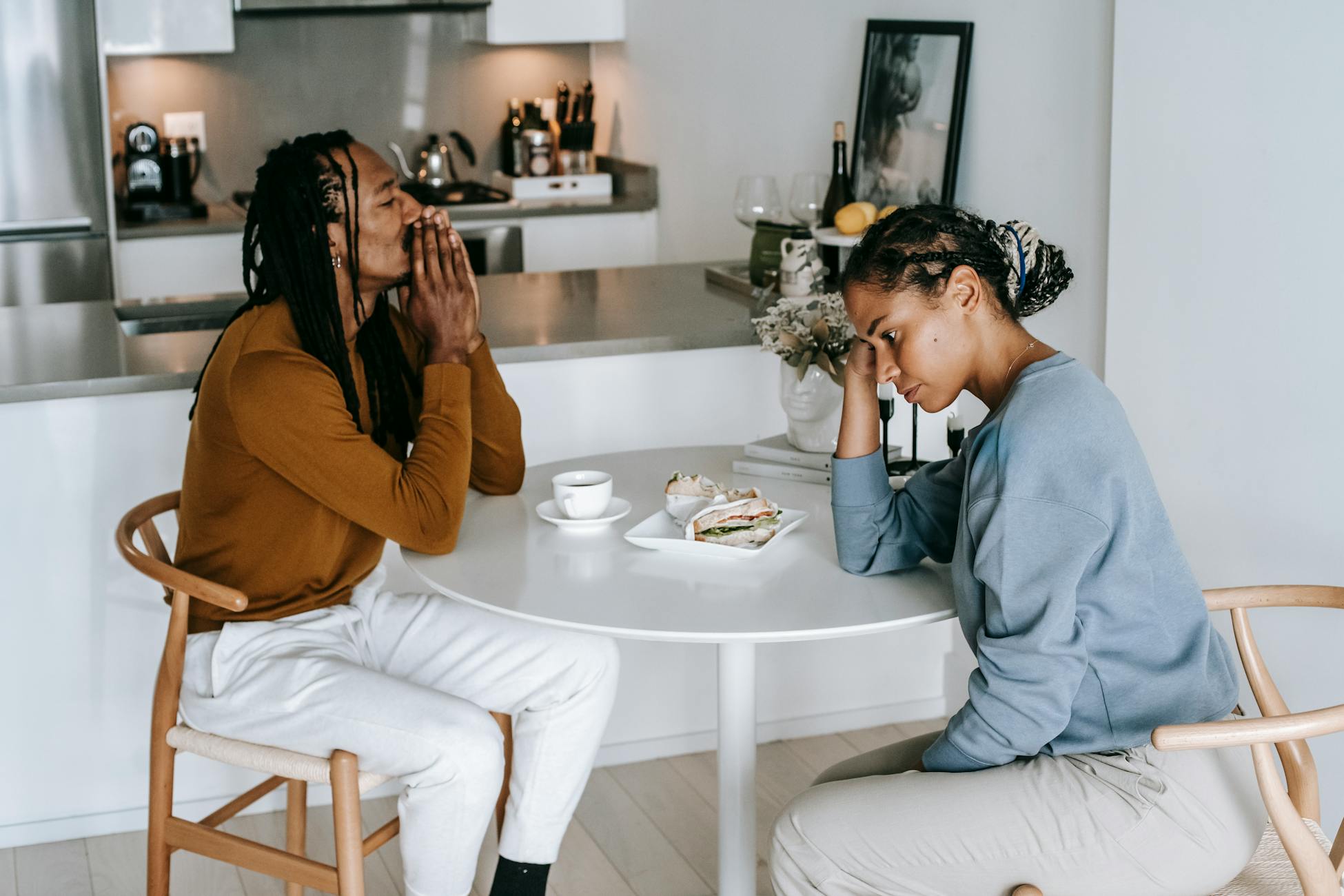
What happens in relationships with someone locked in this pattern is a particular kind of slow erosion. The low-maintenance person gives and gives. They accommodate. They absorb. They adjust. And because they never ask for anything in return, their partner is left in a strange position: connected to someone who is technically present but emotionally unreachable. The relationship starts to feel like a performance where one person plays the role of being okay at all costs.
James Coan’s research on social baseline theory at the University of Virginia suggests that the human nervous system is literally designed to share the load with others. Co-regulation, the process by which two people’s nervous systems help stabilize each other through proximity, tone of voice, and eye contact, is a biological expectation. When one person in a relationship refuses to be regulated by the other, both nervous systems suffer. The person who never burdens anyone is, in a real neurobiological sense, withholding something the relationship needs to survive.
I think about this often now. All those years I spent making sure no one had to carry anything for me, I thought I was being generous. I was starving the people closest to me of the chance to matter to me. And people can only feel close to someone who lets them in.
The inheritance nobody talks about
There’s a reason this pattern is so hard to see from inside it. The person carrying it usually grew up watching someone model the same thing. A parent who stayed endlessly busy and called it dedication. A caregiver who never sat down, never cried, never admitted to struggling. The child watches and absorbs a template: this is what it looks like to be a good person. You carry everything yourself. You make it look easy. You never, ever let anyone see the weight.
My grandmother lived to eighty-nine in suburban Melbourne. She drank black tea on her back porch every morning, watched cricket, tended her garden. She was one of the steadiest people I’ve ever known. But I sometimes wonder now what she carried that nobody ever asked about. Her generation had a word for this kind of silence. They called it strength.
The thing about inherited patterns is that they don’t announce themselves. They feel like personality. Like values. “I’m just independent” is one of the most effective disguises a survival strategy can wear, because the culture around us rewards it constantly. The internet is full of content celebrating people who “don’t need anyone.” What if that celebration is just a trauma response repackaged as a personality trait?
What it actually costs
I spent my mid-twenties eating lunch alone on stacks of TV boxes in a Melbourne warehouse, reading Thich Nhat Hanh and telling myself I was choosing solitude. I would arrive at social events early so I wouldn’t have to walk into a full room. I would ask other people questions about themselves so I never had to talk about me. I was, by most external measures, fine. Functional. Pleasant.
Inside, I was experiencing a kind of depersonalization, a feeling of watching my own life happen to someone else. The anxiety that ran underneath everything didn’t come in the form of panic attacks. It was more like a low hum, a constant monitoring of whether I was taking up too much space, asking for too much, being too visible.
The cost showed up in my relationships. People couldn’t reach me. They would try, sometimes directly, and I would deflect with humor or redirect the conversation. The ones who stuck around often did so at a distance I had carefully engineered without knowing it. The ones who left usually couldn’t name exactly why. They just knew something was missing.
People who seem hard to read are often carrying exactly this kind of history. The stillness reads as composure. Underneath, it’s a form of protection that has calcified into identity.
The slow, unglamorous shift
I started working with a therapist in my late twenties. The work was not dramatic. There was no single breakthrough, no cathartic moment where everything clicked. What happened was slower and more uncomfortable: I began noticing, in real time, the moments I would instinctively pull away from help. A friend offering to drive me somewhere. My brother asking if I needed anything. Small bids for connection that I had been declining for so long the refusal was automatic.
The therapist pointed out something I hadn’t considered. Every time I refused help, I was communicating something to the other person. The message was: I don’t trust you enough to need you. That reframing shook me. I had thought I was protecting people from my needs. I was actually telling them, over and over, that they weren’t safe enough to receive me.
A 2015 study in Personal Relationships found that perceived partner responsiveness, the sense that your partner is attuned and available, depends significantly on the willingness of both partners to express vulnerability. Relationships where one person consistently withheld their needs showed lower satisfaction and higher rates of emotional disconnection over time. The pattern was clear: the person who never burdens anyone ends up burdening the relationship itself.
What if the most generous thing you can do in a close relationship is let someone carry something for you? What if recalibrating which patterns actually belong to you, and which ones you inherited, is the real work?
I’m thirty-seven now. I live in Vietnam with my wife and our daughter. Some nights she falls asleep on my chest and I can feel her whole body relax into the trust that I’ll be there when she wakes up. She hasn’t learned yet that needing someone is dangerous. She just needs, openly, without apology. And every time I hold her through it, I’m aware of two things at once: how natural it is for her, and how foreign it still sometimes feels for me.
The work is ongoing. I still catch myself assembling things alone at midnight, metaphorically speaking. But I’ve stopped calling it independence. I’ve started calling it what it is: an old habit from a time when I believed the only safe version of me was the one who never asked for anything. That belief kept me alive for a while. And then, quietly, it started costing me every relationship that tried to get close.
Did you like my article? Like me on Facebook to see more articles like this in your feed.