
Editorial note: This article was originally published on My Inner Creative and has been updated and republished in May 2026 under The Vessel’s editorial standards.
A reading tracker is one of the more enduring categories in bullet journaling. Most people who keep a notebook for any length of time eventually end up with a page or two devoted to what they have read, what they are reading now, and what they have been meaning to get to. The reasons are not particularly mysterious. Reading is one of the few activities most people do regularly that they cannot quite measure without writing it down, and a single column listing titles by date offers more information about a year than most people would otherwise have.
The seventy-seven trackers collected below were originally featured on My Inner Creative as a survey of how a reading log can be built into a bullet journal. The styles span everything from a simple numbered list of titles through to elaborate bookshelf spreads with hand-drawn spines, monthly progress grids, and detailed review pages with star ratings, quotes, and notes on each book. None of them require artistic ability beyond what a steady hand and a fine-liner pen can produce, and the variation is itself part of the point: there is no right way to track reading, only the way that gets returned to most often.


Reasons reading is worth tracking
A reading tracker is partly a record and partly a small prompt to keep reading at all. The reasons people give for the practice tend to overlap with the reasons given for reading itself. None of the following are clinical claims; they are observations commonly attributed to regular reading in general writing on the topic:
- It is associated with greater emotional intelligence.
- It tends to improve relationships and bolster social skills.
- It is often cited as a source of contentment or happiness.
- It is thought to leave readers feeling more empowered or braver.
- It tends to broaden general knowledge.
- It has a calming effect.
- It can help create a positive bedtime routine.
- It can provide a sense of belonging.
A tracker makes these benefits slightly more visible by giving a person something to look back at — twelve titles in a year, or fifty, or four. The number is less important than the fact of having one, and the small reassurance the page gives that reading is happening at all, even on weeks when it does not feel like much, is part of the point of keeping the record at all.

Setting up a reading tracker
The supply list for a reading tracker is short. A bullet journal with dotted or grid pages helps with column alignment, but is not strictly necessary; a plain notebook works perfectly well. A pen, ideally one that does not bleed through the page, is the only other essential. Markers, washi tape, and stickers can be added once the basic structure is in place, but none of them are needed to start.
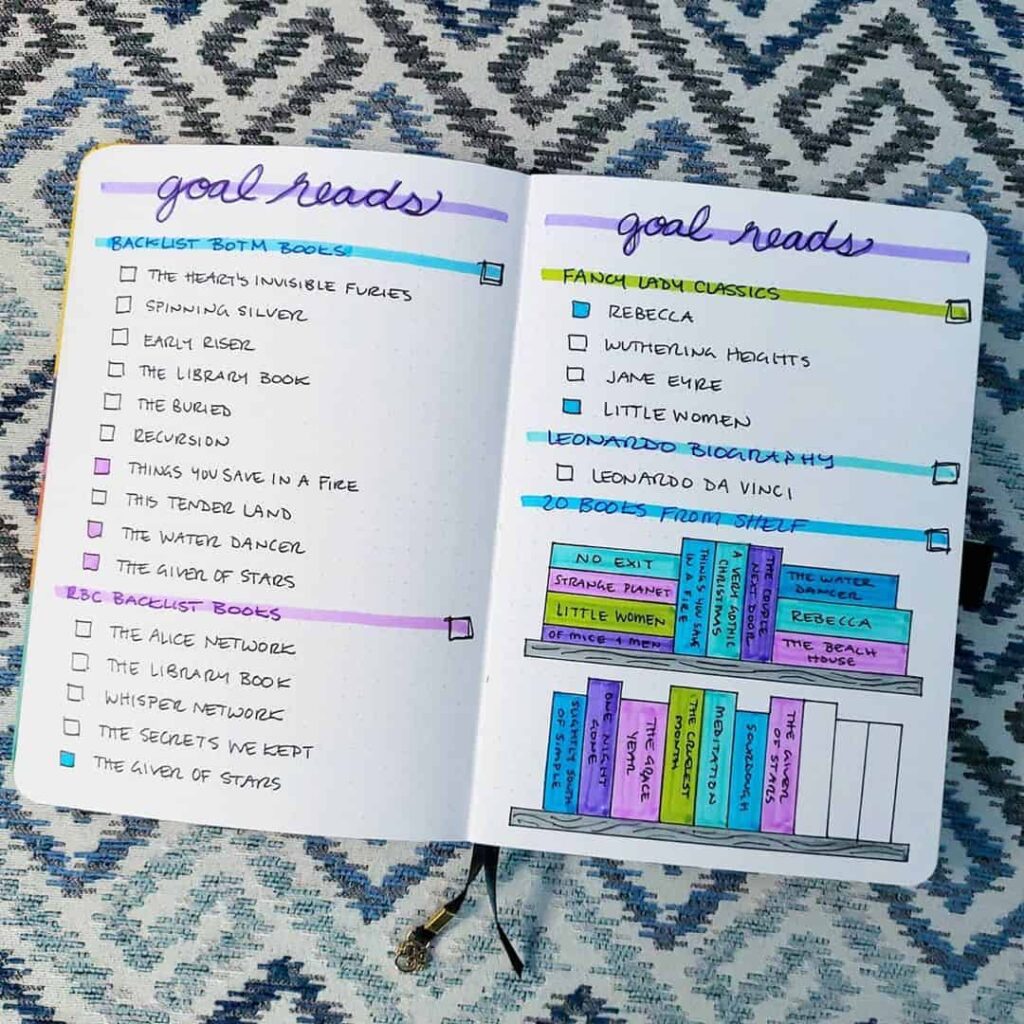
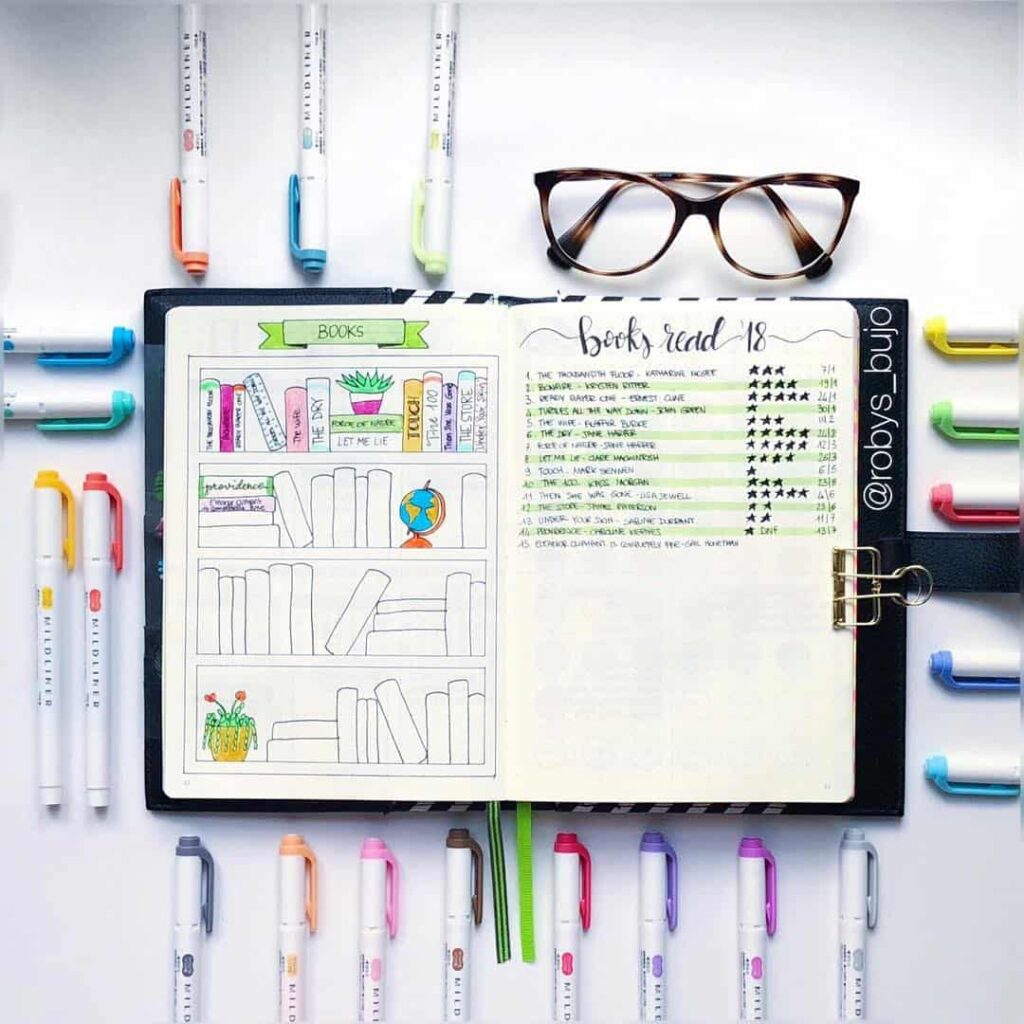
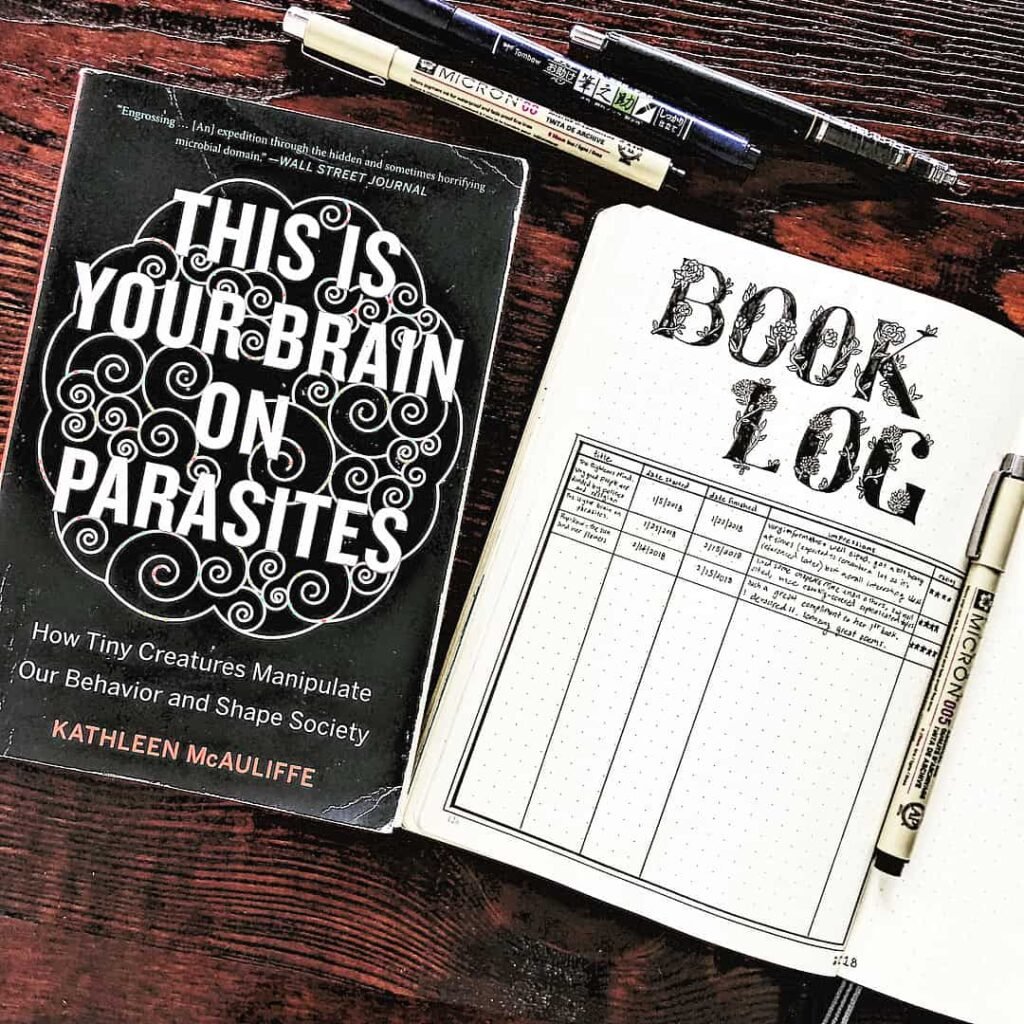
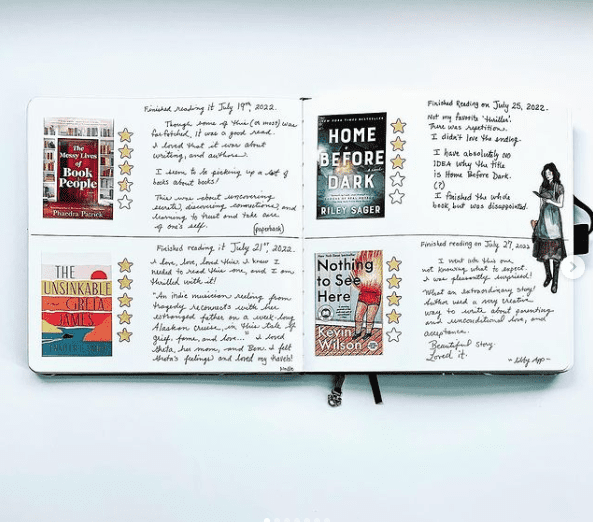
The simplest version of the tracker is a list with three or four columns: title, author, the date a book was started, and the date it was finished. Some people add a fifth column for a brief one-line response on closing the book, or a star rating, or a note on whether they would recommend it. A short symbol key — a tick for finished, an open book for currently reading, a stacked-books icon for the to-be-read pile — is often enough to convey status at a glance.
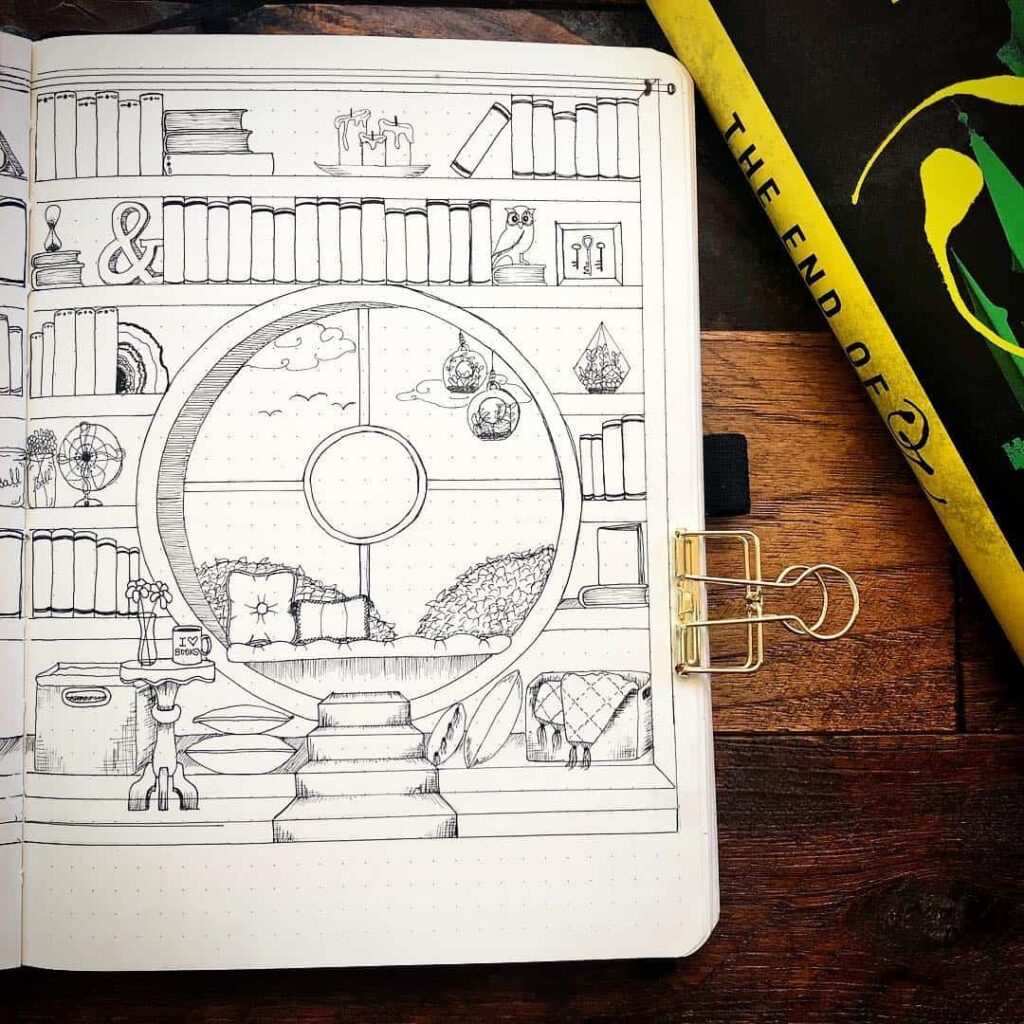
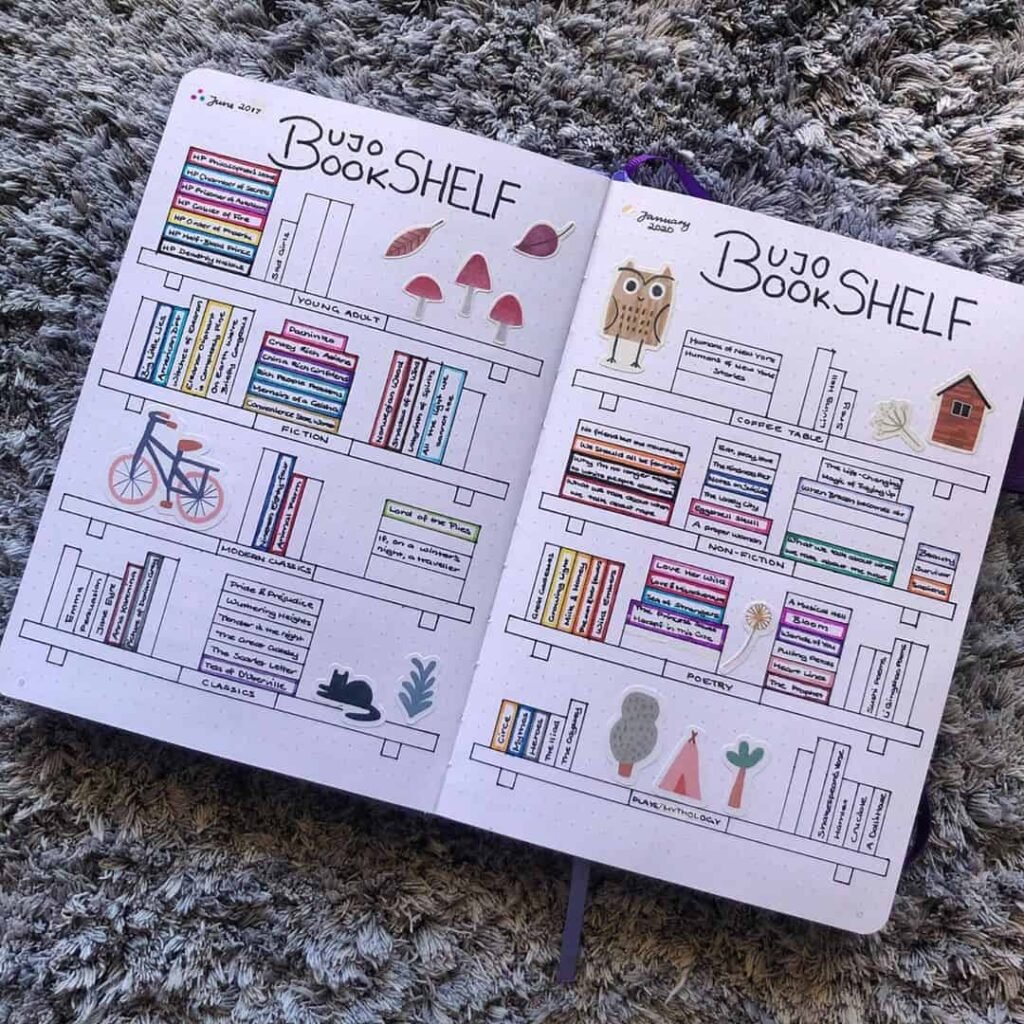
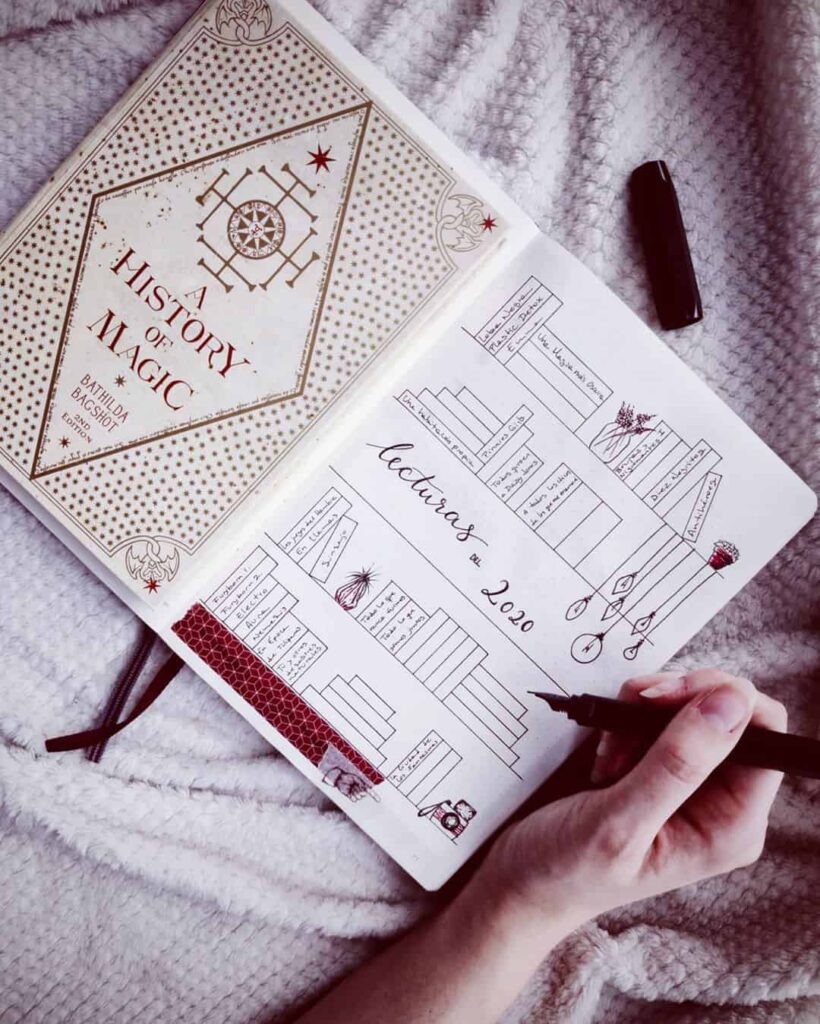
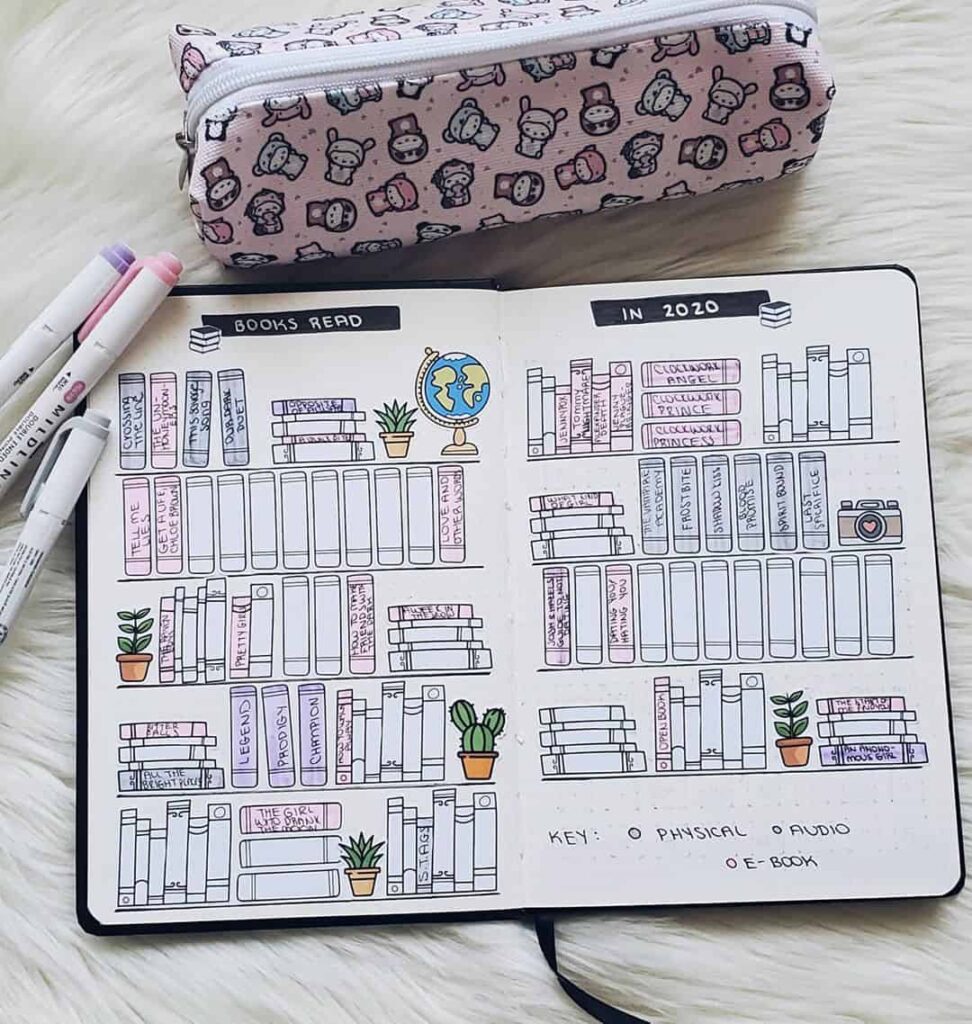
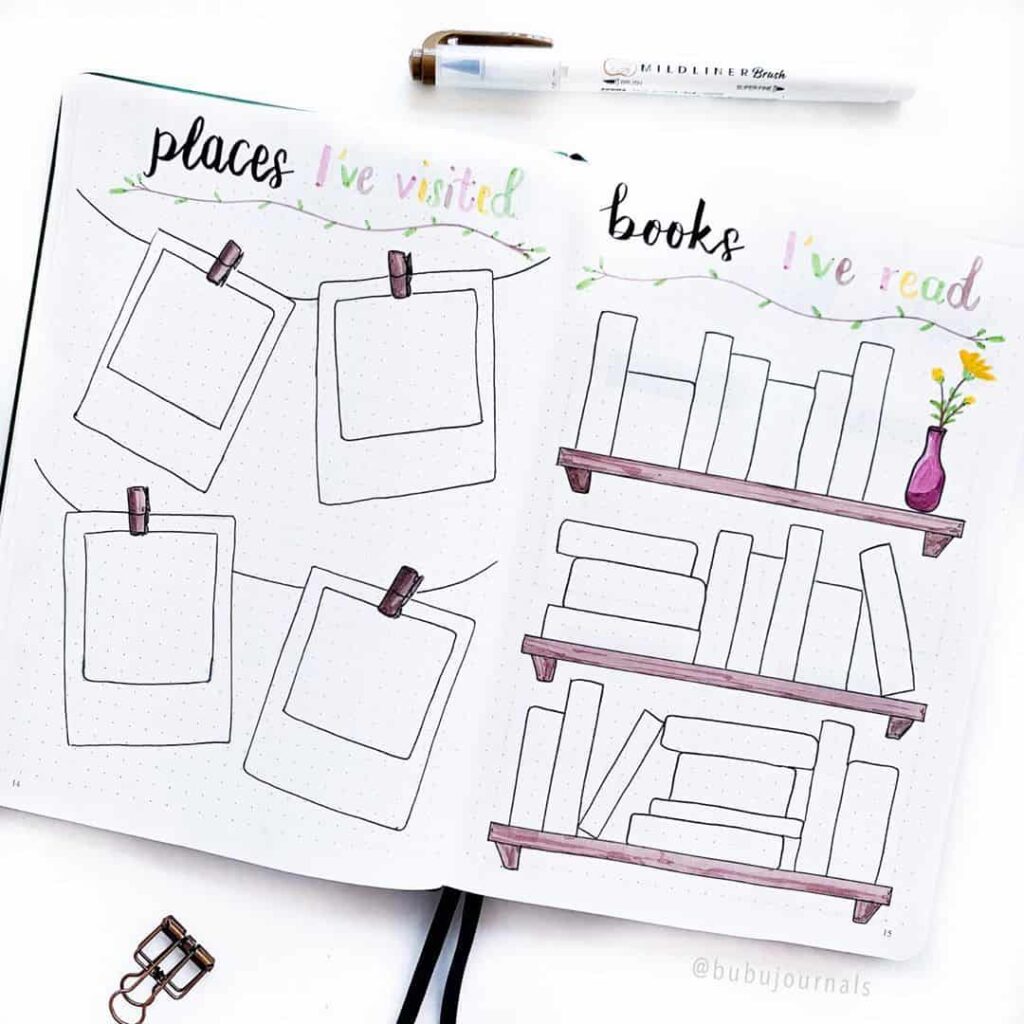
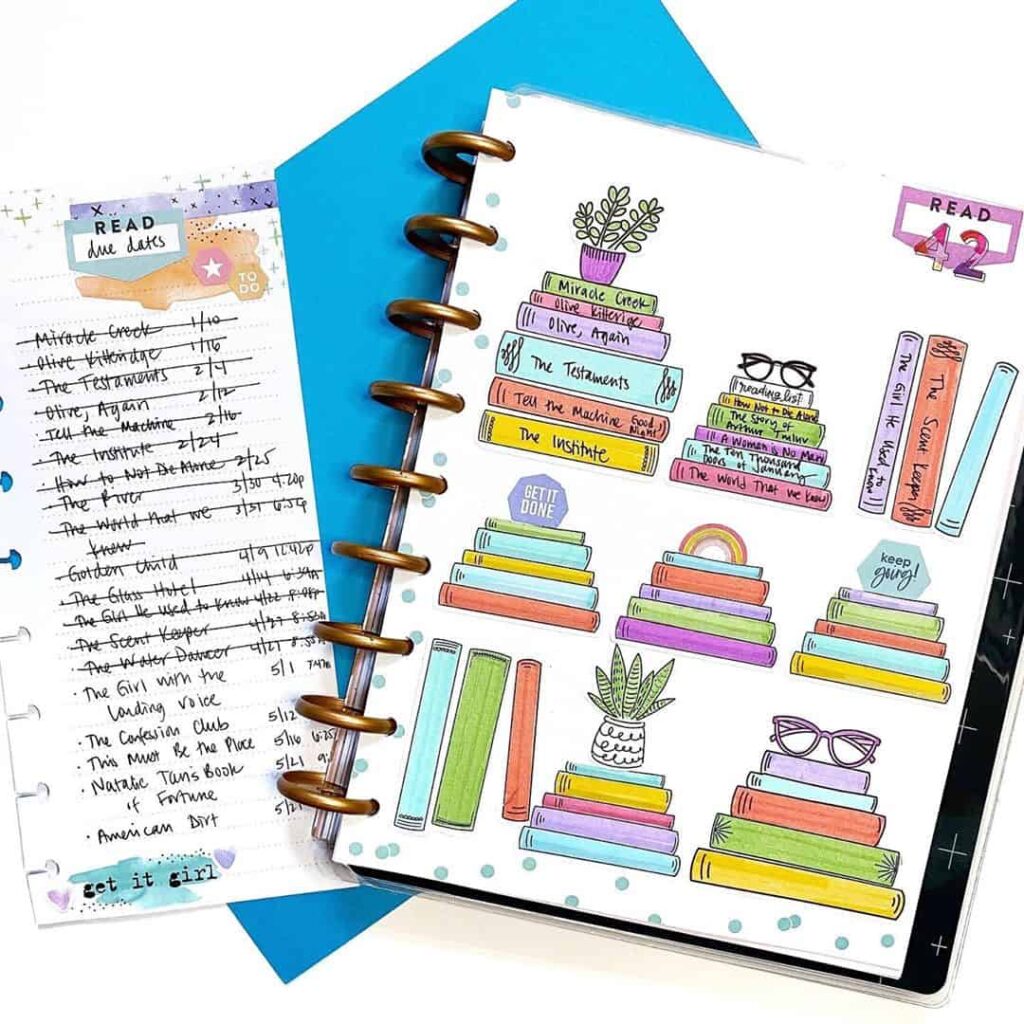
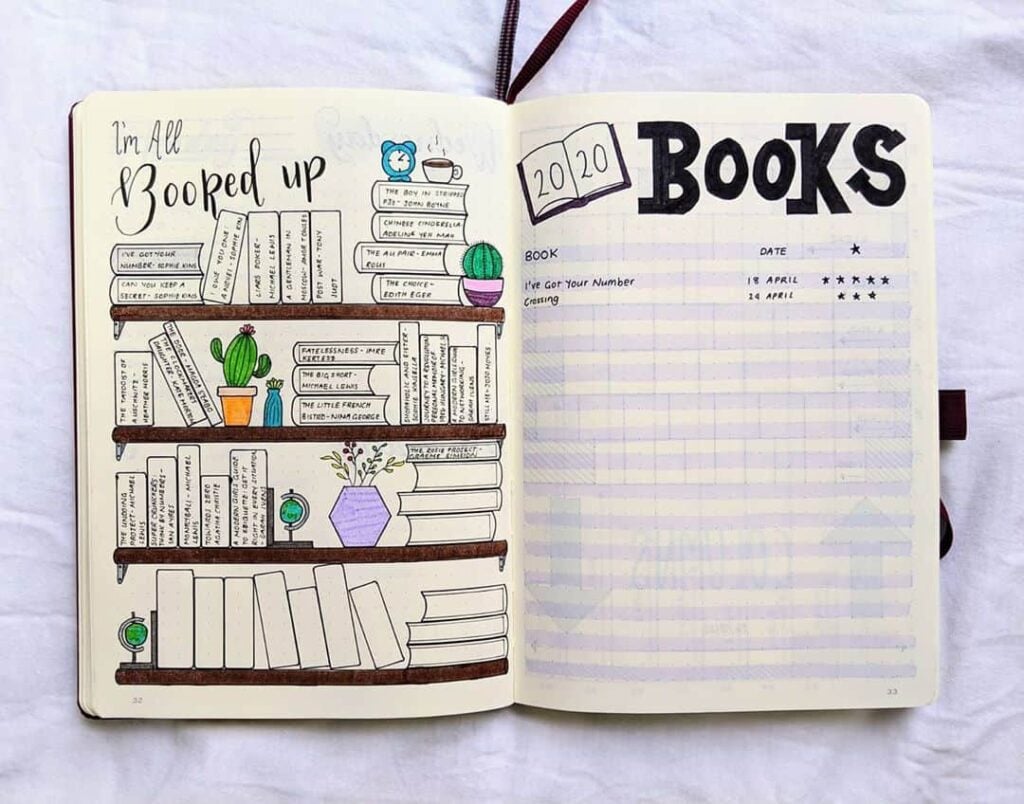
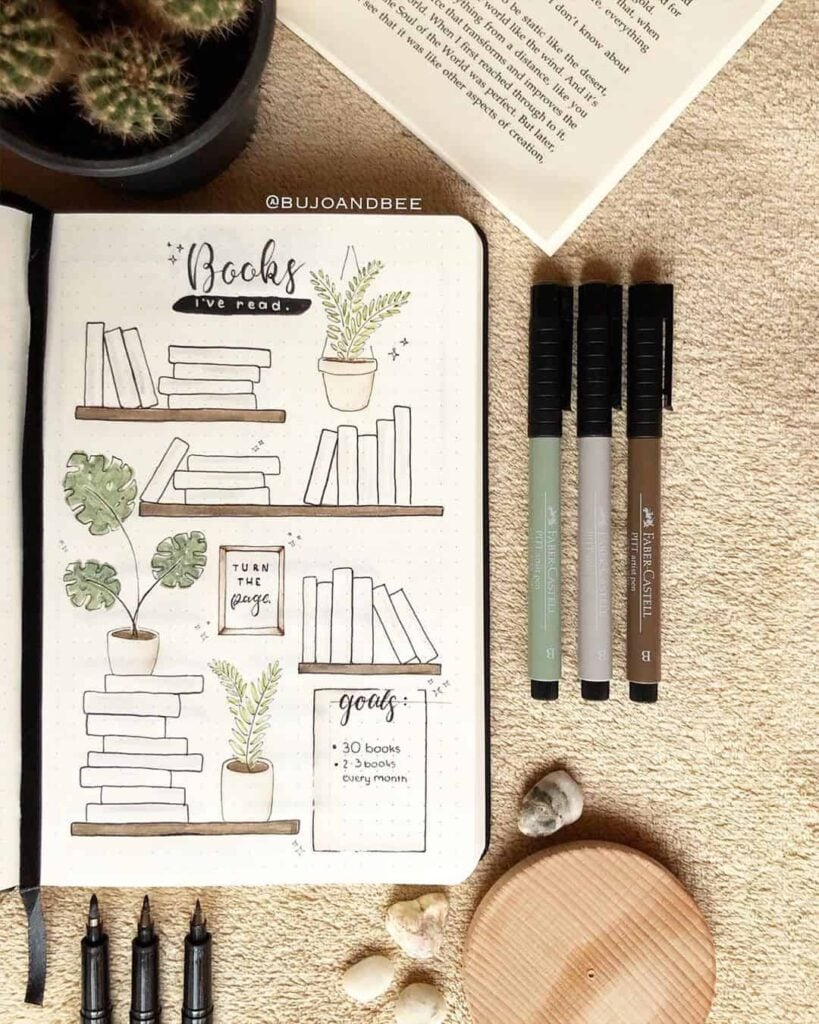
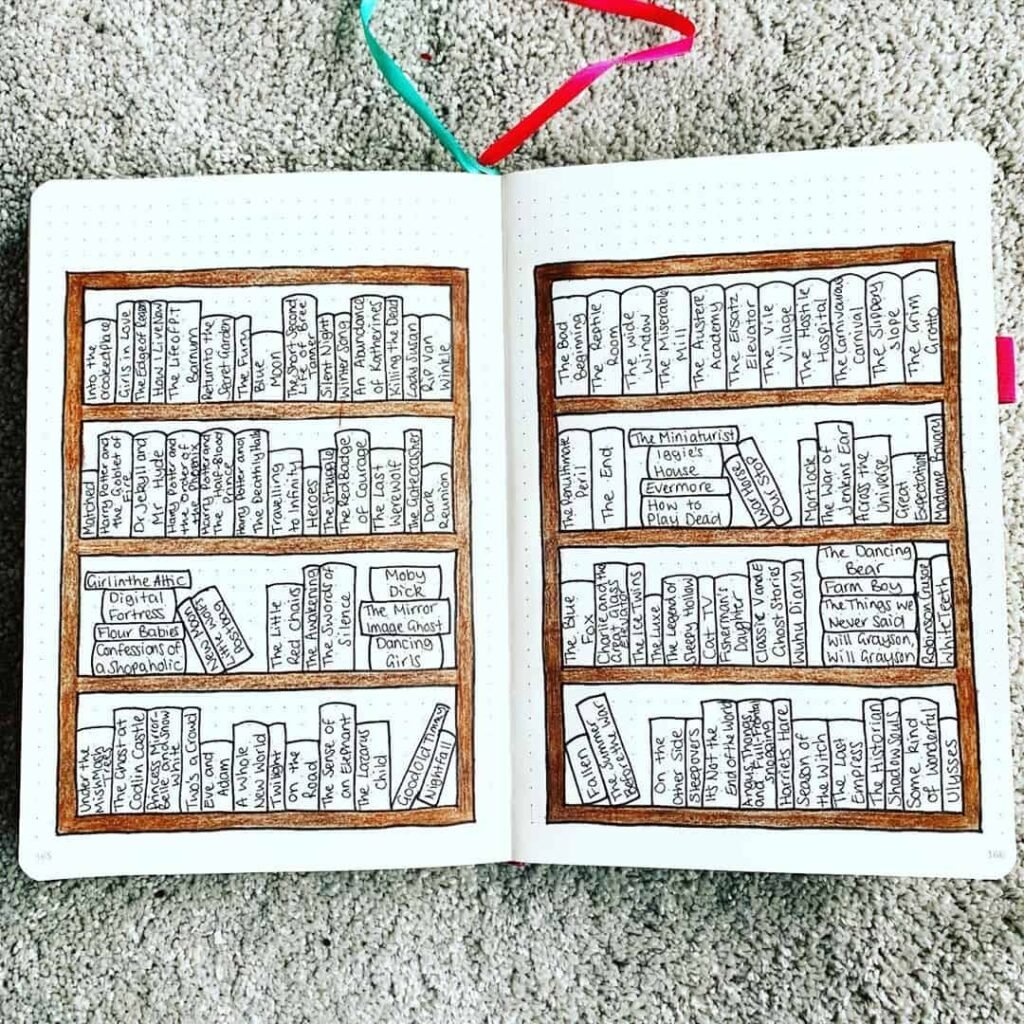
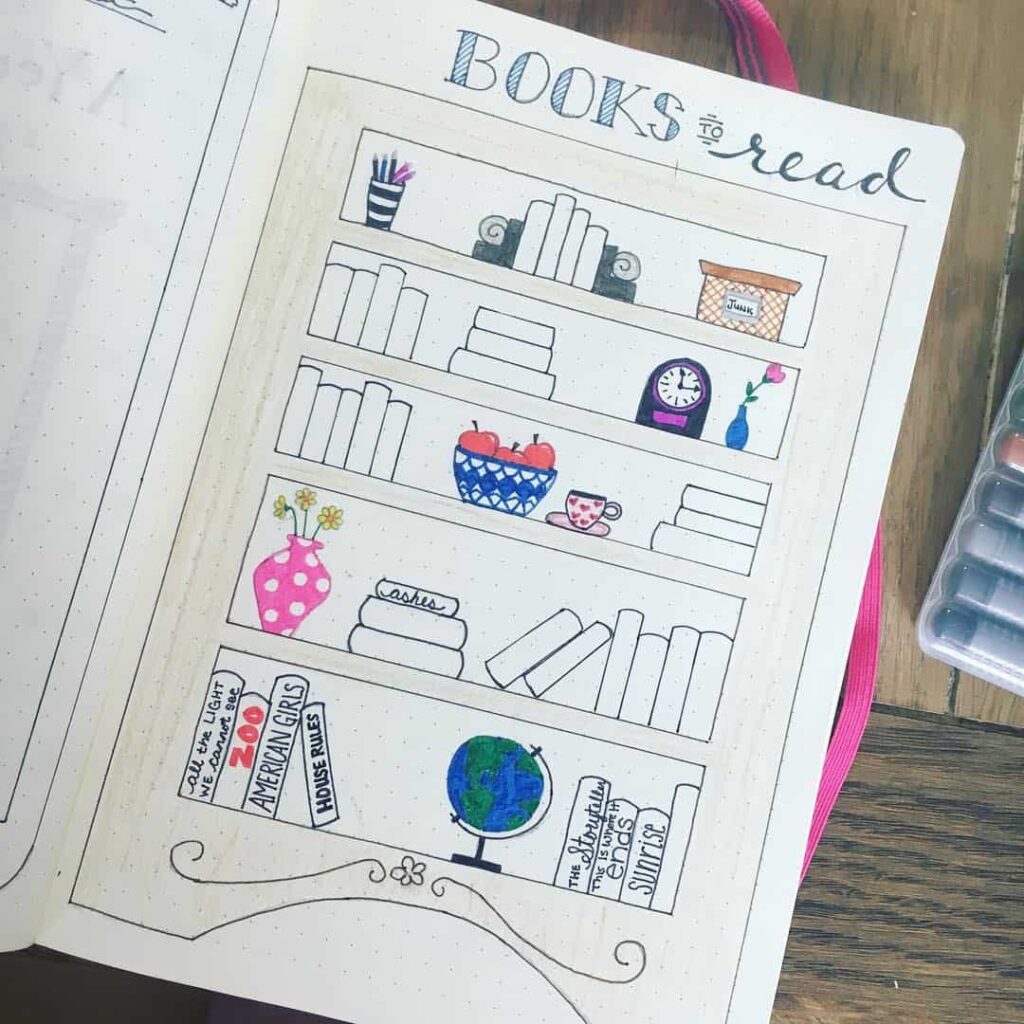
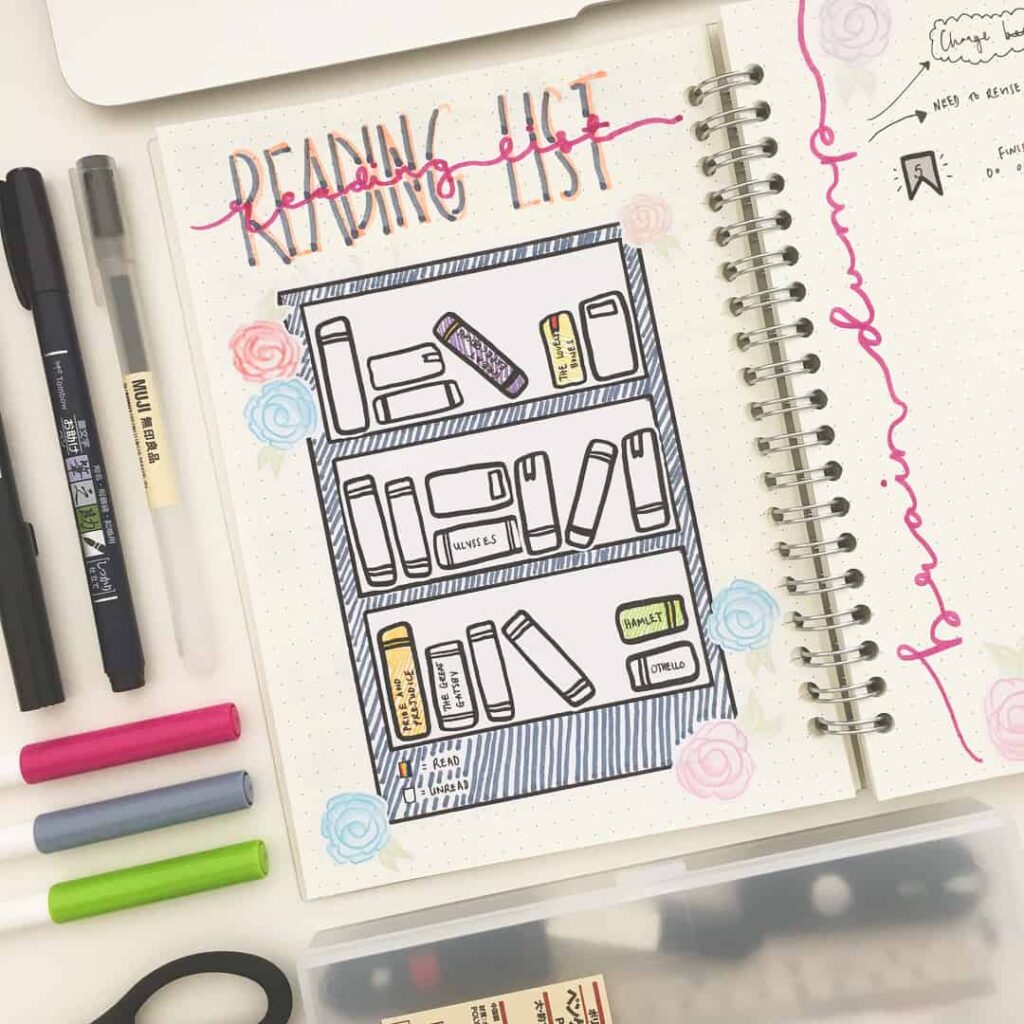
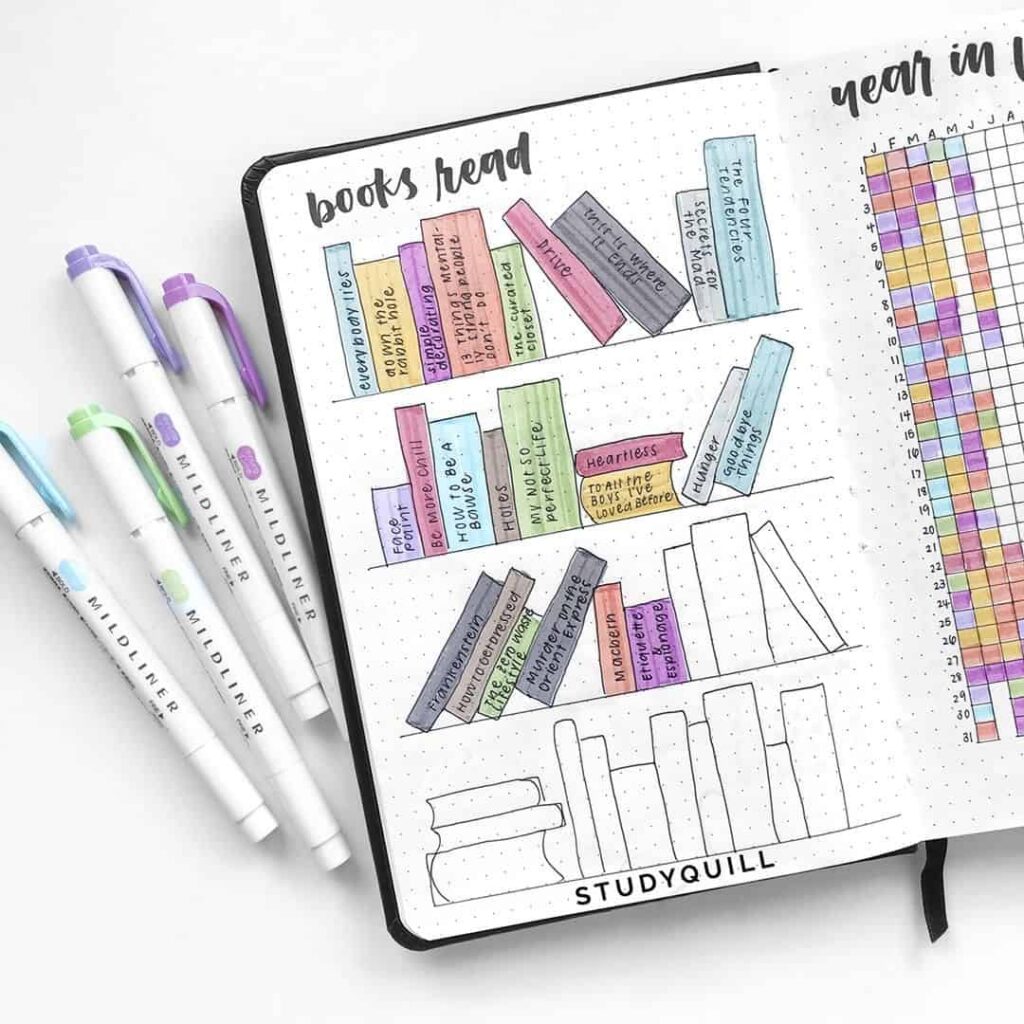
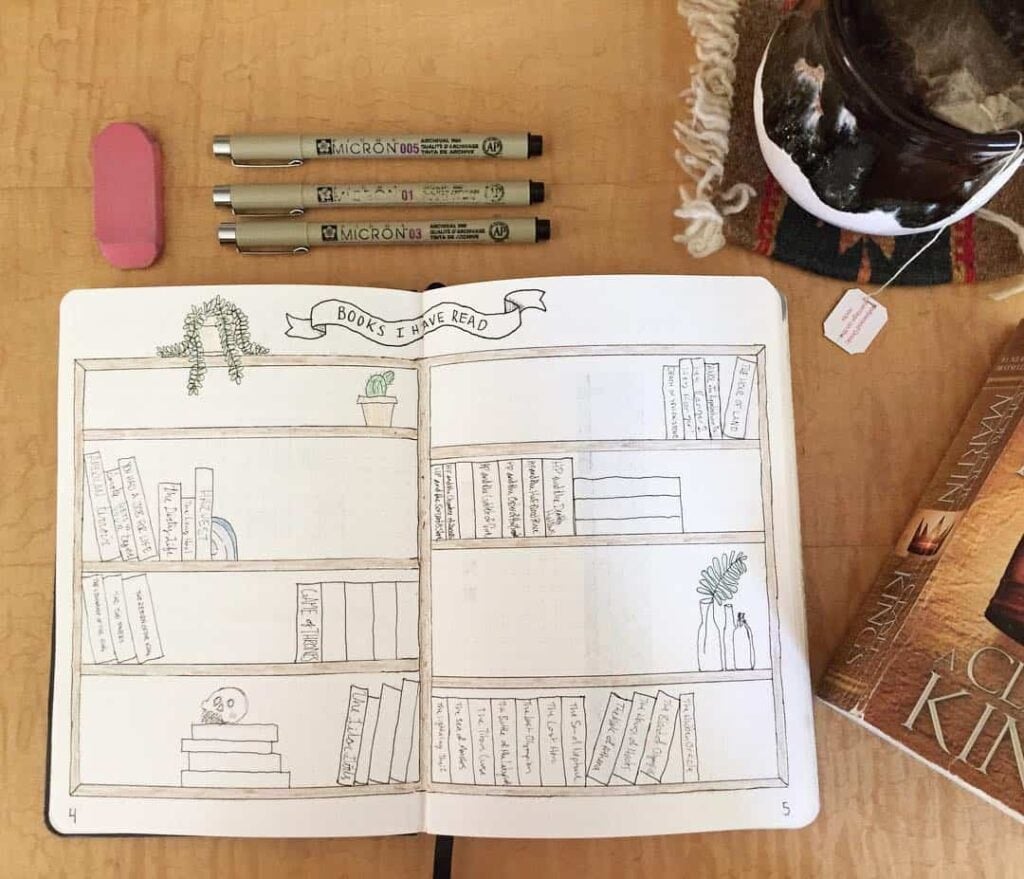
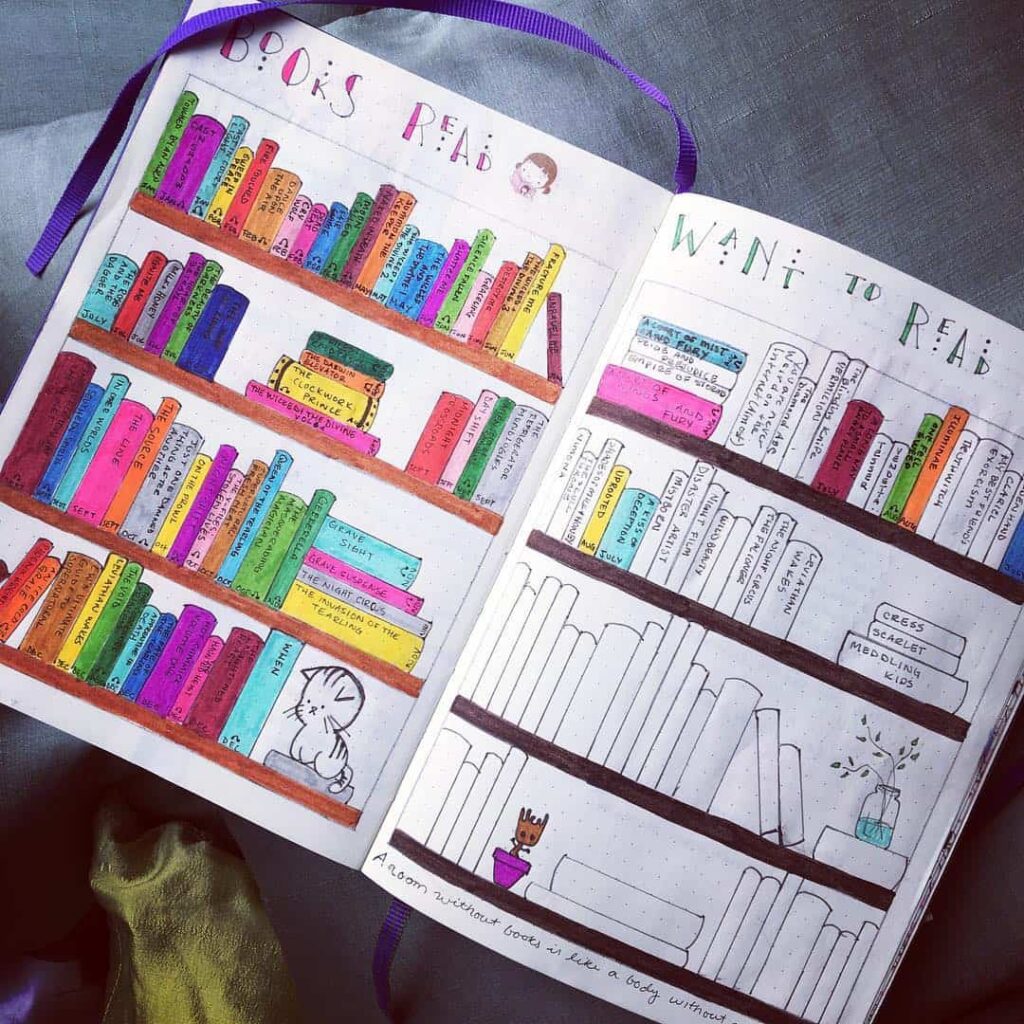
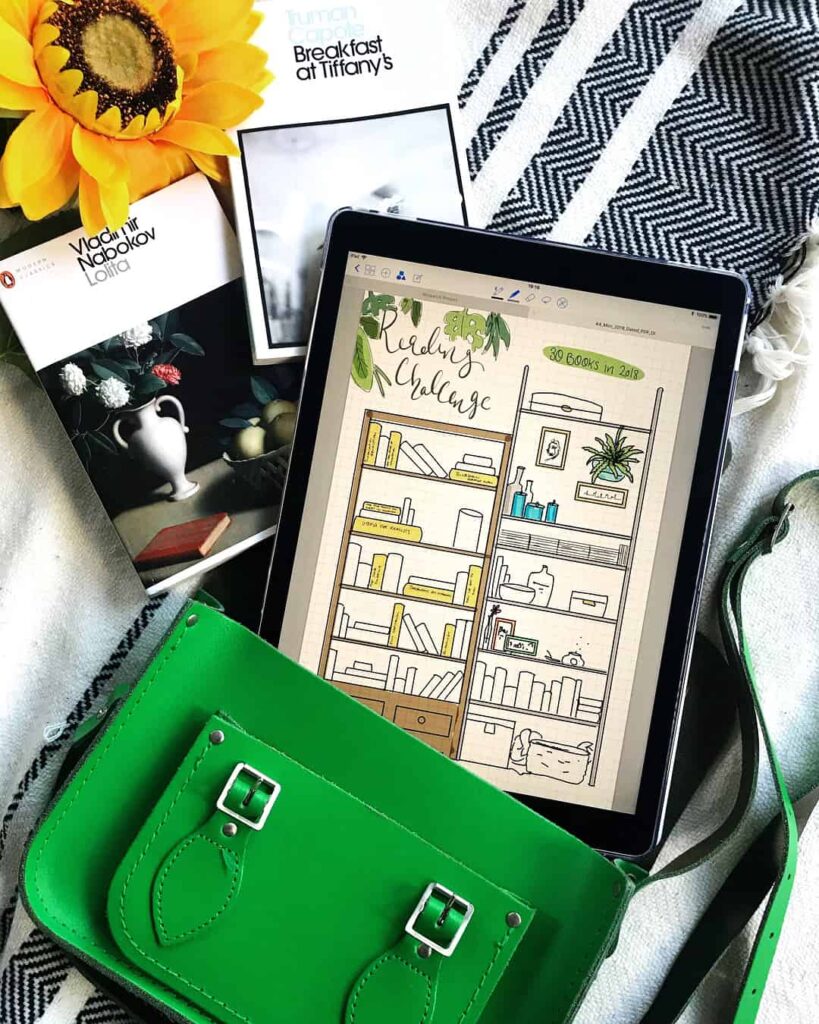
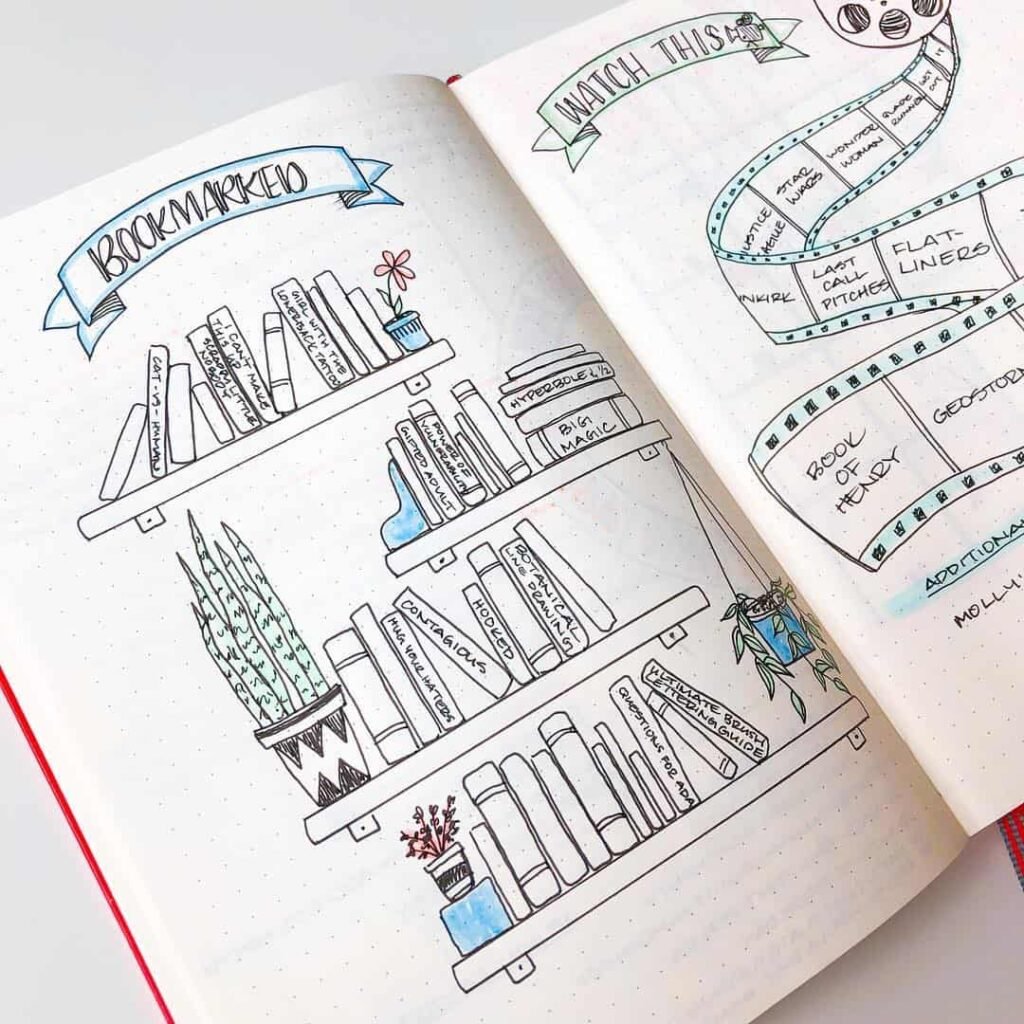
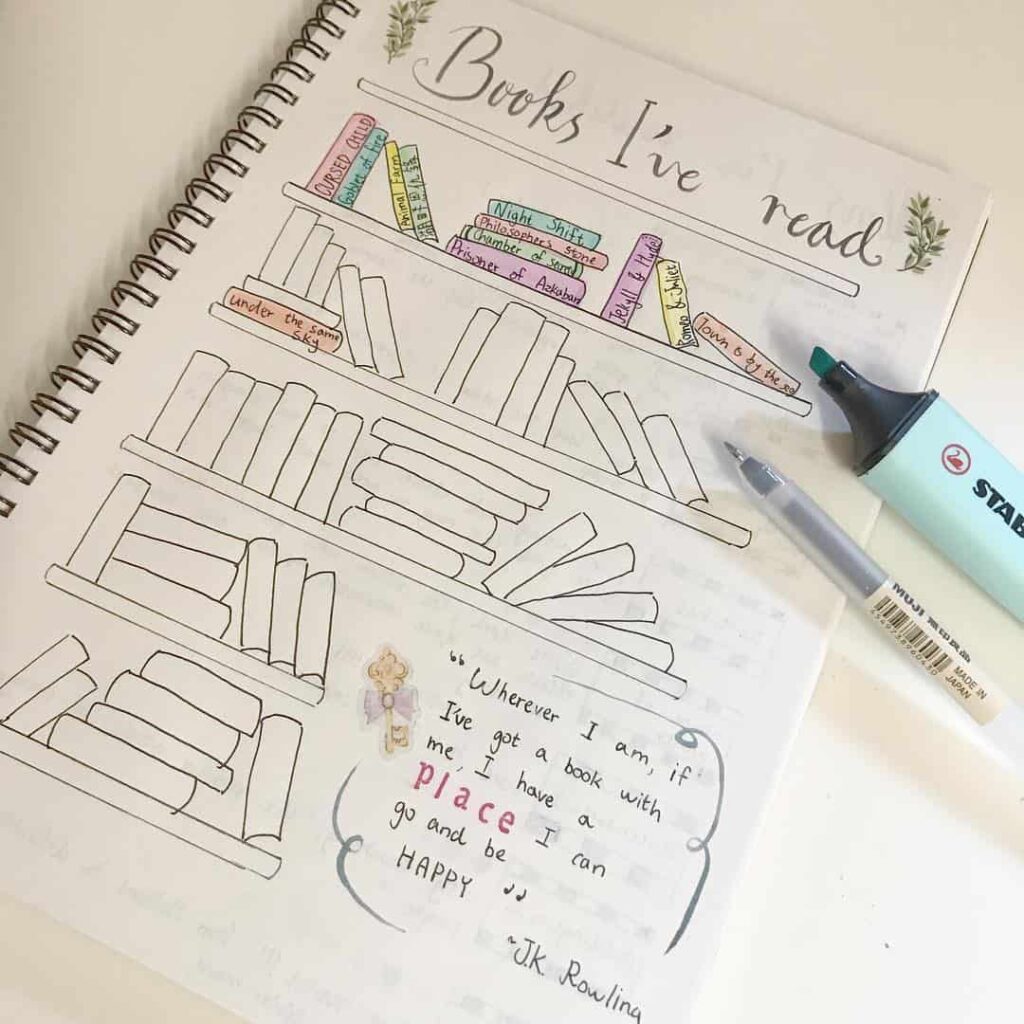
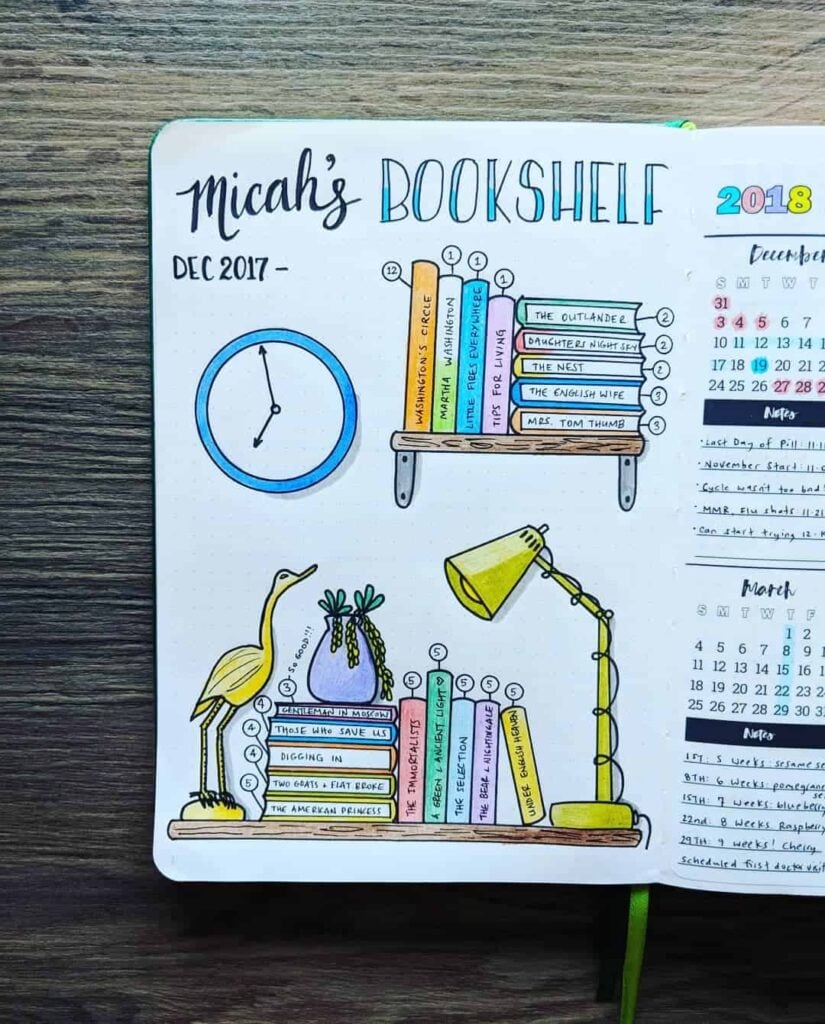
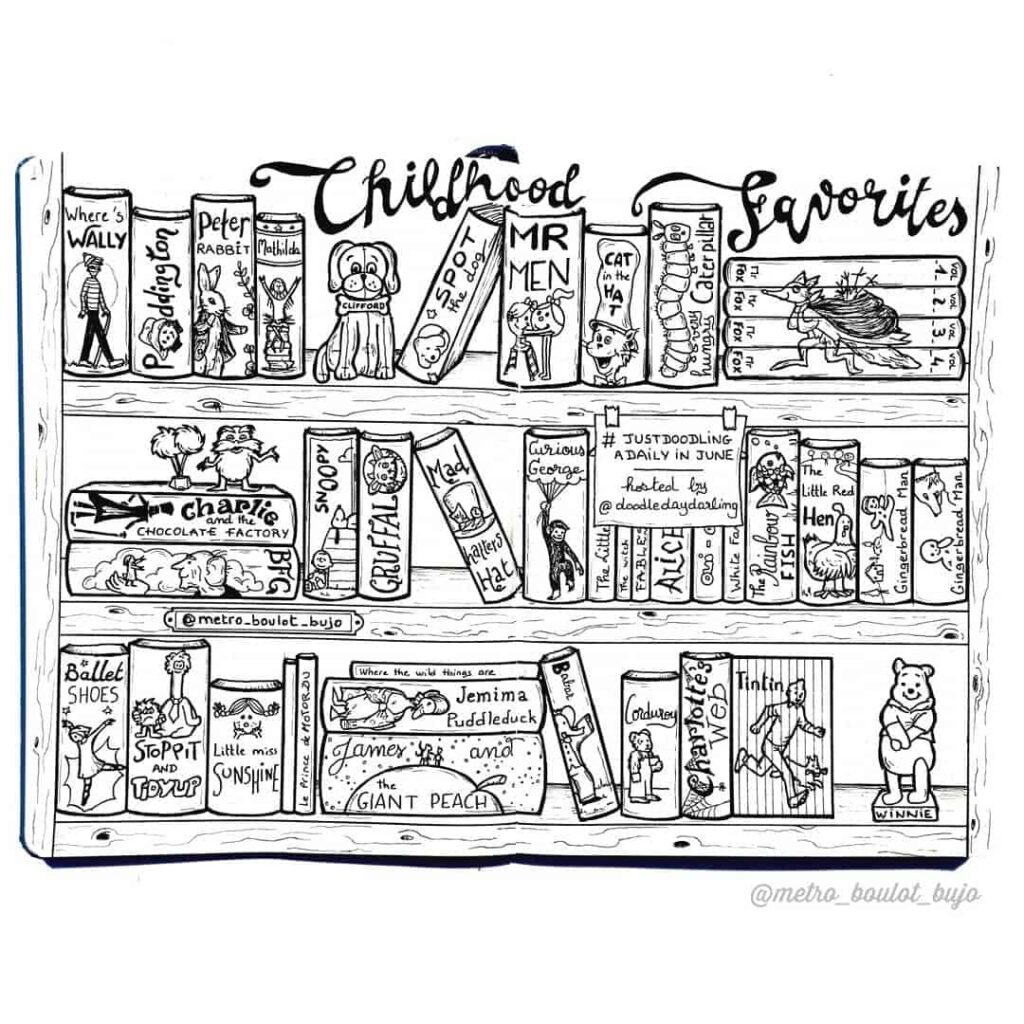
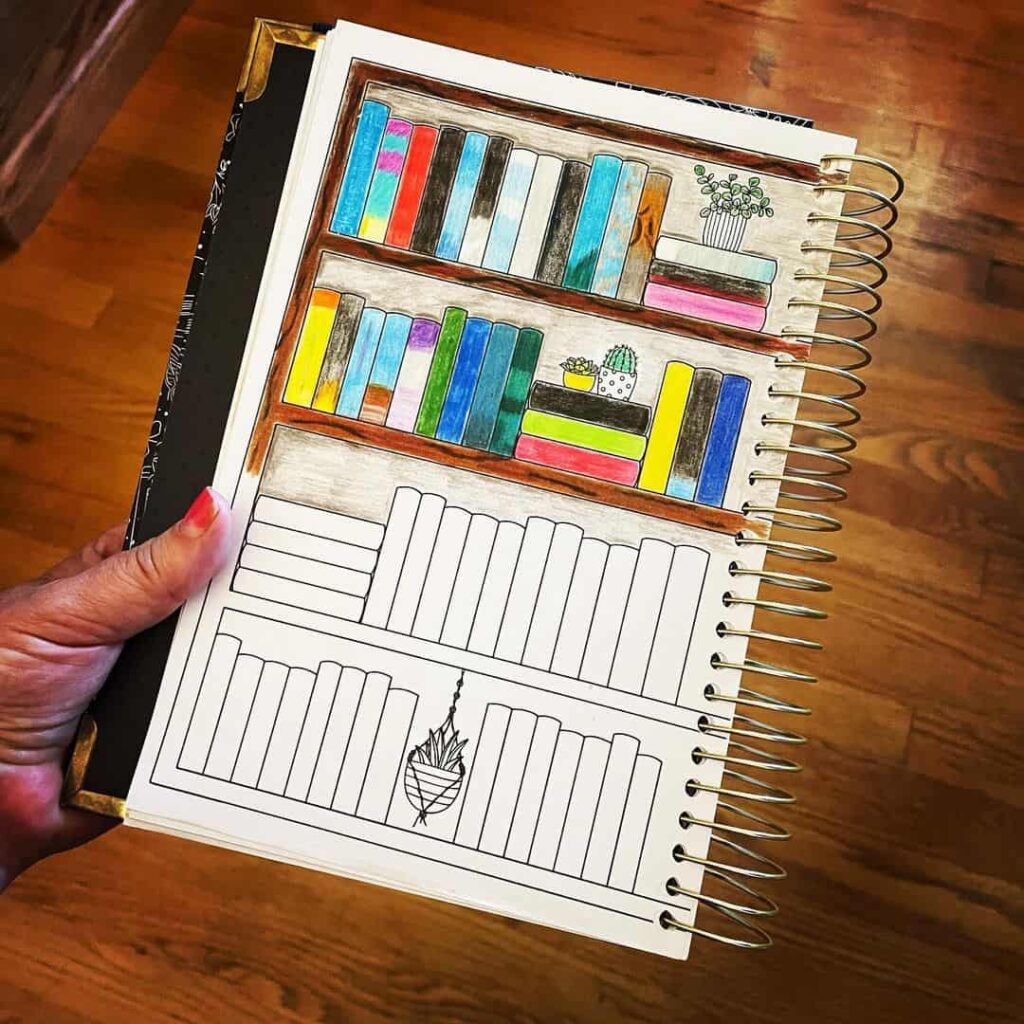
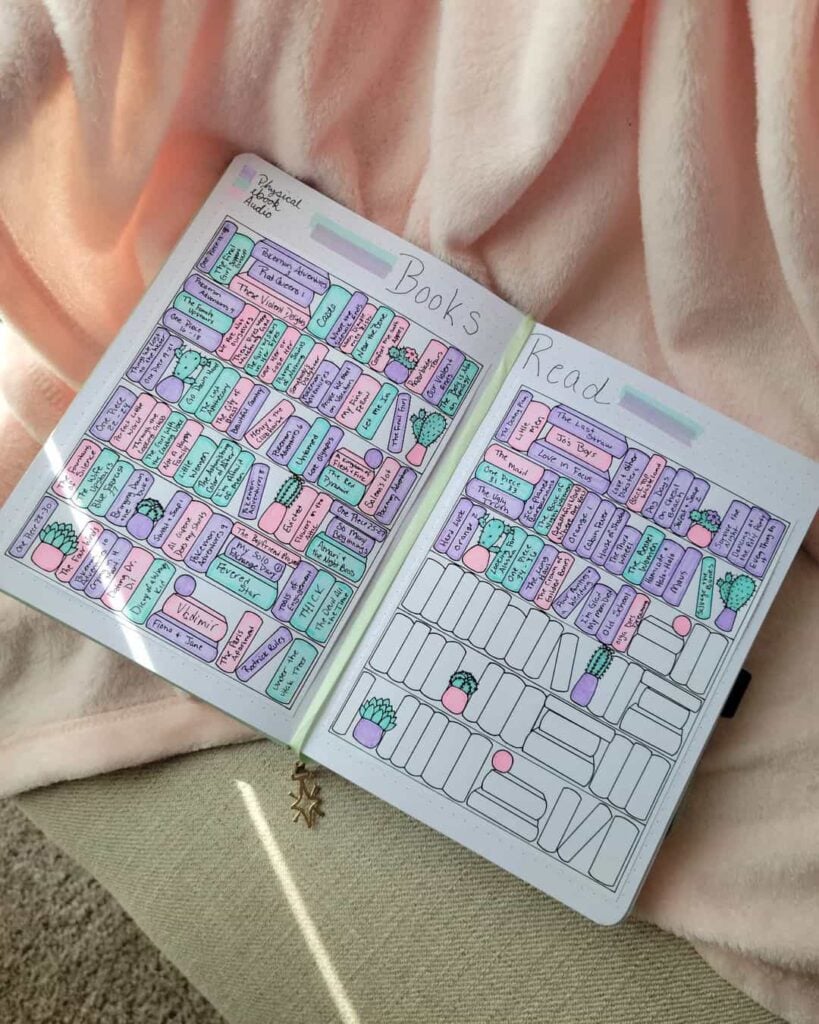
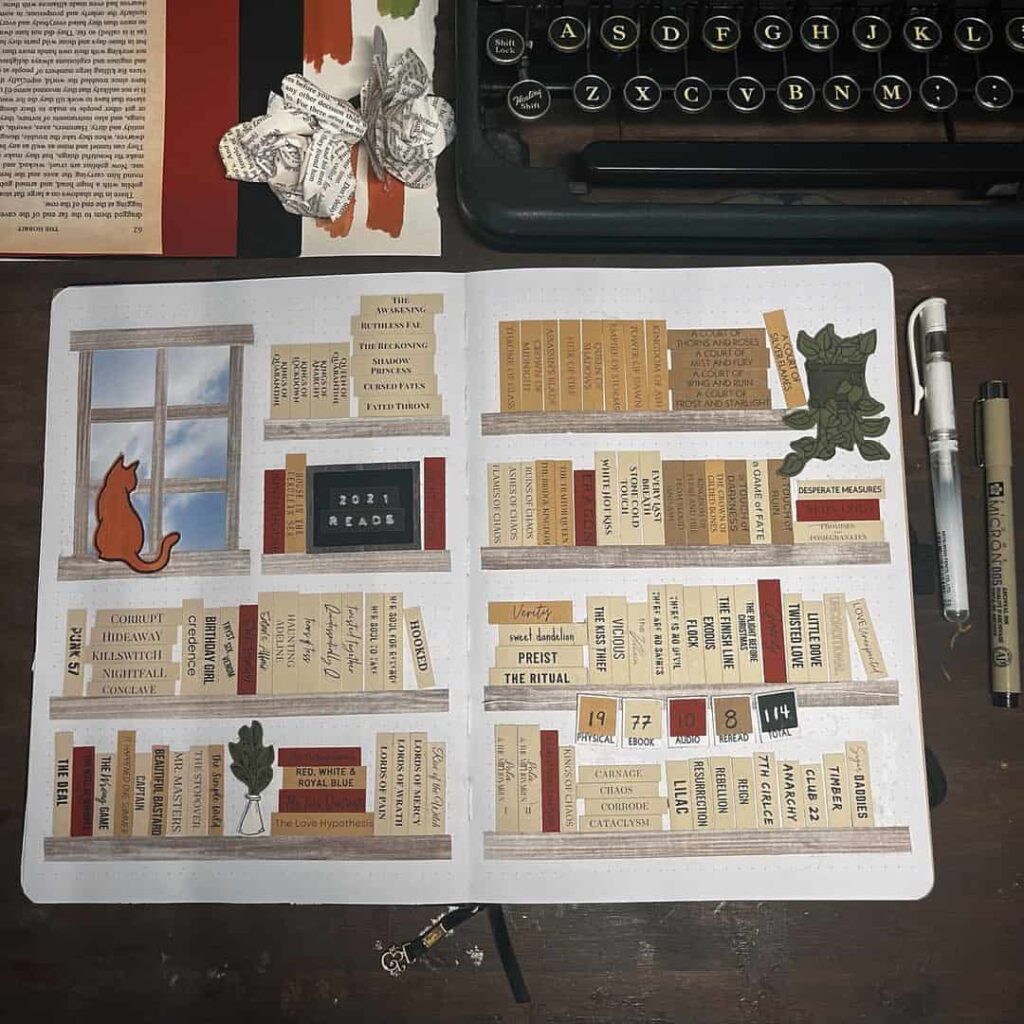
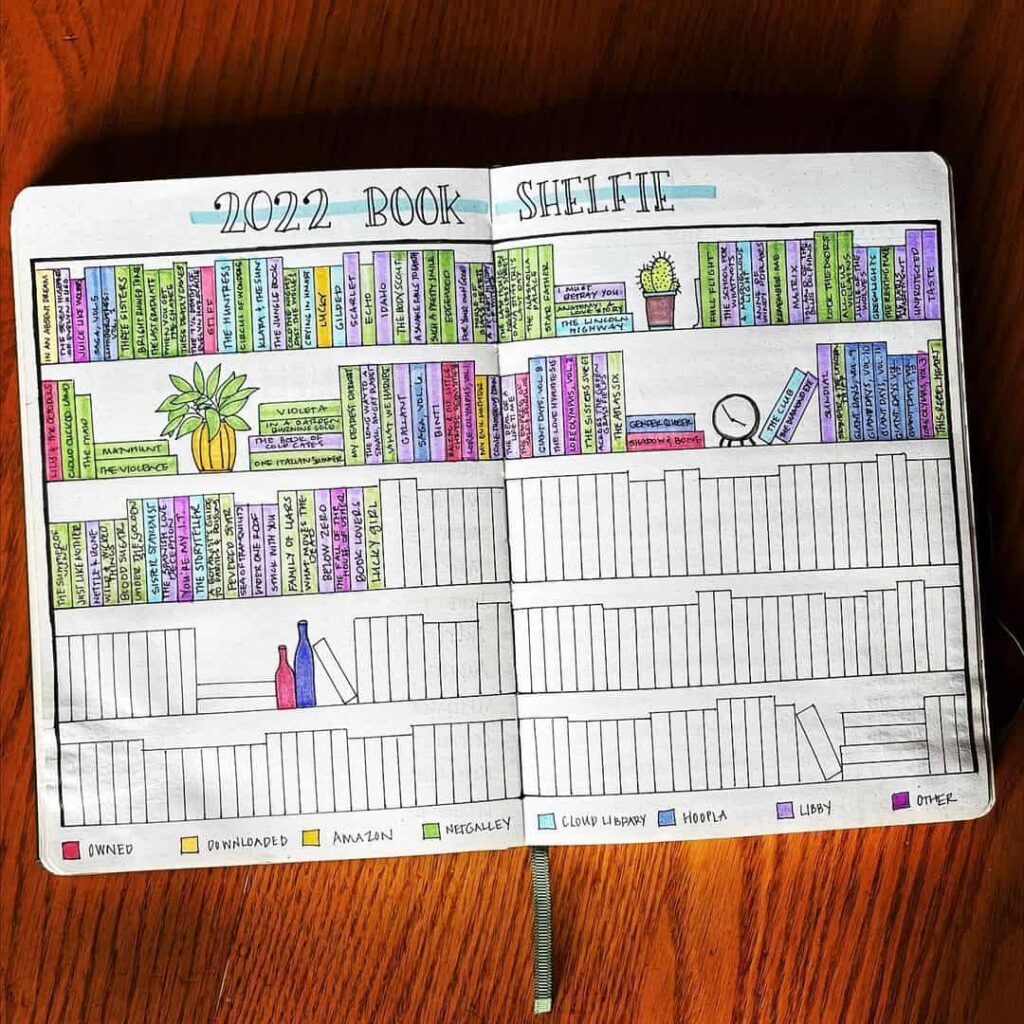
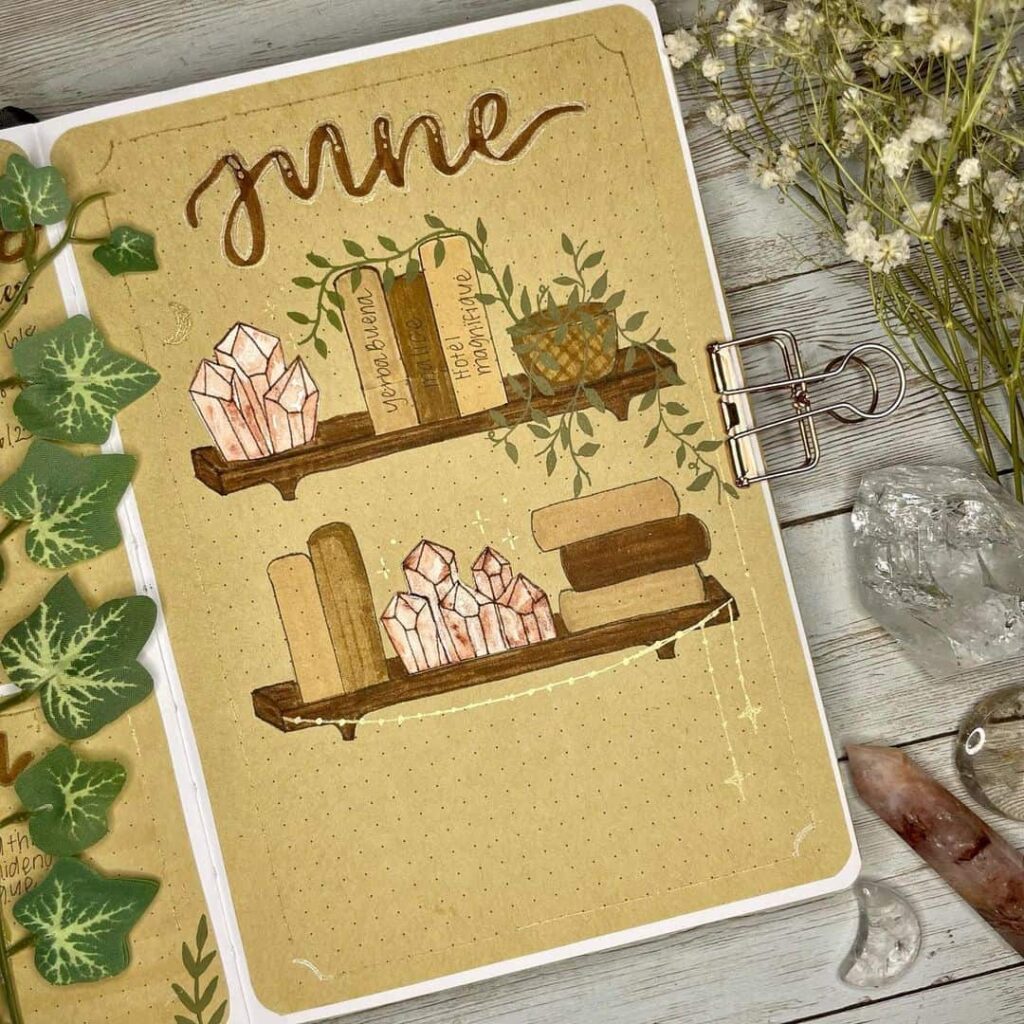
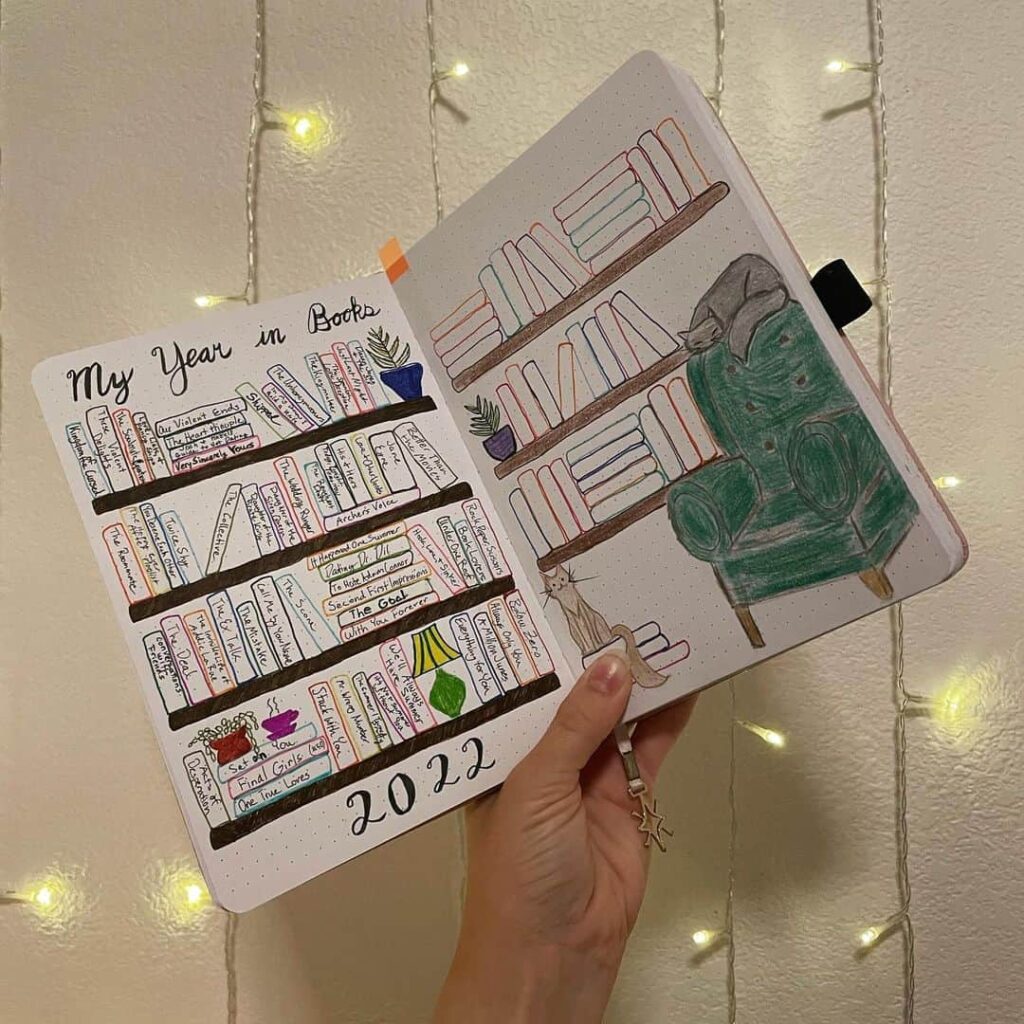
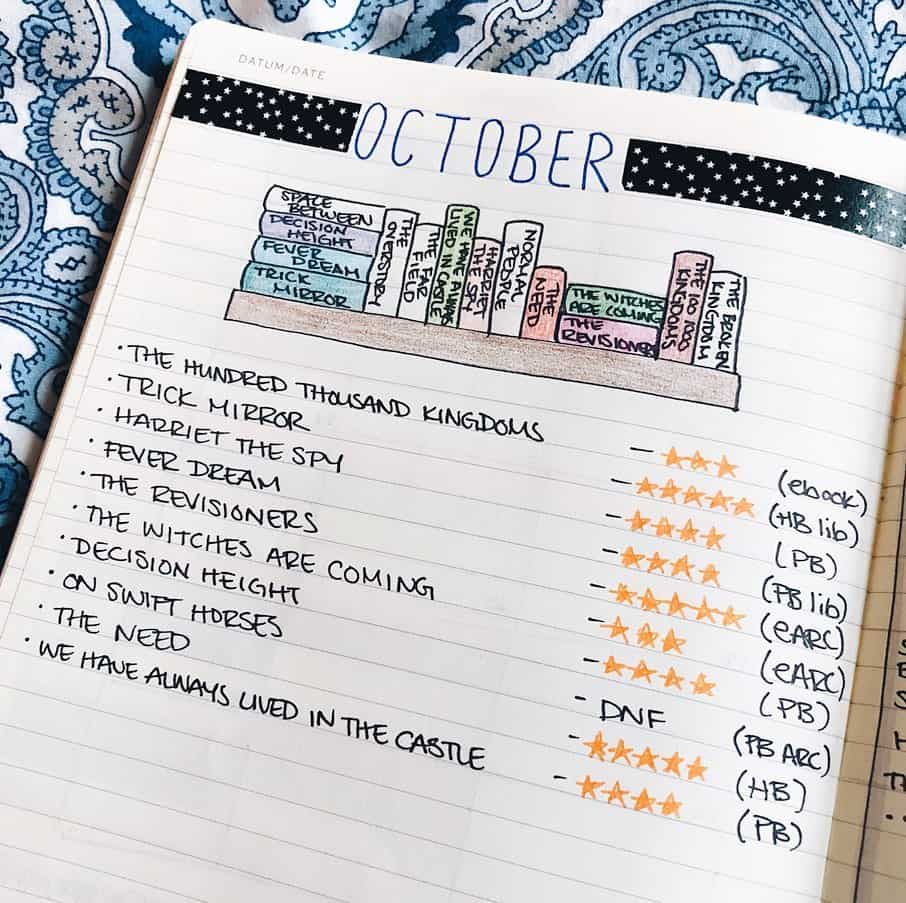
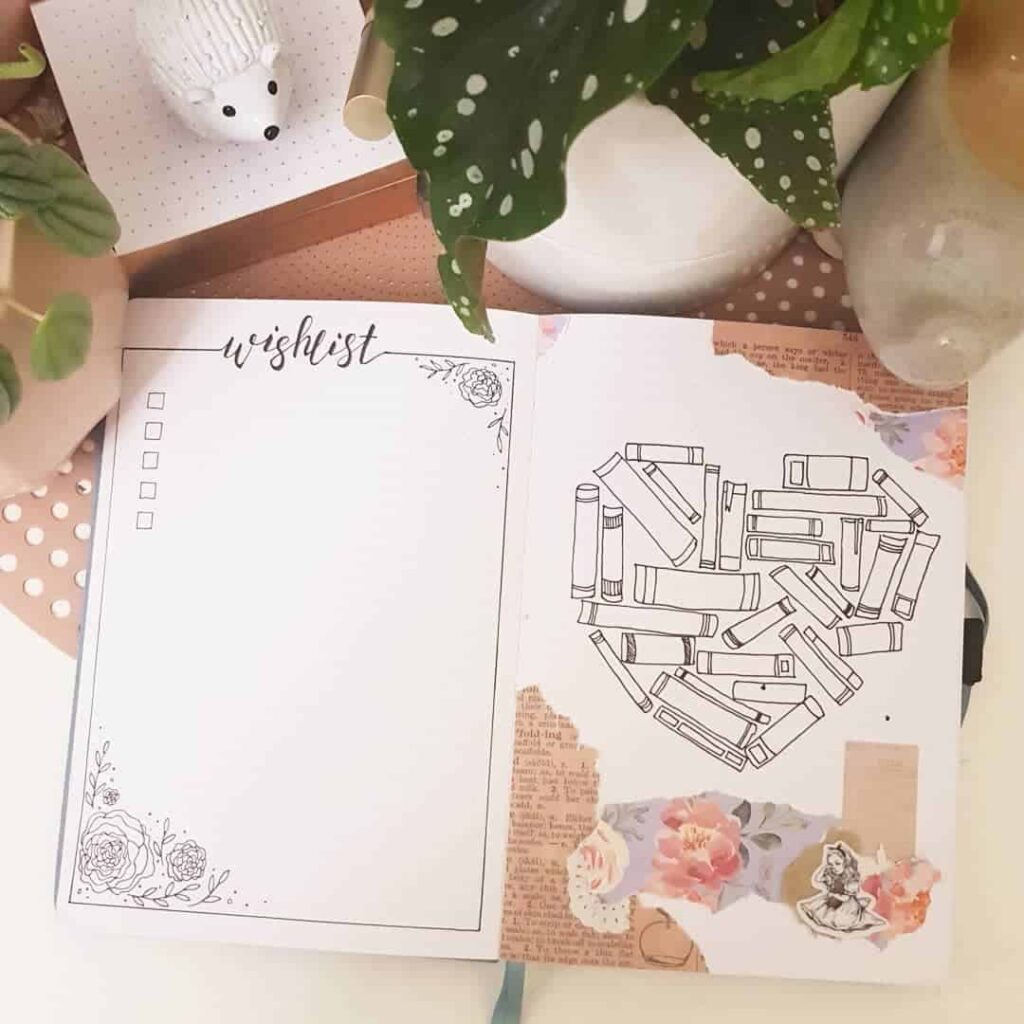
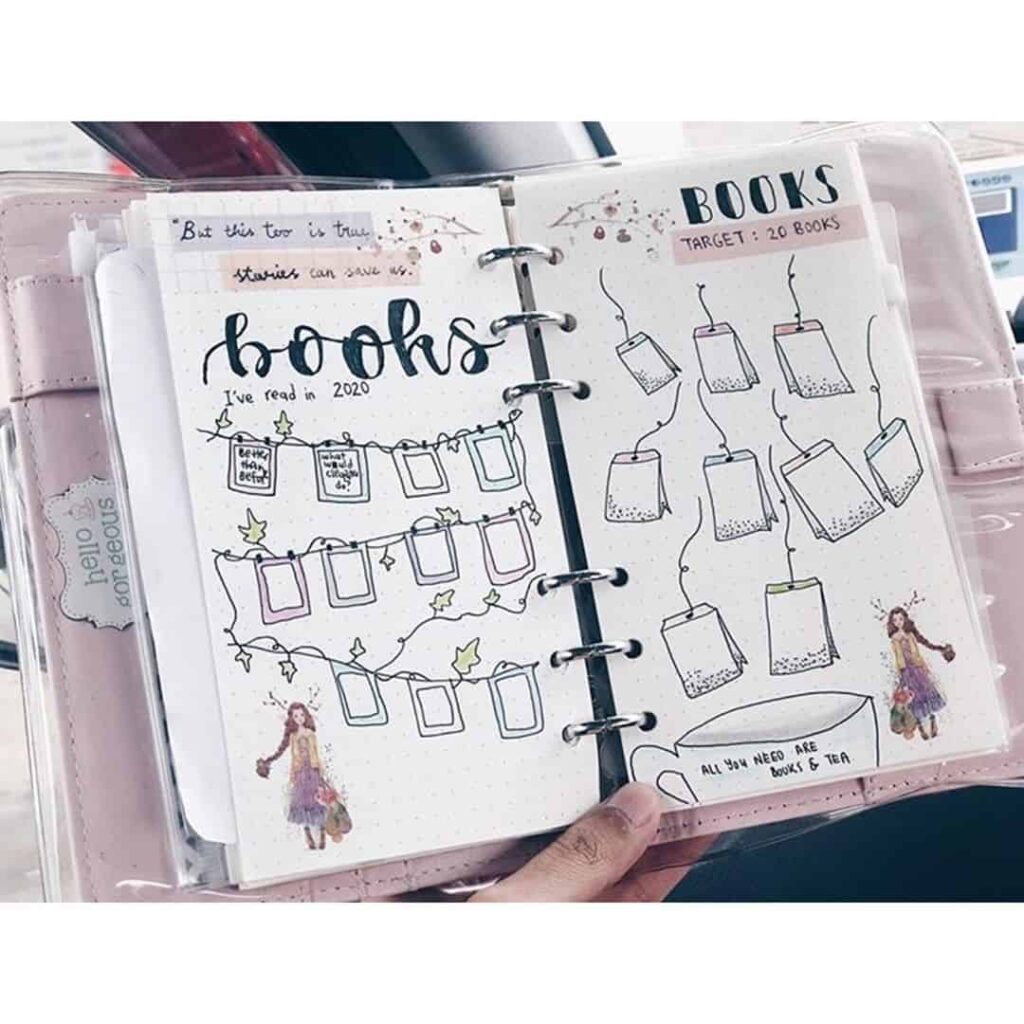
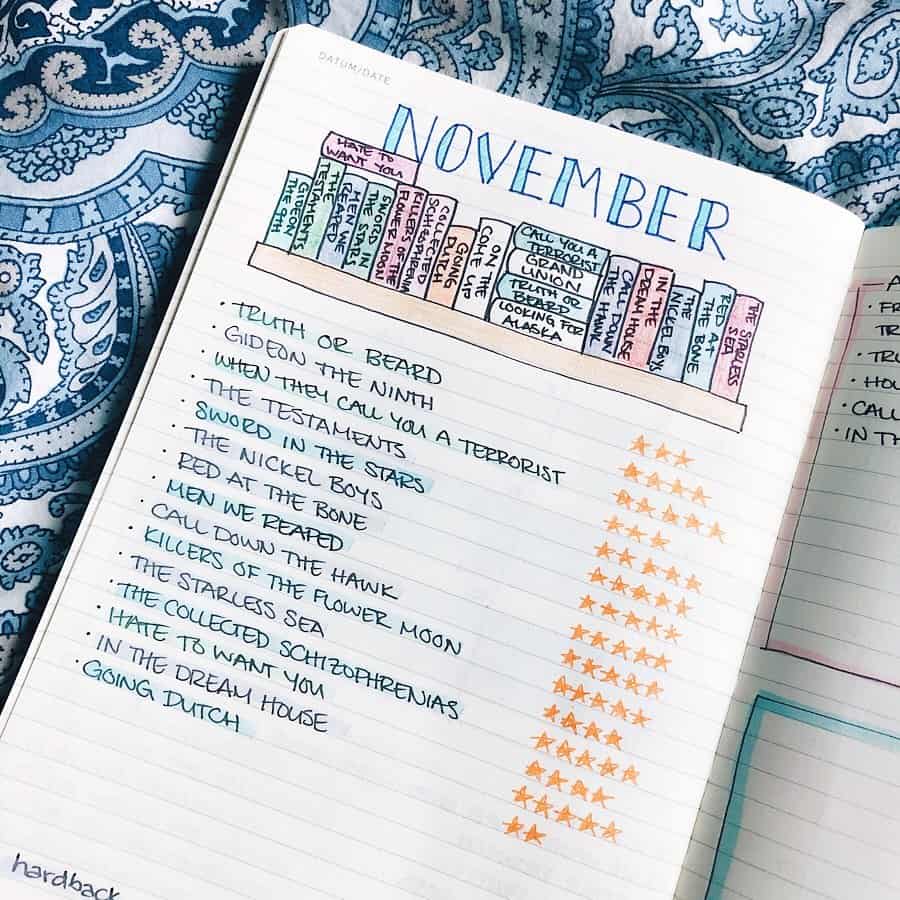
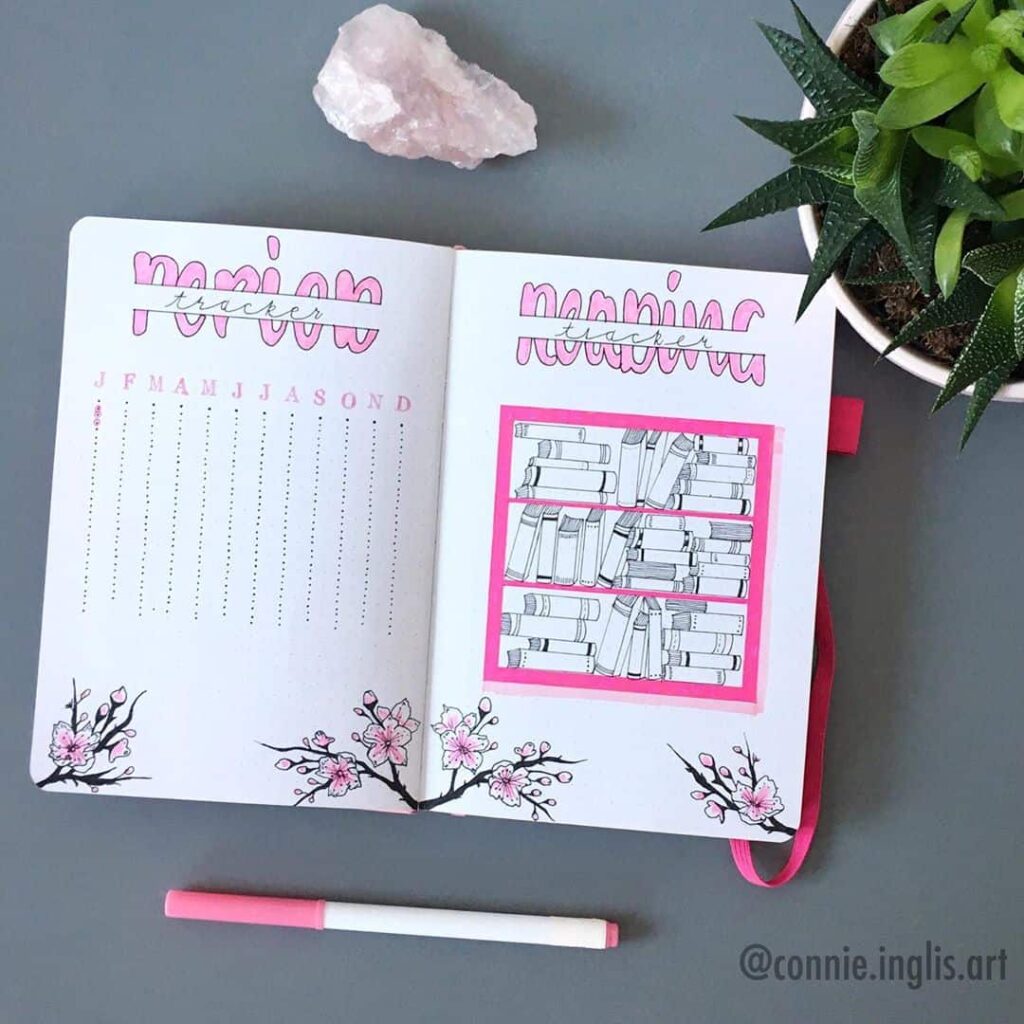
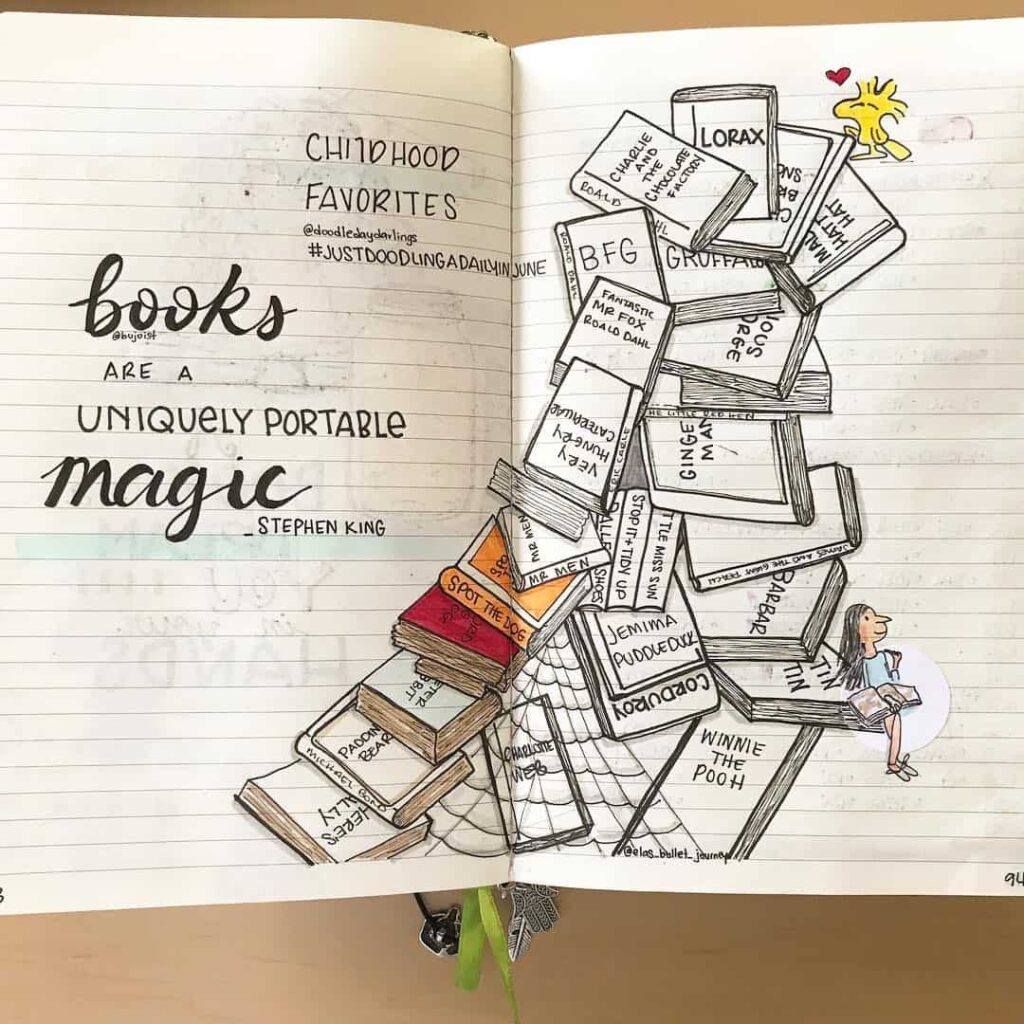
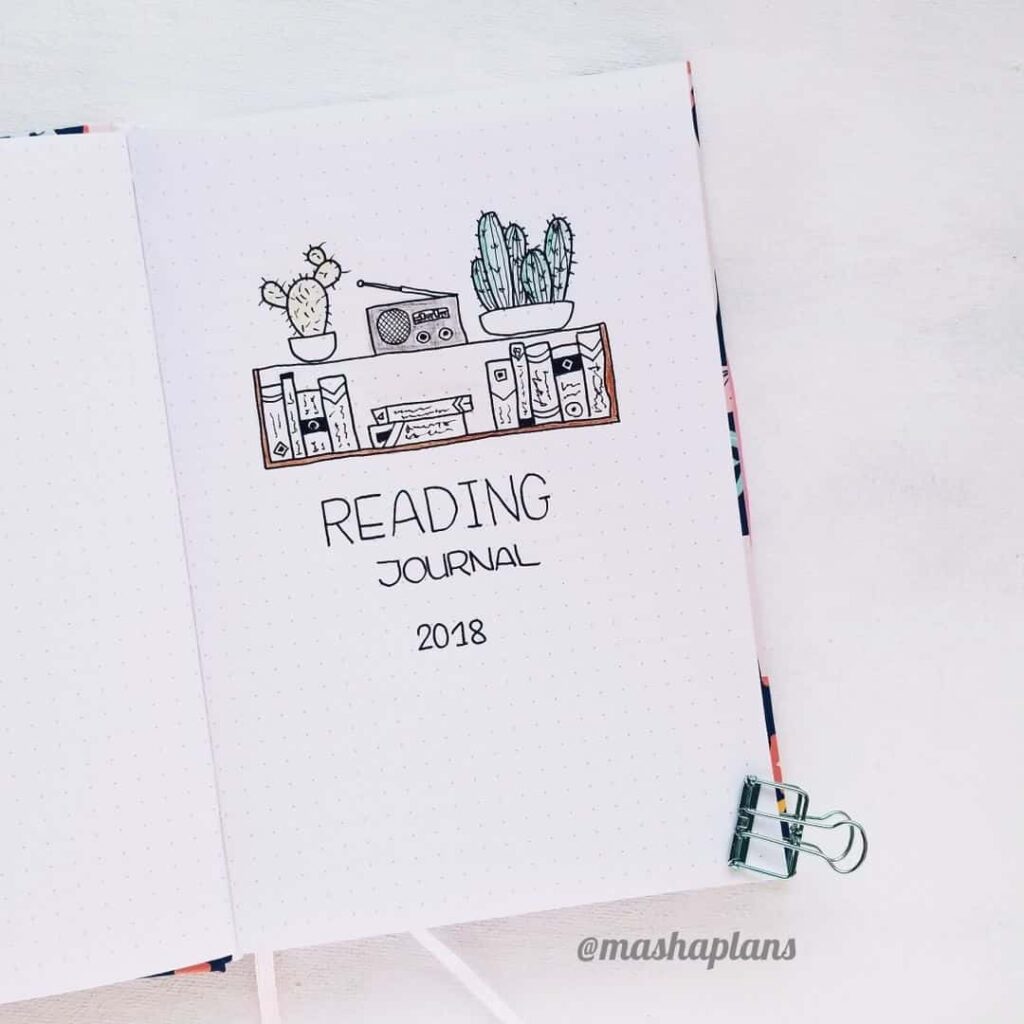
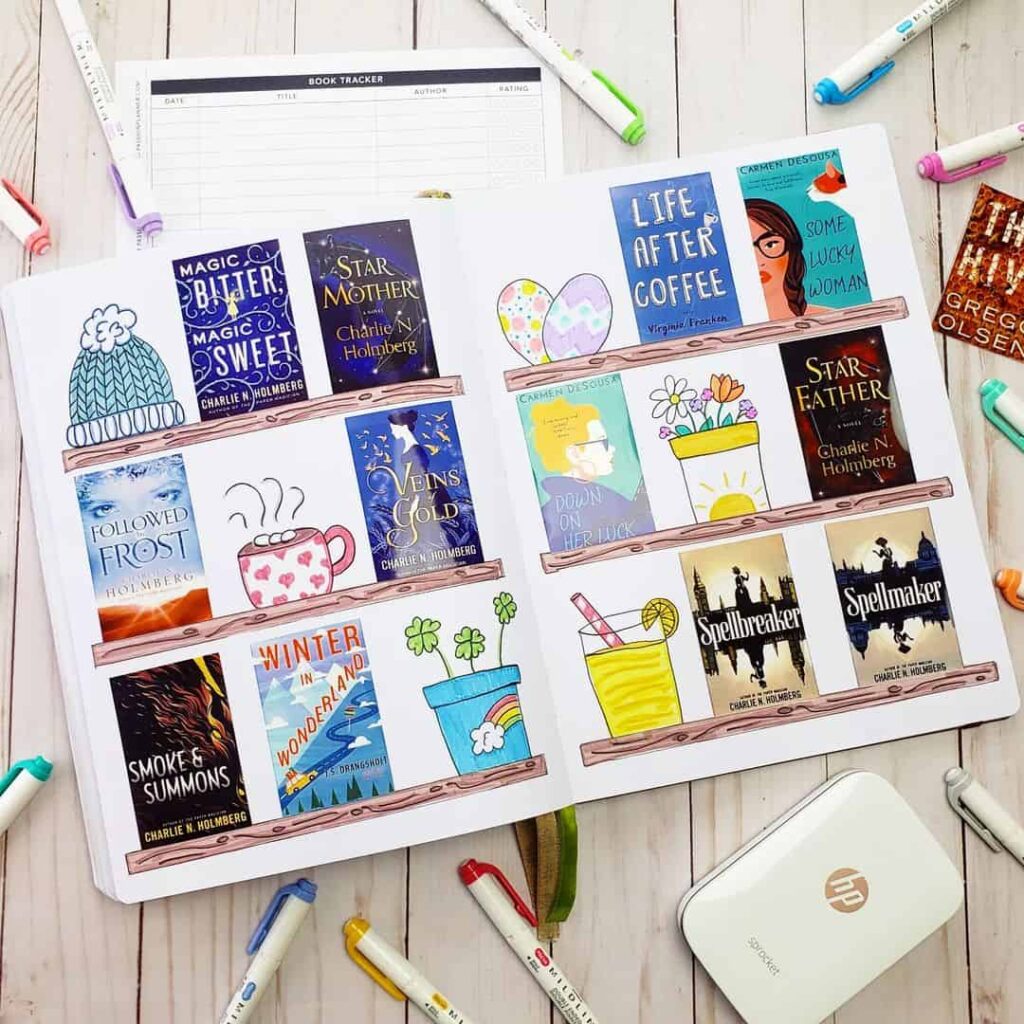
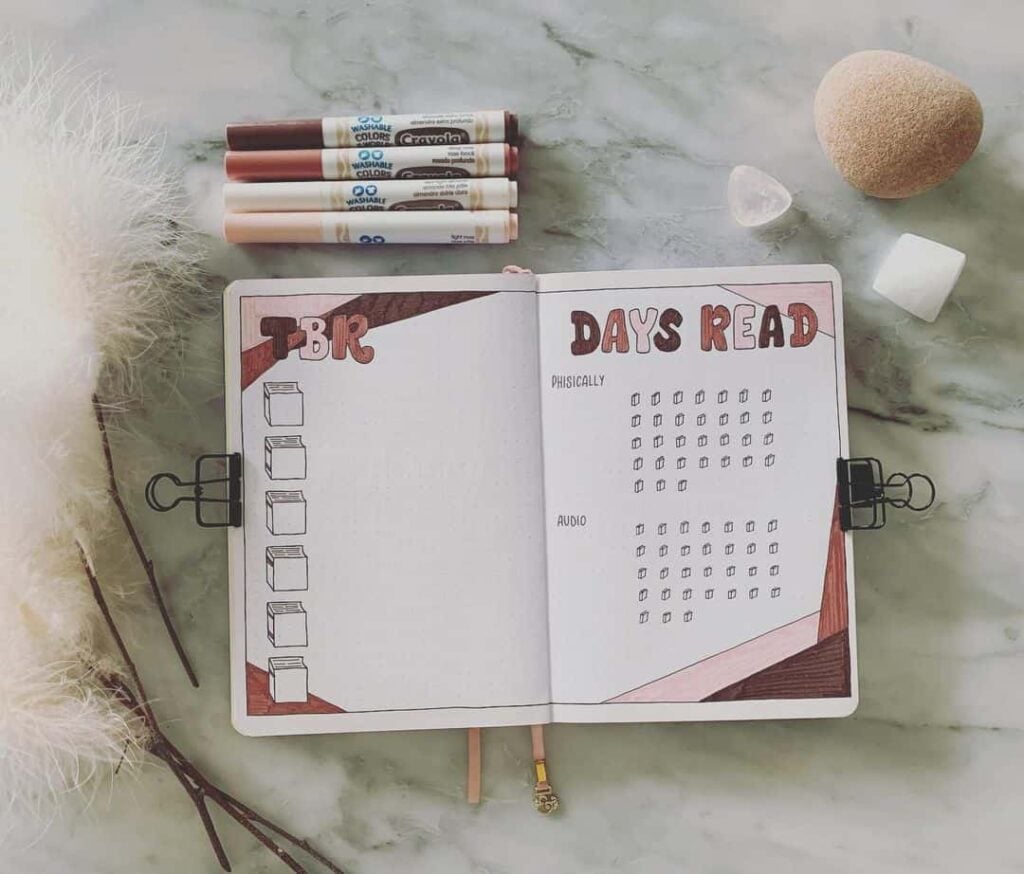
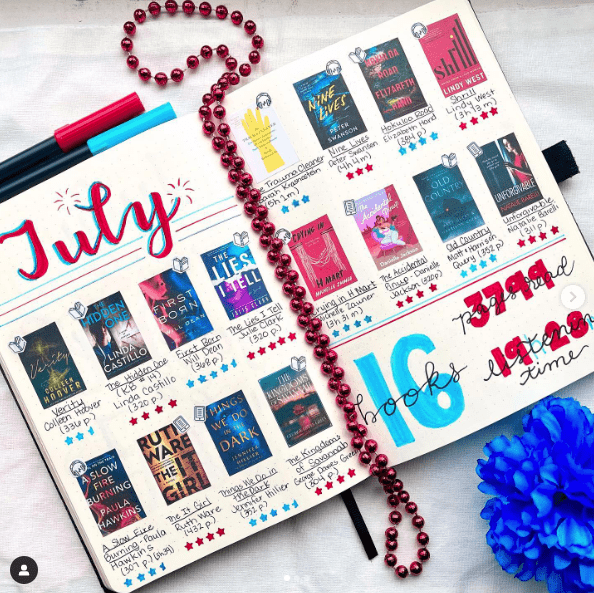
Beyond the basic log, common variations include a monthly summary spread that gathers each month’s reading on one page, a books-to-read collection page that doubles as a wishlist, a dedicated review spread for longer thoughts on individual books, and a bookshelf-style page where the reader draws the spine of each book they finish. The bookshelf variant is the most popular by some distance in the gallery below, partly because it builds visually over the course of a year in a satisfying way.

Other things worth tracking alongside books
A reading tracker tends to grow over time as the reader notices what they actually want to keep a record of. A few additional fields show up regularly in the gallery below:
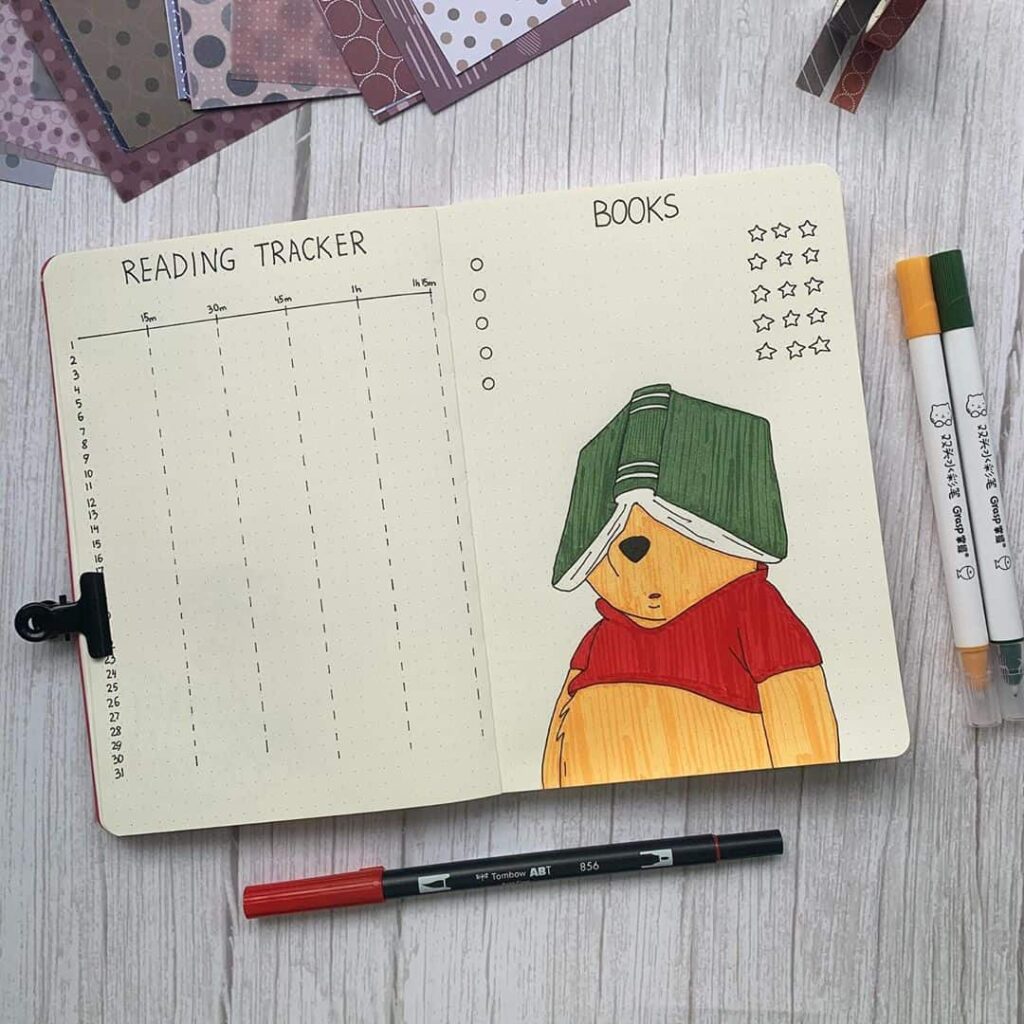
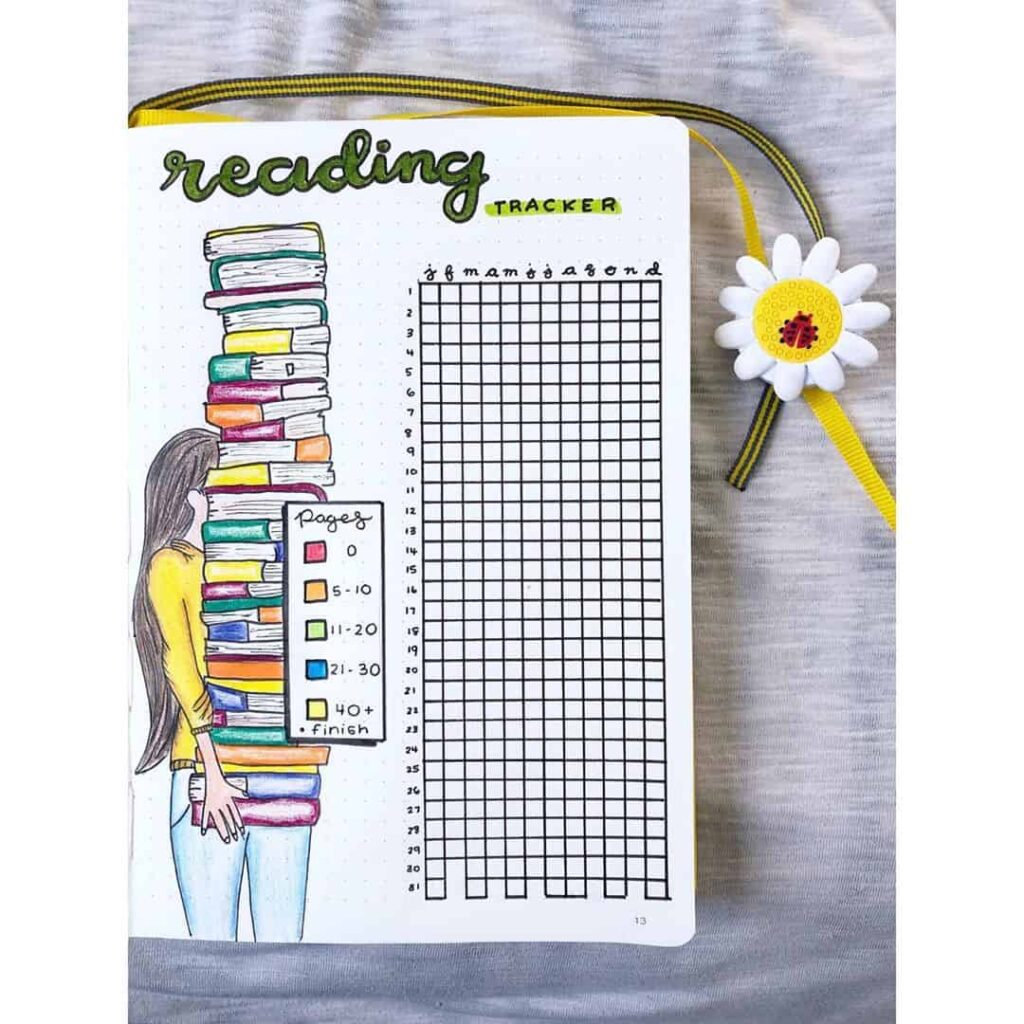
- Pages read per day or per session.
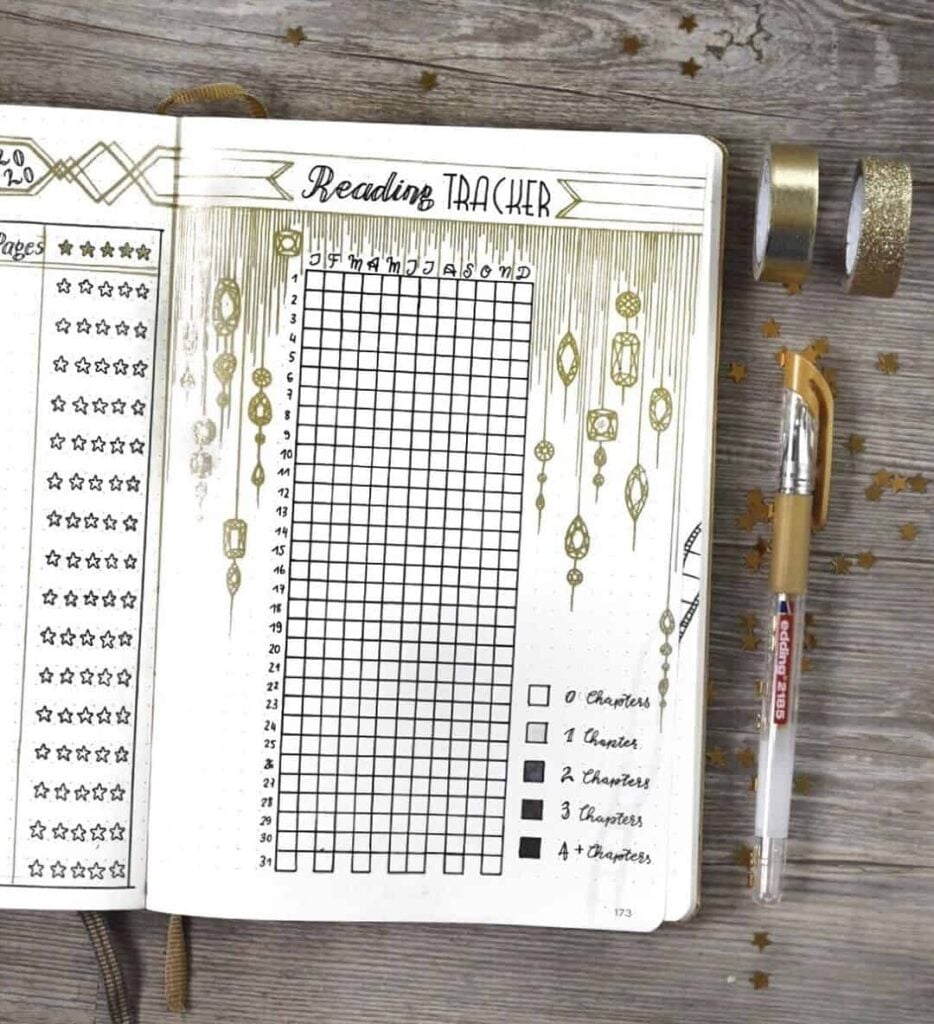
- Chapters finished.
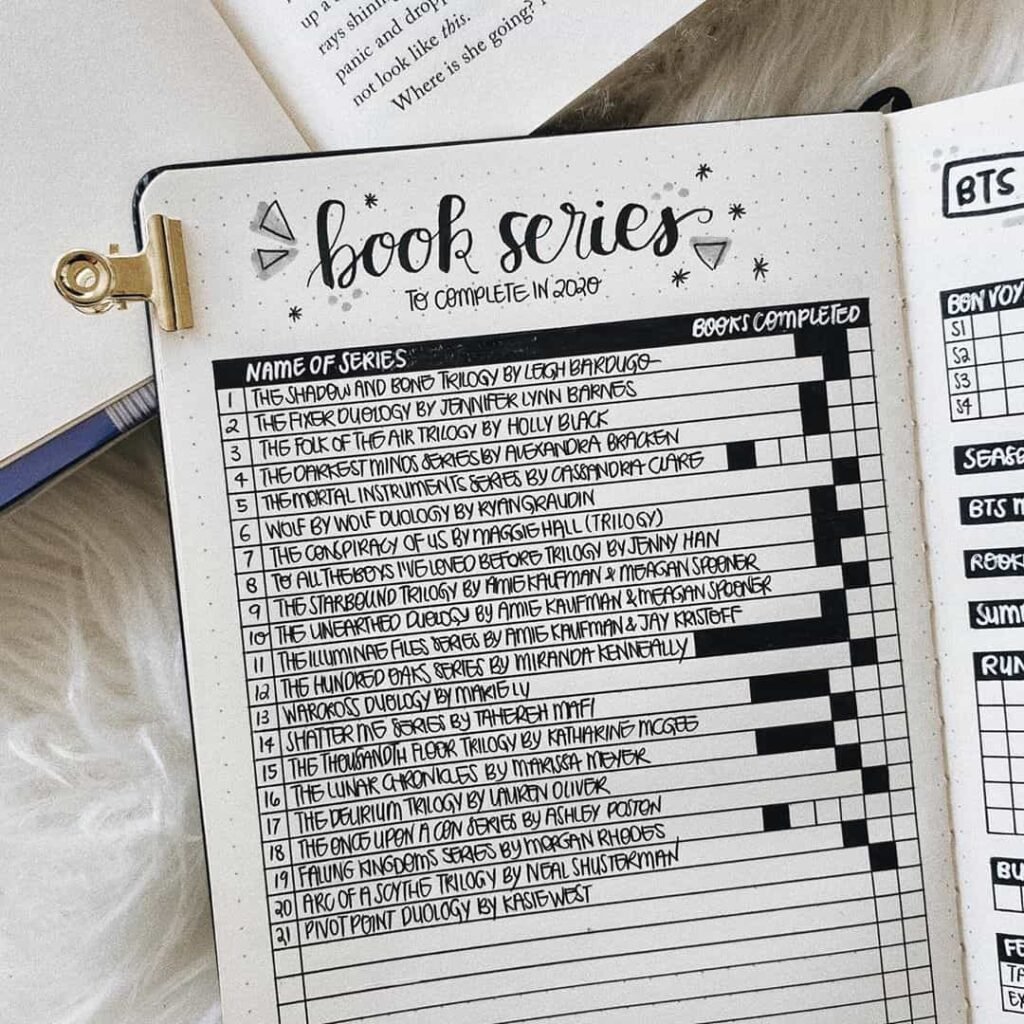
- Series completed.
- Bookstores visited.
- Favourite places to read.
- Live readings or literary events attended.
- Notes taken on individual books.
- Images of the books themselves.
- Favourite quotes.
- Upcoming books to read.
- Books loaned out to others.
- Library books and their return dates.
- Reviews, rankings, and ratings.
- Reading speed or pace over time.
Featured reading tracker spreads
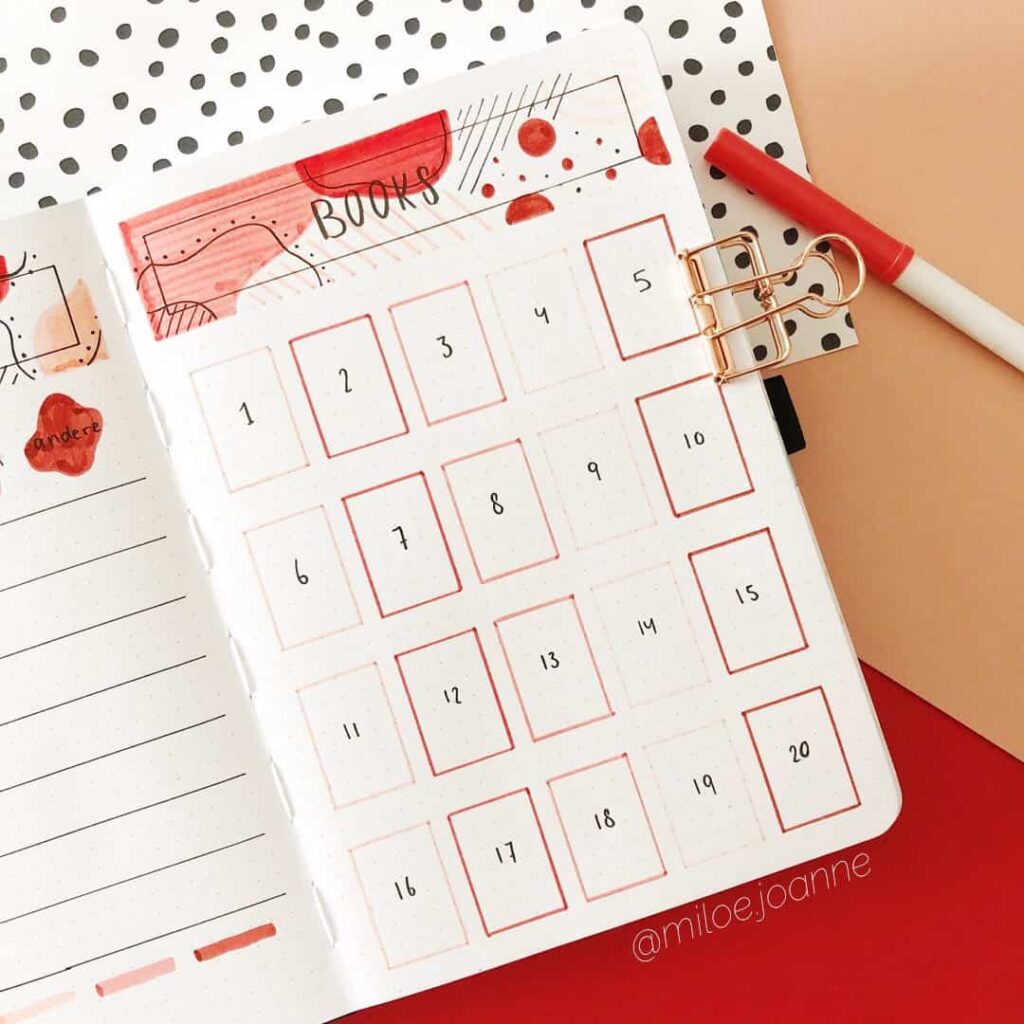
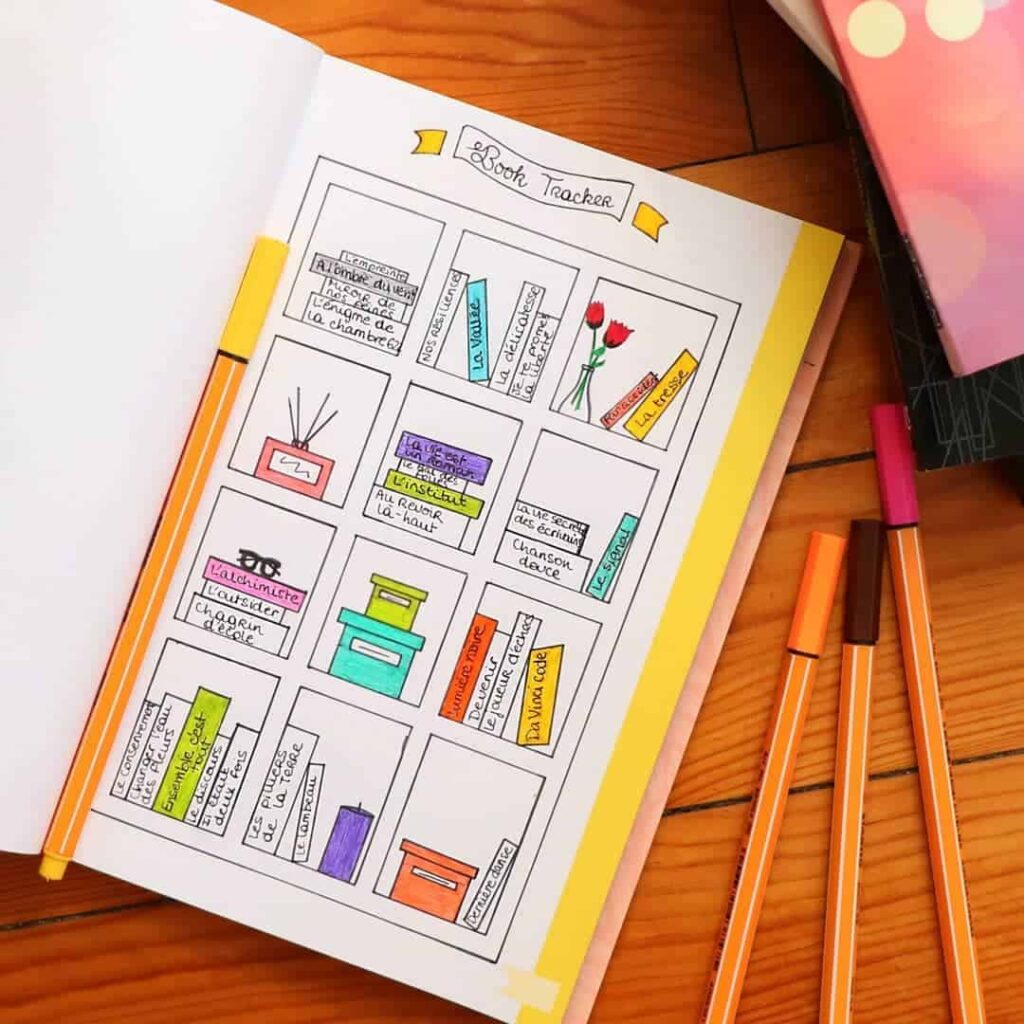
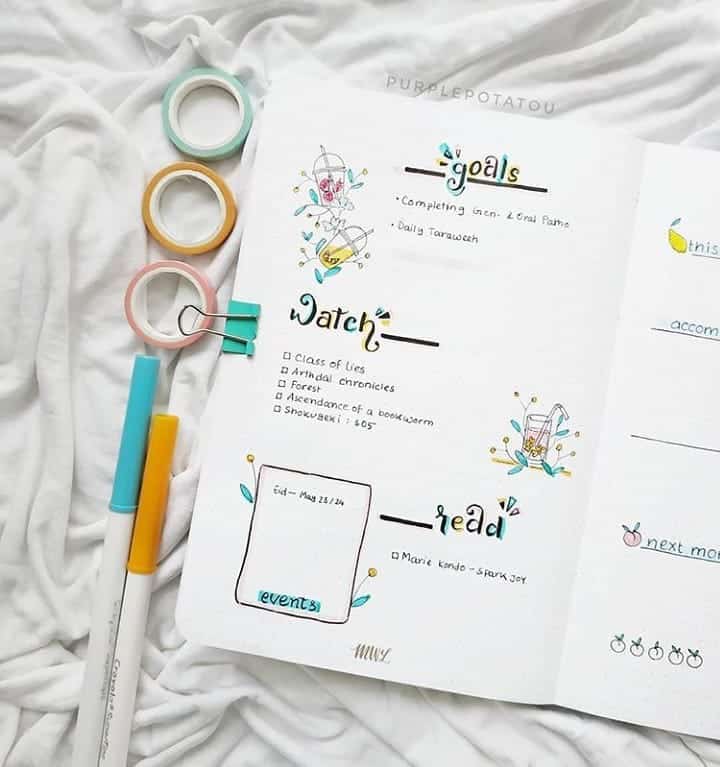
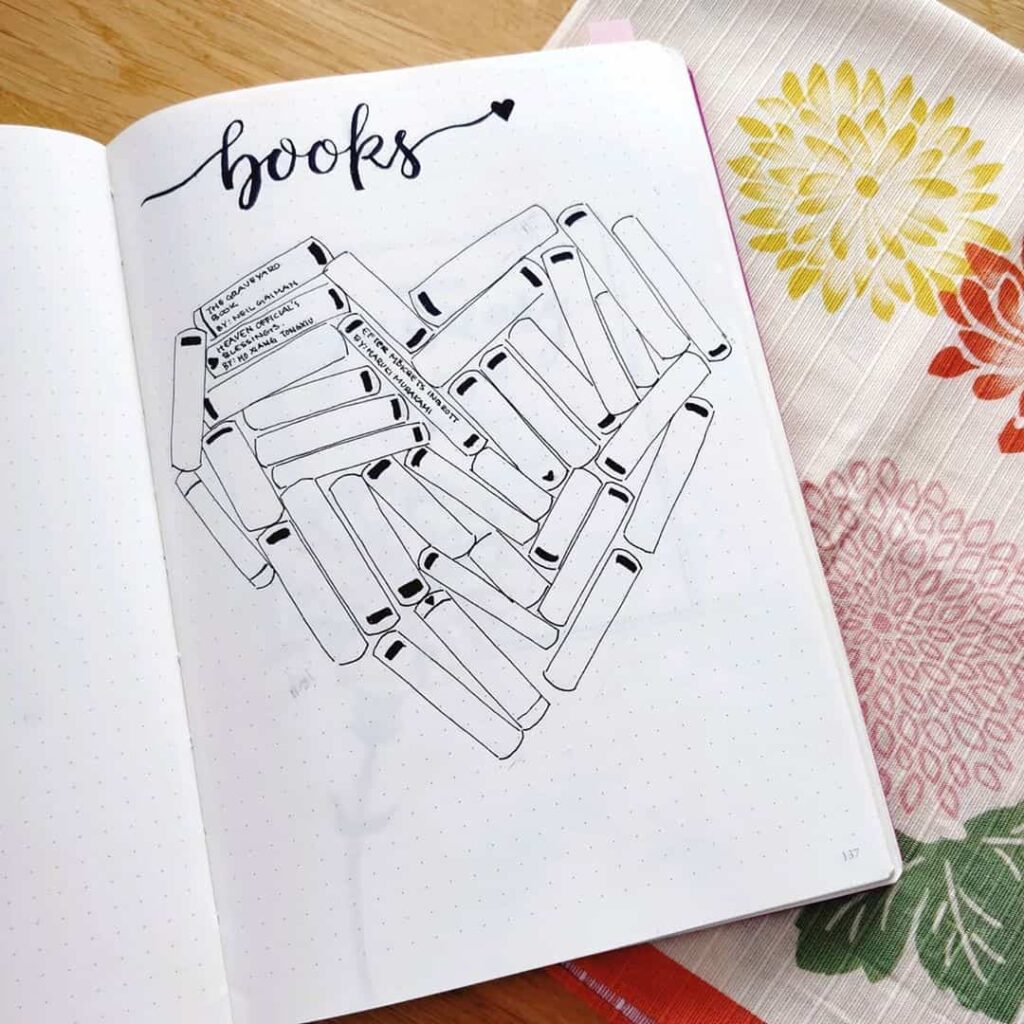
The gallery below brings together seventy-seven reading-tracker and book-log layouts originally collected by the My Inner Creative community over several years of sharing bullet journal work online. The collection was assembled to show the full range of approaches people actually use — not a shortlist of the most elaborate or the most polished, but an honest cross-section of how readers at every skill level approach the same basic problem: how do you keep a useful record of what you read?
A few things are worth knowing before you scroll through:
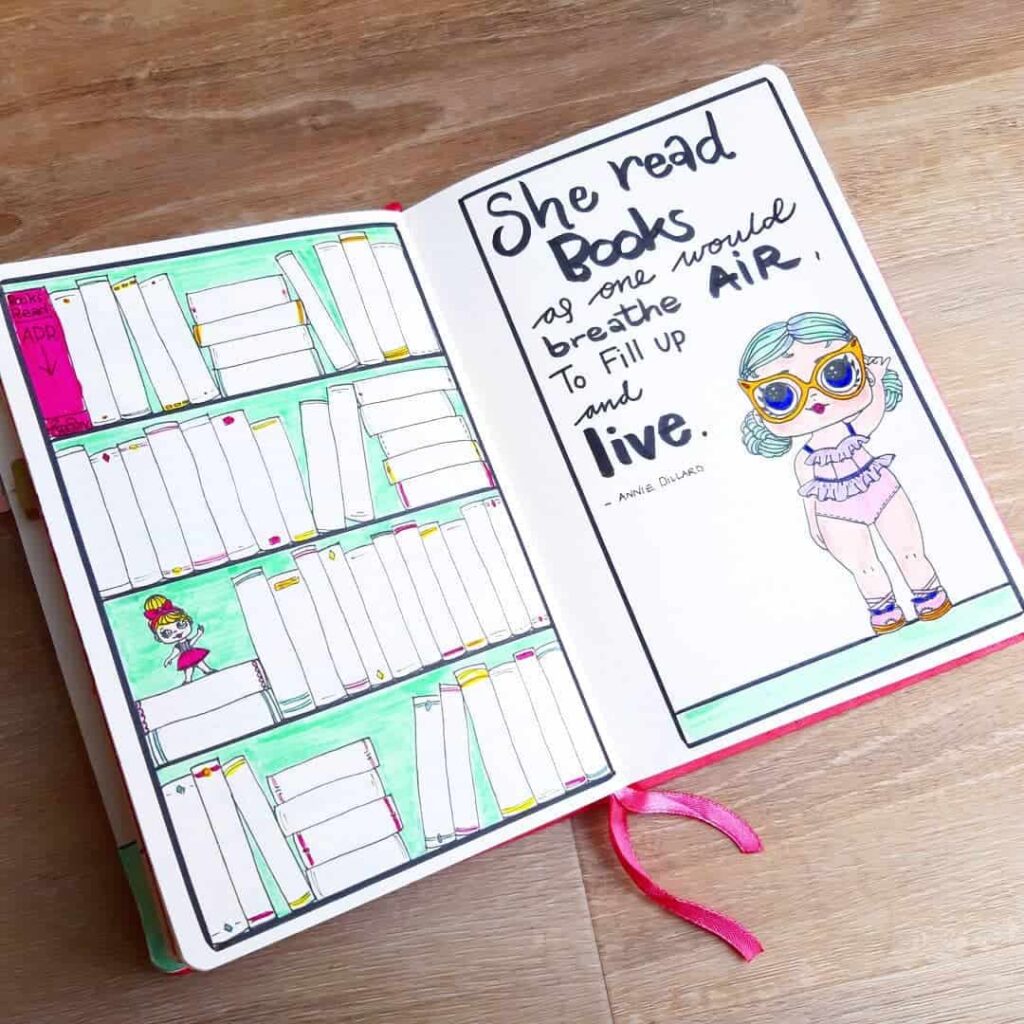
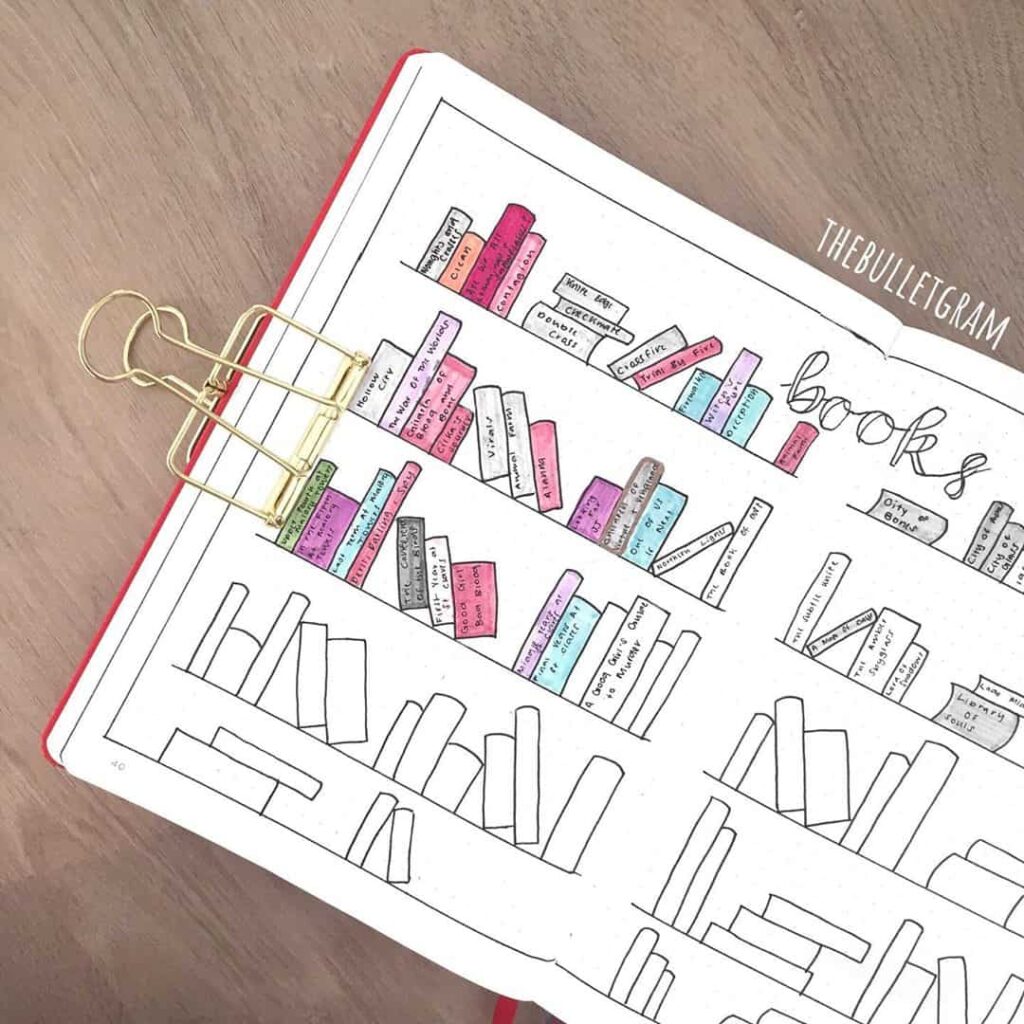
- The bookshelf style dominates. More than a third of the layouts use some version of the drawn-spine bookshelf format, where each finished book is recorded as a hand-drawn spine standing upright on a shelf. The appeal is that the page fills visibly across a year, giving a concrete, at-a-glance picture of reading volume. No two bookshelf spreads in the gallery look quite alike — the differences in lettering style, shelf decoration, colour choices, and page orientation are worth studying if this format interests you.
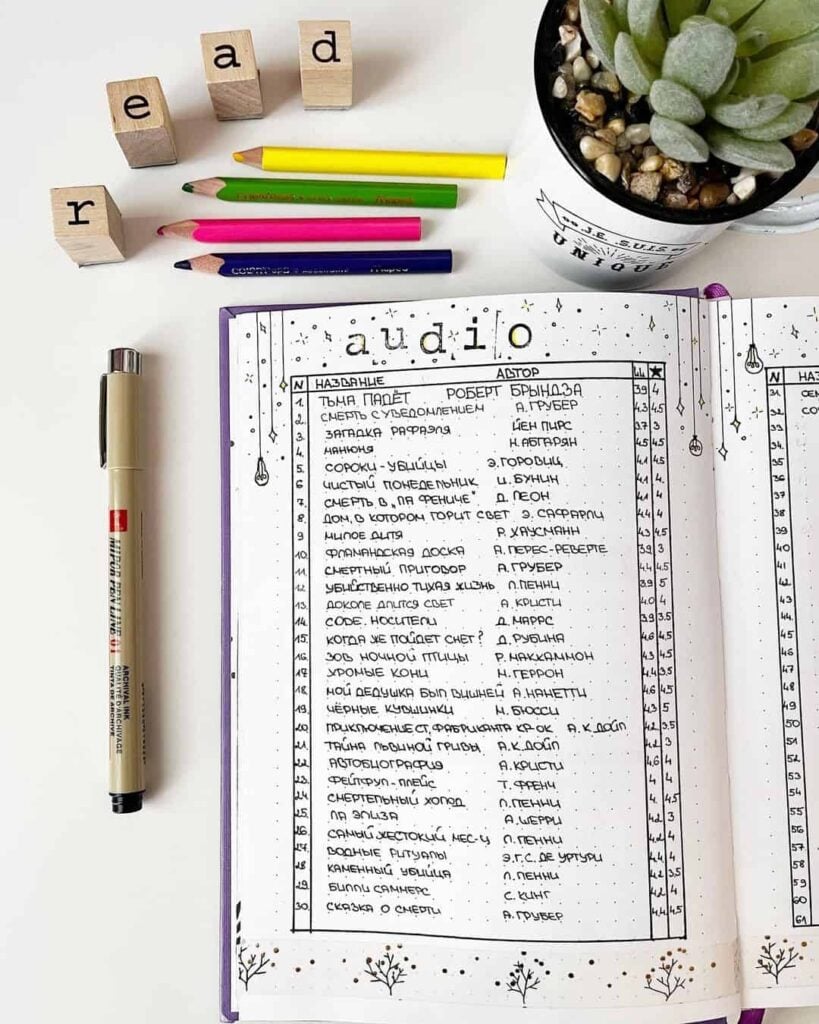
- The column log is the most practical. A significant number of layouts use simple ruled or dotted columns — title, author, start date, finish date, rating. These take under ten minutes to set up and remain easy to maintain. If you have never kept a reading tracker before, a column log is the lowest-friction starting point in the gallery.
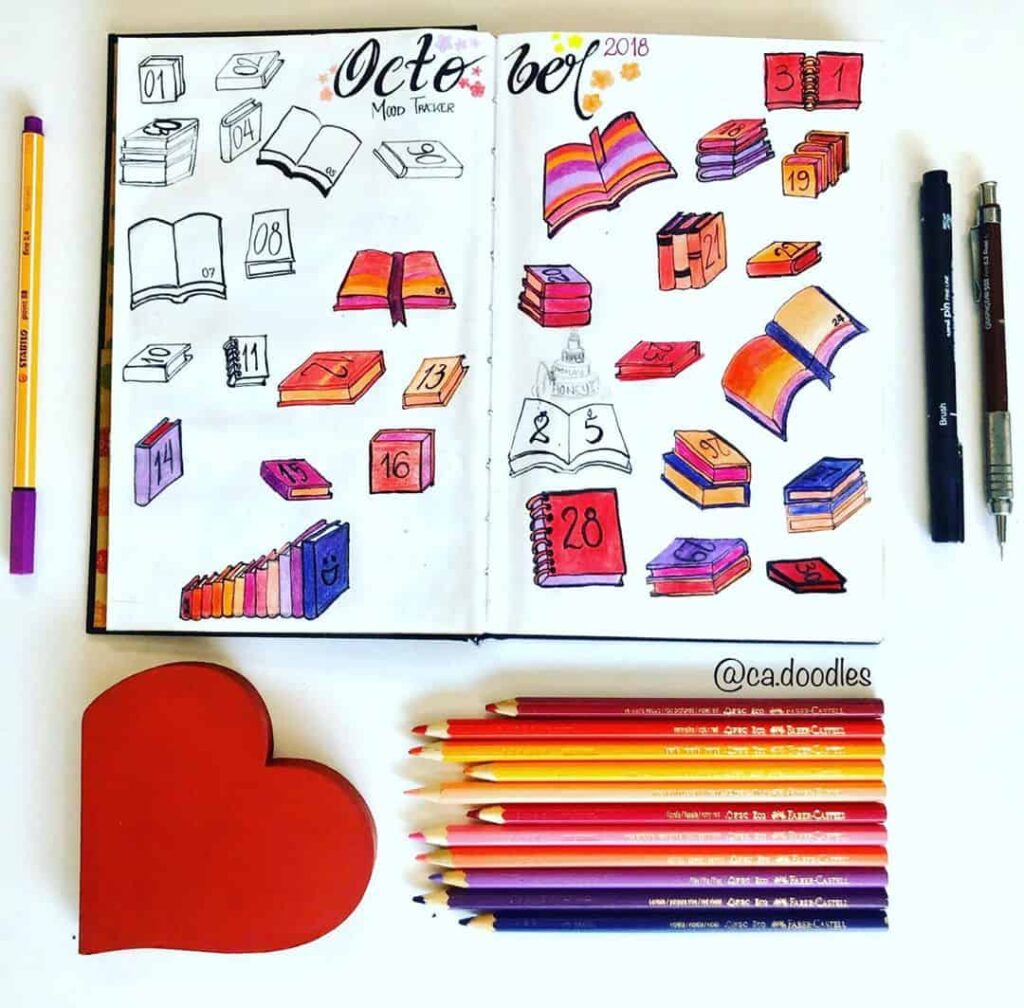
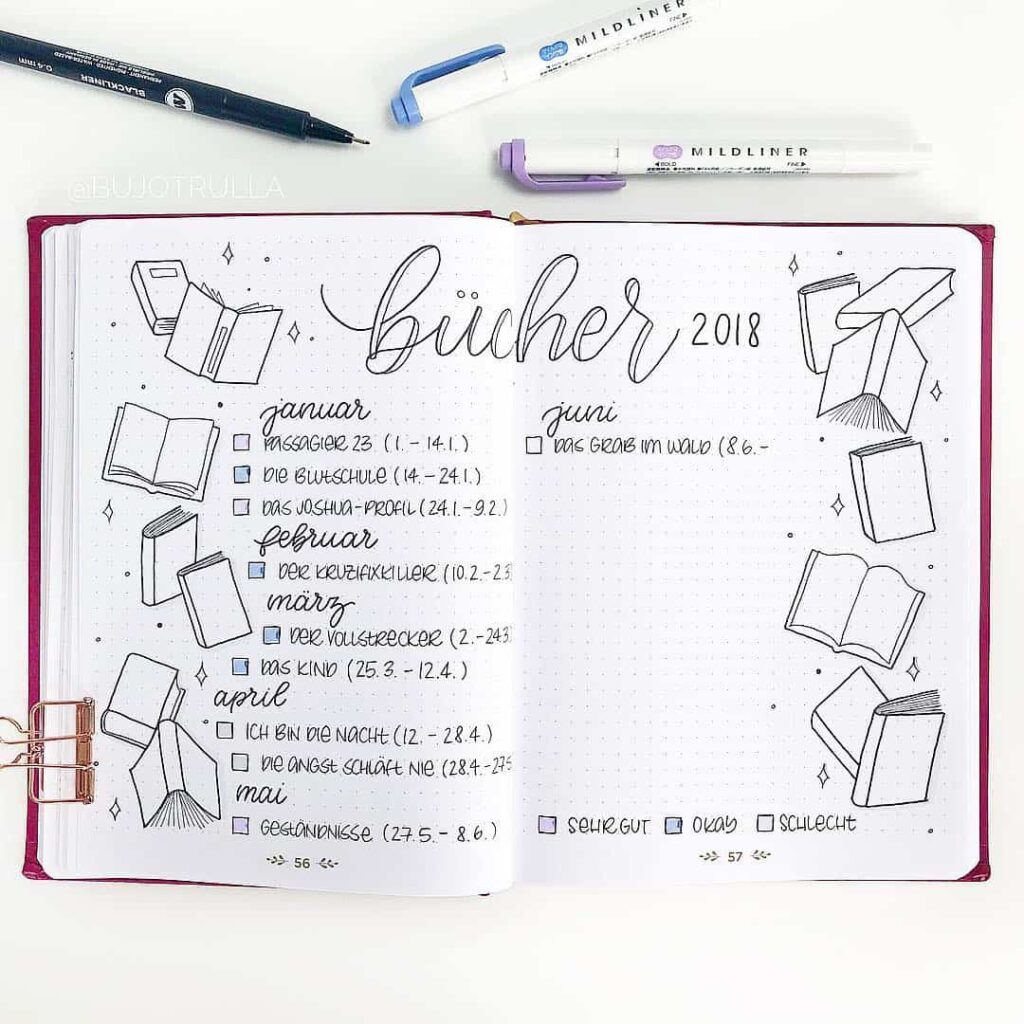
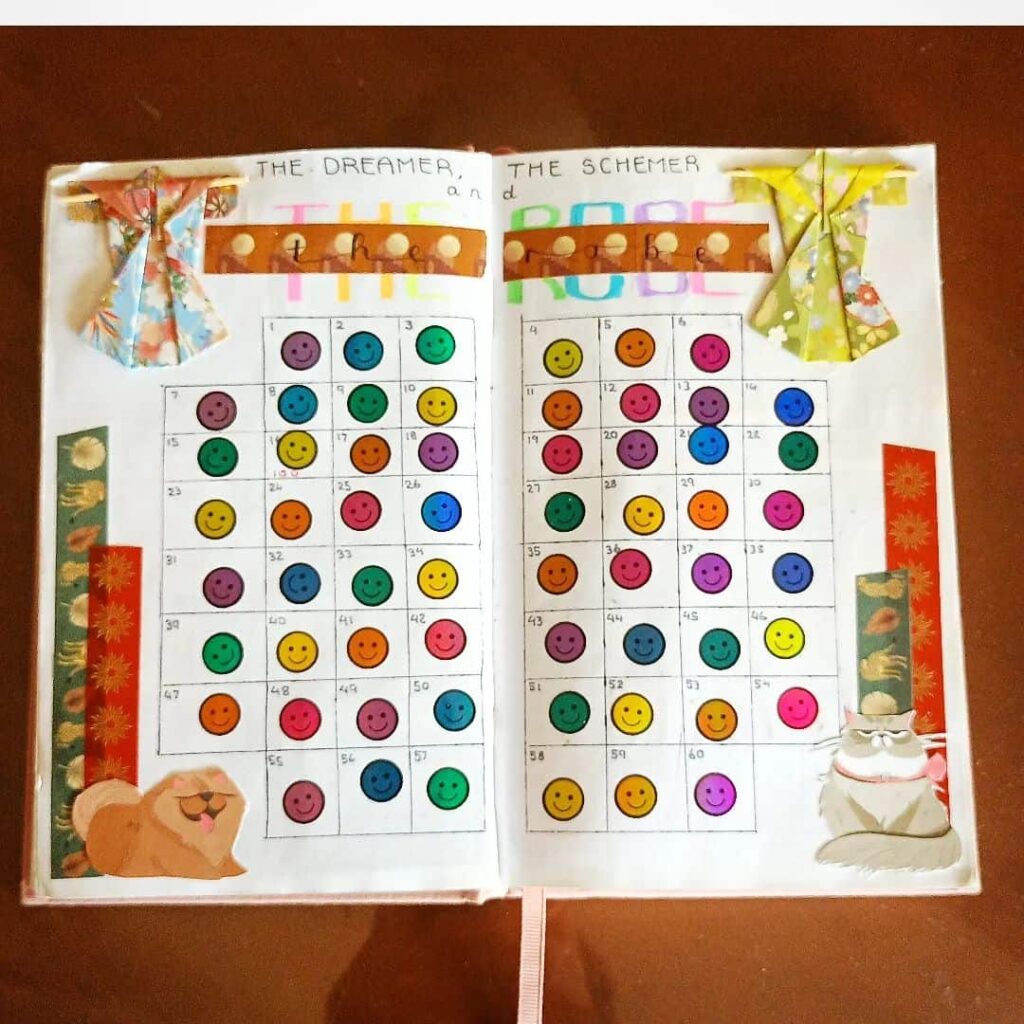
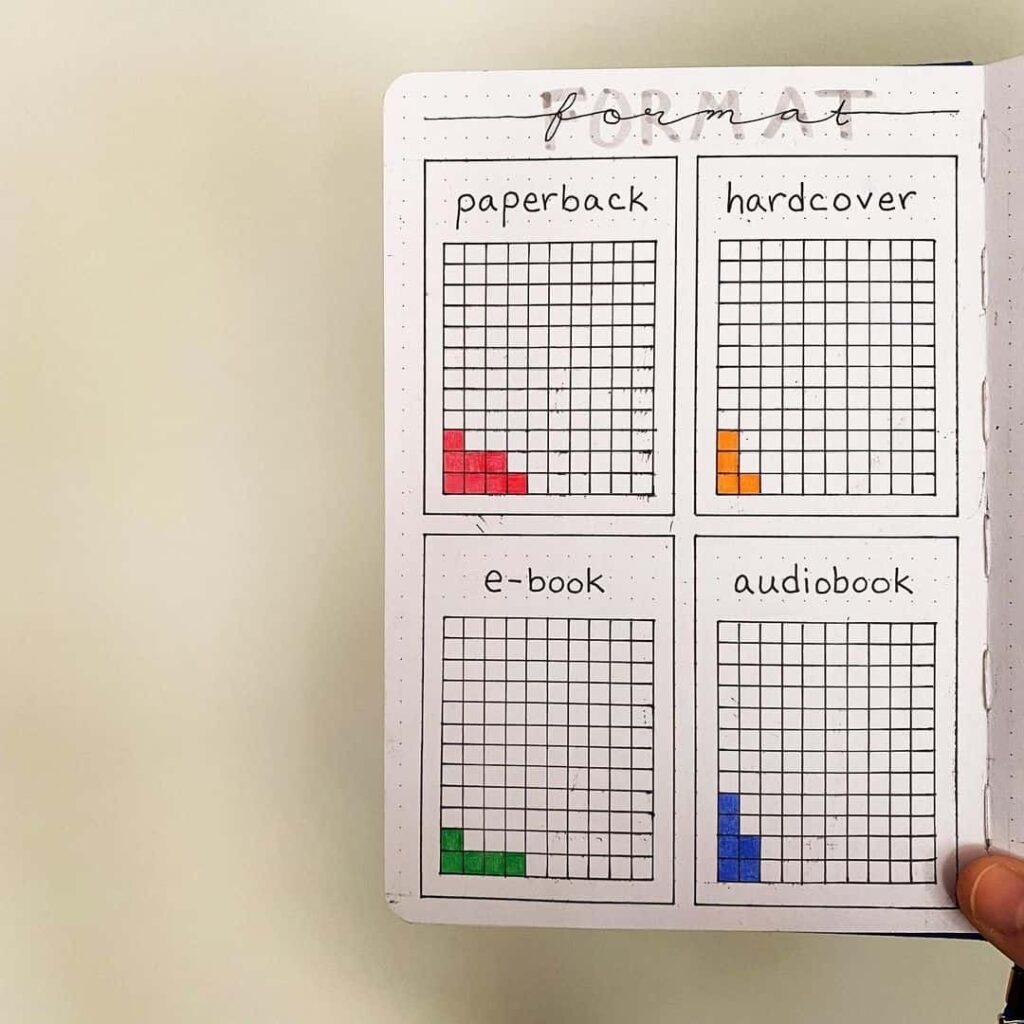
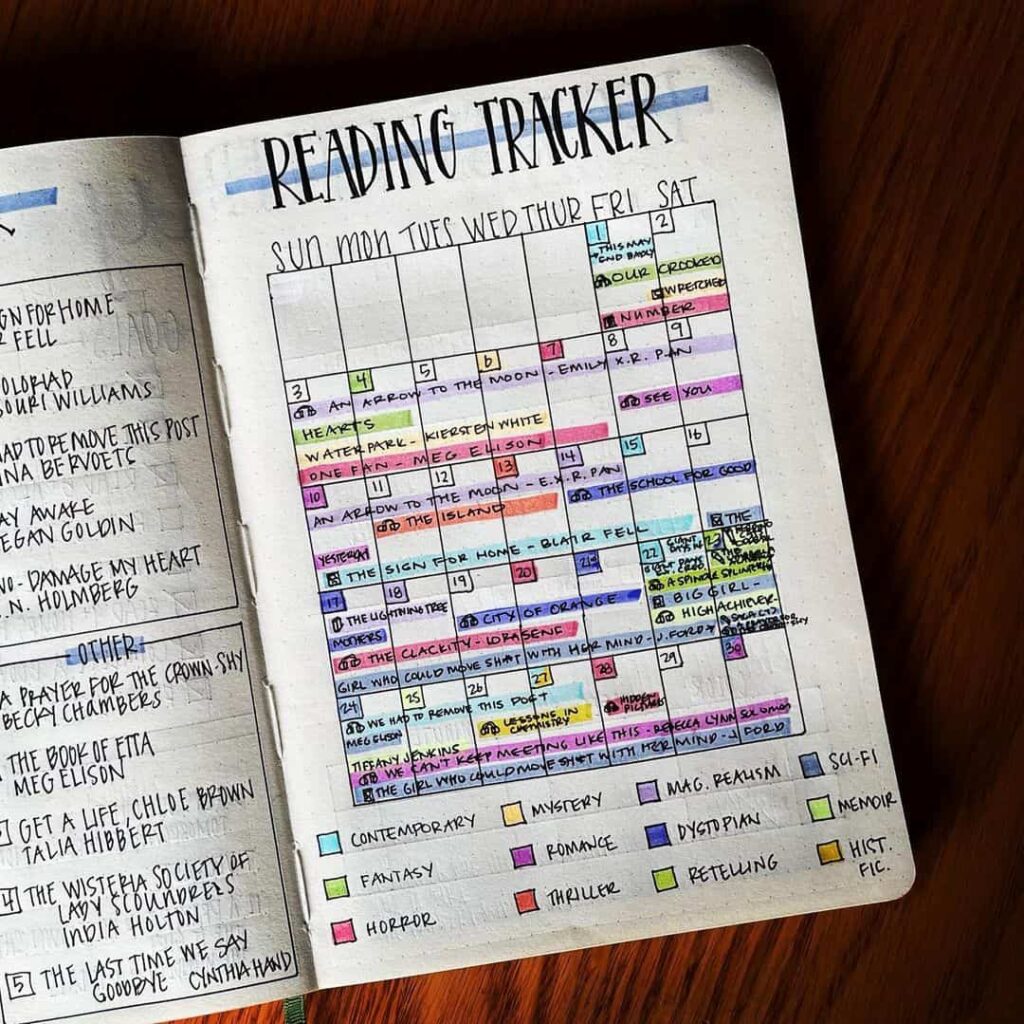
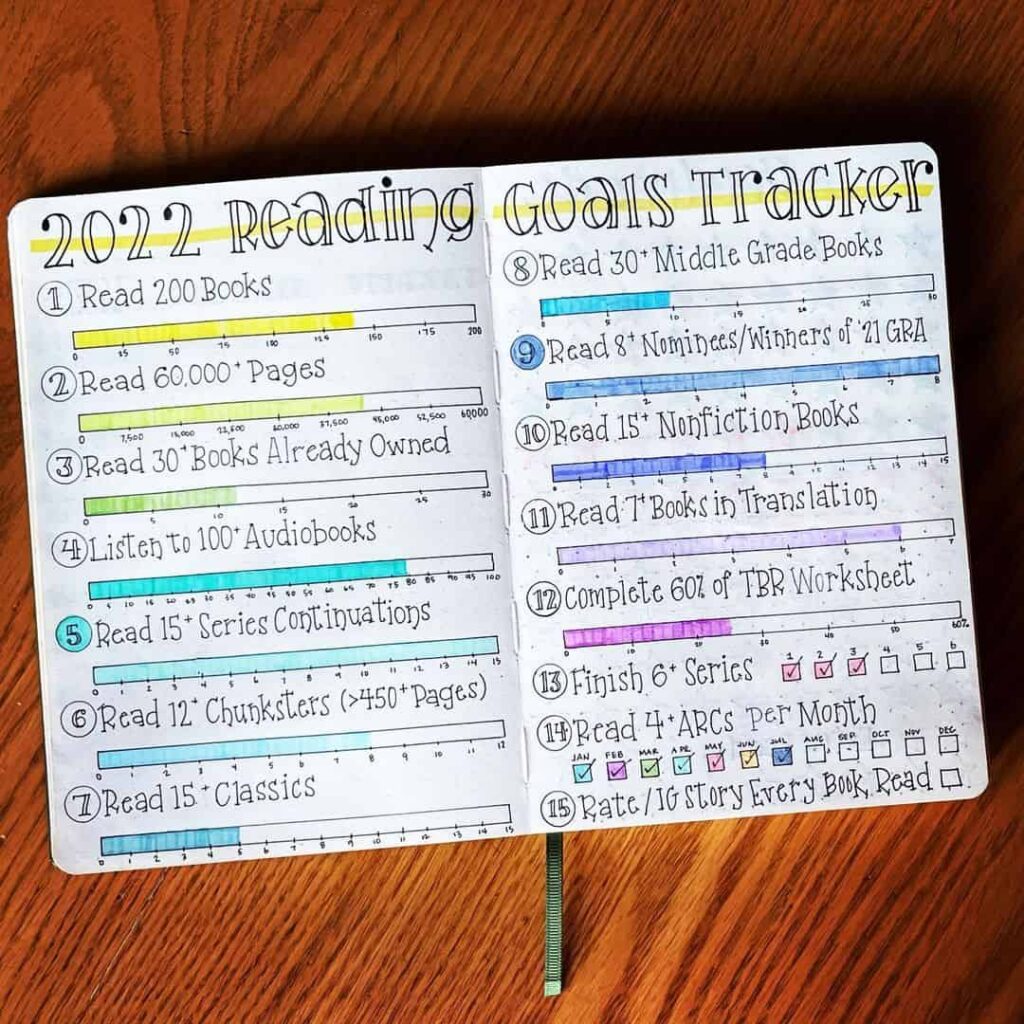
- Monthly layouts are popular with goal-setters. Several spreads organise reading by calendar month rather than as a single running list, which makes it easier to see whether reading pace is picking up or slowing down across the year. Some combine a monthly grid with a cumulative annual count.
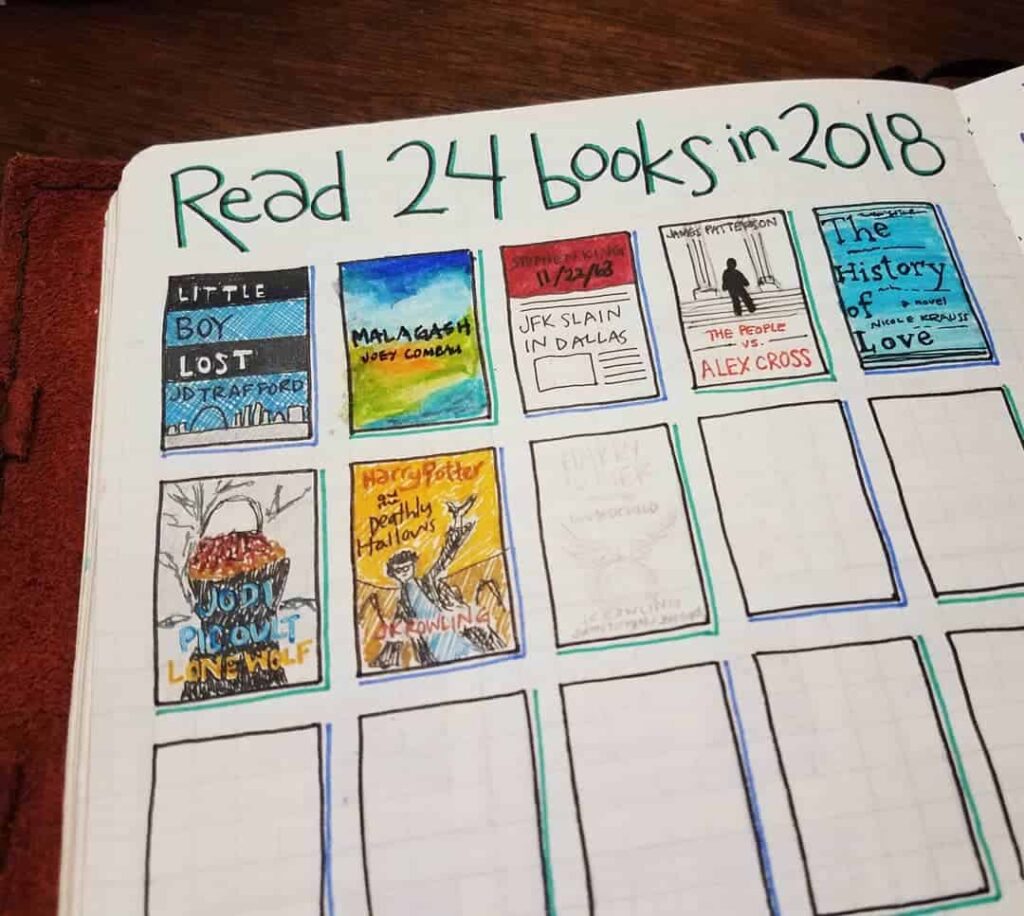
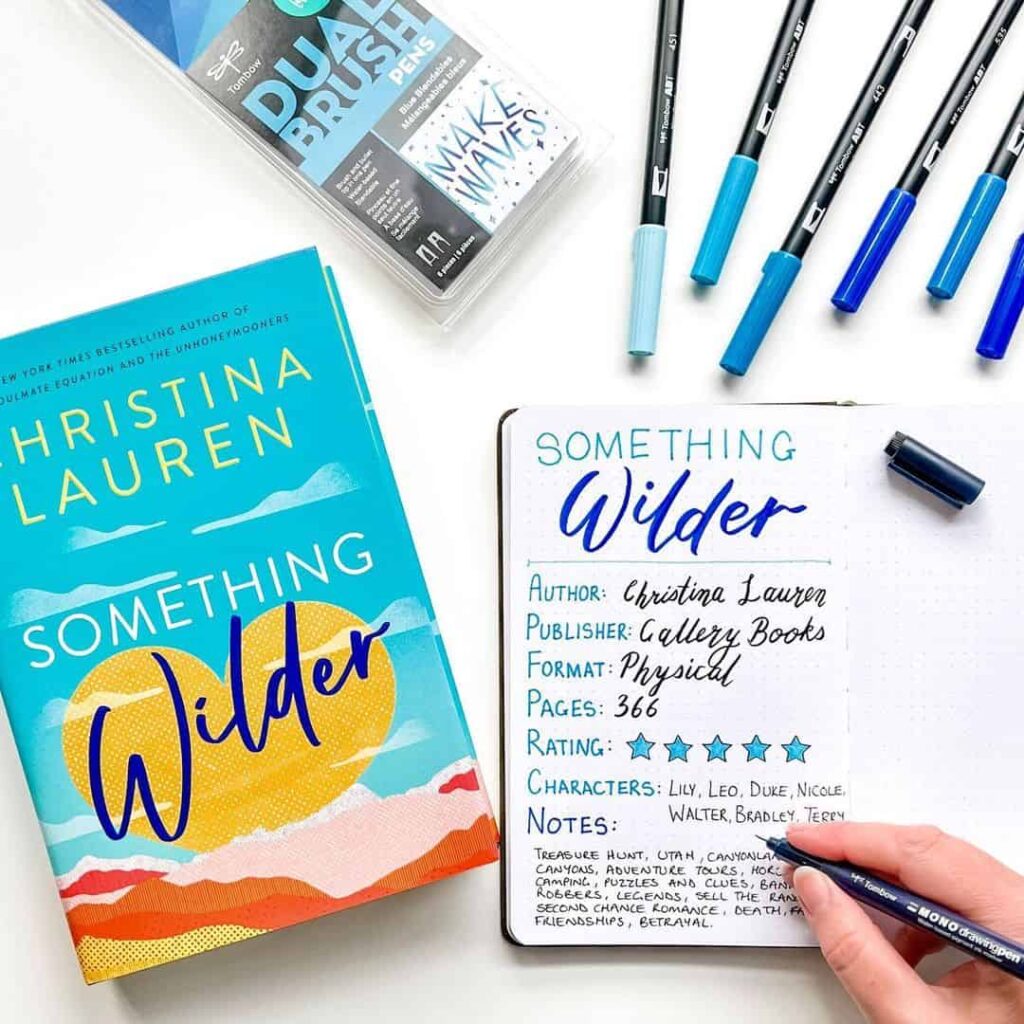
- Review spreads are a category of their own. A handful of layouts dedicate significant space to individual book responses — longer notes, favourite quotes, a rating system, and sometimes a small sketch or cover reproduction. These are less about counting books and more about processing them.
- Skill level varies deliberately. The gallery was not filtered for artistic quality. Some layouts are strikingly illustrated; others are entirely functional. That range is intentional, because the most elaborately decorated tracker is not always the one that gets maintained. The pages that look most useful to return to are often the simpler ones.
Anyone looking for a starting point will find at least one layout close enough to adapt directly. The more elaborate spreads are worth studying for where the practice can go once the habit is established.

















Choosing a format that you will actually maintain
The most common reason a reading tracker gets abandoned is a mismatch between the format chosen and the time available to maintain it. A bookshelf spread that takes fifteen minutes per entry is a satisfying project in January and a neglected page by March. A column log that takes ninety seconds per entry is still being updated in December. The choice of format matters less than the choice of a format that fits the real rhythm of the reader’s life.
A few questions worth asking before settling on a layout:
- How many books do you finish in a year? A reader who finishes four or five books a year has very different page-space needs than one who finishes fifty. A bookshelf spread looks full and satisfying at high volume; at low volume, the same format can feel like a reminder of what you did not read. A column log scales easily in either direction.
- Do you want to track reading or review it? These are related but different goals. Tracking is primarily about record-keeping — what you read, when, how many. Reviewing is about response — what you thought, what stayed with you, what you would recommend. A simple log serves the first goal well; a dedicated review spread or a log with a notes column serves the second. Trying to do both in a single cramped spread is the most common reason reading trackers stop feeling useful.
- Will you be writing by hand or adding entries infrequently? Some formats look better when worked on regularly in small bursts; others are designed to be filled in all at once. A monthly summary spread, for example, is usually completed at the end of each month rather than updated after each book. If you tend to forget to add entries until a backlog has built up, a format that handles batched updates is more practical than one that expects real-time entries.
- How important is the visual element to you? There is no wrong answer. If the decorative aspect is part of why journalling is enjoyable, a bookshelf or illustrated format makes sense and the extra time is not wasted. If the tracker is purely a reference document, a plain column log in a cheap notebook is entirely sufficient. The gallery above contains both extremes and everything in between.
The practical advice most often given by long-term bullet journalists on this question is to start simpler than you think you need to. A column log established in the first week of January gives a full year’s data. An elaborate bookshelf spread that takes two weeks to design and is only half-maintained gives considerably less. The tracker can always be redesigned in the following year with the benefit of knowing what information you actually wanted to capture.
A reading tracker does not require much from the person keeping it. A page, a pen, and the willingness to write down a title when a book has been finished is the whole practice. What the tracker provides in return is a record that builds quietly across months and years, eventually offering something most readers do not otherwise have: a clear, concrete answer to the question of what they read this year, and roughly when, and in what order. The notebook is patient enough to hold all of that, and on most weeks, with most readers, that is the part of the practice that matters most.