Editorial note: This article was originally published on My Inner Creative and has been updated and republished in May 2026 under The Vessel’s editorial standards.
Floral spreads are a recurring theme in bullet journaling. They show up across monthly covers, weekly headers, mood pages, and habit trackers, sometimes as the entire visual identity of a notebook and sometimes as a single small drawing in a corner.
The reason is partly aesthetic — flowers are forgiving to draw at almost any skill level — and partly practical. A botanical motif that took ten minutes to make adds a sense of care to a page that would otherwise be a grid of dates.
The seventy spreads collected below were originally featured on My Inner Creative, a community of bullet journal artists publishing floral and botanical design work. The layouts range from delicate watercolour-style headers to single-line-weight doodles and stamped repetitions. None of them require professional illustration skill, and most can be approximated with a fine-liner pen and a few minutes of patience.
The point of including the full set rather than a curated subset is to show how widely the same general idea — a flower on a page — can take shape depending on the person holding the pen, the colour of ink they happened to be using that week, and how much time the rest of the day had left over for drawing.

Approaches to drawing flowers in a bullet journal
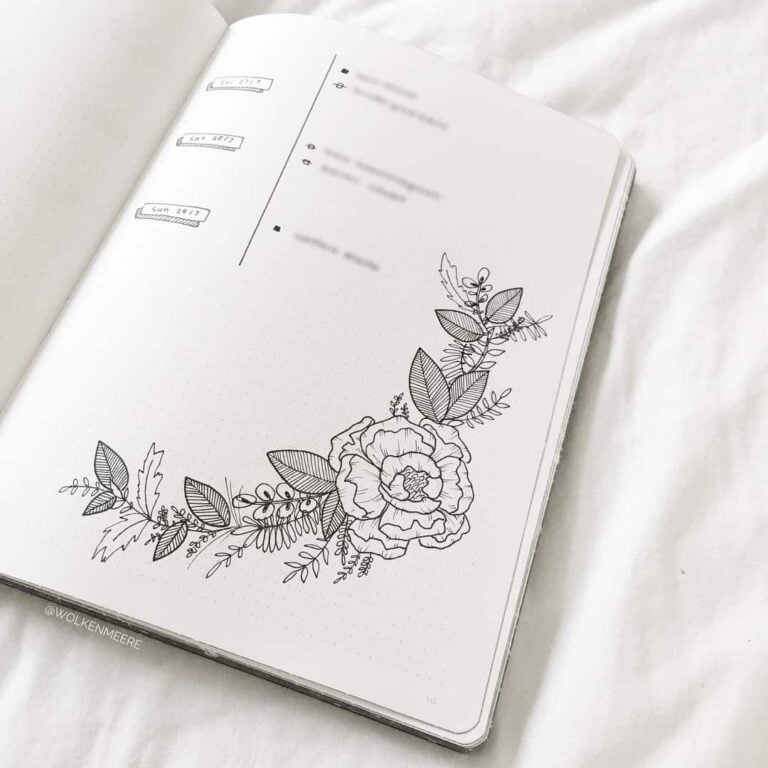
The most common path into floral journaling is online tutorial videos. There are a large number of free walkthroughs covering everything from basic five-petal blossoms to fine botanical line work, and a little practice tends to produce a small repertoire of forms that can be repeated across pages. The trick is to settle on a handful of shapes and trust them rather than trying a new flower for every spread.
For those who do not enjoy drawing, stamps and stickers are an equally valid route. A small set of botanical stamps can produce consistent pages with minimal effort, and the resulting spreads have a hand-pressed quality that machine-printed pages cannot reproduce. Stickers do the same job with slightly less work again, and printed botanical sheets are widely available.

A short history of botanical illustration
Floral imagery is one of the oldest categories in visual art. Depictions of blossoms, blooms, and other botanical elements appear across nearly every significant art movement, from carvings in ancient clay to the still-life paintings of the European tradition. Early herbals and pharmacopoeia in many cultures included drawings of plants.
The earliest surviving illustrated botanical work is the Codex vindobonensis. Its purpose was identification, usually for plants used in medicinal preparations. Before formal systems of taxonomy were introduced, the difficulty of accurately describing plants between regions and languages was potentially hazardous to medicinal preparations themselves. The low quality of early printed reproductions did not always help; the same plant could look quite different in two different books, making it harder for practitioners to be confident about what they were looking at.
The introduction of botanical nomenclature systems eventually made illustration optional in a strict scientific sense. That same period, however, also saw the profession of botanical illustrator emerge. The eighteenth century brought significant advances in printing processes, and illustrations became more accurate in colour and detail than had previously been possible. The rise of amateur botanists, gardeners, and natural historians created a market for botanical publications, and the illustrations did much of the work of making those publications appealing and accessible to general readers. Field guides, Floras, catalogues, and gardening magazines continued the tradition through the nineteenth and twentieth centuries, and the form survives today in printed and digital reference works.
Photography has not made botanical illustration obsolete, despite the steady improvement of reproduction techniques. A trained illustrator can compromise between strict accuracy and clarity in ways a single photograph cannot — combining features from several specimens into a single idealised image, showing both the face and reverse of a leaf, and including magnified details around the margins of the main subject. The same instincts, in a quieter and less rigorous form, are what a bullet journaler is exercising when they decide which side of a flower to draw and where to place it on the page.

Featured floral bullet journal spreads
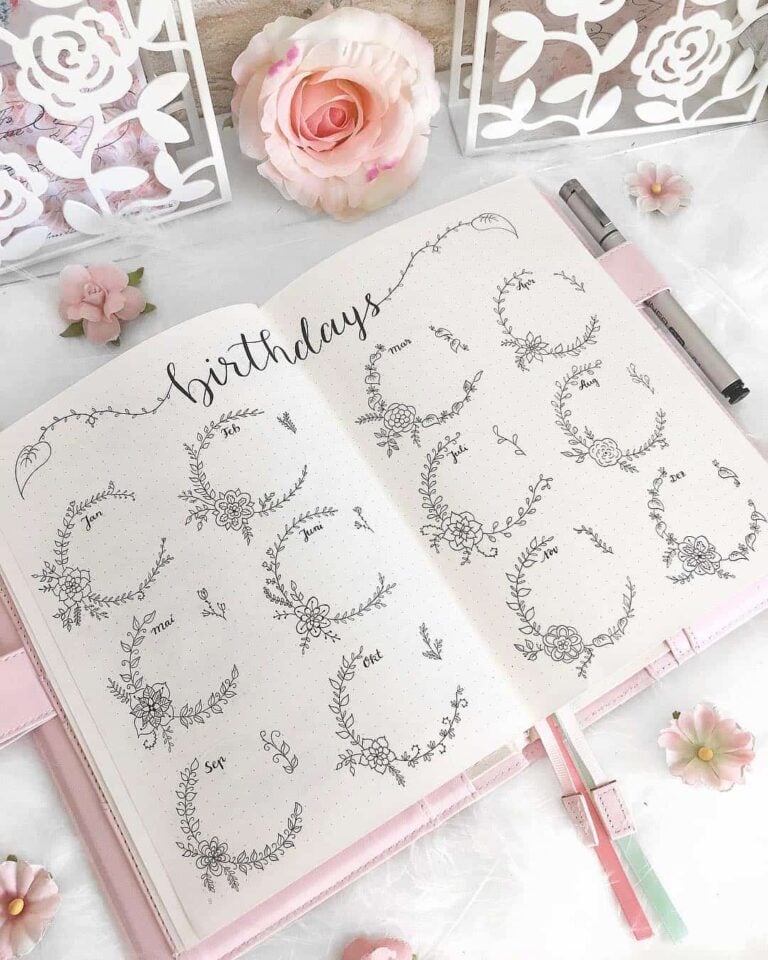
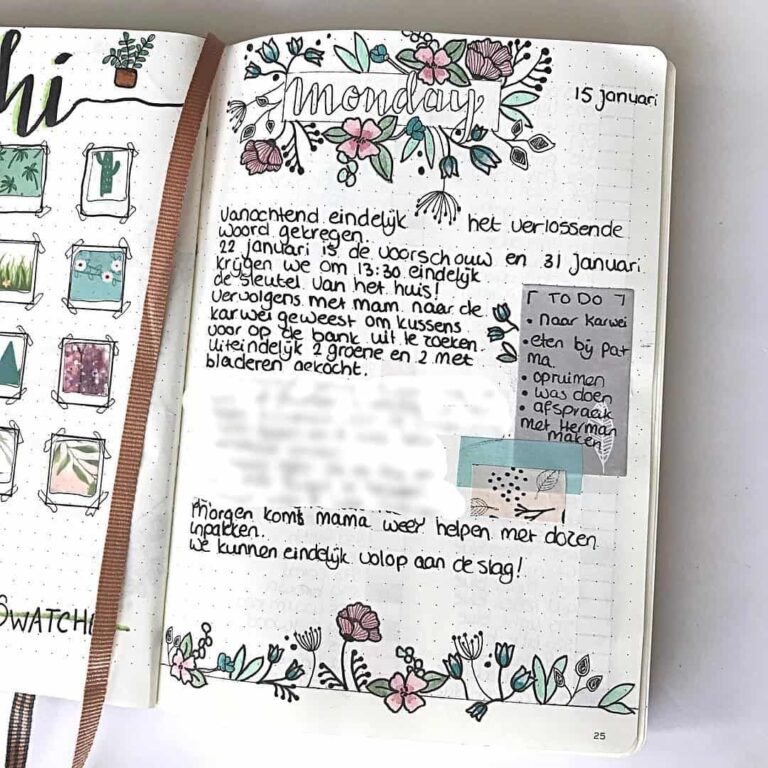
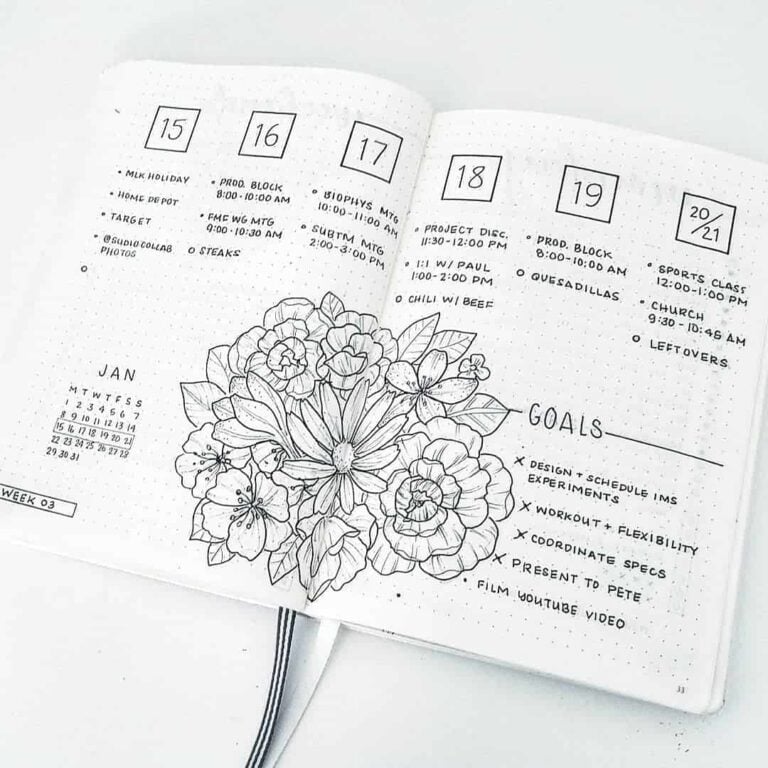
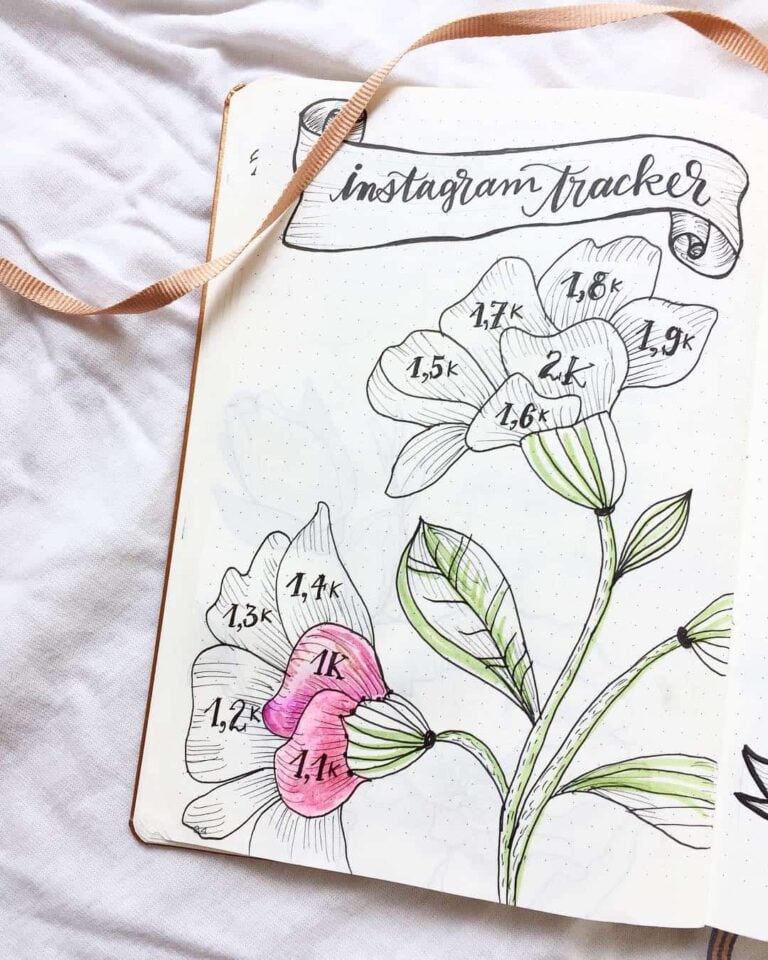
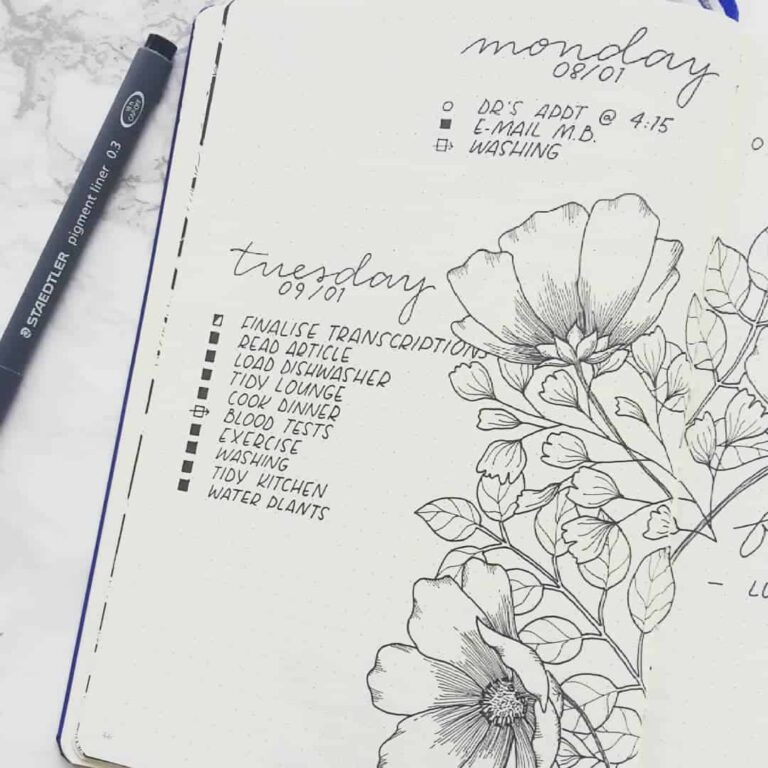
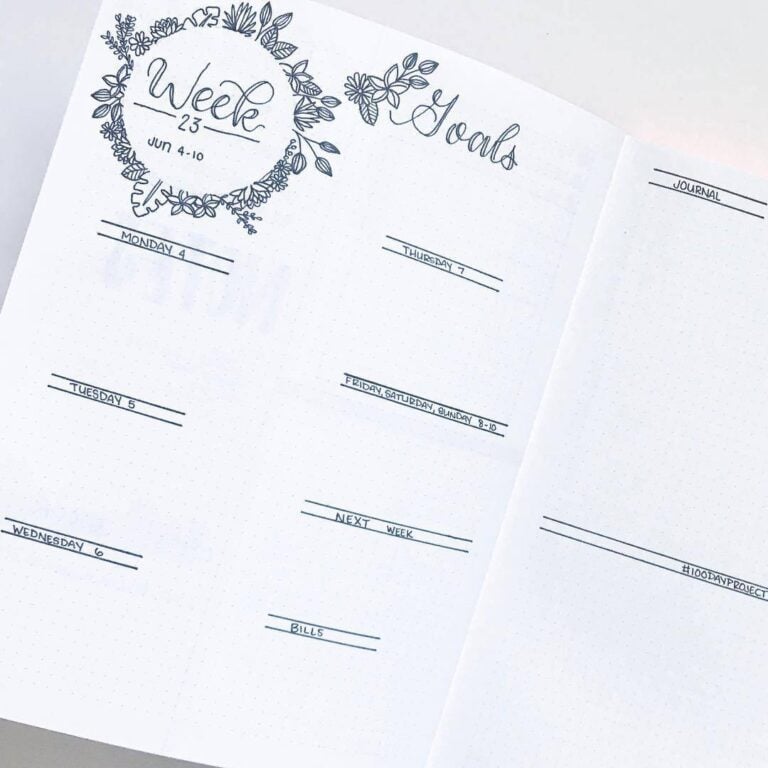
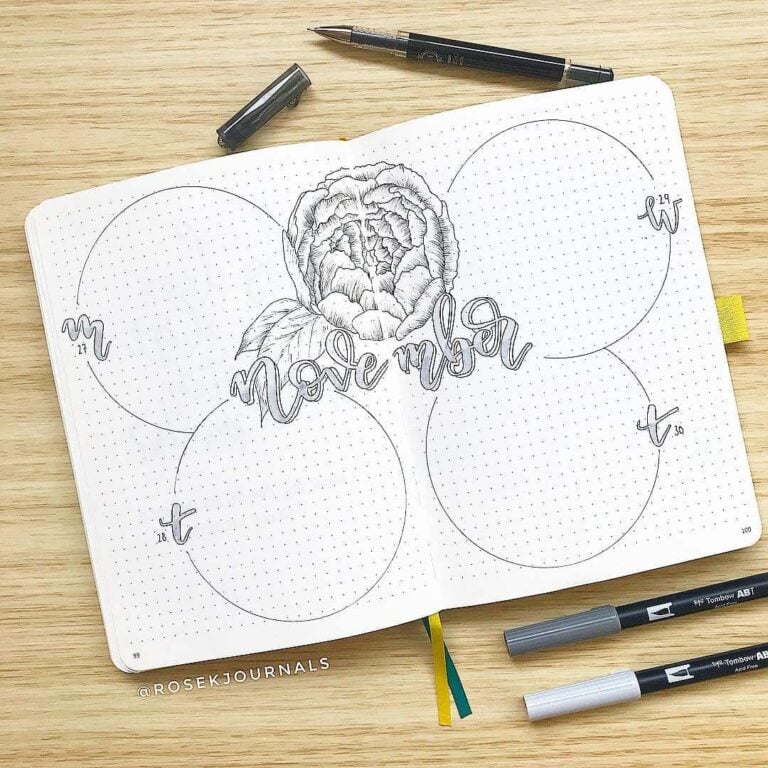
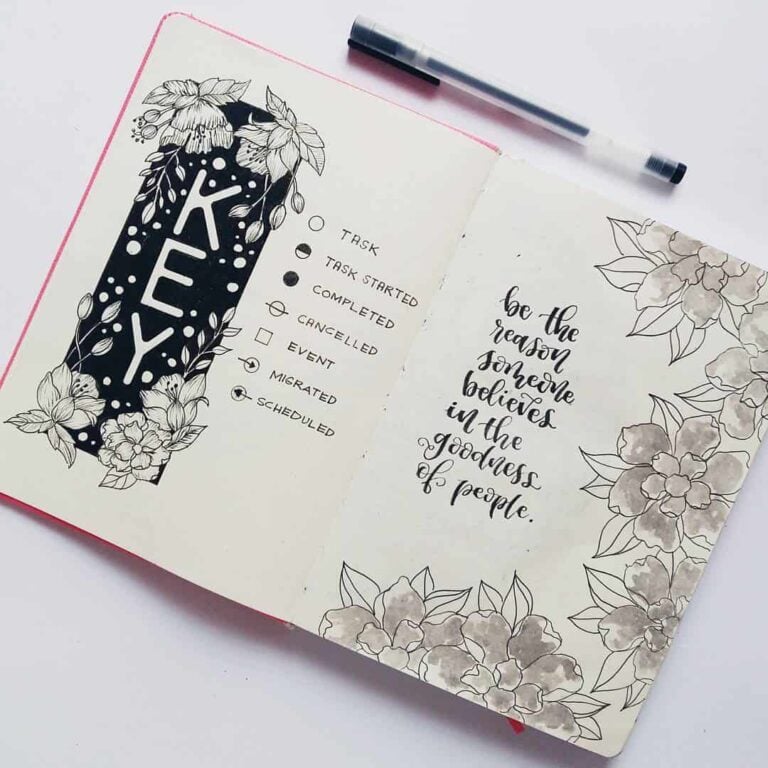
The gallery that follows pulls together seventy floral bullet journal layouts collected from the My Inner Creative community. The styles vary widely — minimalist single-stem drawings, dense bouquets, repeating wreaths around the page edge, hand-lettered headers wrapped in vines, and entire spreads built around a single botanical theme that runs across both pages.
A few of the layouts treat the flowers as borders around an otherwise plain weekly grid; others let the flora take over both pages and tuck the calendar into the remaining negative space. Some are precise enough to read as field-guide illustrations; others are loose, almost cartoonish, and rely on a single colour.
The range is what makes the collection useful. Anyone looking for a starting point will probably find at least one layout that feels close enough to their own ability to copy directly, and others that suggest where the practice can go with more time and a little more confidence.


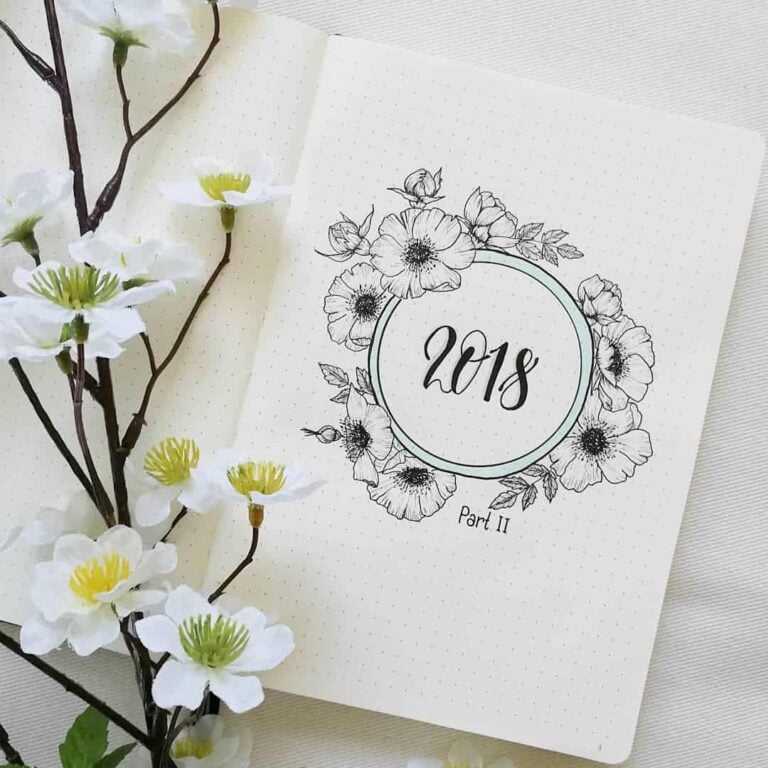

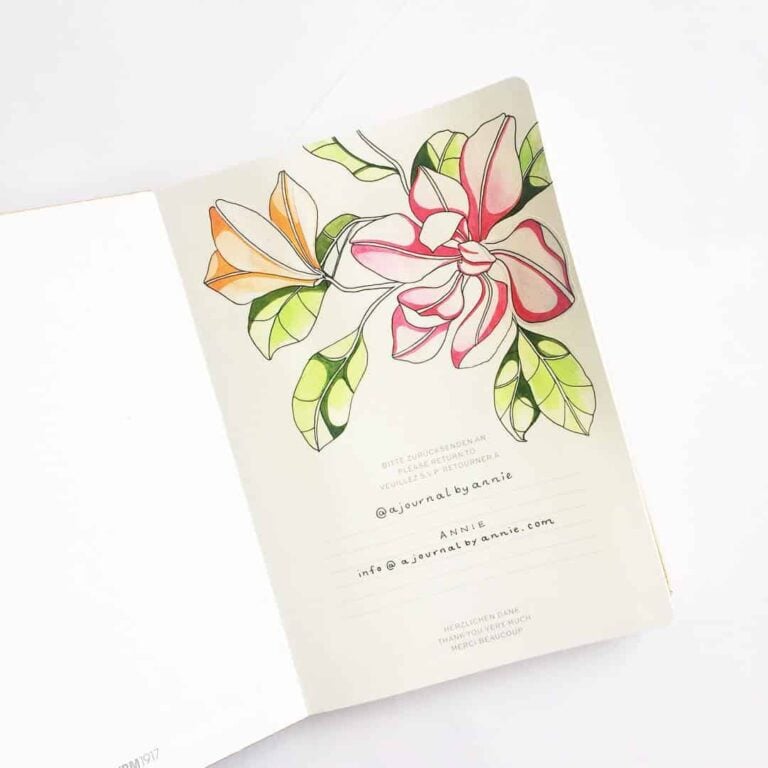


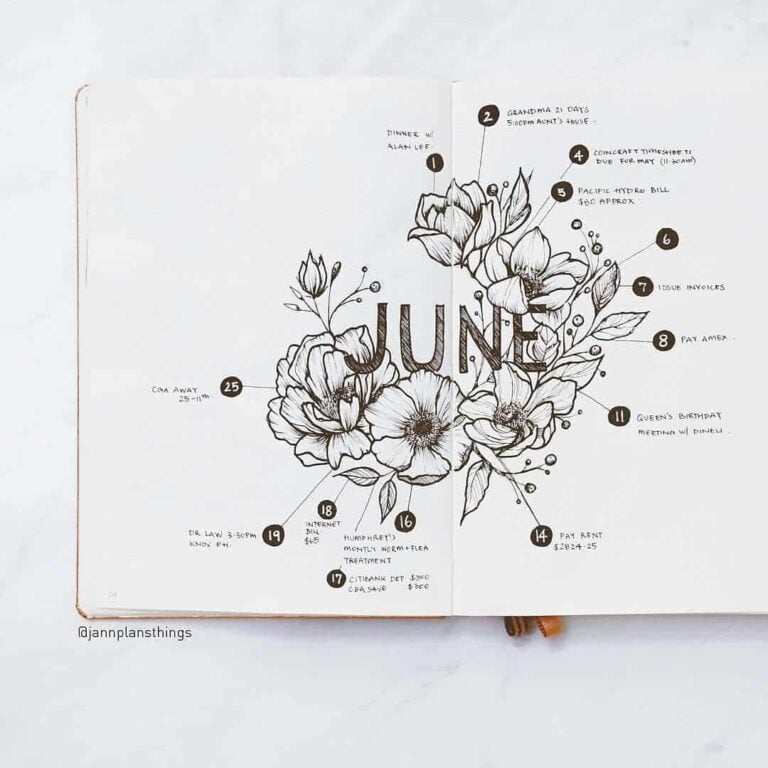


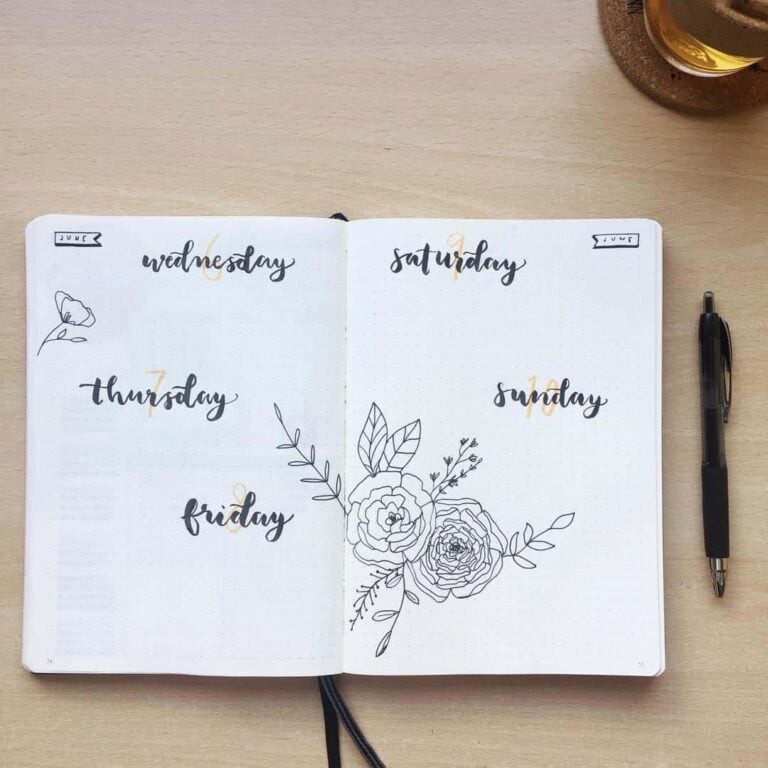


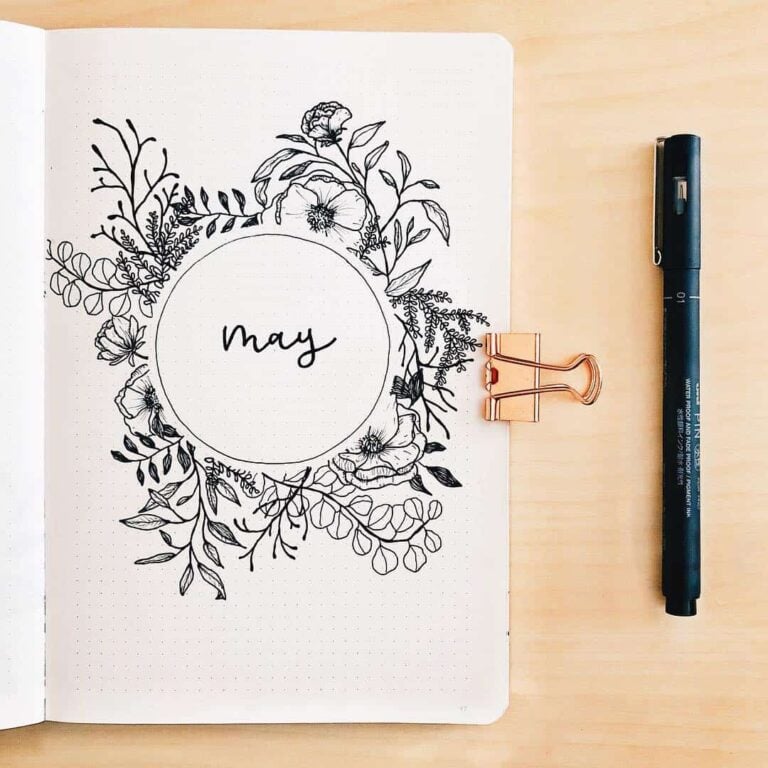


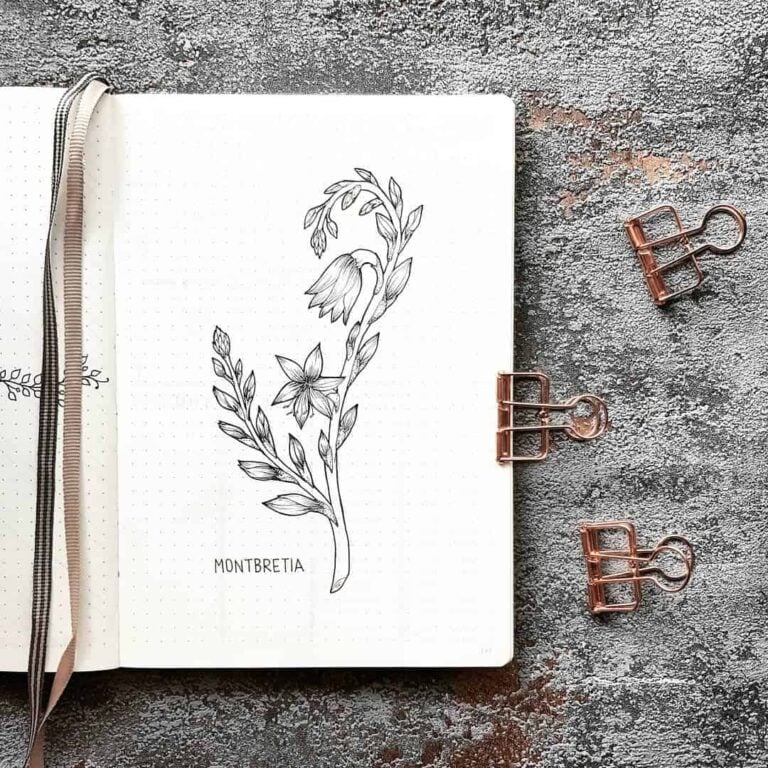


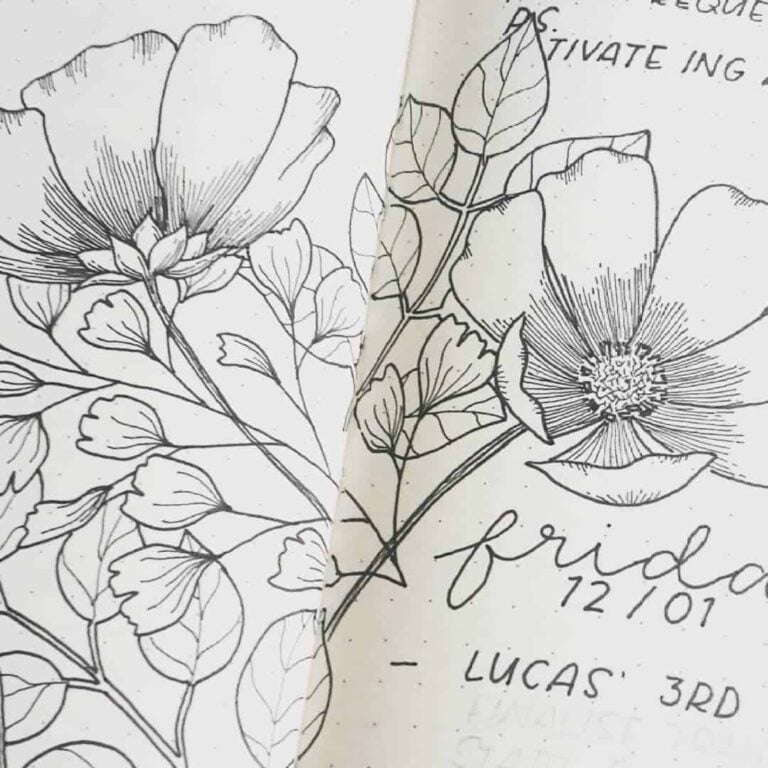
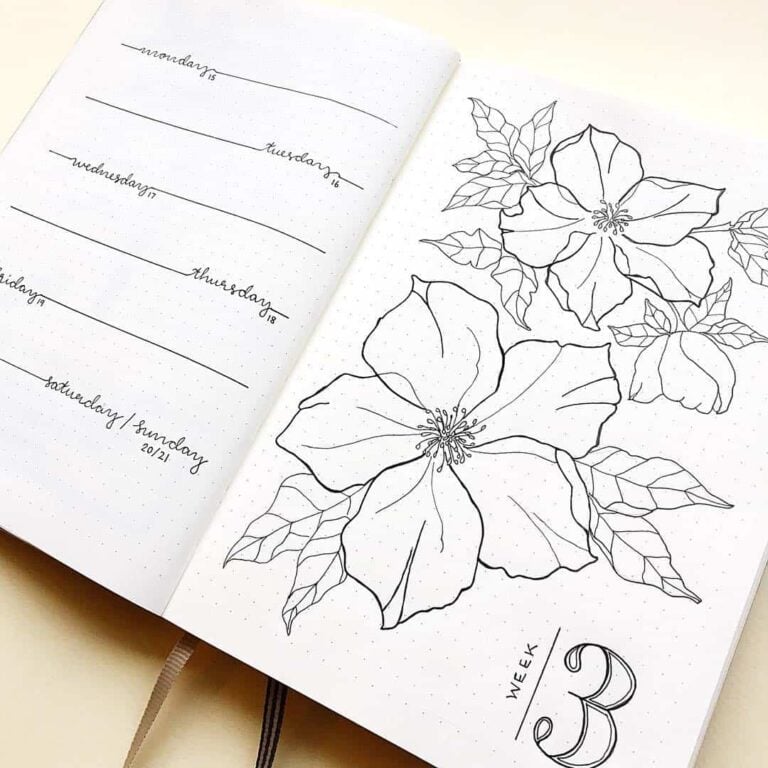








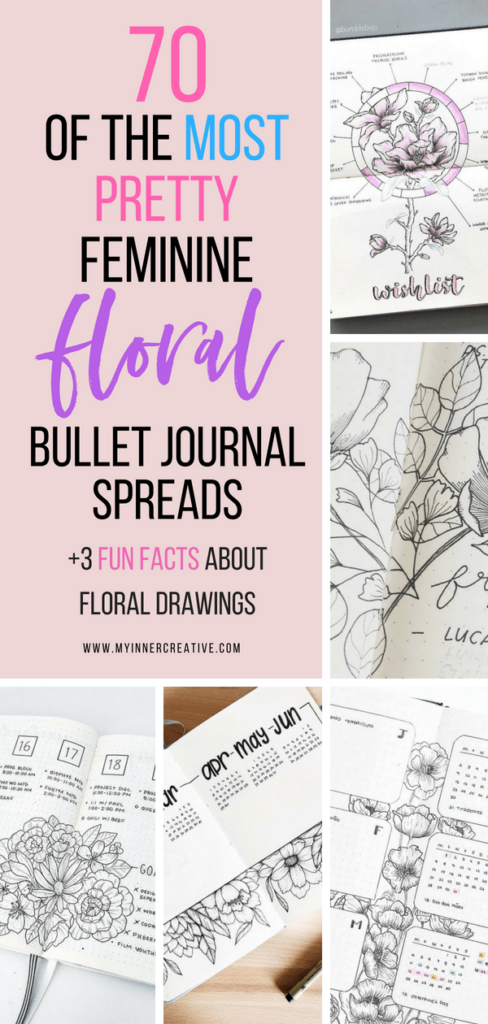
Floral spreads are popular for a reason. They are one of the few decorative additions to a working notebook that consistently feels worth the time spent making them, and that worthwhileness does not depend on the result being any good.
A wonky flower in the corner of a Monday list is still a flower drawn by hand in the corner of a Monday list. The line might be uneven, the petals lopsided, the stem leaning the wrong way, and on most days that small bit of effort, made in the few minutes before the rest of the day begins, is enough.