
Editor’s note: This article was originally published on Eluxe Magazine and has been updated and republished in August 2026 under The Vessel’s editorial standards.
Purchasing clothing made from recycled plastic bottles or reclaimed fishing nets can seem like a sound environmental choice. In practice, however, those garments — along with any item made from acrylic, nylon, polyester, Lycra, or other petroleum based fibers — shed microscopic plastic filaments every time they go through a washing machine. Those filaments are carried out with the wash water and end up polluting waterways.
The problem is not limited to overtly synthetic fabrics. Athleisure items — tights, hoodies, yoga wear — tend to be washed more frequently than other garments, which multiplies their cumulative shedding. Most household washing machines, including newer models, are not fitted with filters capable of catching fibers at this scale.
Why microfibers are a significant environmental concern
The scale of the problem is easier to grasp through a single finding. When researchers analysed 1,393 seawater samples gathered from coastal waters and under-studied ocean regions worldwide, microfibers turned out to be the dominant particle shape, accounting for 91% of the microparticles found. Microplastic fibers consistent with textile origin have also been detected in drinking water, beer, and table salt, and in human fecal samples — which suggests ingestion through food and drink is already occurring. Some research indicates these fibers may affect immune function.
Marine life is also affected. Animals ranging from plankton to crabs and fish can mistake microfibers for food, with evidence of reduced food consumption and lower energy levels as a result.
A starting point: fabric choices
Choosing natural fibers for new purchases is one of the more effective upstream interventions. Hemp, linen, organic cotton, silk, wool, alpaca, and Tencel do not shed petroleum based microfibers. Most require few or no chemicals to produce; Tencel is the exception worth noting — its wood pulp is dissolved using a chemical solvent, though the process recovers and reuses over 99% of it in a closed loop. For anyone who already owns a wardrobe containing significant synthetic content, however, a laundry filter is a practical complementary measure — one that addresses shedding at the point of washing rather than waiting for waterway cleanup.
The filters described below take different approaches to the same problem, from portable wash bags to externally attached hose filters, and vary considerably in price and installation complexity.
Filtrol 160
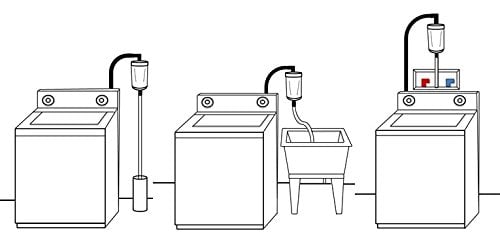
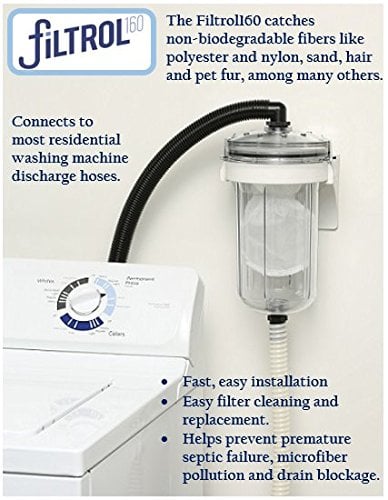
The Filtrol 160 is a patented, reusable filter that attaches to a washing machine’s discharge hose, intercepting synthetic clothing fibers — including polyester, nylon, rayon, and acrylic — before they reach the wastewater system. It also captures sand, hair, and pet fur, which has the side effect of leaving laundry visibly cleaner. When the filter becomes full, the collected material can be emptied into the bin and the filter rinsed for reuse; replacement filter cartridges are also available.
Price: $139.99
Eleanos reusable washing machine filter
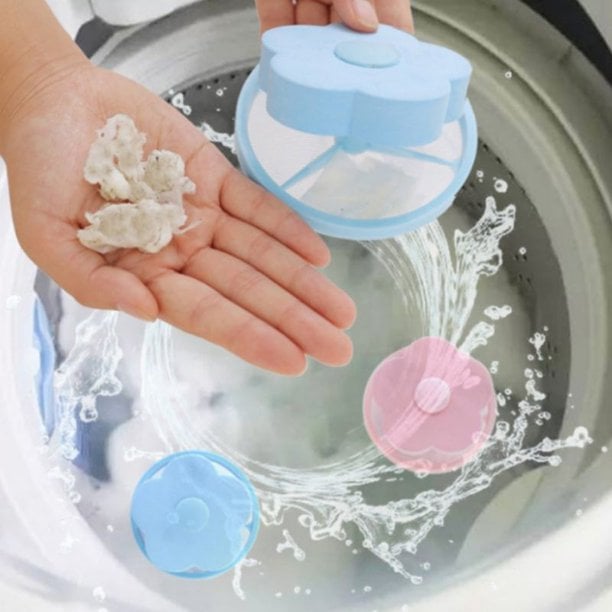
At the more accessible end of the price range, the Eleanos filter units are placed directly into the wash load alongside clothing — using several at a time is recommended. They catch microfibers during the cycle; once removed, the trapped fibers can be peeled away and disposed of in solid waste, preventing them from re-entering the water system or becoming airborne.
Price: $5.59
Guppyfriend
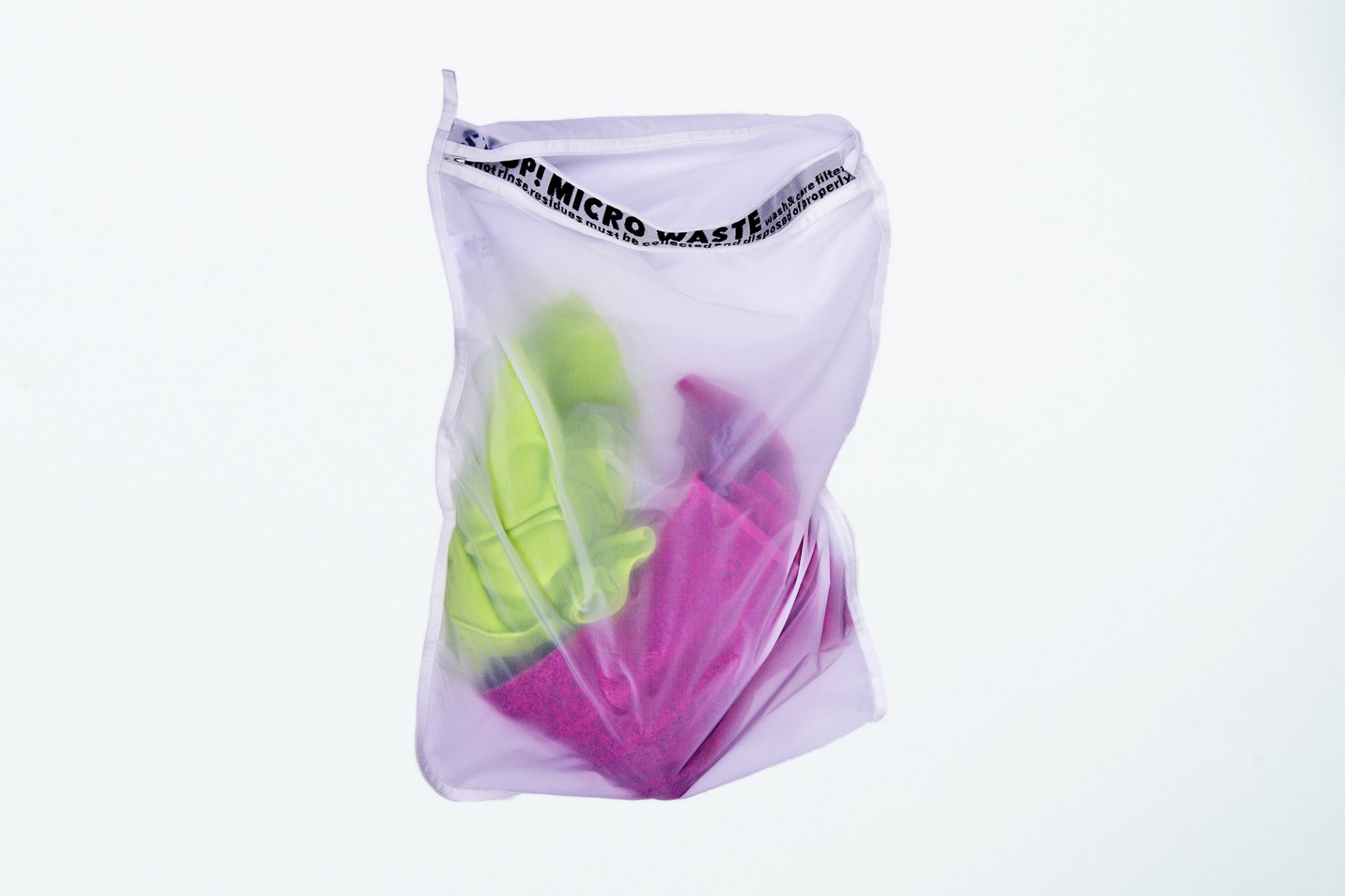
The Guppyfriend is a portable wash bag designed to go wherever synthetic garments need washing. Synthetic items go inside, the bag is sealed, and the whole thing is placed in the machine as usual. Fibers shed during the wash collect inside the bag rather than passing into the drain. When the interior begins to show accumulated lint, the fibers are removed by hand and put in the trash. The bag is sized for smaller synthetic items — swimwear, workout gear, underwear — rather than full loads.
Price: $34.95
Coraball
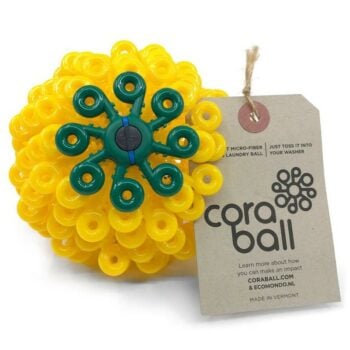
The Coraball draws its design logic from coral, which captures fine particles from moving water through its branching structure. The ball is dropped directly into the washing machine drum with the laundry. An independent study from the University of Toronto found that a single Coraball can intercept approximately 26% of microfibers that would otherwise flow down the drain — a meaningful reduction, though the manufacturer recommends using three balls together for greater effect.
Price: From $38.99
Lint LUV-R
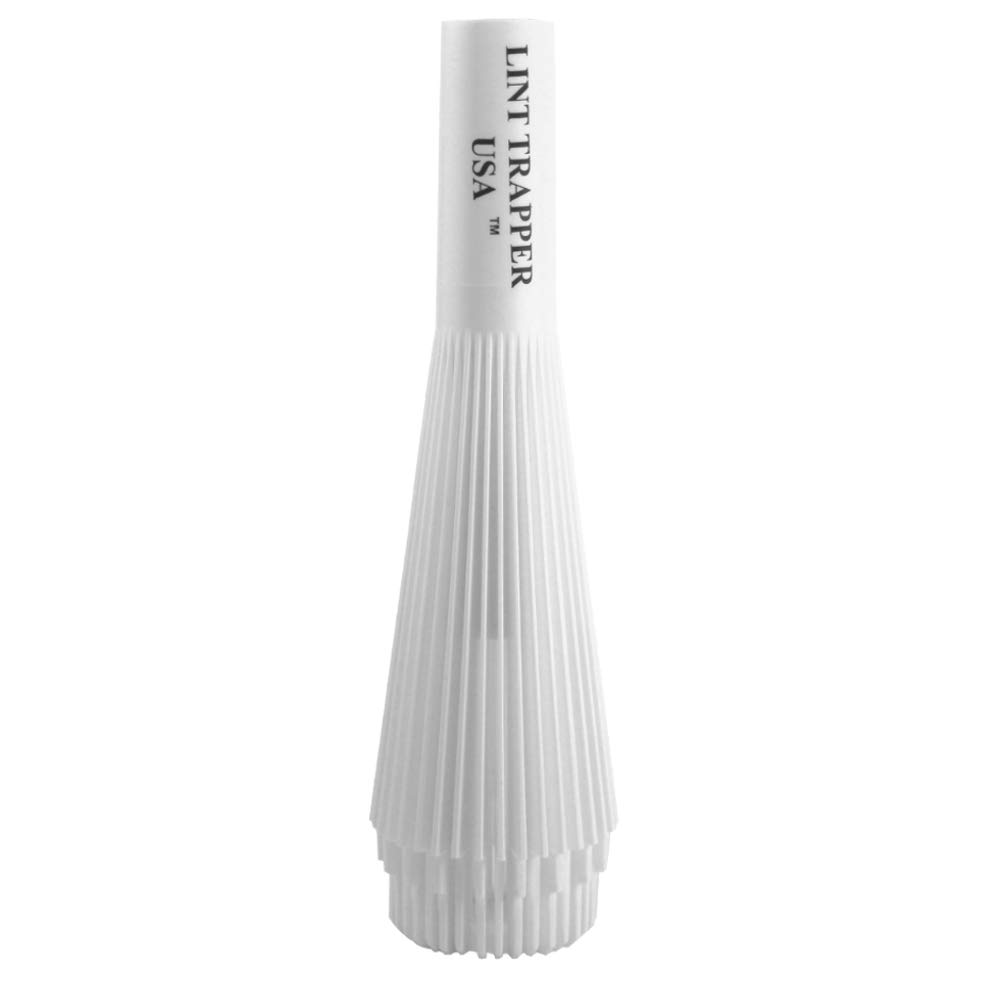
The Lint LUV-R is an externally installed filter unit — more involved to set up than the drop-in options above, and priced accordingly. In the same University of Toronto study that tested the Coraball, the Lint LUV-R captured an average of 87% of microfibers in wash effluent, more than three times the Coraball’s rate — the strongest performance of any product tested in that research. The manufacturer states that it protects plumbing and septic systems as well as marine environments by removing lint and microplastics from the discharge stream.
For households that use greywater to wash dishes and water the garden, the filter addresses a more immediate concern: without it, microparticles from clothing can end up stuck to plates and glasses, and microplastics reaching garden soil can contaminate plants and the animals that eat them.
Price: $140
Why this may not stay a consumer problem
Every option above puts the cost and the effort on the individual household, which is a poor way to solve a problem generated at the scale of an entire textile industry. That is beginning to change through regulation rather than retail. France legislated in 2020 to require that every new washing machine be fitted with a filter to catch plastic microfibres from January 2025 — the first country to do so. As of late 2025, however, that provision remained unenforced: the technical definitions of what counts as a compliant filter were never finalised, so manufacturers have not yet been required to comply.
The significance is less about one national market than about where the responsibility sits. A filter built into the machine captures fibers from every wash by default, rather than only from the loads where someone remembered to use a bag or drop in a ball. For anyone buying an appliance in the next few years, it is worth asking whether a model already includes filtration — an integrated system removes the ongoing decision entirely.
What filters can and cannot do
No currently available consumer filter captures 100% of shed microfibers. These products reduce the volume of plastic reaching waterways — they do not eliminate it. The more durable long-term lever remains reducing the proportion of synthetic fiber in new clothing purchases — which is why the original advice was to start with fabric choice and treat filtration as what you do about the synthetics you already own.