
Editorial note: This article was originally published on My Inner Creative and has been updated and republished in May 2026 under The Vessel’s editorial standards.
The dream catcher is one of the more visually recognisable motifs that appears in bullet journals. A hoop, a web of thread inside it, a small number of feathers and beads suspended below — drawn in pen on a notebook page, the shape is unmistakable, and it has become a recurring decorative element in spreads that lean toward an organic or hand-drawn aesthetic. It is also a motif that comes with more history and more contemporary debate than most. The pages collected below acknowledge both.
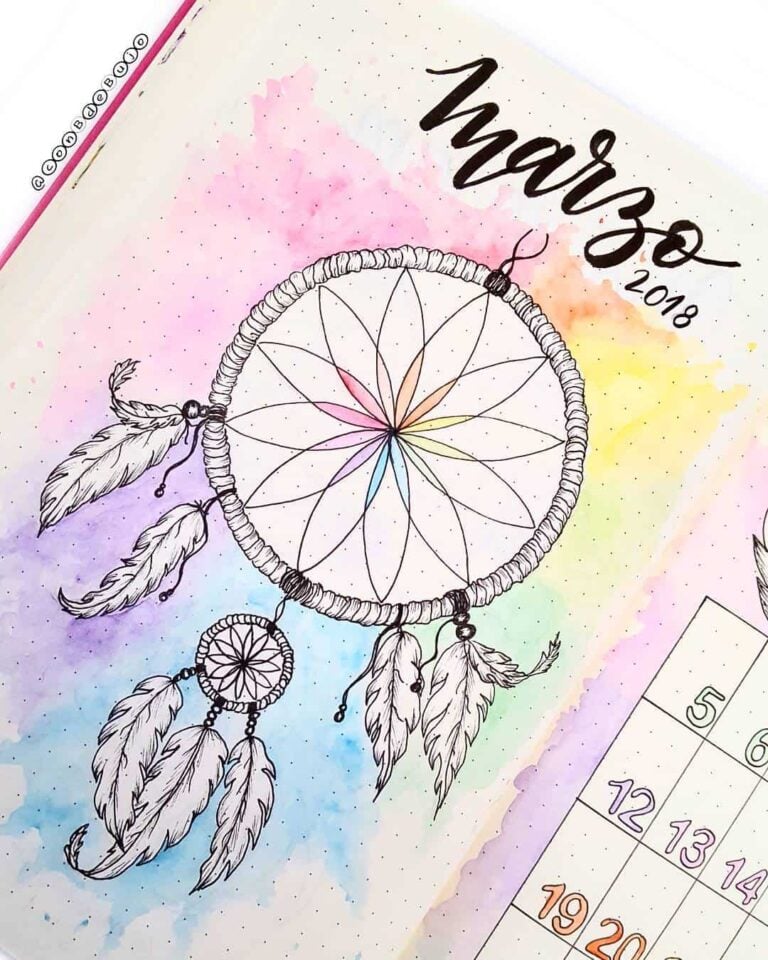
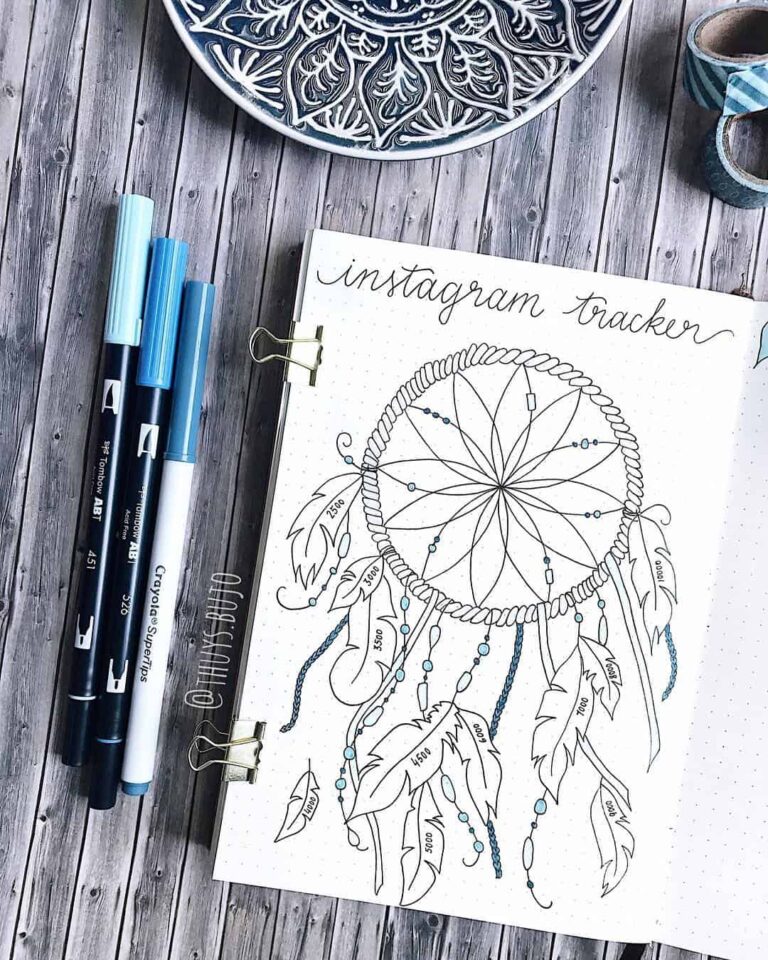
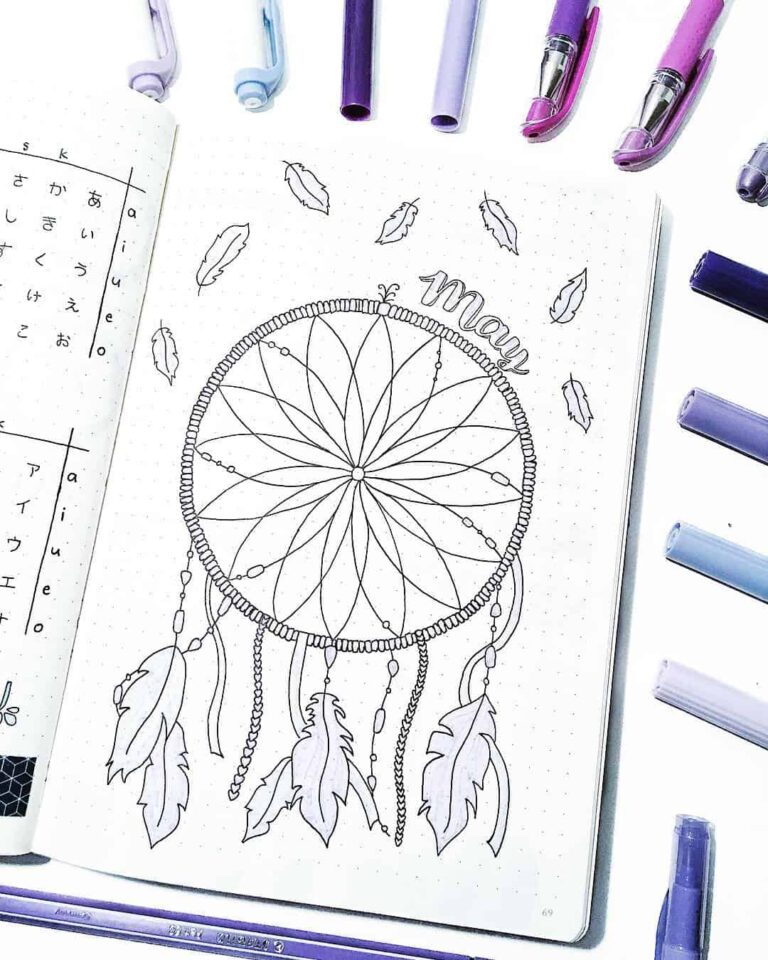
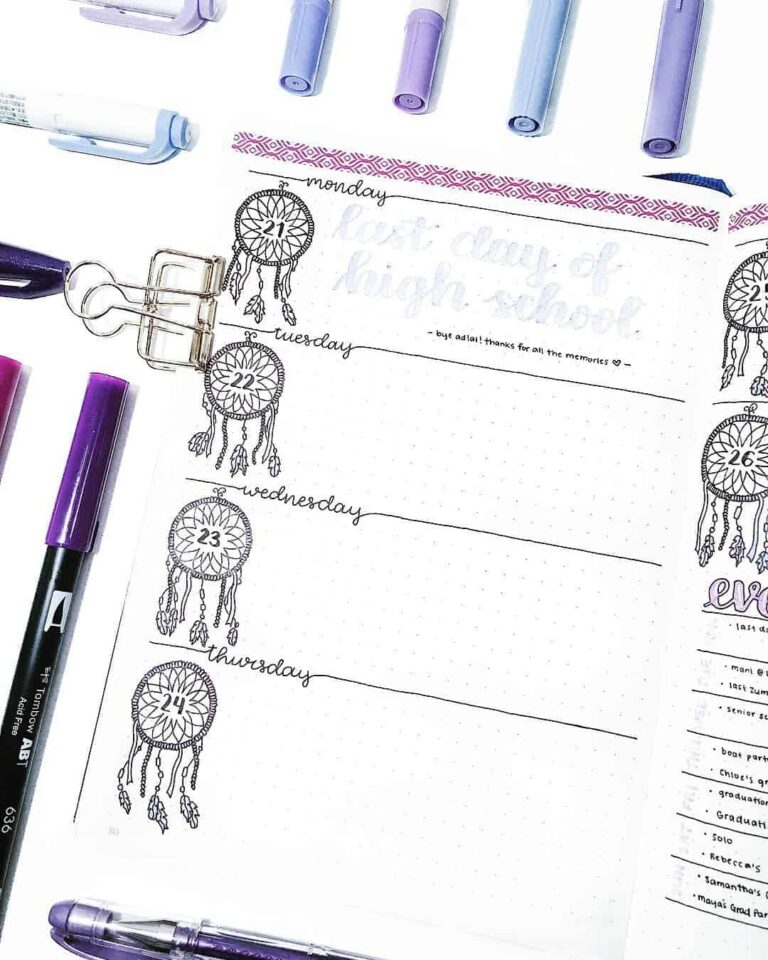
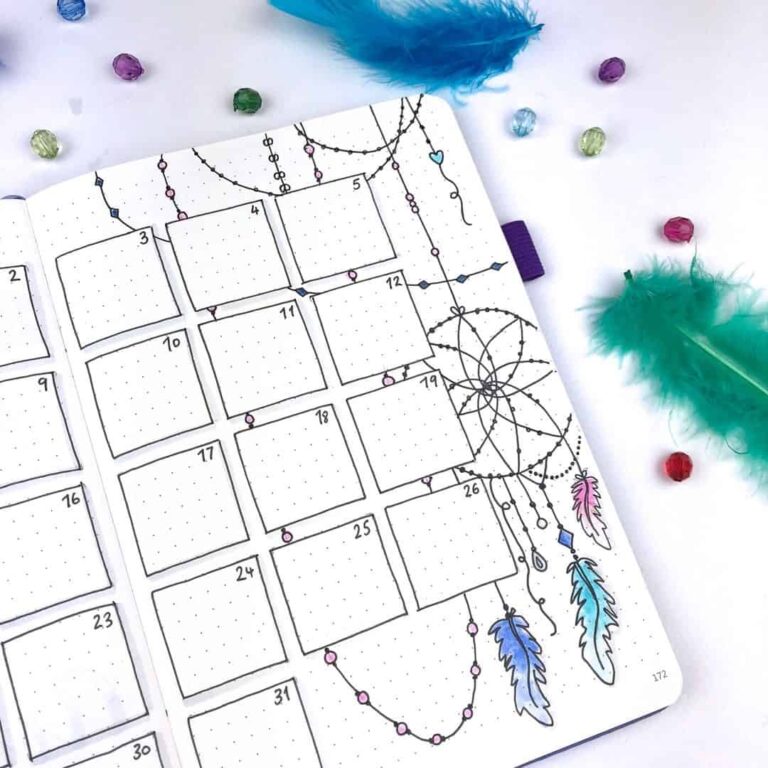
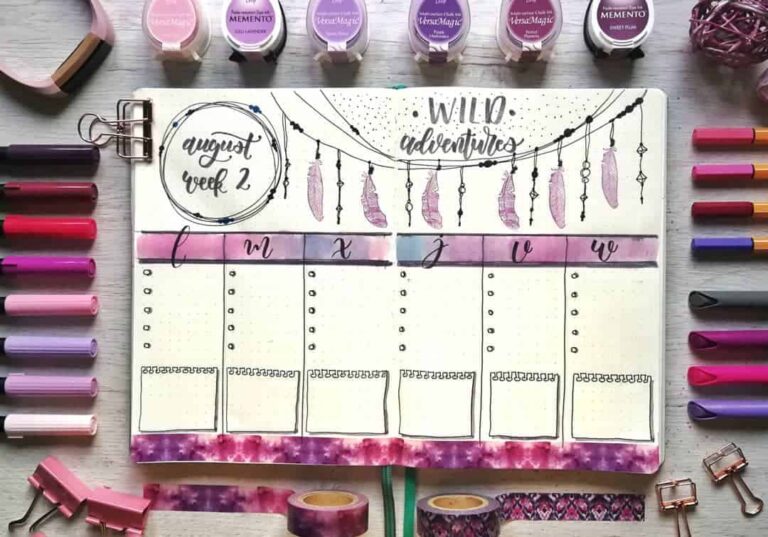
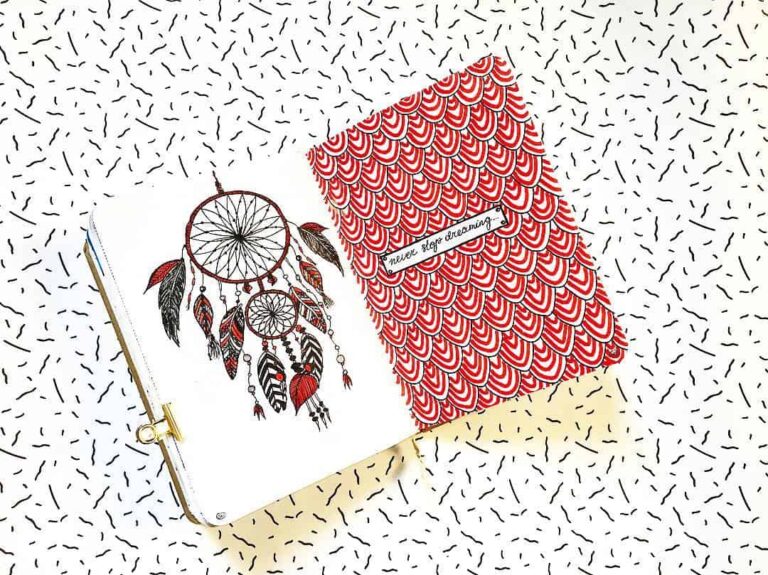
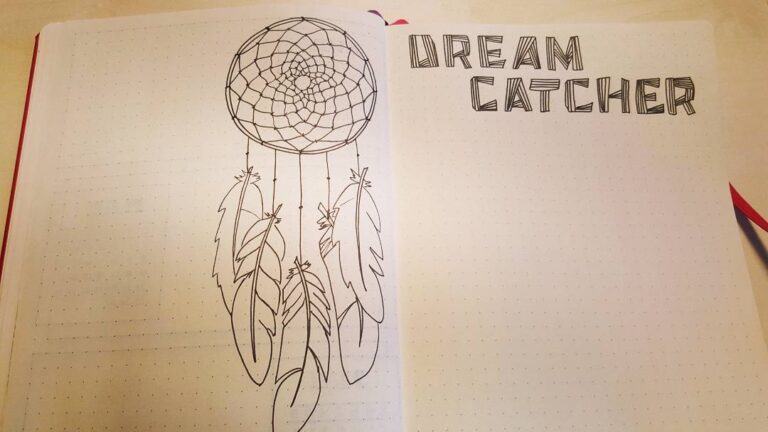
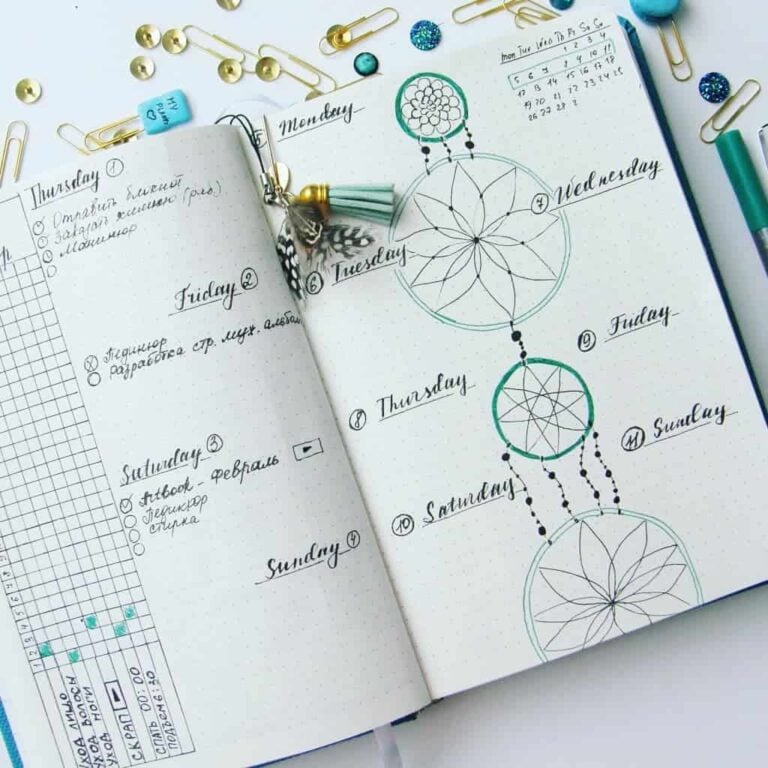
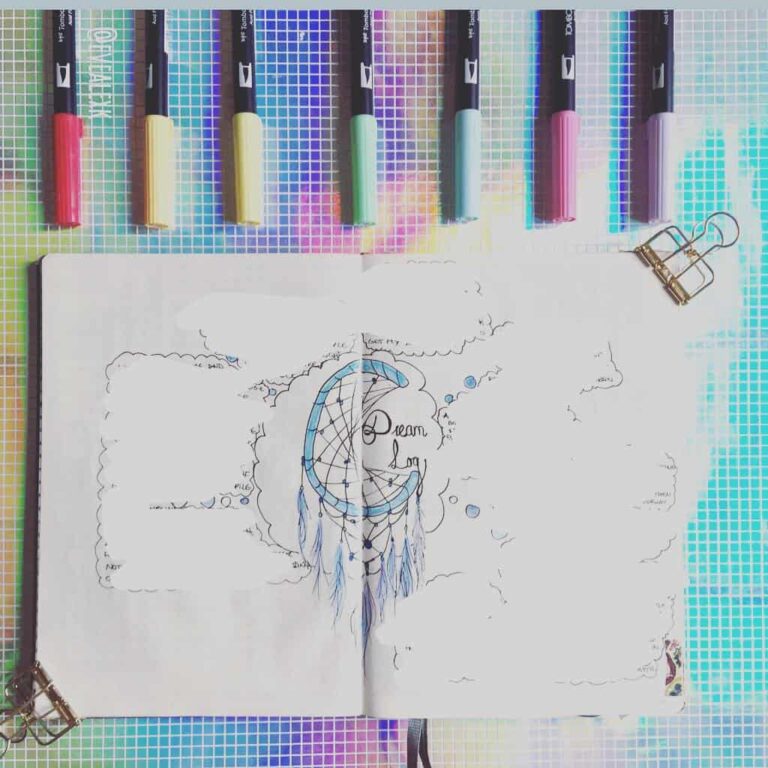
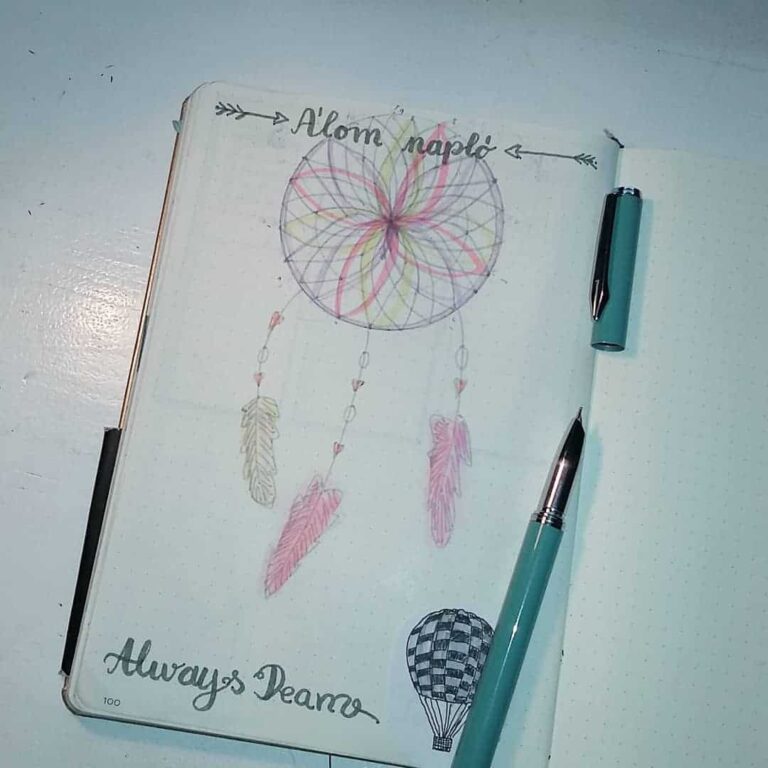
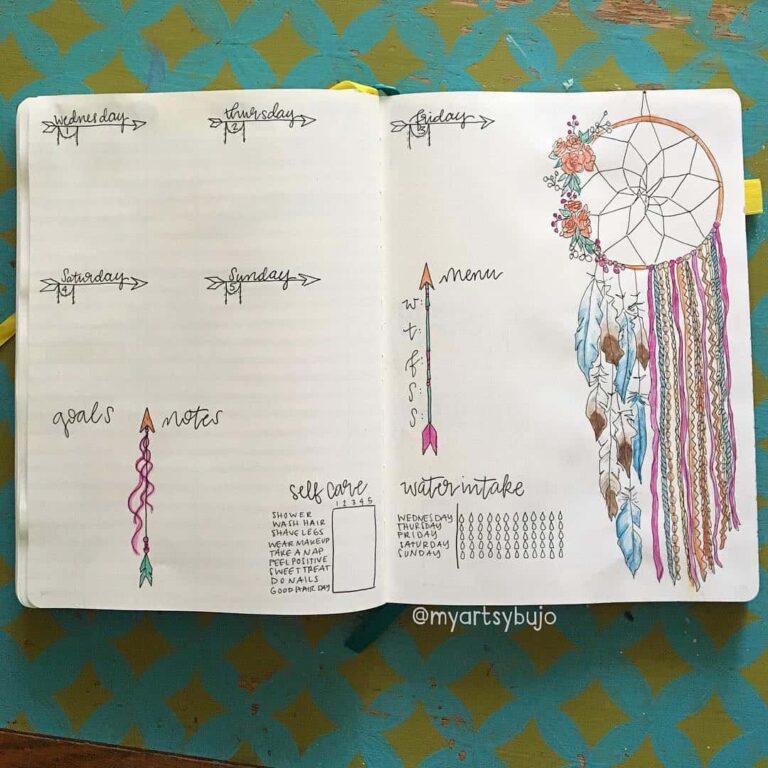
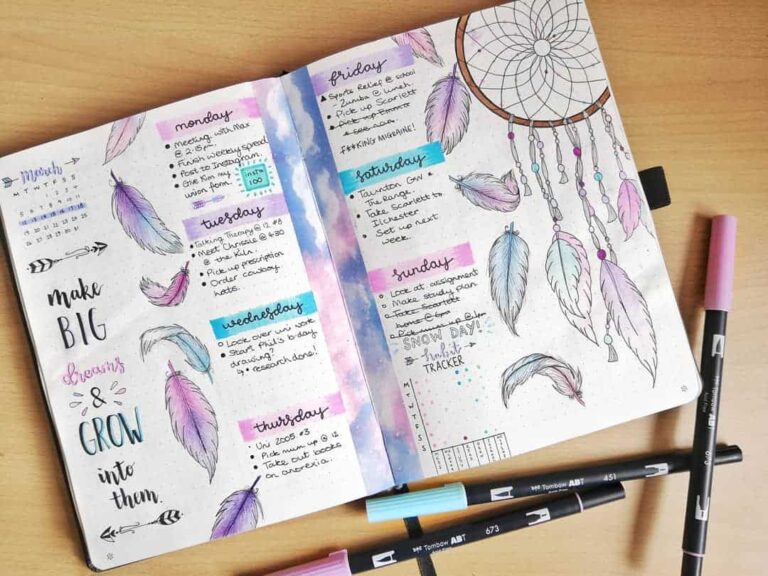
The spreads collected below were originally featured on My Inner Creative as a survey of how journalers have used the dream catcher motif in a notebook. They include dream tracking pages, cover pages, monthly headers, and freestanding decorative spreads. The visual format of the motif lends itself to bullet journal pages in particular — it can be drawn quickly, it scales from a small corner element to a full-page illustration, and it carries an immediately readable shape.
Where the motif comes from
The dream catcher originates with the Ojibwe Nation, where it was a small handmade object — a hoop of bent wood or willow, a web woven from sinew, feathers and beads attached at the bottom, hung above a sleeping place. The object’s purpose varied across families and tellings, but the broad pattern is consistent. The web catches the bad dreams; the good dreams pass through to the sleeper. Different stories tell the same shape with the directions reversed; the underlying object is the same.
The motif spread to other Native American Nations and First Nations communities during the pan-Indian movement of the 1960s and 1970s, and from there into wider popular use. The wider use is the part that has produced the most discussion, and the part that journalers using the motif now navigate one way or another.


The cultural conversation
The motif sits in a more sensitive place than most decorative elements that appear in bullet journals. Some members of Native American and First Nations communities consider the dream catcher a shared cultural symbol that has become a source of unity across many distinct Nations. Others view its widespread non-Indigenous use as a form of cultural appropriation, especially in contexts where it is sold or mass-produced without acknowledgement of its origin.
The pages below sit, for the most part, in a quiet middle. The journalers drawing them are not selling the result, the motif is being used in a private notebook rather than a commercial product, and many of the pages pair the image with a small written note about what the motif means to the person drawing it. That kind of attention is at least part of what distinguishes thoughtful use from thoughtless decoration. Readers will form their own view of where any individual page sits on that spectrum.
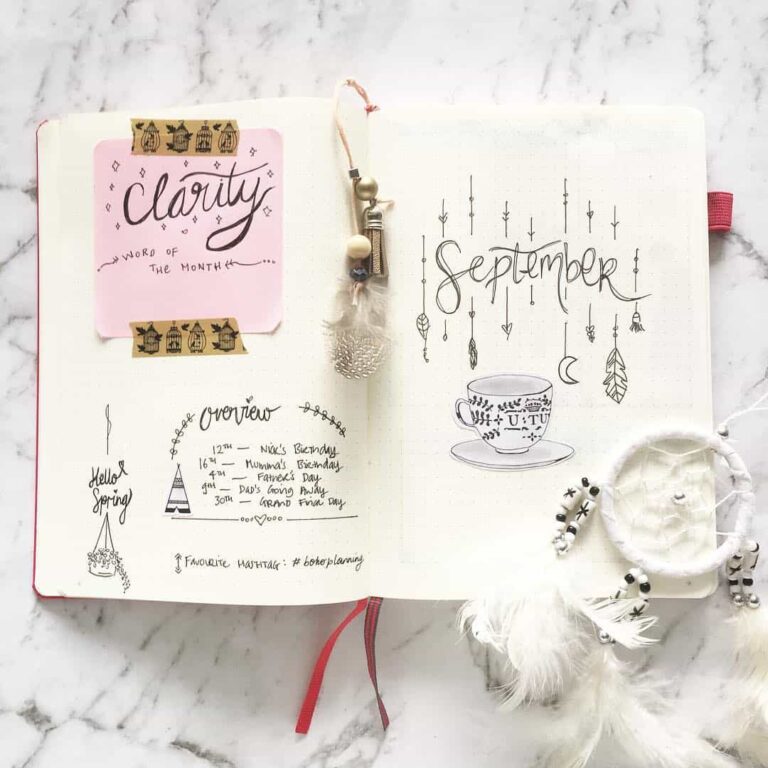
The motif as a bullet journal element
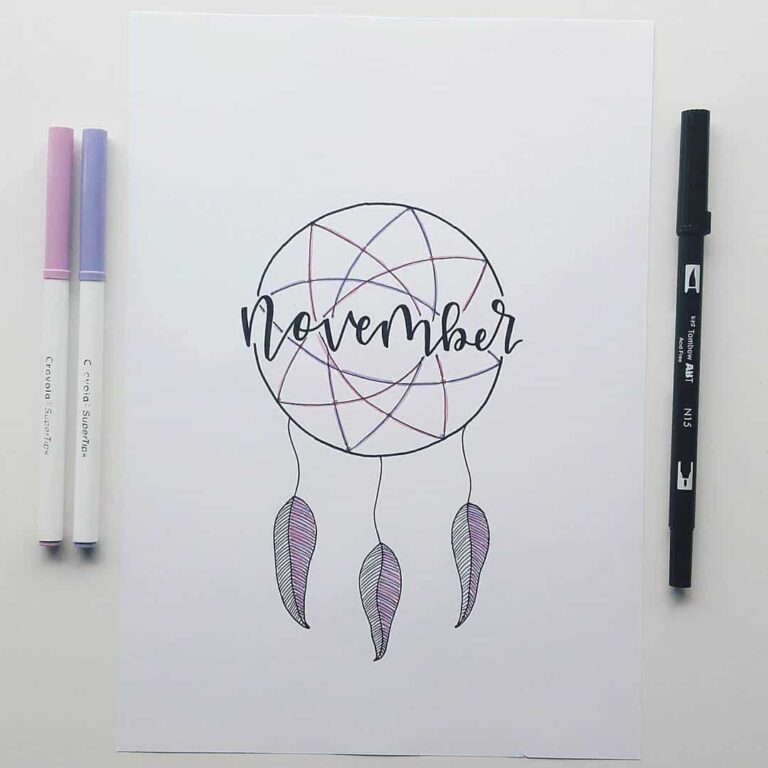
As a drawing, the motif resolves to three components: a circle, a pattern of lines inside the circle, and a small number of elements hanging from the bottom. The circle can be perfect or deliberately uneven. The pattern inside ranges from a simple radial web with eight or twelve spokes to dense geometric weavings that resemble lacework. The hanging elements are usually a small number of feathers and beads, drawn in a couple of strokes each. None of the three components requires technical skill; the motif is forgiving, and the pages below include plenty of versions that are clearly drawn by a confident hand and plenty that are clearly drawn by a beginner.
Drawing the motif: a practical breakdown
The circle is the starting point. Most journalers draw it freehand rather than with a compass, and the slight irregularity that results suits the organic quality of the motif better than a perfect ring would. If consistency matters, a coin or a small lid makes a reliable template. The thickness of the line can vary — a single fine pen stroke reads as delicate; a double outline with the gap filled gives the hoop more visual weight.
The web inside the circle is the most variable component. The simplest version uses evenly spaced spokes radiating from a central point, connected by a spiral of thread drawn in widening rings — essentially the same structure as a bicycle wheel, with the gaps between the spokes narrowed toward the rim. A more elaborate version replaces the simple spiral with a series of connected triangles or diamonds, producing the lacework effect that appears in some of the spreads below. Neither version requires measuring; the web is forgiving of small inconsistencies, and the handmade quality of an irregular web is part of the appeal.
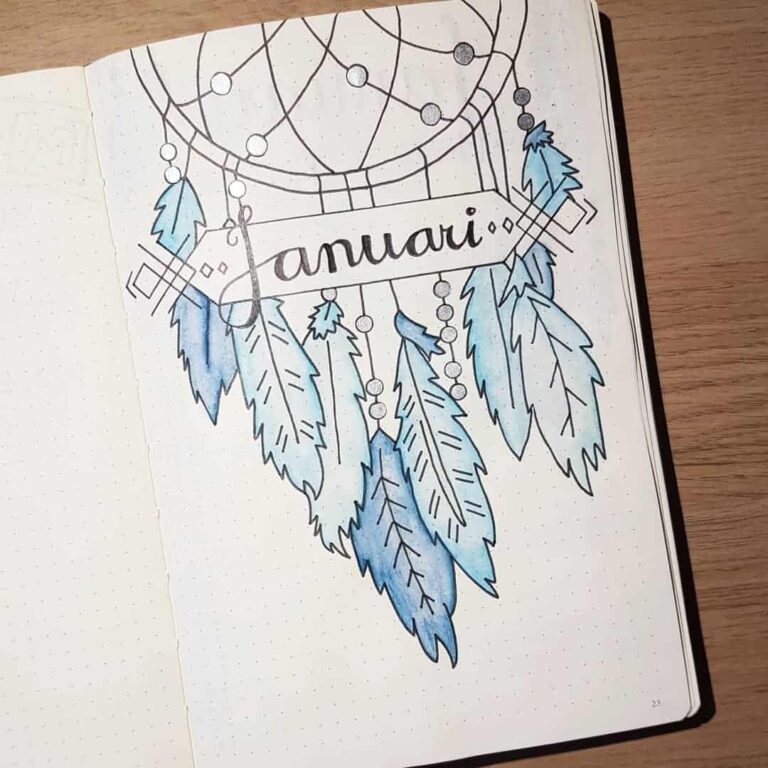
The hanging elements are typically feathers and beads, attached by short lines or loops at the base of the hoop. A simple feather drawn in pen requires only four strokes: a central quill, two angled lines for the vane on each side, and a few short diagonal marks to suggest the barbs. Beads are even simpler — a small oval or circle, optionally filled. Most spreads use between two and five hanging elements; more than that begins to crowd the bottom of the motif and loses the lightness that makes it work as a page element.
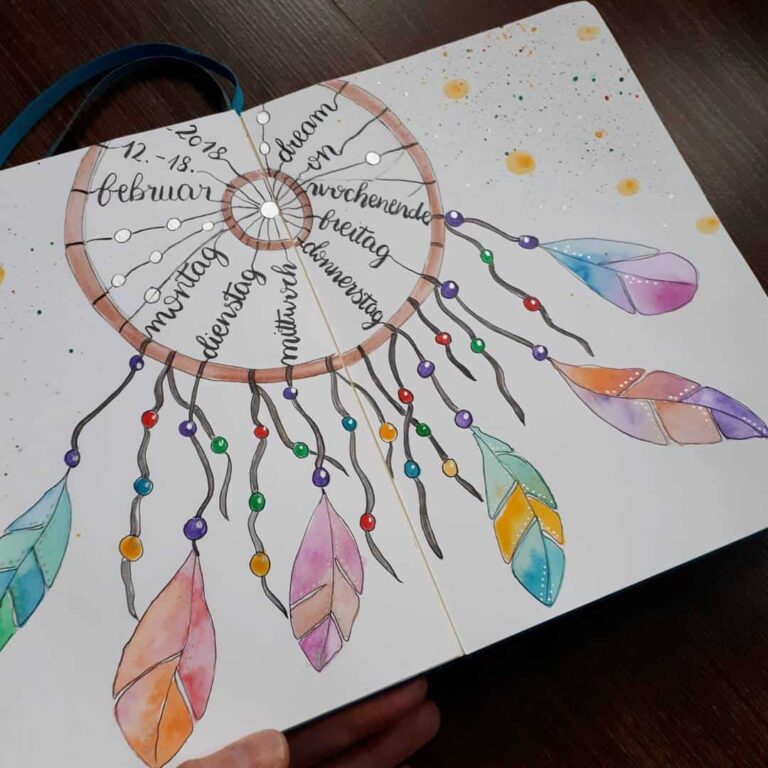
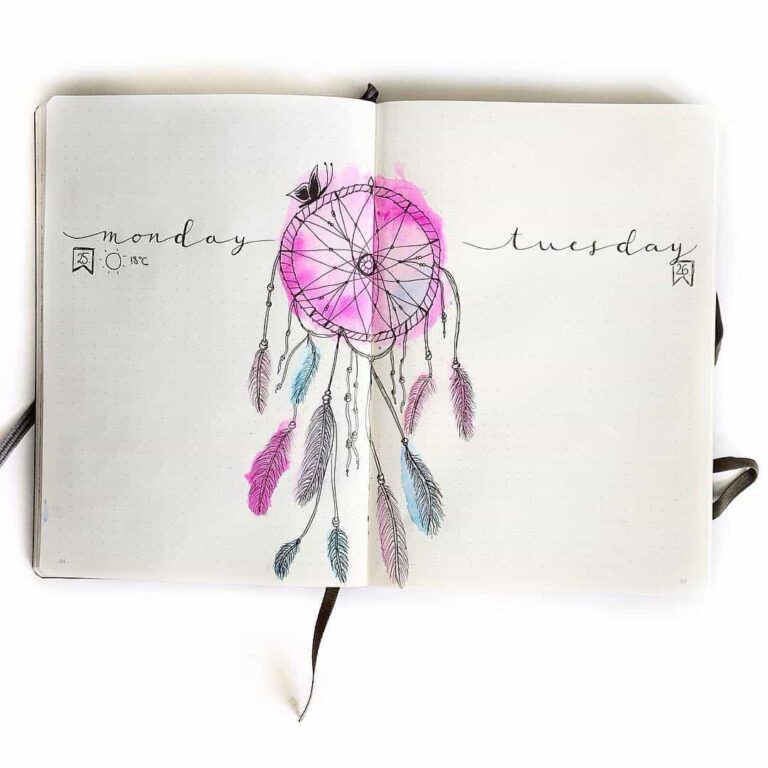
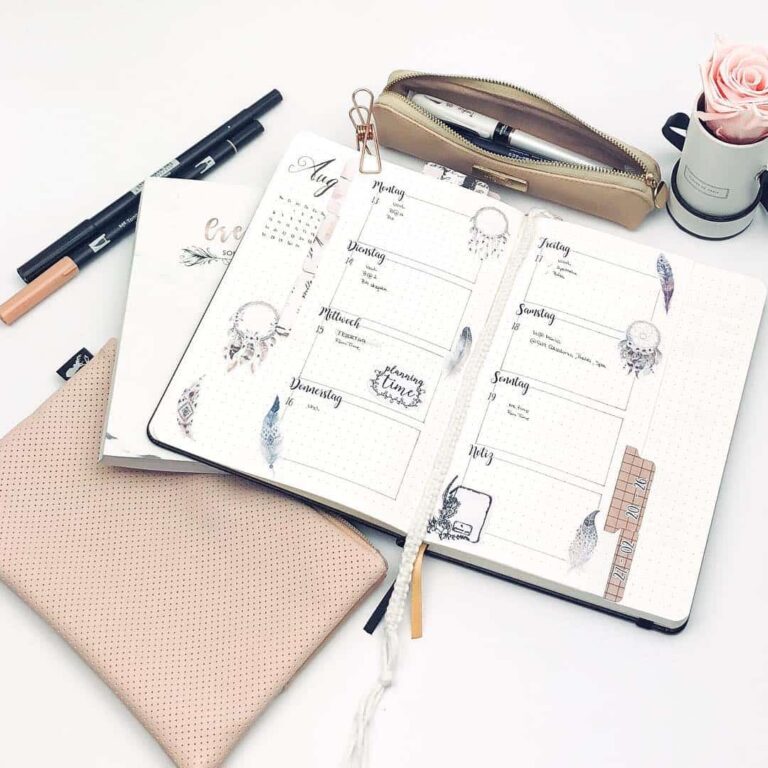
The motif scales well. A dream catcher drawn in the corner of a weekly spread takes a minute and reads as a small decorative accent. The same motif drawn across two pages becomes the spread itself, with the practical content tucked inside the circle or around its perimeter. Several of the layouts below use the larger format as a cover page for the month, with the days of the month written along the rings of the web. Others use the smaller format as a recurring header for a sleep tracker or a dream log.
How journalers tend to use the motif
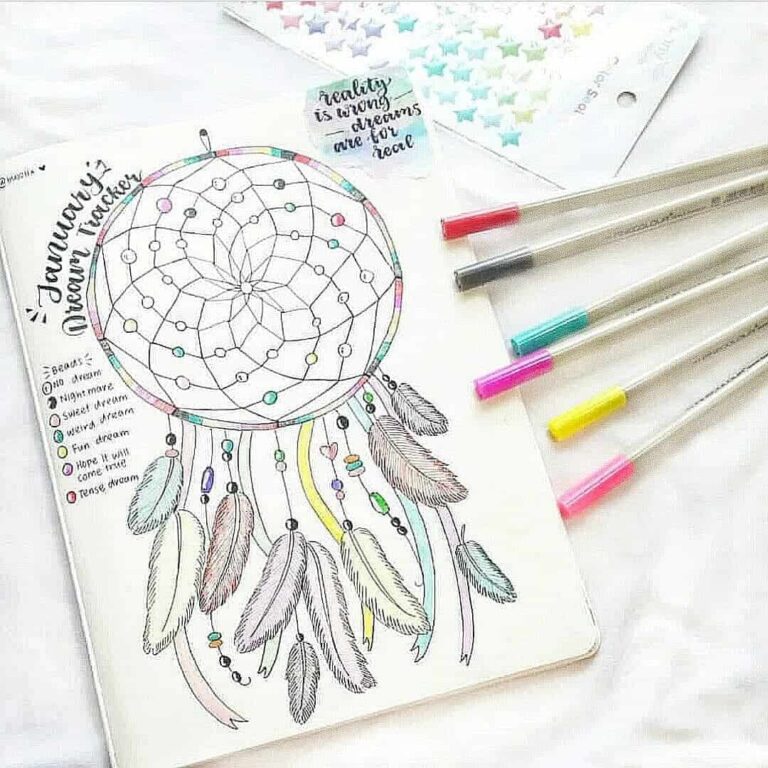
Three uses recur across the gallery. The first is the dream log itself — a page or a recurring entry where the journaler records dreams, often with a dream catcher illustrated at the top of the page or in the margin. The second is the monthly cover, where the motif serves as the theme for the whole month’s spreads, with the colour palette and the supporting elements pulled from the same general aesthetic. The third is a freestanding decorative spread, where the page is essentially an illustration with a small written reflection alongside it.
The motif also pairs well with adjacent elements that already appear in many bullet journals — feathers, leaves, vines, small celestial details, hand-lettered quotes. None of these need to appear together; the pages below include minimal versions with just the hoop and web, and more elaborate versions where the dream catcher is one element in a wider illustrated scene. The format is flexible enough to fit alongside whatever else the journaler is already drawing.
Setting up each use in practice
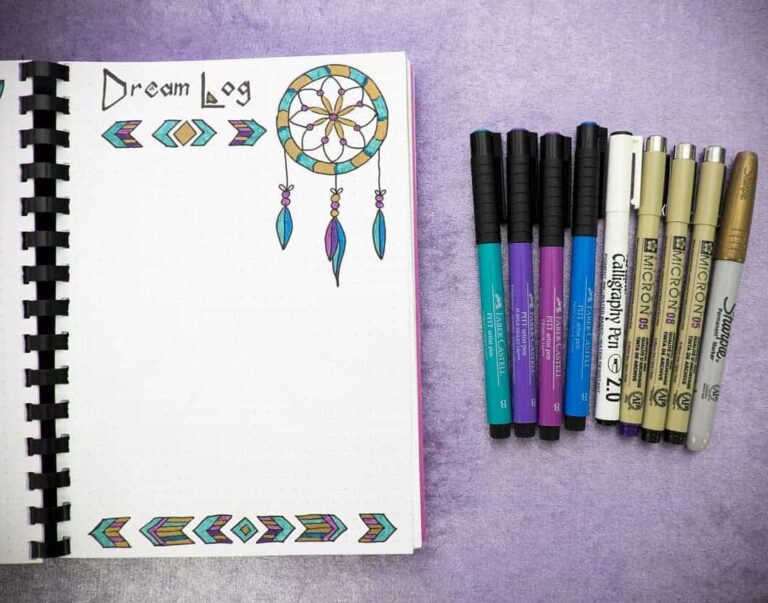
The dream log. A recurring dream log works best when the format is consistent enough to scan quickly across entries. A small dream catcher drawn in the top corner of each entry — same position, same approximate size — creates a visual anchor that makes the log feel intentional rather than ad hoc. The written content below it can be as brief as a title and a few keywords, or as long as a full narrative account; the motif holds the format together either way. Some journalers add a simple rating or mood indicator inside the hoop itself, using the circle as a small data field.
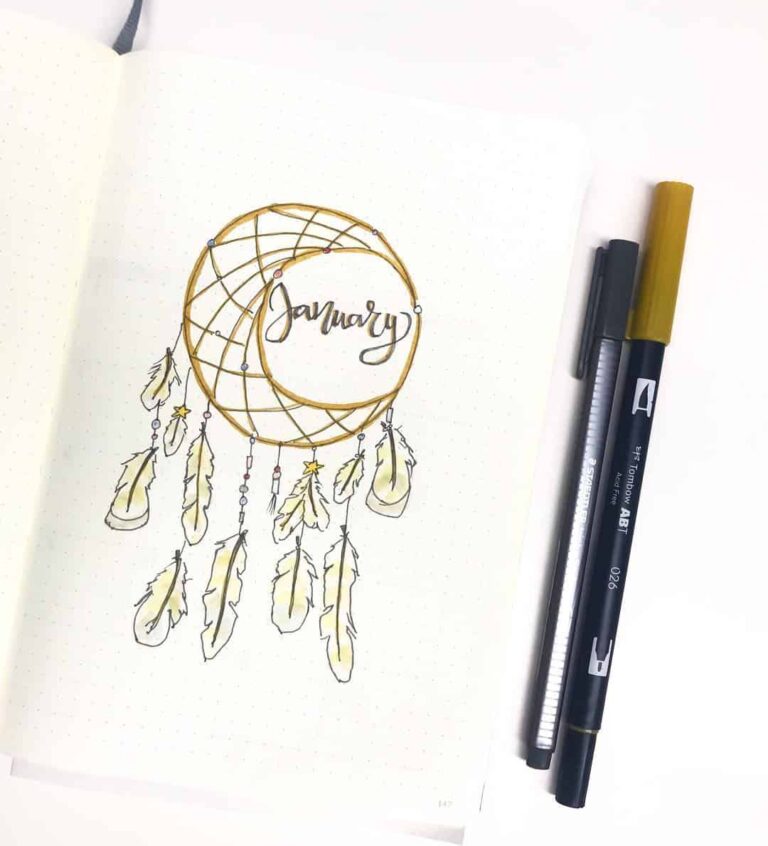
The monthly cover. The motif scales to a full cover page most effectively when the circle is large enough to contain practical content — the month name, a short intention, or a list of priorities written inside the web. Drawing the hoop to span most of the page width and centering it vertically leaves enough margin at the top and bottom for a title and a decorative border. The hanging feathers can extend below the lower margin, which gives the illustration a quality of spilling past its frame that suits a cover page well.
The freestanding decorative spread. A two-page spread built around the motif typically positions the hoop in the centre of the right-hand page, with the written reflection or quote occupying the left-hand page. The asymmetry works because the eye moves naturally from the text to the image. For journalers who prefer a more integrated layout, the written content can be placed inside the hoop itself, with the web pattern drawn lightly enough to read as a background rather than a foreground element — a technique that appears in several of the spreads below.
Featured dream catcher bullet journal spreads
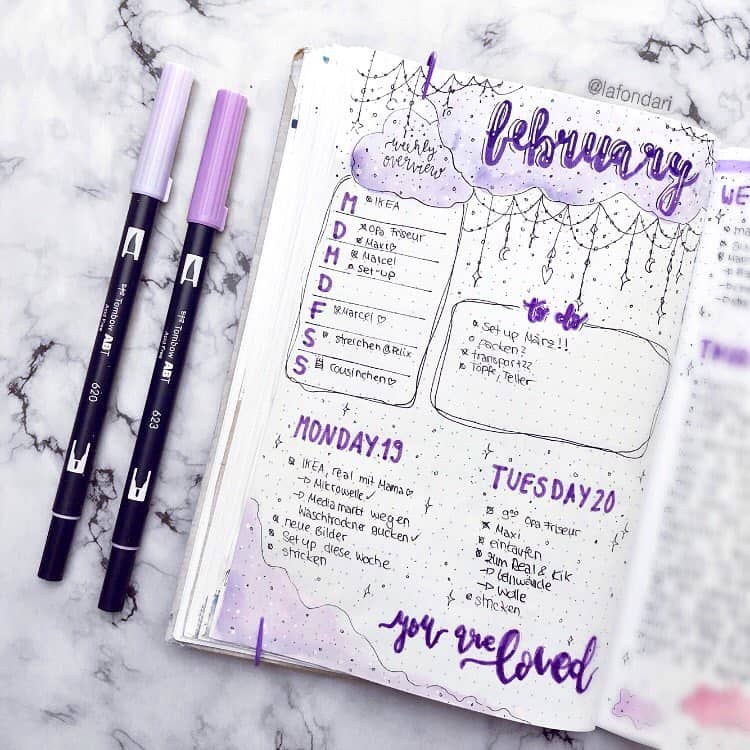
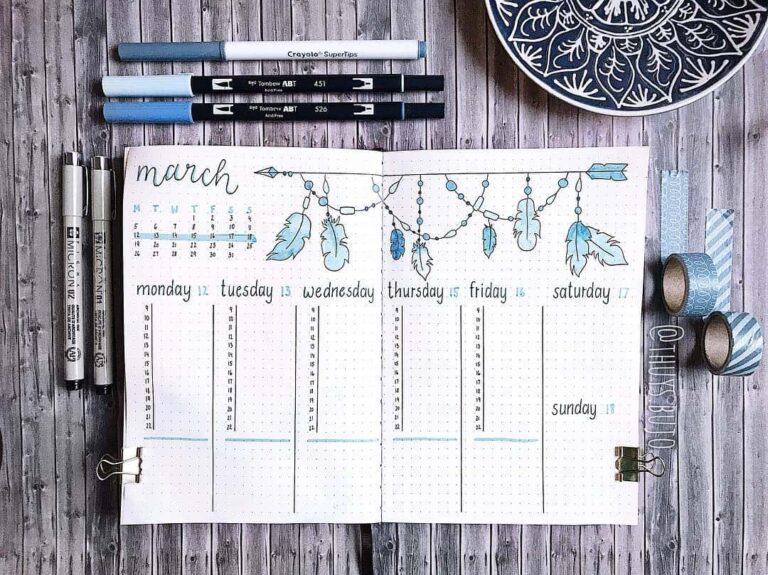
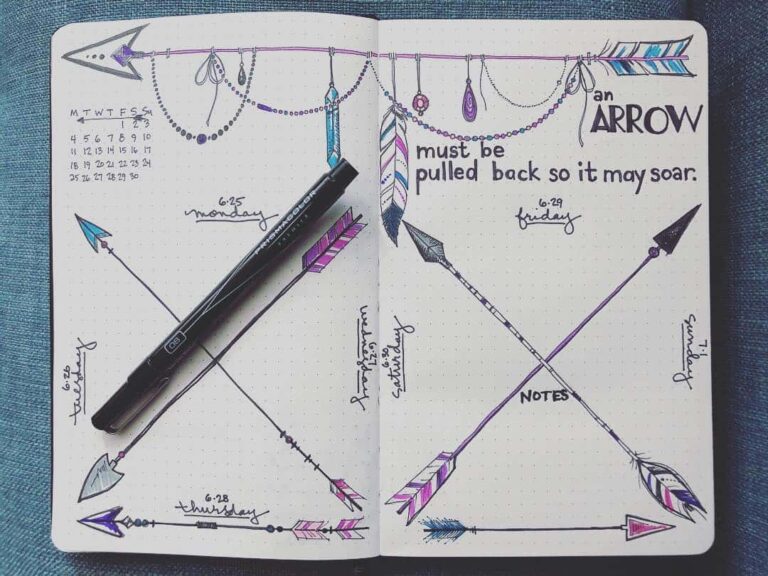
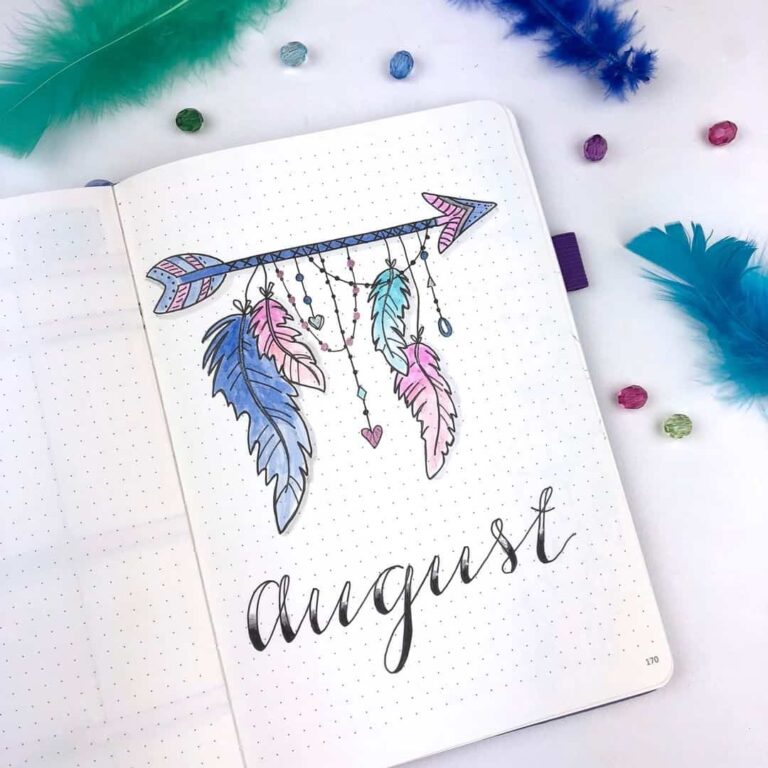
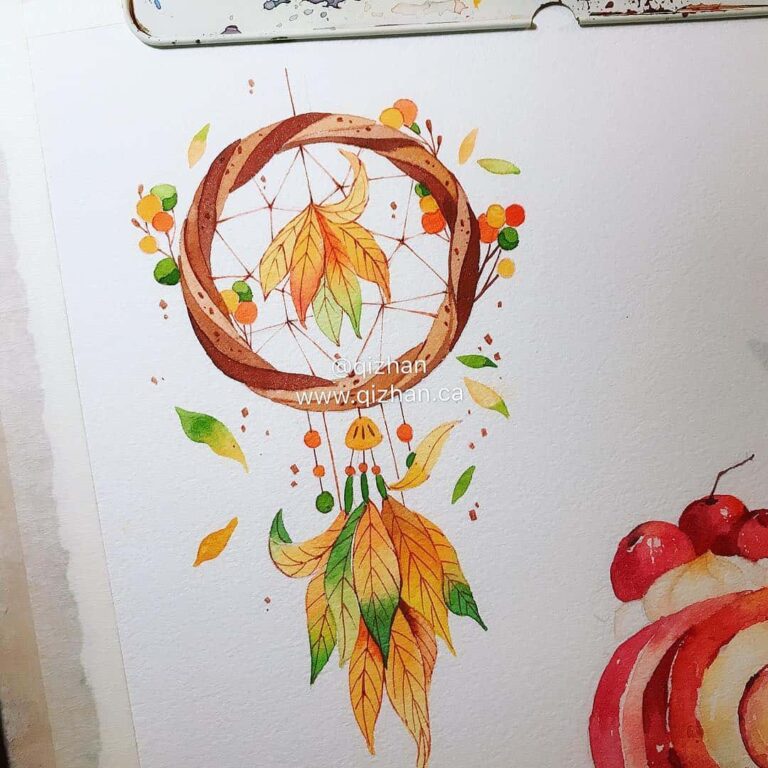
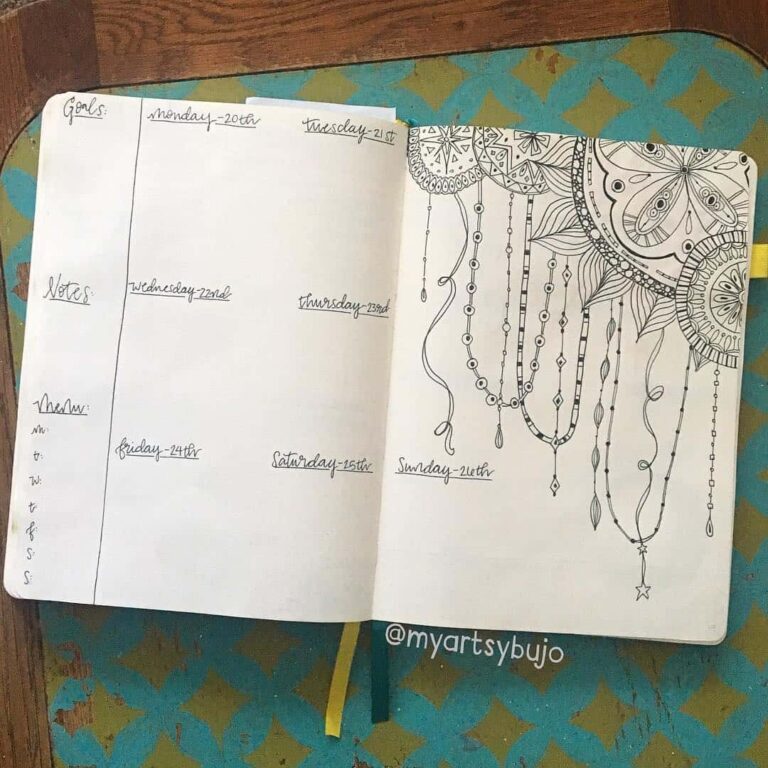
The spreads collected below come from the My Inner Creative community and span small accent uses, larger illustrated cover pages, dream-log headers, and freestanding decorative pages. They are included as a visual reference; the motif is forgiving enough to be redrawn in a notebook with a pen and a steady hand.











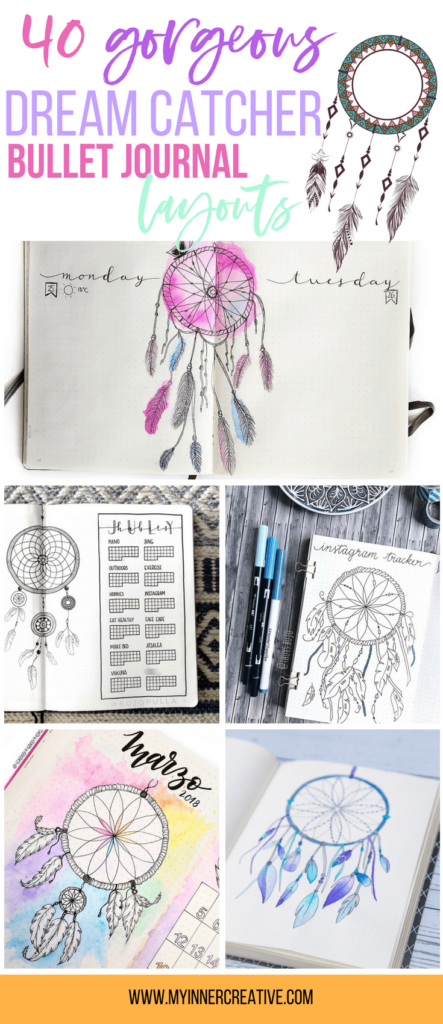
Practical notes for drawing it in your own journal
Pen weight makes the most visible difference to the finished result. A finer nib — 0.3mm or below — suits the intricate web and produces a more delicate overall impression. A broader nib makes the hoop and the hanging elements bolder, which works better as a standalone spread than as a small accent element. Mixing the two within a single motif — a finer pen for the web, a broader one for the hoop outline — is a technique that appears repeatedly in the spreads below and gives the motif more visual depth without requiring colour.
Colour, when it appears, tends to be limited to one or two tones applied to the feathers and beads rather than to the web itself. Leaving the web in black or dark ink and adding colour only to the hanging elements keeps the contrast readable and avoids the visual noise that comes from colouring the web’s intersecting lines. Watercolour, brush pen, and coloured fineliner all appear in the spreads below; the choice matters less than keeping the palette narrow.
For journalers who have not drawn the motif before, drawing the hoop and web on a scrap page first — not as practice, but as a size reference to place behind the journal page and trace lightly — removes the pressure of committing to a size and position before the shape is settled. The journal page itself can then be drawn freehand with the reference nearby rather than underneath.
The pages above are the work of many different journalers, drawing the same recognisable shape in many different ways. Some are minimal; some are elaborate. Some pair the motif with a quiet acknowledgement of where the image comes from, and some treat it purely as a decorative element. The motif itself has been doing both at the same time for decades, and the pages above are a small piece of that longer pattern — a shape that keeps appearing because the people who draw it find something in it worth keeping.