
Editorial note: This article was originally published on My Inner Creative and has been updated and republished in May 2026 under The Vessel’s editorial standards.
Sleep is one of the easier things to track and one of the harder things to fix. A bullet journal sleep tracker is not a sleep aid; it is a record. Over a few weeks, a simple grid of bedtimes and wake-times tends to expose the patterns that the body has been responding to all along — the late nights that follow social weekends, the early mornings that pile up before a deadline, the stretches where a steady eleven-to-seven routine quietly improves everything else.
The spreads collected below were originally published on My Inner Creative, a community of bullet journal artists who organise their pages around mood, routine, and the small daily habits that affect how the rest of life feels. The layouts span everything from minimalist grids and dot-shaded scales to colour-coded charts and hand-drawn moons.
None of them require artistic skill. What they share is a willingness to put one of the more invisible parts of life on a page where it can be looked at.
Why sleep is worth tracking on paper
Sleep tracking has moved from clinical settings to wrists and pillows. Many fitness trackers now record sleep alongside steps and heart rate, and most produce a nightly score that is reassuring on good days and demoralising on bad ones.
The advantage of using a bullet journal instead, or alongside, is that the act of writing the numbers down forces a brief, daily moment of reflection. A device shows a graph; a notebook asks a person to notice.
The most useful reason to track sleep at all is that sleep affects almost everything else. Mood, attention, appetite, recovery from training, the ability to make decisions before lunch — they all sit downstream of how the night before went.
A tracker does not change the night; it only makes the relationship visible, and visibility is usually the first step toward changing it.
What sleep actually looks like through the night
A typical night cycles through light sleep, deep sleep, and REM sleep, repeating the cycle several times. Light sleep arrives first, usually within minutes of falling asleep, as the heart rate and body temperature drift down. After roughly ten to fifteen minutes of light sleep, the body settles into deep sleep, which is the phase associated with physical repair. Most of a typical night is spent in light and deep sleep; REM, which is shorter and more variable, tends to cluster in the second half of the night.
A bullet journal tracker cannot detect any of this directly. What it can do is record what a person notices upon waking — whether the sleep felt restorative or shallow, whether dreams were remembered, whether the morning started slowly or with energy.
Over time, those subjective notes line up against bedtime, screen exposure, alcohol, caffeine, and exercise in ways that are harder to see in a daily app screenshot than in a quiet two-page spread reviewed at the end of a month.
What people often notice when they start tracking
Bullet journal sleep tracking is not diagnostic, and a notebook will never replace a sleep study. What it tends to do, even after only a few weeks, is reveal patterns that were previously absorbed into the general blur of weeks. Sleep needs vary widely from one person to the next; some adults are at their best on seven hours, others noticeably underslept at nine. A tracker turns the question of how much sleep is enough into something a person can answer for themselves rather than guess.
The benefits people commonly notice, and that research has consistently associated with better sleep, include the following — none of which require any particular kind of journal to enjoy:
- Steadier moods and a calmer baseline through the day.
- Sharper concentration, memory, and reaction time — important enough that studies have compared the impairment caused by severe sleep deprivation behind the wheel to that of driving under the influence of alcohol.
- Better appetite regulation. Sleep deprivation tends to increase hunger signals, particularly for high-energy foods.
- Reduced risk of cardiovascular and metabolic conditions, including diabetes and heart problems.
- A more reliable immune response, which can mean fewer days lost to the colds and minor infections that pass through any household.
- Greater creative range. Many people find that the morning after a properly rested night is when ideas surface that had been stuck for weeks.
- Better recovery from exercise, training, or any physical work the body is being asked to do.

Featured sleep tracker bullet journal spreads
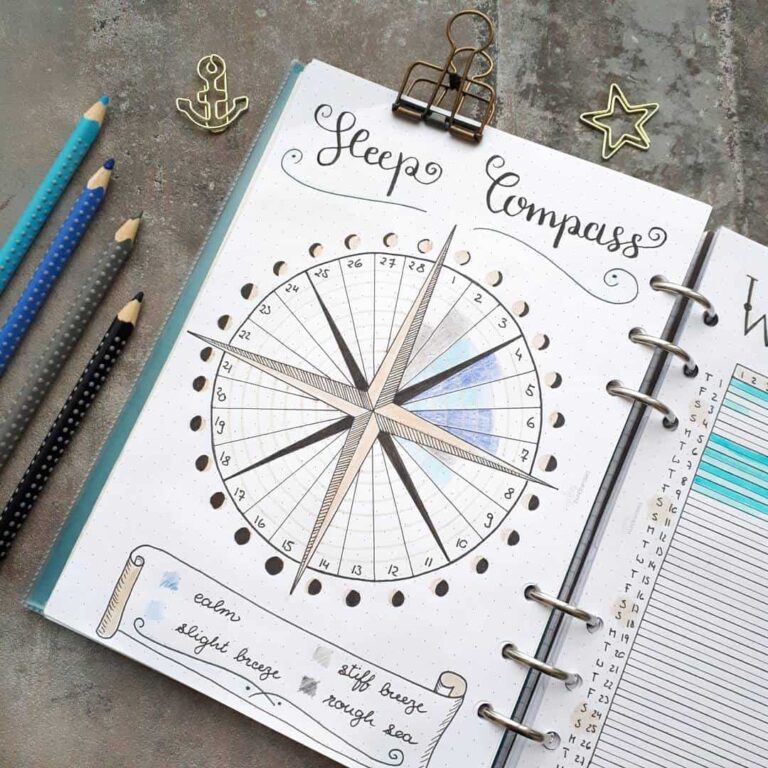
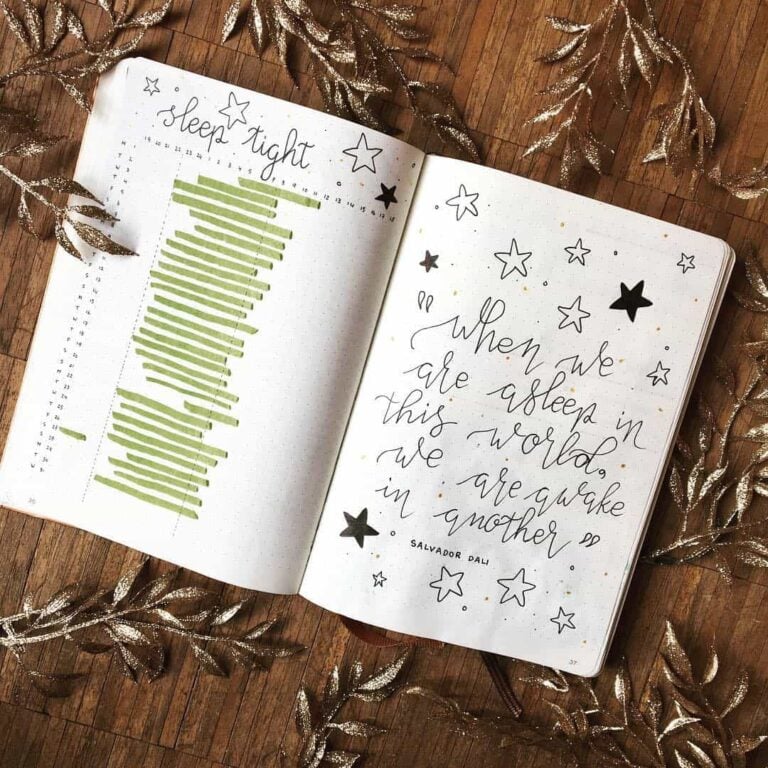
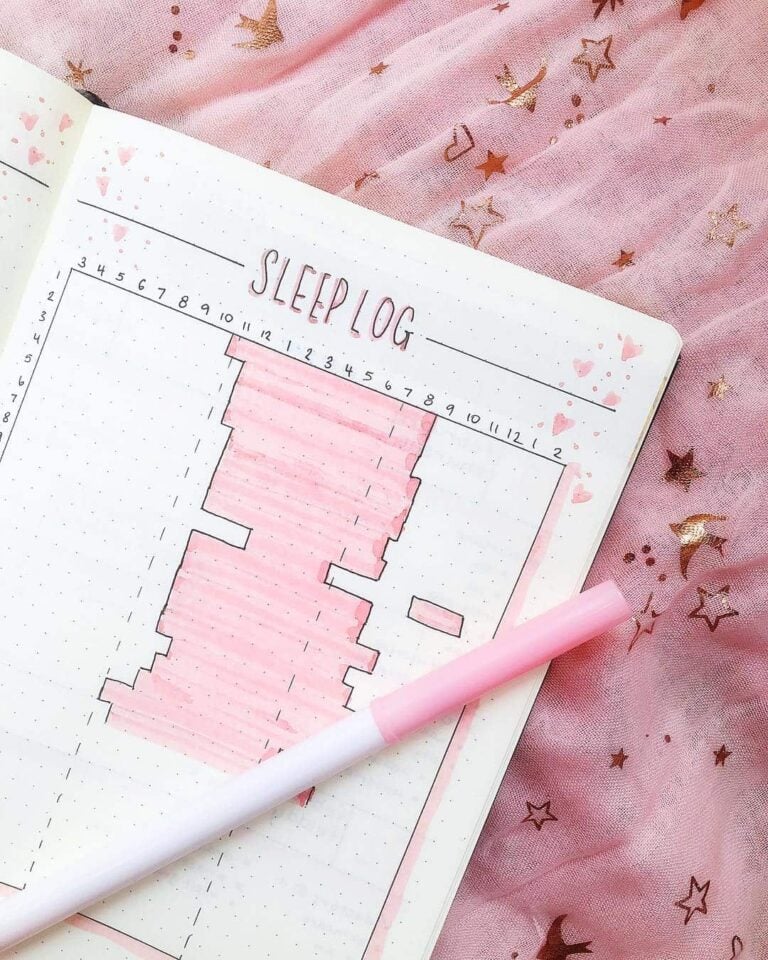
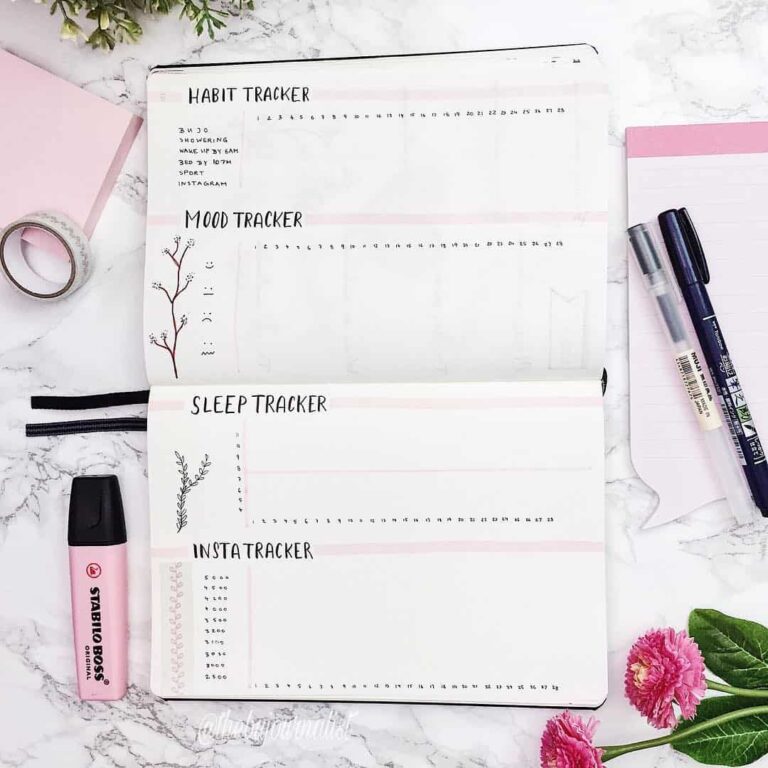
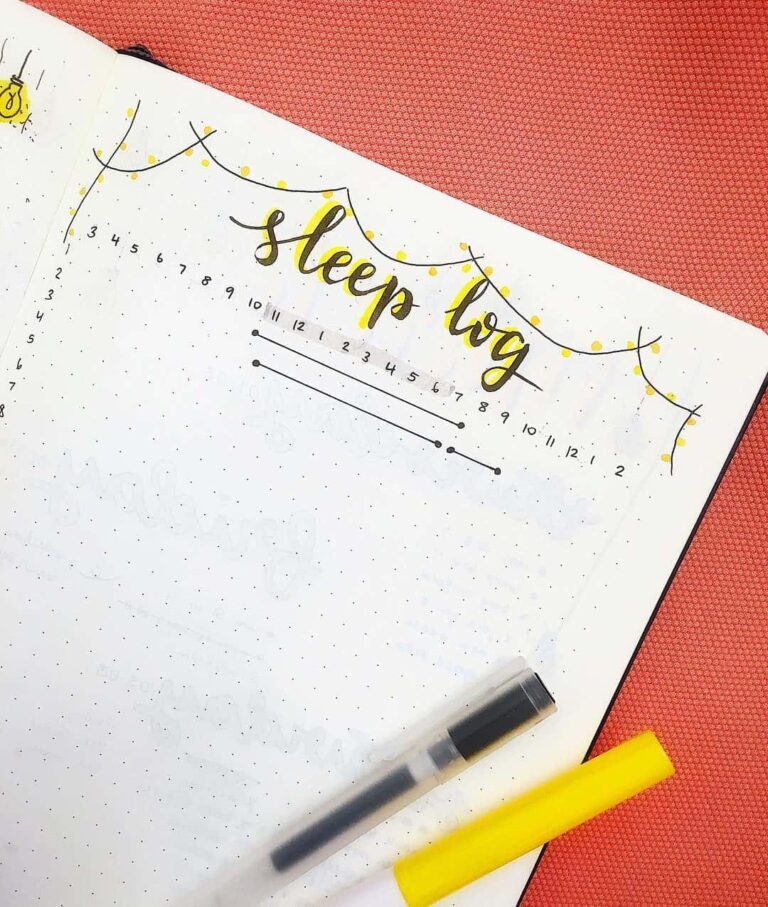
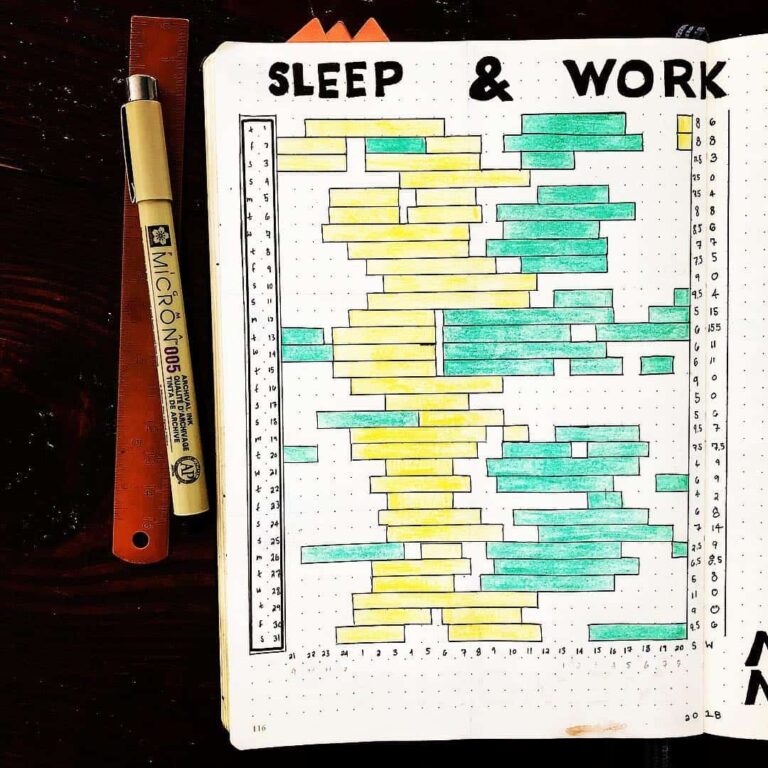
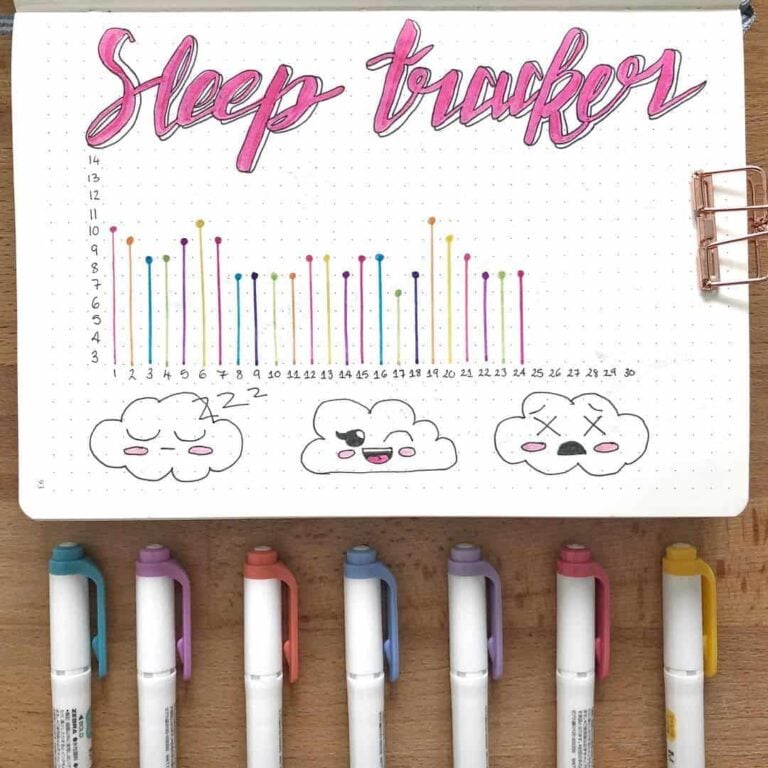
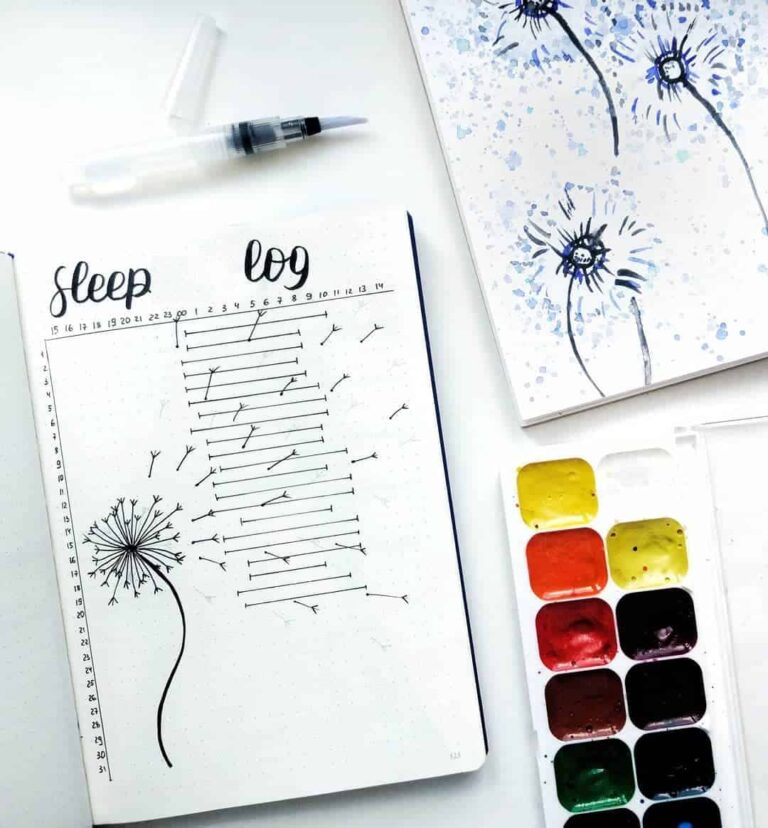
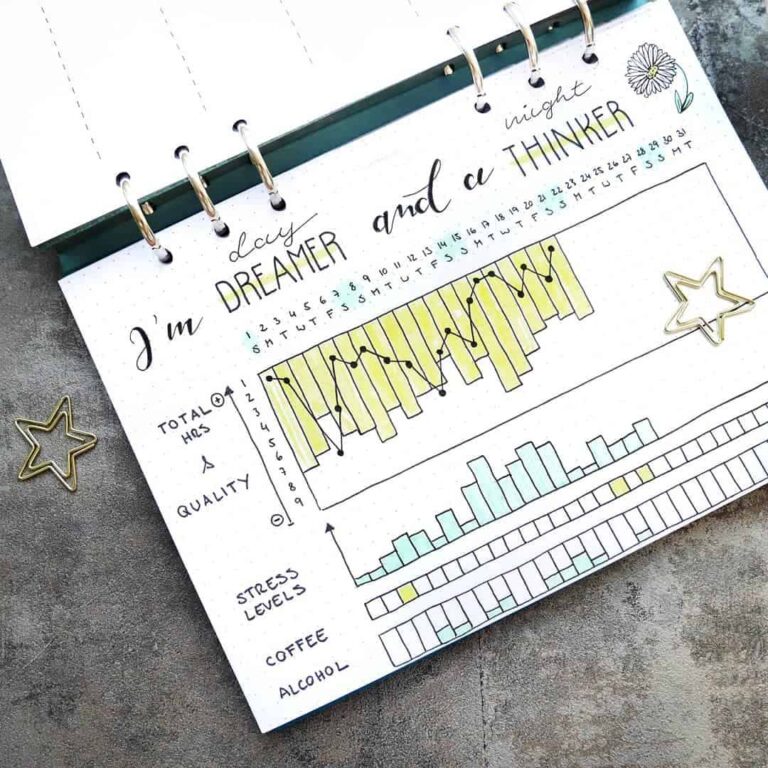
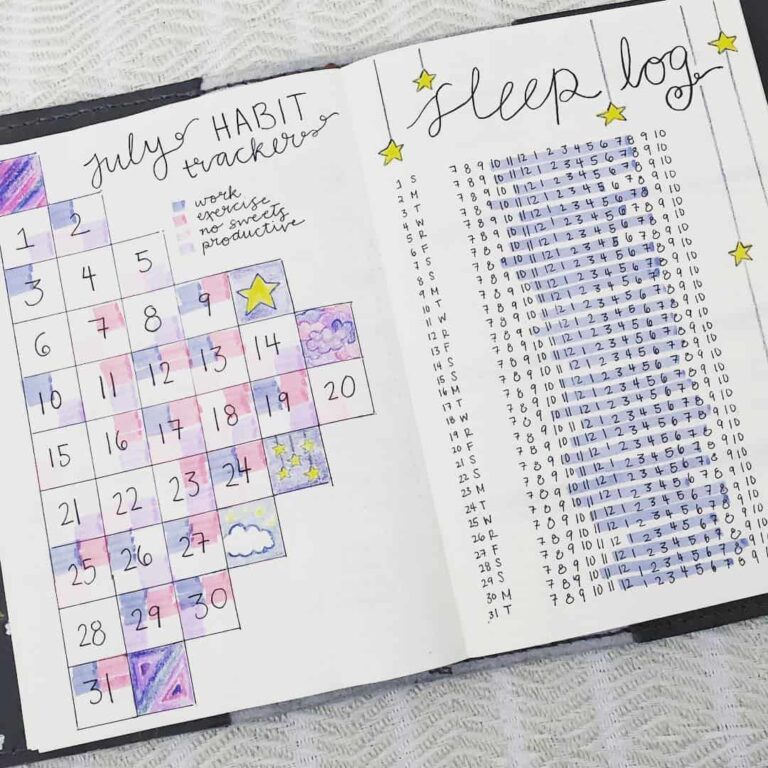
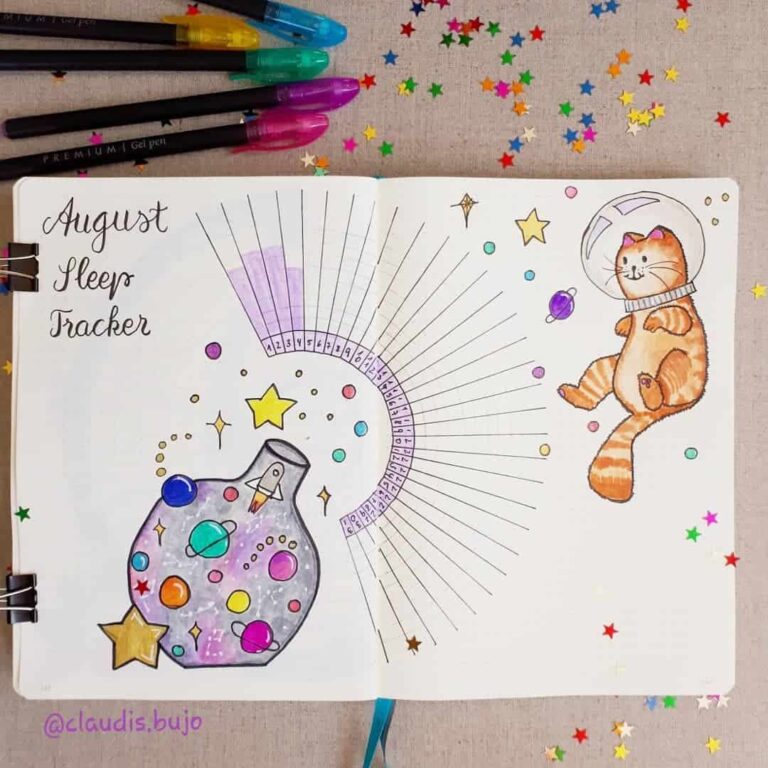
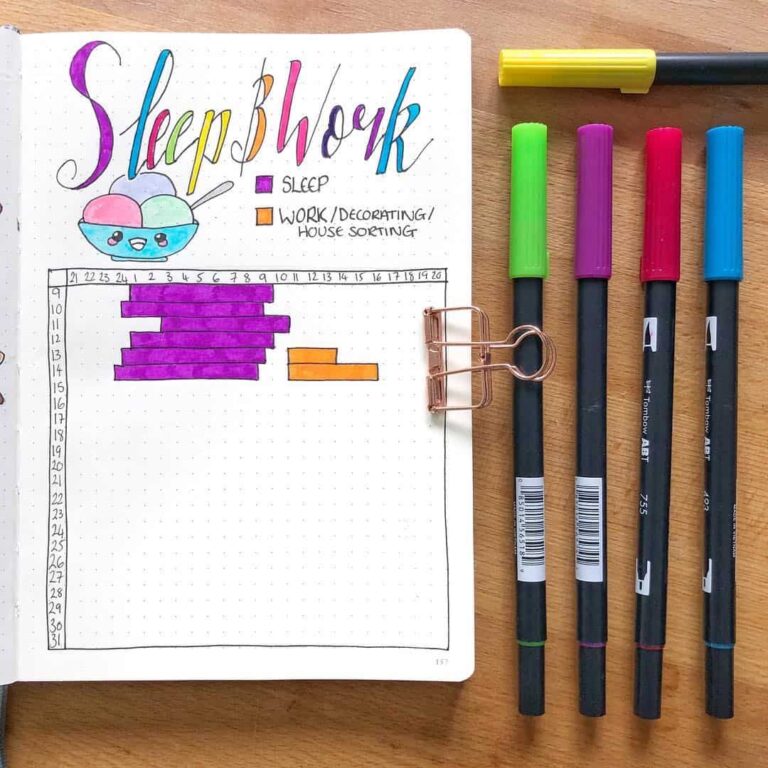
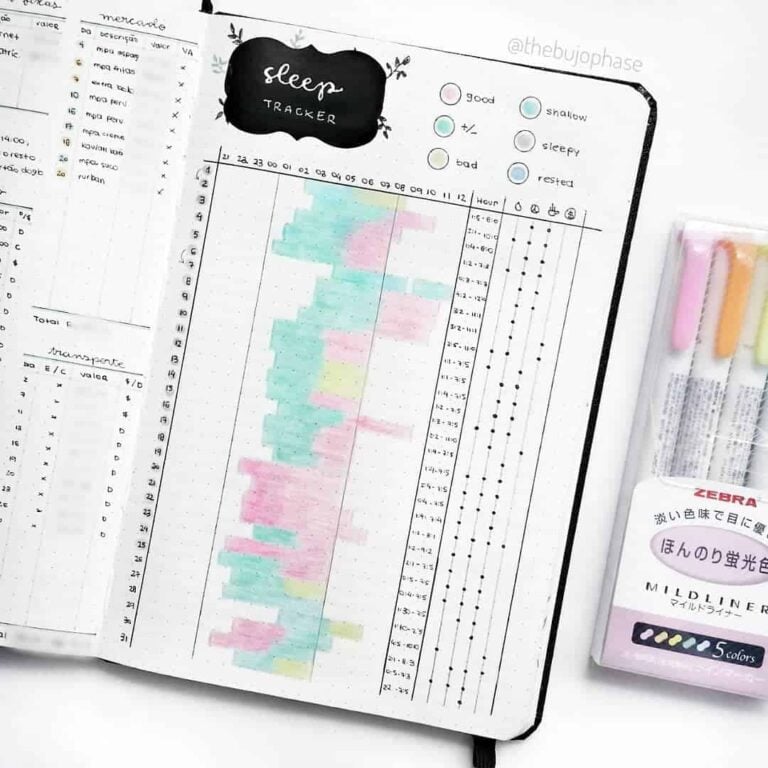
The gallery below pulls together twenty sleep tracker layouts collected from the My Inner Creative community. The styles vary widely. Some use a clean numerical grid that records bedtime, wake-time, and total hours and nothing else. Others lean visual, with shaded moons or starfields filling in for hours slept. A few sit alongside a mood column or a brief daily prompt, treating the tracker as one part of a wider habit page. Browsing them is less about copying a layout exactly than about seeing how many ways the same simple act of writing the night down can take shape on paper.

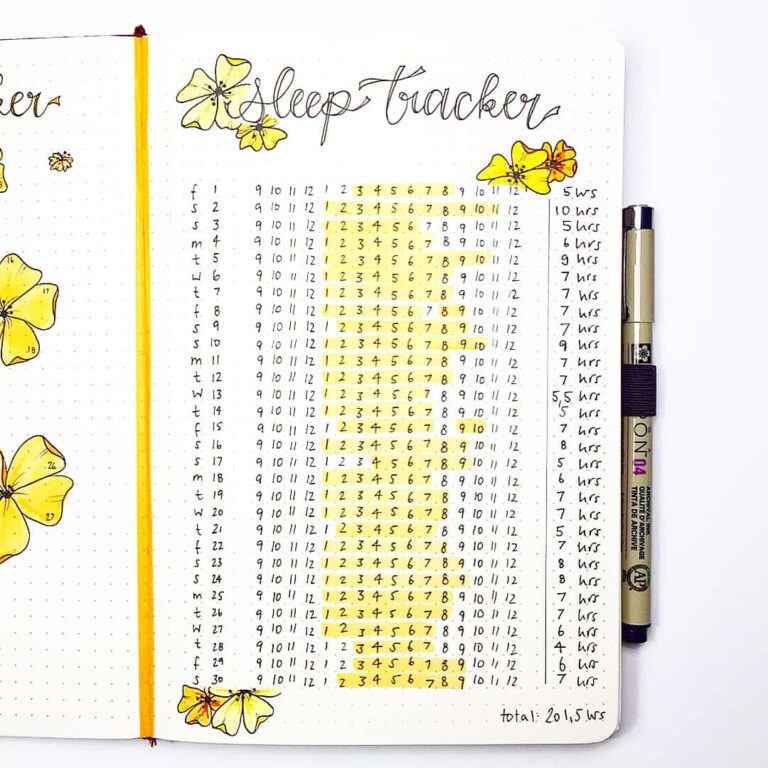
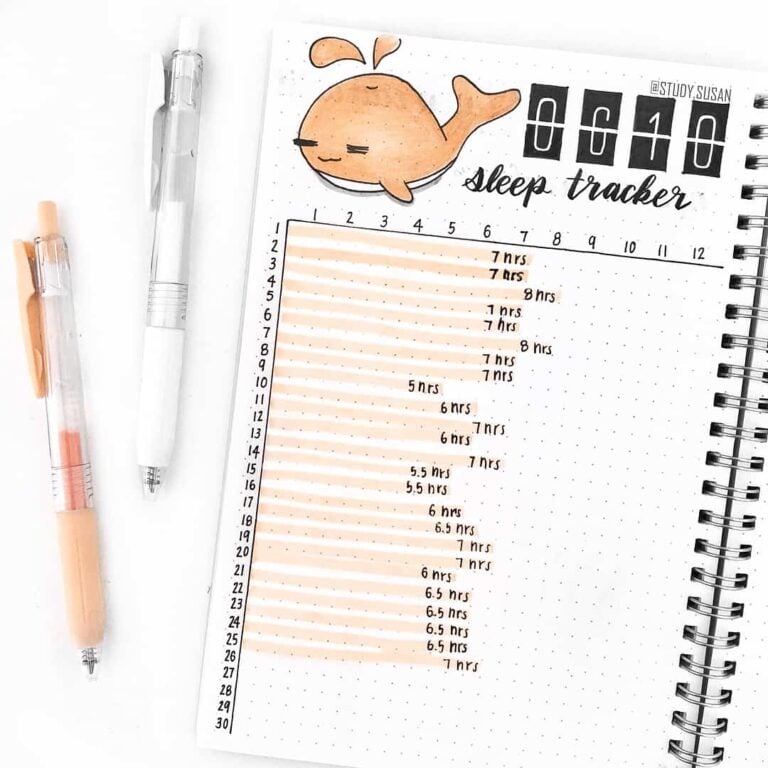
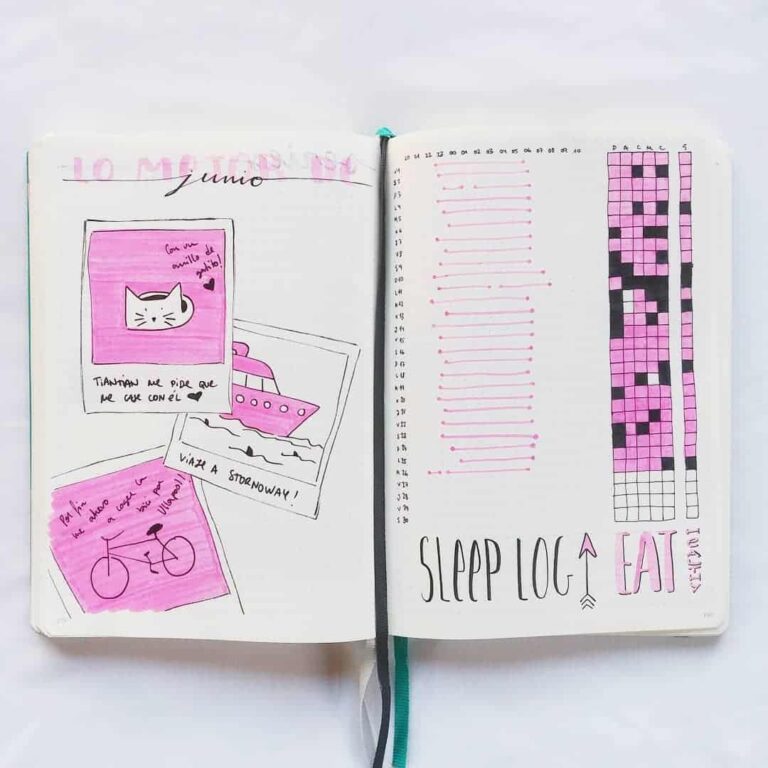
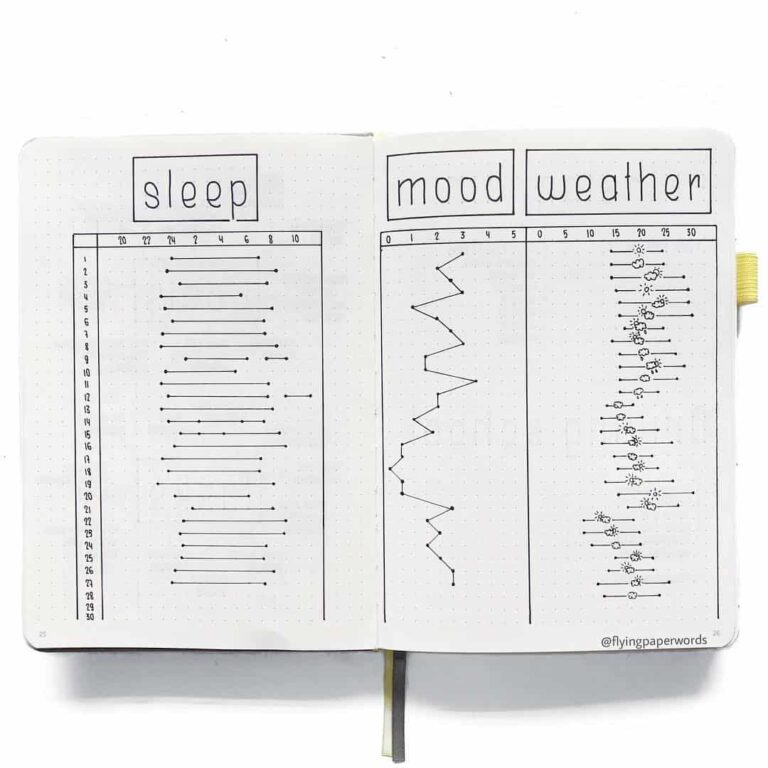
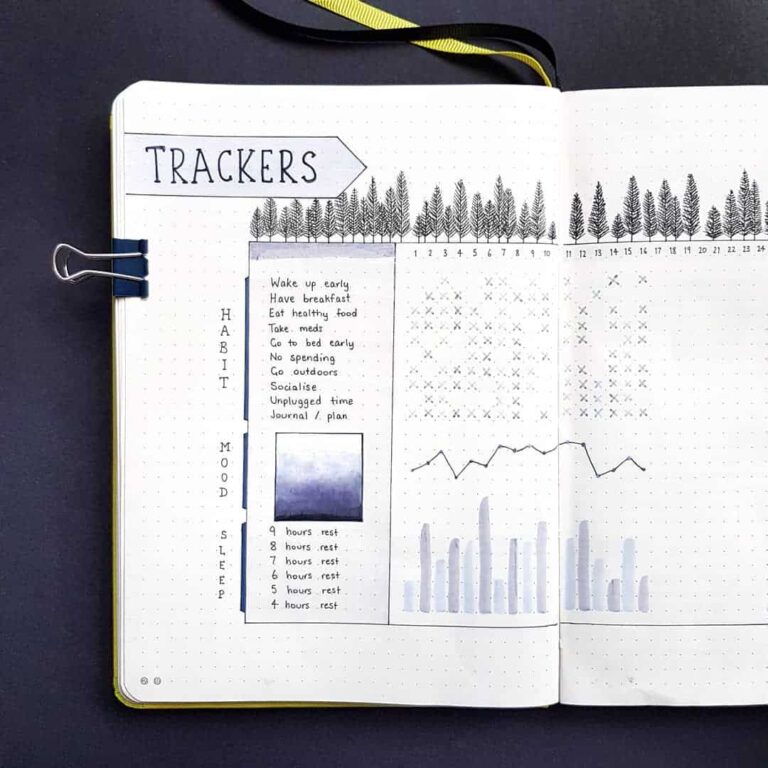


Sleep tracker spreads to draw from
Sleep tracking is unusual among habit pages in that it rewards consistency more than ambition. A simple line a night, kept for a month, is worth more than a beautifully designed spread that gets abandoned after a week.
The notebook does not have to be elaborate, and the tracker does not have to be perfect. It only has to be open long enough to write down what the night was actually like, and to come back to it long enough to notice when it changes.
Patterns that take weeks to surface tend to be the ones worth knowing about, and a quiet record kept in pen, on a page, is one of the older and simpler ways of noticing them.